![Hey Decor Girl [Latest Trending Decor Design Ideas]](https://heydecorgirl.com/wordpress/wp-content/uploads/2024/08/Heygirldecor-Logo.png)
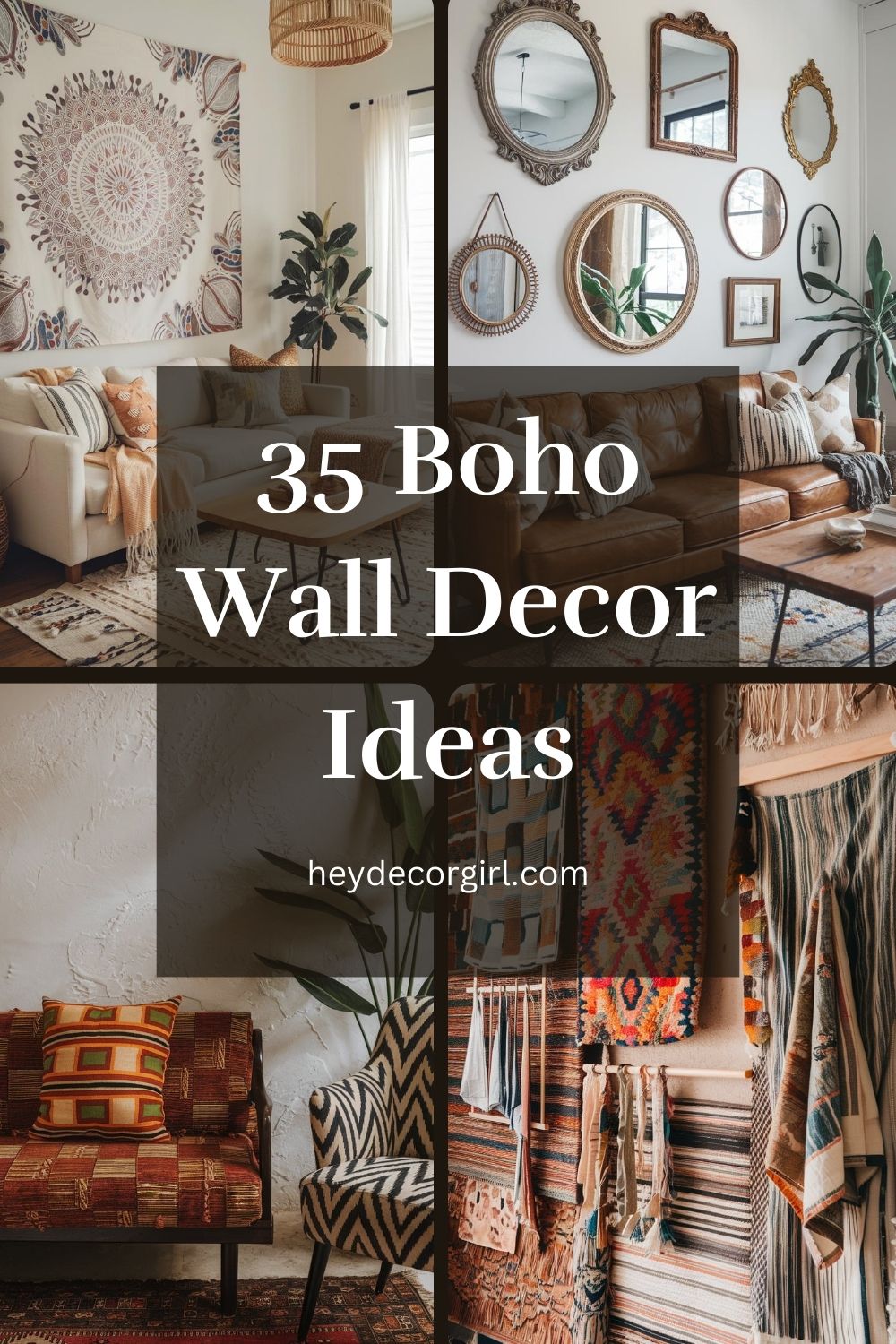
Boho Wall Decor Ideas style, whose distinctive feature is an eclectic combination of patterns, textures, and bright colors, also became a favorite for creating inviting and personalized spaces. The style is rather carefree and artistic, and that approach has incorporated the elements of other cultures and epochs to form a particular, relaxed sense. It is attractive because it represents individuality and creativity, and each boho space is unique itself.
Wall decoration is an important aspect to attain a unified look of boho. It serves both as a canvas to show personal style and also provides depth of appearance to a room. Whether it is a wall adorned with macrames or a tapestry and handcrafted arts, the right wall decor can turn any dull wall into the central point of the whole room, which connects all other elements of the interior.
We will discuss 35 cool boho wall decor options that will make you want to make your space personality-filled and cute. You can either make a small statement of whim or a big statement of style, and these tips will guide you towards the boho wall that is not only beautiful but also distinctly personal.
Boho Wall Decor Ideas
1. Macramé Wall Hangings
Description and Types
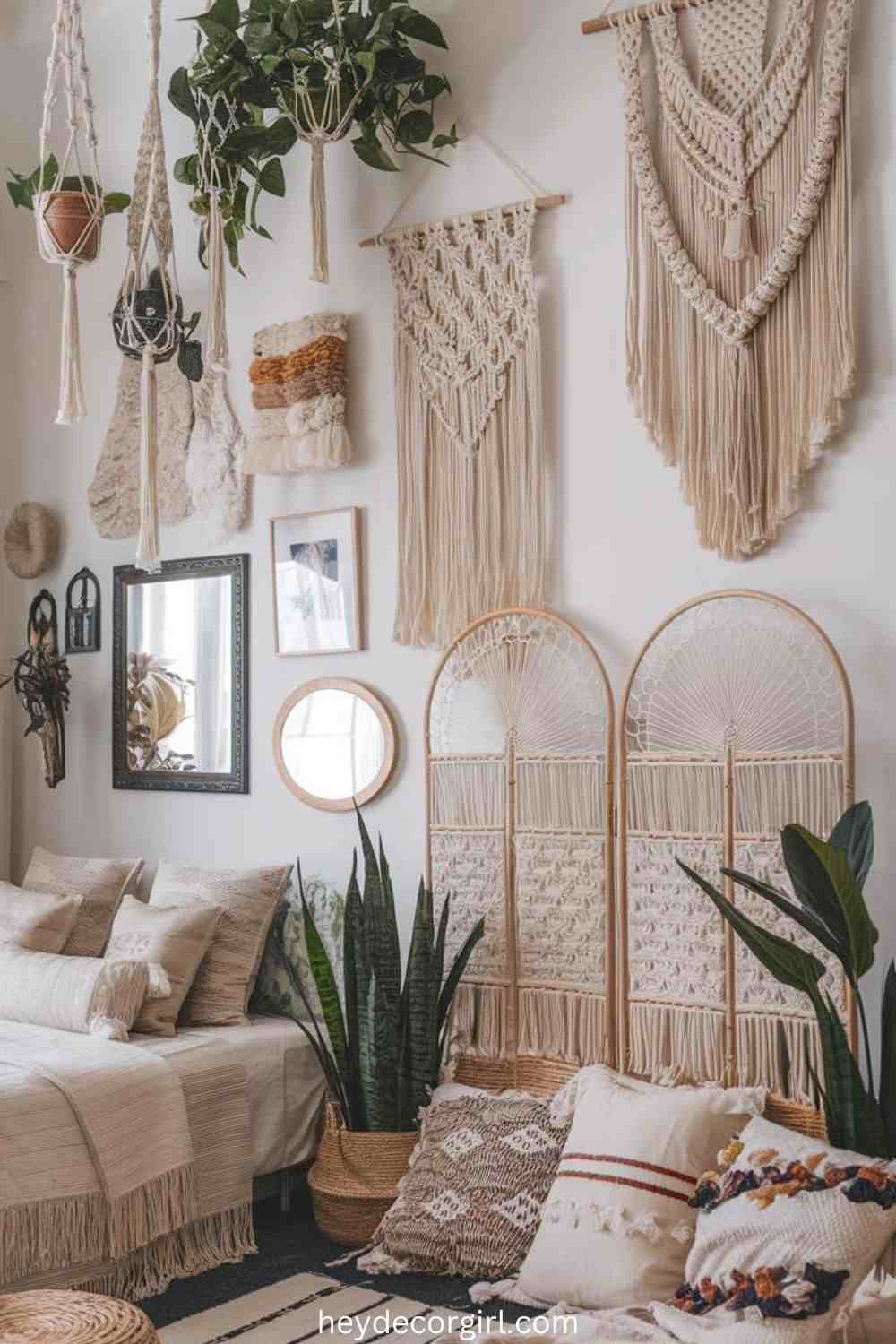
Macramé wall hangings are done through elaborate knotting methods to produce appealing shapes and textures. This is an art crafted by hand, and it has a history of many cultures and its resurgence into the modern deco, giving an air of bohemian style to any area. Macramé wall hangings exist in a variety of styles:
- Plant Hangers: These are trendy items that can be used as a decorative element as well as a trendy method of displaying indoor vegetation. You can suspend them on the ceiling or put them on the wall, providing a natural touch to your decor.
- Tapestries: Bigger macramé tapestries are wall art. They may be simple and elaborate and can be used to make a statement wall.
- Wall Panels: Wall panels can be quite decorative, with a combination of knots and textures to give them a three-dimensional effect. They may serve as a central material of a room.
Placement Ideas
- Over a Bed: A Macramé tapestry or wall hanging can be used to act as an impressive substitute for a headboard. The space over the bed is enriched with the texture and pattern that make the space appear comfortable and relaxed.
- On a Gallery Wall: Adding macramé items to a gallery wall installation creates a haptic feature. Combine with framed paintings, mirrors, and other wall decorations to produce a layered, eclectic appearance.
- In a Reading Nook: Having something to distinguish the space, a Reading Nook should have a macramé wall hanging in the background of the reading chair or small couch to add some boho style. It contributes a warm, welcoming background.
- As a Room Divider: Macramé wall hangings of large sizes may be applied to create a physical barrier in the space in a room, e.g., an open-plan living room. This is useful in forming separate areas as well as in providing decorativeness.
Guidelines on the use of Color and Texture.
- Color Coordination: Although most traditional macramé is viewed in a neutral color scheme, an addition of color can be added using colored threads or colored fibers. Select colors that will match your current decor or provide a contrast that will be interesting to look at.
- Texture Mixing: To add the boho effect, combine the use of macramé wall hangings with other textures like woven baskets, fabric wall hangings, or plush cushions. Suchan overlay of textures gives a multi-dimensional appearance.
- DIY Customization: Add beads, feathers, or tassels dyed in any color to customize your macramé. It means that you can align the macramé with your color preferences and design choices.
- Balance and Scale: The size of your macramé piece compared to the space on the wall. Bigger pieces on the wall are very bold and may be used as the primary focus, and the smaller ones may be combined to create a less conspicuous effect.
2. Boho Wall Tapestries
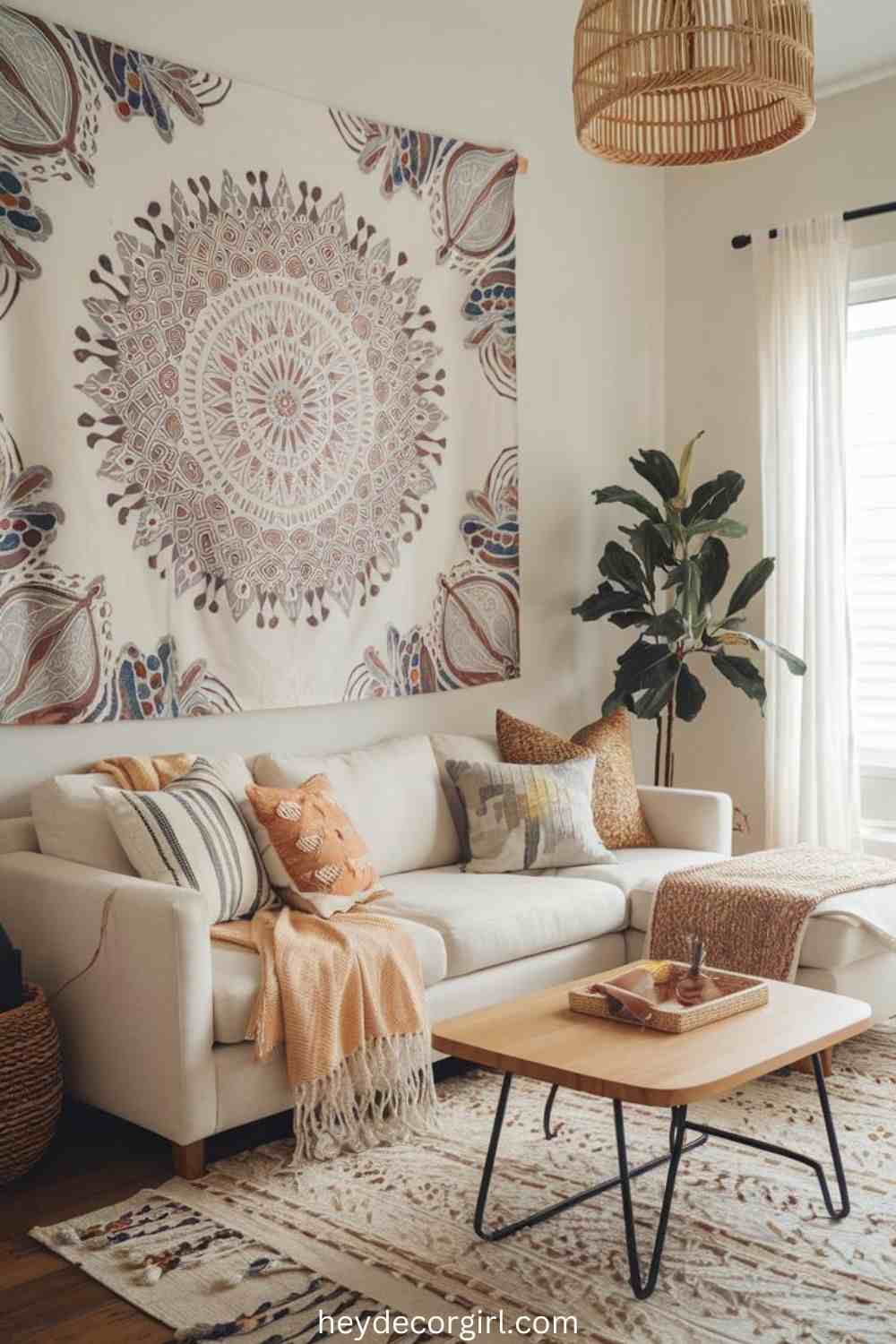
Trendy Patterns and designs
Boho wall tapestries have been characterized by their colorful patterns and designs, which make bohemian decoration look eclectic and relaxed. Here are some popular styles:
- Mandalas: These circular artworks are usually complicated, with recurring patterns that are surrounded by a rich color palette. Mandalas may be used as a center of focus and a way of bringing a meditative and relaxing touch to your surroundings.
- Geometric Patterns: It can be bold and abstract geometric patterns, which may be striking to the eye. They also usually include a combination of forms and colors that are in line with boho style.
- Nature-Inspired Designs: Tapestries with nature (e.g., flowered prints, trees, or heavenly designs) are an organic and playful addition to the room.
- Ethnic and Tribal Prints: These patterns tend to bring cultural patterns and styles to bear,r and they bring an element of international influence and history to your walls.
Creative Uses
- As a Bedspread: A big tapestry may be used as a bedspread or throw to add some reflection and color to your bedding. Select a design that is compatible with other elements of decoration in your bedroom.
- Room Divider: Hang a tapestry or a decorative rod on the ceiling to give the room a pleasing appearance. It may be applicable in open areas or to divide various sections in a room.
- Wall Art: Drape a tapestry as a piece of wall art. This is particularly effective as a gallery wall backdrop or as a standalone statement piece.
- Ceiling Decoration: To make the room look special, put a tapestry on the ceiling, which will provide an interesting visual effect and depth and texture to the room.
- Tablecloth or Furniture Cover: It can be used as a tablecloth or furniture cover on a certain piece of furniture, such as a bench or ottoman. This is able to add dynamic designs and guard surfaces.
Hanging and Layering Hints.
- Proper Hanging: Hang your tapestry with the help of adhesive hooks, nails, or a curtain rod. Make sure that the hanging technique is sturdy and will hold the weight of the tapestry, but it will not harm the wall.
- Making Layers: To achieve a dynamic appearance, layer tapestries and other wall decorative items, such as macramé hangings, framed art, or mirrors. This gives the space a visual appeal.
- Hanging Height: Take into consideration the height at which you would be hanging the tapestry. To achieve a decent appearance, place it in such a manner that it matches the other pieces of furniture and other decorations.
- Framing/Mounting- An artistic piece can be placed in either a wooden/metal frame to make it look more professional or hung on a canvas to have it appear more orderly. This can make it look more like traditional art and improve the overall presentation of the same.
- Maintenance of the tapestry: The tapestry should always be dusted and cleaned as per the instructions of the manufacturer to keep it in good condition. Keep out of the sun to ensure that it does not fade away.
Through these trends, imaginative applications, and hanging ideas, you can incorporate boho wall tapestries in your decor successfully to add to the overall visual appeal of the space.
3. Woven Baskets
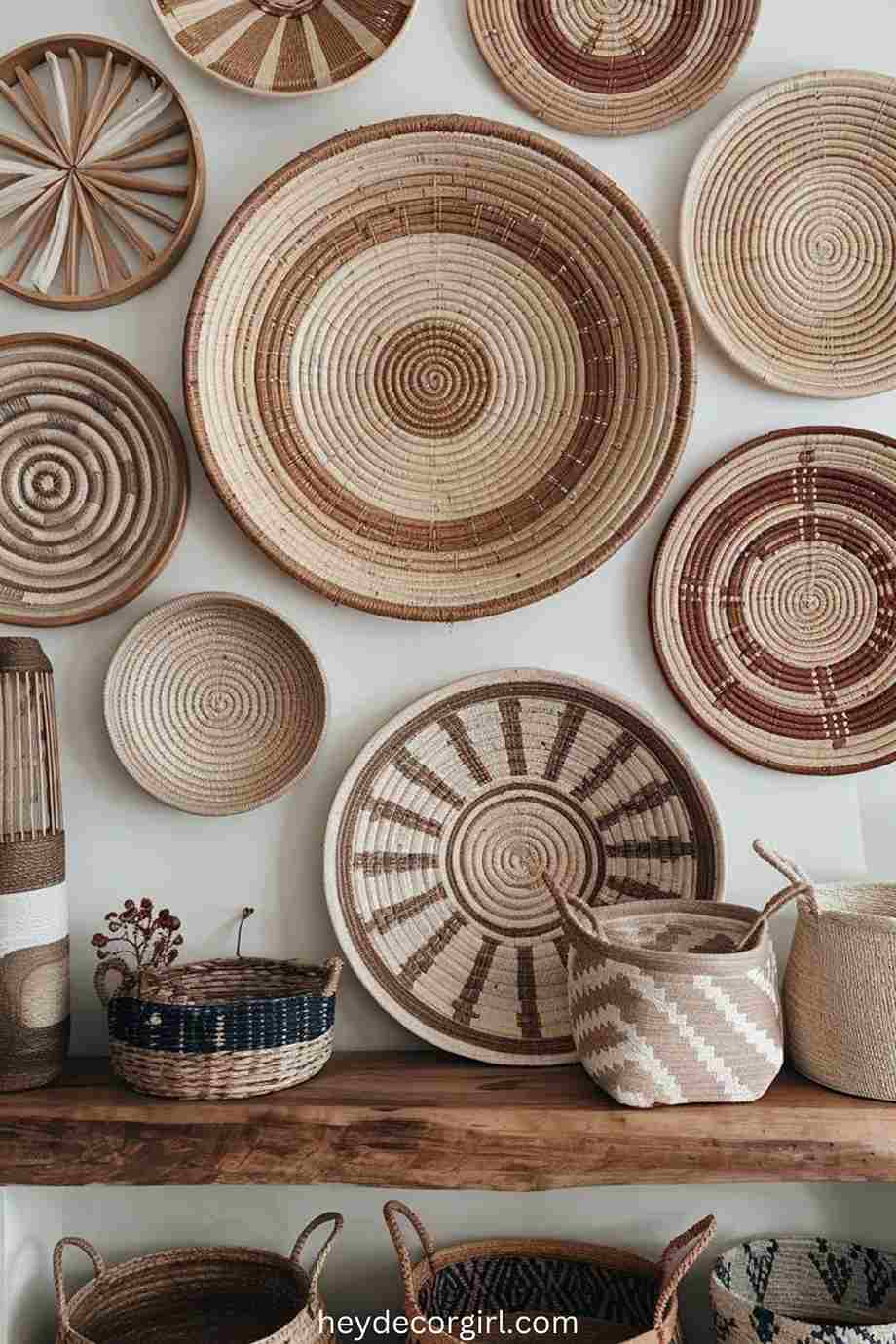
Various Shapes and Sizes
Another type of boho decoration that is versatile and stylish at the same time is the woven basket, which will not only be useful but also be beautiful. All of them are of various shapes and sizes and help to create the overall boho effect:
- Round Baskets: Round baskets are standard and versatile, and are best used in the wall decor. They are available in different sizes and may either be used singly or be bundled.
- Square and Rectangular Baskets: These are excellent in order to produce a structured appearance. They are able to be applied in the display of larger objects or in the formation of a more detailed pattern on the wall.
- Oval Baskets: Oval-shaped baskets are very nice and may be utilized to counterbalance the lines of a wall design.
- Tall and Narrow Baskets: These may be utilized to provide vertical interest and are ideal for displaying plants or decorative items.
Arrangement Ideas
- At the Wall: Use a Grid Pattern.. Place baskets in a grid pattern on the wall in order to build a unified and orderly appearance. It works well, especially when using baskets of the same shape and size.
- As a Focal point: Take use of a very spacious, furnished basket with intricate weaving as a focal point. Best to position it either at the center of a wall or over a key piece of furniture and to supplement it with small baskets.
- Eclectic Cluster: Combine baskets of different shapes, sizes, and designs into an eclectic cluster that is interesting to look at. This style brings out a casual, bohemian atmosphere to the room.
- In a Pattern: Display baskets in a pattern, i.e., a chevron or round shape. This is capable of bringing order to a boho environment and at the same time, keeping it organic.
- On a Shelf or Mantel: baskets can be placed on a shelf or mantel to create a piled effect. Add other ingredients such as candles or small plants to give it texture.
Techniques of Mixing and Matching Textures.
- Contrast Textures: Use baskets of varying textures (woven wicker, rattan, and seagrass). This generates visual appeal and helps boost the boho style.
- Color Coordination: Although boho decor tends to be quite colorful, it is also possible to combine natural and neutral colors to achieve a more minimalistic effect. Apply baskets of different colors and finishes so as to make a balanced palette.
- Add Patterns: Have plain patterned baskets to include variety and depth. Geometric or tribal baskets can be combined with plain colored baskets or baskets with a slight texture.
- Layering: To achieve a rich, textured appearance, stack the baskets in front of the smaller basket in the larger basket. This gives depth and beauty to your composition.
- Balance and Scale: Make sure that you balance the bigger baskets with smaller ones. The display can be anchored with large baskets and provided with smaller baskets that can create an accurate detail and variety.
Using these shapes, arrangement concepts, and tips on mixing, you can easily utilize woven baskets to add more to your boho decor and make your place more stylish and personal.
4. Dreamcatchers
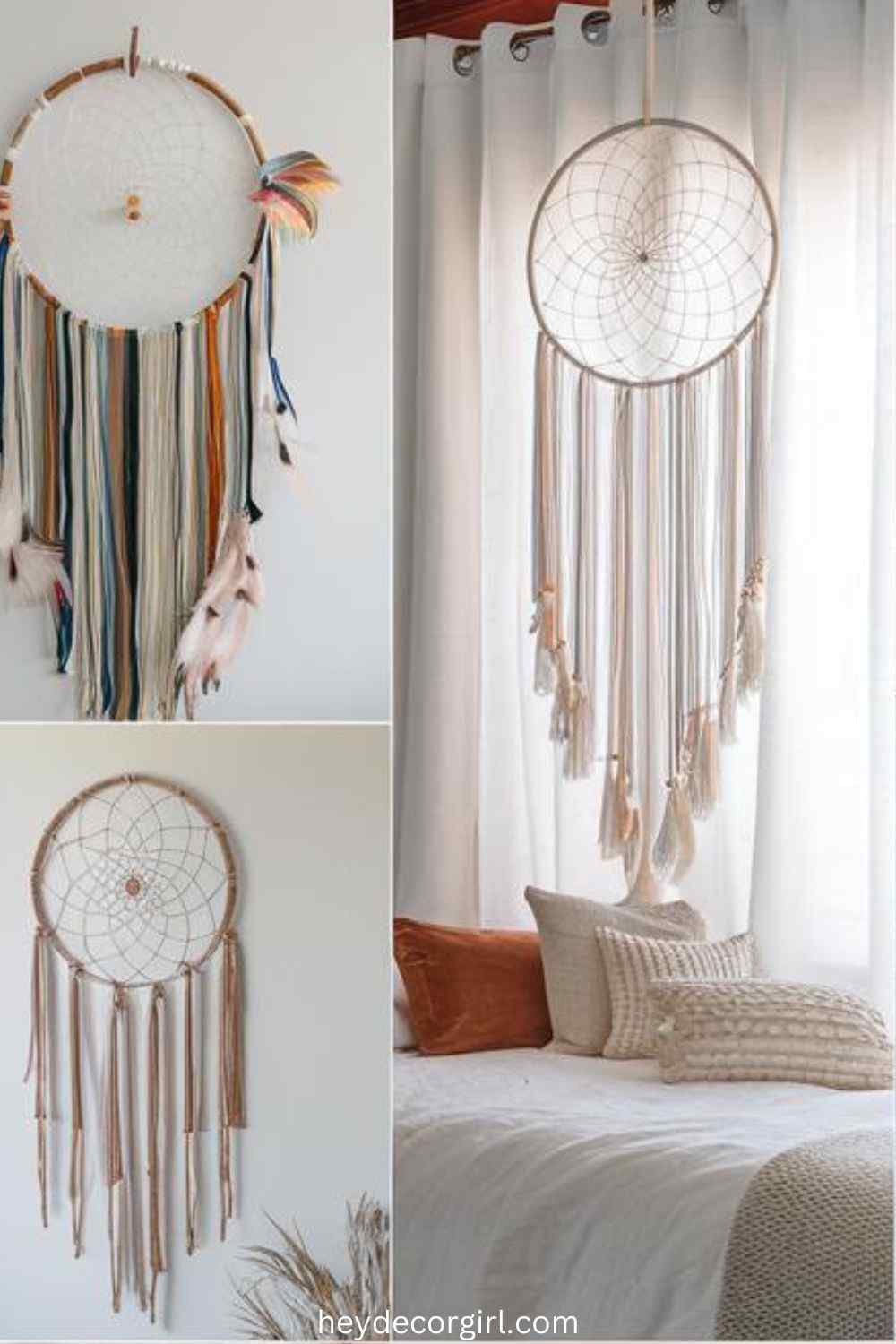
Classical and Contemporary Styles.
Dreamcatchers have a history that has its roots in the Native American culture, and they are both decorative as well as symbolic. They are also believed to keep off bad dreams from the sleeper. The following are the various styles and their contemporary modifications:
- Traditional Styles:
Classic Native American Design: It has a circular shape with a woven web or net in the middle of the circle that has a lot of feathers, beads, and occasionally gemstones. It is made using natural materials such as leather or sinew.
Symbolic Elements: It many times incorporates religious symbols and design, the spider web or the circle of unity and inclusion. - Modern Styles:
Boho-Chic Variations: is a combination of bright colors, tassels, and a mix of materials such as yarn and fabric. It is the more leisurely, light-hearted appearance of these dreamcatchers.
Minimalist Designs: More clean and modern with simpl,e more streamlined frames and we, bs and made of fewer materials.
Artistic Adaptations: Incorporates dreamcatchers of distinct shapes and novel materials, e.g., metallic frames or abstract patterns.
Placement Ideas
- Near windows: Suspend a dreamcatcher at a window with the ability to receive the light. This installation enables it to move and attract sunlight softly, producing a romantic and airy look.
- Above Headboards: A dreamcatcher should be hung over the headboard of a bed. This conventional location is in line with its purpose of safeguarding the sleeper and also offers a sense of decoration over the bed.
- Entryways: A dreamcatcher should be placed next to a room or house door. It may serve as a receiving and guarding image to the individuals going into the space.
- Within Nurseries: in a child’s room or nursery, a dreamcatcher should be hung to add a fun touch. Select light colors and smooth fabrics to suit the decor of the room.
- In Reading Nooks: Place a dreamcatcher into a comfortable reading nook/meditation spot. It has a soothing effect on the atmosphere.
DIY Tips and Customization
- Select Your Materials: Select your materials based on your style. To the traditional dreamcatchers, natural fibers such as sinew or leather are used. In case of the modern versions, try using yarn, fabric, or even metal rings.
- Frame and Web: Mold the frame with a material that is strong, such as a wire or a wooden hoop. In the case of the web, string or yarn is to be used, and it is possible to include beads or feathers to provide some sort of texture and visual appeal.
- Make It Personal: Add your own personal touches: Add colors and things that speak to you to your dream catcher. To make it special , add some symbols, charms, or even gemstones that have a meaning.
- Experiment with Sizes and Shapes: The classic and traditional dreamcatchers are round, but nowadays they can have different shapes like hearts or stars. Choose various sizes to fit your room.
- Add Lights: Add fairy lights or LED lights to the dreamcatcher to create the effect of glow. This gives it a touch of magic and makes it more decorative.
- Explore Hanging Varieties: Explore the way you hang your dreamcatcher. Macramé cords, decorative ribbons, or plain hooks will be used to attain the required appearance.
Exploring these styles, placement suggestions, and DIY tricks, you will be able to make or select a dreamcatcher that will contribute not only to the aesthetic appeal of your personal space but also to its personal significance.
5. Boho Wall Art Prints
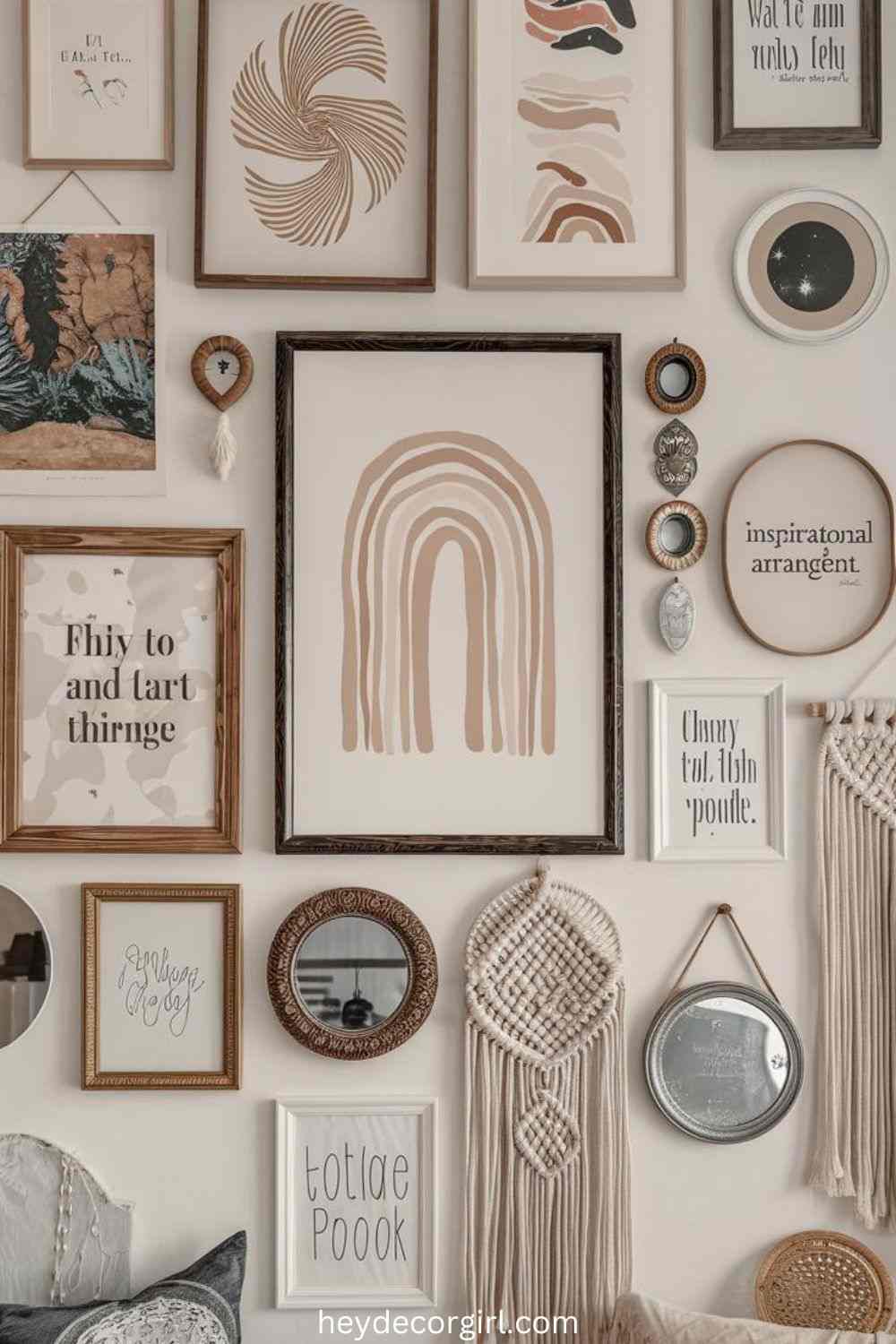
Popular Themes
The eclectic and free-spirited approach of bohemian decor is sometimes present in the printed wall art of Boho. Here are some popular themes:
- Nature: Prints with botanical illustrations, flower designs, or scenery. These paintings help to bring the outdoors indoors, and they commonly depict in detail drawings of leaves, plants, and flowers.
- Abstract: Abstract prints are bold in color, shape, and pattern. These may be minimalist designs to overwoven complications, which add a modern and artistic touch to the boho decor.
- Celestial: Artworks that portray the heavens, such as stars, the moon, and galaxies. The prints have a dreamy and mystical effect and are usually done in rich, deep colors.
- Ethnic and Tribal: Prints that have patterns and motifs that are based on different cultures and traditions. This can be in the form of tribal, manda, las, and geometric designs, giving your space a global feel.
- Motivational or philosophical quotes written in artistic fonts. These prints may be very personal and may be used as an everyday reminder.
Framing and Grouping Tips
- Mix and Match Frames: A mixture of frame styles and colors can be used to add to the eclectic boho appearance. It can be important to combine a ooden frame with metal frames or different finishes.
- Consistency in Themes: When combining different frames, the art prints should consistently share a similar theme or color scheme to create a sense of unity. This will assist in developing an integrated appearance even with the different frames.
- Vary Frame Sizes: Add visual interest to avoid repeating the same frame size and orientation (portrait and landscape). This style does not have a strict and monotonous look.
- Consider Matting: Add contrast to each print with the help of mats. It is also possible to use mats to frame lists of prints of various sizes and make them more harmonious.
Italians, How to Build a Unified Gallery Wall.
- Plan the Layout: Prior to hanging, it is important to put the prints on the floor before hanging or cut up pieces of paper and visualize how the layout should appear. Look at the balance and flow altogether so that the gallery wall appears to be purposeful, and not accidental.
- Establish an Element of Focal Point: Begin with a portrait print in the center or a large size to give the gallery wall a starting point. Get smaller prints to put around it and have a well-balanced and attractive display.
- Use Space Effectively: Squeeze a steady distance between frames so as to provide an orderly appearance. This distance is variable depending on the size of the prints as well as the wall space.
- Use Other Wall Decorations: Combine art prints with other decorations of the wall, including macramé hangings, mirrors, or woven baskets. This brings richness and diversity to the gallery wall.
- Match to Room Decor: This is to make sure that the color scheme and style of the prints match with the general room decor. This assists the gallery wall in blending with the rest of the space.
- Rotate Art: It is also possible to rotate the prints every now and then to give your gallery wall a new appearance. This enables you to use new prints or seasonal themes.
By examining these themes, framing ideas, and wall gallery planning, you will have a gorgeous and personalized boho wall art gallery that helps to add personality and beauty to your space.
6. Vintage Mirrors
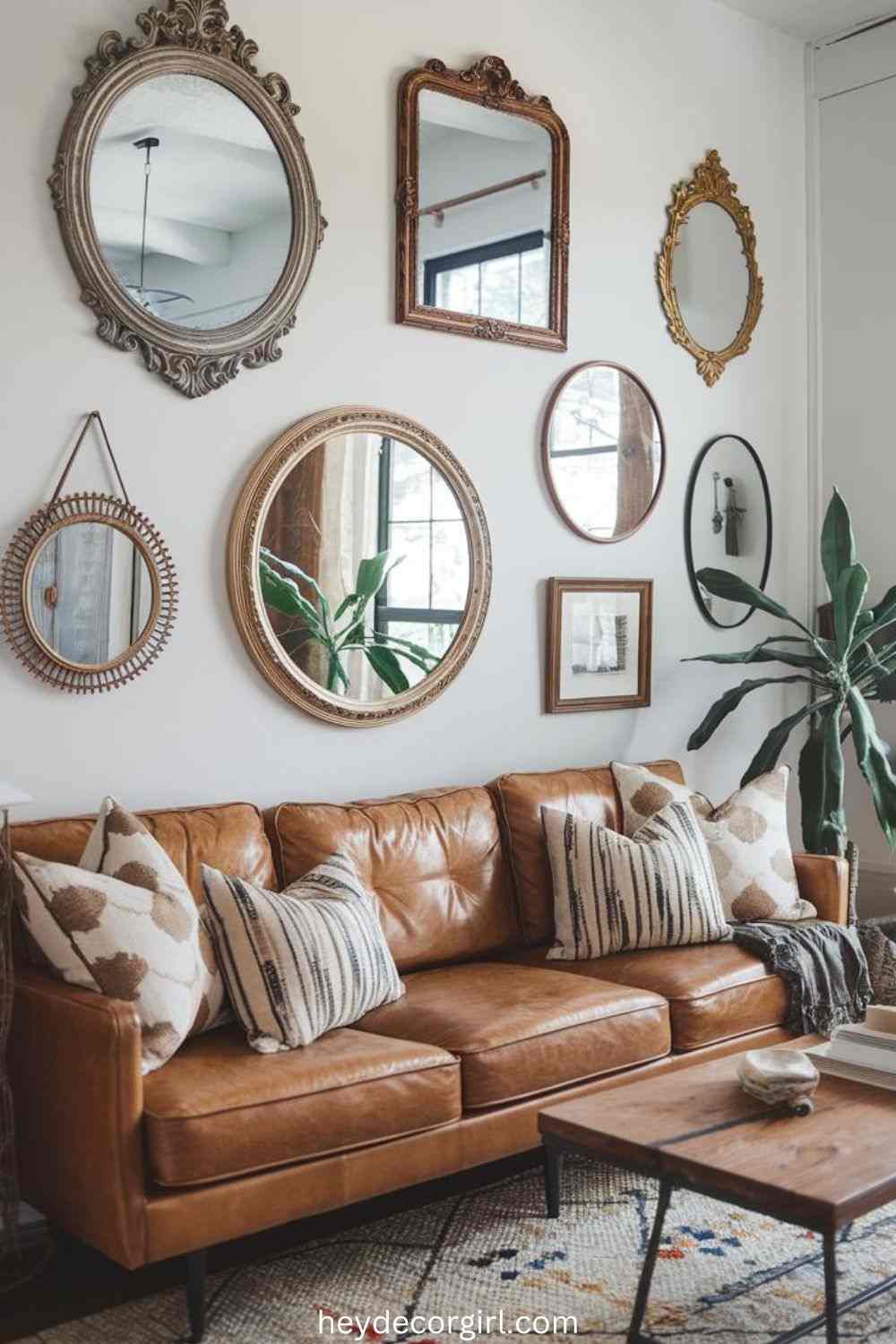
Types of Mirrors
There is a variety of vintage mirrors, which have a certain impact on boho decor:
- Sunburst Mirrors:
Form: Has the centre mirror and rays or spokes, radiating outwards. It is usually sun-inspired and may be subtle or dramatic.
Materials: Meals are usually metallic, wood, or wood-metal composite. A typical vintage appearance is on a gold or brass finish. - Ornate Frames:
Design: Detailed and elaborate frames, sometimes containing elaborate carvings, scrollwork, or floral patterns. The mirrors have a classical beauty and may be Baroque or Victorian.
Materials: Typically wood or resin, gilded or painted. The frames may be decorated with imitation gems or glass. - Framed Glass Mirrors:
Design: Basic glass mirrors with old-fashioned frames, and may have classic patterns or minimalistic designs.
Materials: Metal or wooden frames that have worn-out finishes, such as a distressed or antiqued appearance. - Architectural Mirrors:
Design: Mirrors that were designed after architectural features like arched windows, door panels, or shutters. They have a more organized and geometrical pattern.
Materials: Wood or metal, occasionally with a distressed or reclaimed finish.
Placement Tips
- Reflecting Natural Light:
Position: Mirrors should be placed across or close to windows so that they reflect natural light and enhance it. This position serves to light up the room and makes it look more open and airy.
Effect: Light reflection may improve the general atmosphere and render the space bigger and friendlier. - Creating Focal Points:
Location: A large old-fashioned mirror is hung on a central wall or over a fire to be an accent. It is appealing, and it gives the room a classy outlook.
Effect: A large mirror can be used to ground the decor of the room and act as a focal point. - Enhancing Small Spaces:
Location: Use mirrors in small rooms to create an illusion of a large room. The wall size of one can be expanded by a huge mirror, or a group of smaller mirrors can be used to visually expand the room.
Effect: Mirrors are able to give an illusion of increased space and depth to smaller spaces. - Above Furniture:
Location: Hang mirrors over furniture, including consoles, sideboards, or dressers. This gives a harmonious appearance, and the ornamentality of the furniture can be improved.
Effect: Mirrors on furniture would add visual appeal and may be used to match the design of the furniture underneath.
Blending with Other Decorative Elements.
- Gallery Wall Integration:
Combine: Incorporate old mirrors in the gallery wall with prints and photographs, among other wall decorations. Combine various styles and sizes with an eclectic style.
Effort: The mirrors are three-dimensional and reflect light, and the gallery wall to be more dynamic. - Layering with Textiles:
Combine: Have mirrors close to or over textile materials such as tapestries, macramé hangings, or patterned rugs. This gives it a texture and contrasts the reflective surfaces.
Effect: The reflective and tactile elements combine to add to the boho aesthetic and provide a rich visual experience. - In addition to Vintage Furniture:
Combine: Hang mirrors around or on old pieces of furniture such as an antique dresser, chests, or chairs. Make sure that the mirror design matches the furniture design.
Effect: The mirrors also add a vintage touch to the furniture and make up a unifying theme in the decor. - Using with Plants:
Combine: Have mirrors close to plants or an area where plants are present. The cogitations can emphasize the vegetation and form a fresh and vibrant effect.
Effect: The mirrors enhance the beauty of the natural plants and bring a sense of elegance to the green areas in your house.
Exploring these styles, placement tips, and combinations of decor helps to successfully implement the old vintage mirrors in your boho decor, both improving the style and functionality of your home.
7. Hand-Painted Art
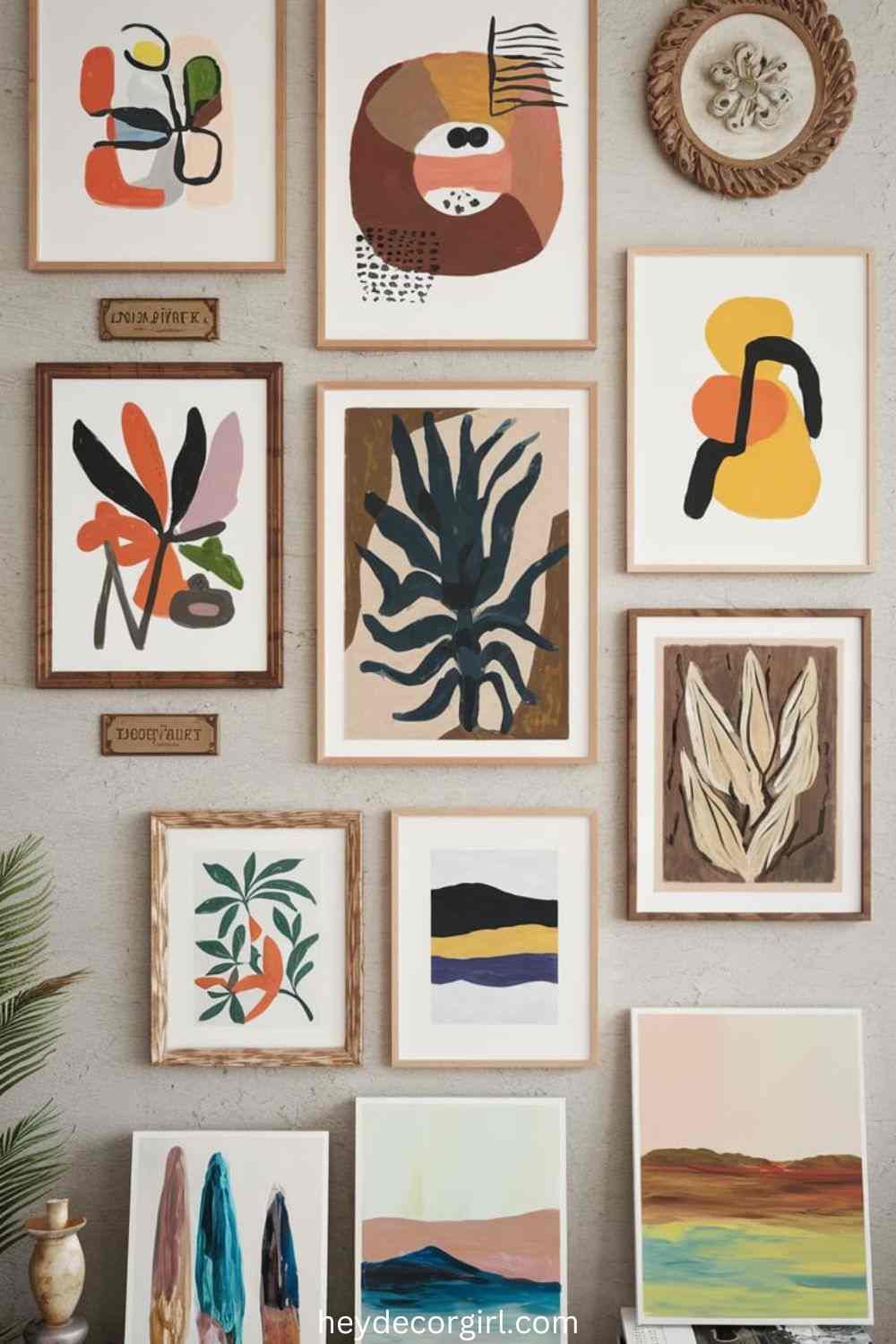
The use of Local Artists or DIY Paintings.
- Local Artists:
Support Local Talent: Artwork by local artists will help it look more personal, as well as help the community. Find local galleries, art fairs,s websites that feature local talent.
Unique Pieces: Meprobable Local art can be reflective of the local culture and styles and offer unique and original pieces that add character to your space. - DIY Paintings:
Personal Expression: You can make your own hand-painted works of art to express personal style and preferences. You can make self-customized paintings to suit your decor, colors, and themes.
Creative Projects: Have an art hobby or project and try various styles and styles. Self-made paintings are also an interesting and satisfying method of decorating the house.
Types of Art
- Abstract Art:
Design: Characters are vivid colors, shapes, and patterns without any particular subject. Abstract art may bring a contemporary and vibrant feel to your area.
Style: Minimalist to complex compositions, which leave a large scope of possibilities for interpretation and styles. - Botanical Art:
Design: Specializes in flowers, nature, and vegetation. The art of botany may be either realistic or stylized.
Style: Contains detailed illustrations, watercolor painting, or abstract versions of botanical subjects. - Figurative Art:
Design- Portrays human figures or animals in different styles, realistic and abstract. Figurative art will be able to introduce a personal and expressive touch to your decor.
Style: This involves portraits, studies of anima, ls, or dynamic figures in any artistic style. - Landscape Art:
Design: Shows scenes of nature, e,.g. mountains, forest, or the sea. Landscape art may be seen as a way of relaxing and being in touch with nature.
Style: Pure realism up to abstract image, a variety of moods and themes.
Display Methods
- In Frames:
Traditional Appearance: Hand-painted art is framed to give it a well-finished look. Select frathathich matches the artwork and the room decor in general.
Diversity of Frames: Add variety of frames, i.e., wood or metal, or colorful frames, to make the art more appealing to the eye. You may use mats to create contrast and depth. - Mounted on Wood:
Art on Wood Panels: Stick painting onto wooden panels to give it a rustic or modern appearance. The technique provides depth and richness to the piece.
DIY Mounting: DIY projects can be mounted on canvases or wood panels that are already cut down. The technique is more informal and flexible for the presentation. - Gallery Wall Arrangement:
Eclectic Wall: This is a gallery wall where a group of hand-painted pieces is displayed together. Combine various art forms and frames to have a nontraditional and vibrant appearance.
Planning: Organize the artworks in a well-balanced and aesthetic composition, with factors such as spacing and alignment. - Floating Frames:
Contemporary Style: Floating Frames: Floating frames featuring a minimalist touch are used to display the artwork. This presentation style provides the art with a contemporary and light look.
Effect: Floating frames may achieve a slight distance effect between the artwork and the wall, and improve the visual effect. - Art Ledges or Shelves:
Change of Direction: Paintings can be placed on art shelves or hung on the ledges of shelves to be displayed flexibly and easily changed. This is one way of overlaying the artwork and other decorations.
Different Heights: Alternate the level of art and incorporate some decorative features, such as plants or sculptures, to give the gallery a refined look.
With the help of local artists or self-made paintings, experimenting with a variety of forms of hand-painted art, and different forms of display, you can make your own design and make your room richer and more interesting.
8. Plant Walls
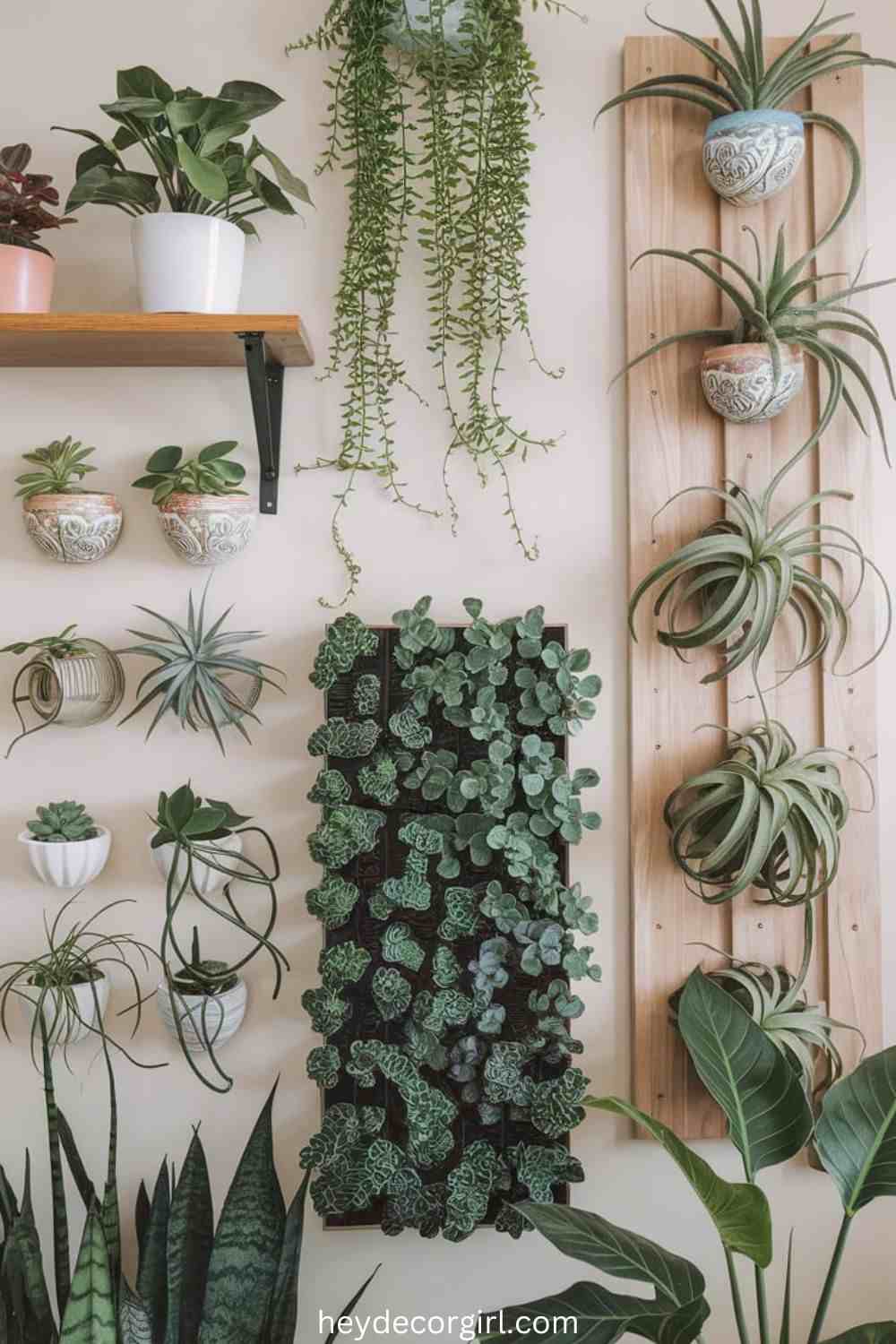
Types of Plants
- Succulents:
Form: Succulents low-maintenance plants whose leaves are fleshy and store water. They are available in different shapes and colors and are therefore good for forming visually attractive plant walls.
Types: Echeveria, String of Pearls, and Haworthia are typical common types of succulents that are used in plant walls. They may be laid out in numerous designs and designs. - Trailing Vines:
Design: Cascading vines, bringing the effect of lush vibrancy, to plant walls. They can develop on the ground and occupy the vacancy with their vegetation.
Types: Some of the most common trailing plants are Pothos, String of Hearts, and English Ivy. They can be used in hanging and planters mounted on the walls. - Fern Varieties:
Design: The ferns create a folly of a touch, a feathery texture to the walls of plants, and bring a natural appearance. They are ideal for the development of a thick, greenish look.
Types: Boston Fern, Maidenhair Fern, rn aBird’sNest Fernfern are good varieties to use on walls. - Air Plants:
Design: The air plants (Tillandsia) are exceptional plants as they do not need soil. They may be stuck on different surfaces, and it is common to find them exhibited in artistic shapes.
Types: Several species of air plants can be combined to provide a sculptural appearance.
Planters and shelves are mounted on the walls.
- Wall-Mounted Planters:
Types: Planters can be crafted of such materials as metal, ceramic, or reclaimed wood. They are available in different varieties such as pocket planters, hanging pots, and boxes mounted on the walls.
Design: Set out planters in a grid format, vertical garden, or more free form, free-form design. Make sure that they are well installed and can support the weight of the plants. - Shelves:
Types: Shelves may be simple floating shelves, tiered units, or custom-built units that are designed to accommodate several plants. Depending on the aesthetic, materials may include wood, metal, and so forth.
Design: Plant them in different heights and depths to make the look dynamic. Various shelf sizes and configurations should be used to bring visual appeal and suit the various types of plants. - Vertical Garden Systems:
Types: These systems will utilize a mixture of planters, irrigation systems, and supports to produce a complete green wall.
Design: These systems are designed to fit a large area either through pre-design or custom design, depending on the needs of the plant and space requirements.
Plant Care: Wall-Mounted Plants.
- Light Requirements:
Positioning: It is necessary to make sure that the plants are positioned in a place with sufficient light. Succulents and air plants usually found to like bright indirect light, whereas ferns and trailing vines can be found to withstand low levels of light.
Additional Lighting: Grow lights should be used in case of inadequate natural lighting, particularly where walls have to be covered with plants. - Watering:
Frequency: Water plants depending on their requirements and on the environment. The succulents require fewer watering sessions as opposed to ferns or twining vines.
Drainage: Planters mounted on the wall should be well-drained to avoid root rot. Place drainage holes in the planters or put gravel on the bottom. - Maintenance:
Pruning: It is always important to prune the trailing vines and other plants to make them healthy and manageable. Trim off all dead or withering leaves to keep things looking healthy and plants alive.
Cleaning: Leaves of the dust plants and cleaning up of the planters daily or weekly to avoid pests and the accumulation of dust. On bigger plant walls, it is better to spray or wipe down surfaces in a gentle manner. - Fertilization:
Feeding: It should be fed with proper fertilizers depending on the type of plant. The succulents do not need frequent feeding like the rest of the plants.
Application: Use the recommended dosage and frequency of application to have plants acquire the required nutrients without being overfertilized.
Through the inclusion of the diverse plants, the selection of the appropriate wall-mounted planters and shelves, and regarding the fundamental care rules, you can make a beautiful and blooming wall with plants and make your space very beautiful and cozy.
9. Textile Wall Art
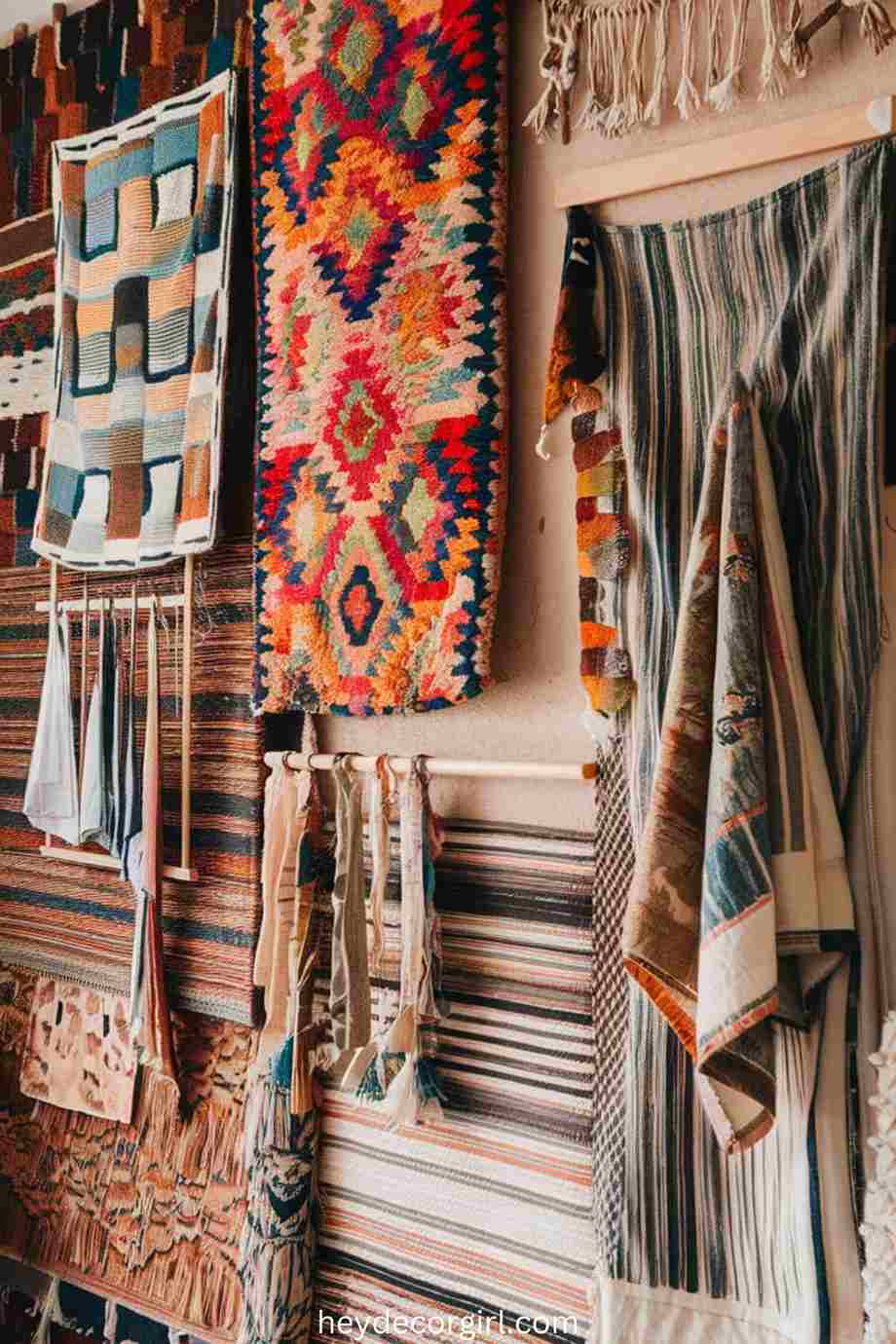
Wearing Fabrics such as Rugs and quilts.
- Rugs:
Decoration: Have patterned or woven rugs on the walls of your room to provide some texture and show some color. Big patterns or complicated designs of rugs can be focal points or statement pieces on your wall.
Styles: Depending on your decor style, you can use area rugs, kilims, and Persian rugs. Your walls can be made interesting and more detailed by the texture and patterns they have. - Quilts:
Design: Hang quilts on your walls so that you can add warm, homemade details to your decor. Quilts are characterized by elaborate designs and bright colors, which can be used to add to a boho or eclectic area.
Types: Tie in antique quilts, patchwork quilts, or use contemporary designs to create visual interest. Quilts are soft and warm and can be used in contrast with other elements of the walls.
Creative Hanging Methods
- With Dowels:
Design: It is a plain and fashionable hanging textile solution made of wooden dowels. Fold the cloth around the dowel in clips or sewn loops.
Procedure: Drill the dowel on wall-mounted hooks or brackets. This technique enables the exchange of textiles easily and provides a clean and minimalistic appearance. - Clip Frames:
Design: Hang textiles using clip frames or frame clips. It is an efficient and modern solution to framing fabric that does not require any conventional framing.
Step: Just cover the fabric on the frame and stick it to the wall. Small works or fabrics layered over each other should be presented in clip frames. - Tension Rods:
Design: Imprint tension rods on the wall to place textiles. It is an excellent technique for light clothes and can be modified easily.
Procedure: The tension rod should be placed between two wall brackets, or adhesive hooks should be used to hold the rod. Roll the fabric over the rod, and give it the required height. - Fabric Strips or Ropes:
Design: Provide textiles in the form of decorative stripes or ropes that are draped on the wall using decorative fabric strips or ropes. The approach introduces a fun and casual aspect to your decor.
Technique: Use the strips or ropes of fabric and fix them to a wall hook or nail, and hang the cloth in a natural style. The method is effective when dealing with bigger and lighter clothes. - Wall-Mounted Rails:
Design: Wall-mounted rails/curtain tracks to use the textile. This technique permits one to have several pieces and change them easily.
Procedure: Screw the rail or track to the wall and attach the fabric by means of hooks or clips. It is a perfect arrangement to display a line of fabrics or overlays.
Mixing Various Fabrics to create Texture.
- Layering Fabrics:
Design: Pin different materials of fabrics like rugs, quilts, and textiles to form the rich and textured creation of a wall art installation. The patterns and materials used are mixed, which brings depth and visual interest.
Procedure: Put the fabrics in cross layers or grid designs to demonstrate the different textures and designs of the fabrics. The method produces an active and united appearance. - Mixing Patterns:
Design: Cut fabrics with any type of textile pattern, i.e., geometric prints, floral, or abstract. This method produces a very lively and eclectic wall art exhibition.
Style: Choose the fabrics that match in terms of color and style and place them in a harmonious manner on the wall. One possible option is a unified color scheme or theme to bind the patterns. - Textural Contrasts:
Design: Alternate between textures, like smooth quilted clothes, woven carpets, and soft materials. The difference in the texture adds more texture to the wall art.
Technique: Place the fabrics of opposite textures side by side to exhibit the individual characteristics. This method gives the wall depth and attractiveness. - Color Coordination:
Design: Coordinate the color scheme by using various fabrics. The use of complementary or matching colors of fabrics to produce a balanced wall art show.
Technique: Create a color gradient or a color pattern of the textiles to highlight the color scheme. This will also give a unified and smooth aesthetic.
Through a combination of textiles such as rugs and quilts, experimenting with hanging techniques, and mixing fabrics, you can achieve something unique and highly attractive as a textile wall art and improve the style and atmosphere of your space.
10. Ethnic Prints and Patterns
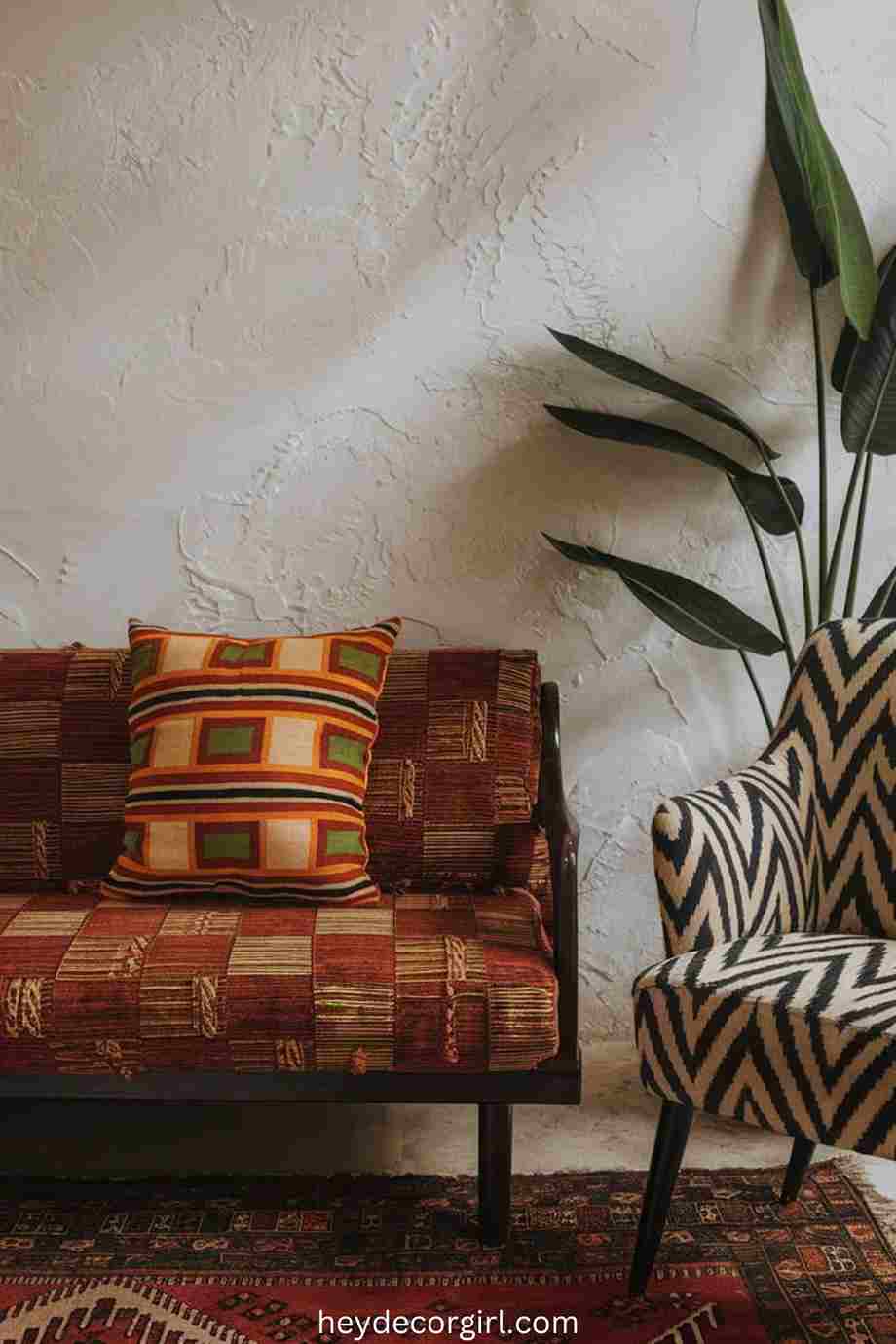
Incorporating Prints
Tribal Prints:
- Design: Tribal print designs typically incorporate geometric-shaped lineal patterns in varying sizes and complex styles inspired by indigenous forms of art from around the world. Collectively, these prints will bring a high-revving and cultural aesthetic to your decor.
- Examples: African kente cloth, Native American designs, Polynesian symbols. Search for fabrics or wallpapers that feature these traditional patterns.
Ikat Patterns:
- Design:nThe ikat design is a dyeing technique, the threads are dyed before they are woven, and this produces a characteristic blurred pattern. It is with these designs, which are often brightly colored abstractions.
- Examples: Indonesian ikat fabrics, Central Asian ikat motifs, and contemporary interpretations of the ancient form. These ikat prints are great to use when you want a little more layers and texture in your home decor.
Other Ethnic Patterns:
- Design: There are plenty of ethnic patterns to experience, including Persian rugs, Indian block prints, and Mexican Talavera tiles. They each offer a bit different cultural slant and visual appeal.
- Examples: Persian florals, Indian paisley prints, and Mexican geometric tile designs. Bring these into your home for a sense of culture and ethnicity.
Use of Fabric or Wallpaper
Fabric:
- TYPES: Designate ethnic-printed textiles for cushions, throws, curtains, ais, and upholstered furniture. Patterns of tribal or ikat prints can attract attention and make a bold statement.
- Design: Select cloth that matches the colors already in your room. Large-scale prints may be used on accent pieces, or smaller prints for those who want the print subtler.
Wallpaper:
- Styles: Ethnic-printed wallpaper can cover a whole wall or serve as an accent wall. Search for wallpapers featuring tribal or ikat, or other ethnic designs to make a bold statement in your space.
- Design: Choose wallpapers that match the overall design of your room. Use solid colors or coordinating prints to complement patterned wallpaper for a cohesive look.
How to Balance Decor When Using Two Patterns
Color Coordination:
- Harmonizing: Pick ethnic prints that go with the colors you already have. Pair bold, colorful prints with neutrals and solids in other furnishings.
- Accent hues: Incorporate shades from the ethnic prints you applied earlier to make a selection for accessories such as cushions, rug., This makes for a cohesive look.
Mixing Patterns:
- Scale and Proportion: Mix with other patterns in varying scales and proportions. For example, combine a large tribal print with smaller geometric or solid prints.
- Pattern Harmony: Make sure that the patterns share a commonthreadd, such as matching colors or styles, to prevent looking too overdone. Scroll Prints mixing prints from the same culture can tie a look together.
Focus Areas:
- Feature Walls: Use ethnic printed wallpaper or fabric on a feature wall to make it the central focus. This method gives prominence to the print as opposed to filling up space.
- Accent Cushions: Introduce ethnic designs on smaller decorative pieces such as cushions, llampshadesand rugs for a subtle splash of pattern that won’t overwhelm the room.
Texture and Material:
- Balance: Mix ethnic prints with other textures and materials to keep the outfit interesting. For instance, if you’re going to add a printed fabric, consider mixing it with something textured like a throw and cushion or a patterned rug among smooth-block color furniture.
- Layering: Layer in ethnic prints with natural fibers and/or metal to make a clean, cohesive decorating style.
Simplicity and Focus:
- “Less is more”: When working with large ethnic prints, regardless of being boldg,o simple and plain on everything else so that you let the patterns do all the work. Don’t overwhelm the space with a wide variety of competing designs.
- Strategic Positioning: Position ethnic prints where they can have the most impact, like in a statement wall or on an important piece of furniture, for a well-orchestrated and non-random aesthetic.
- Add ethnic prints and pictures with some fabric or wallpaper, adding these tips for balancing out patterns with other aspects of your decor, or you’ll create a room filled with culture and unique visual appeal.
FAQ
Q1. What is boho decor?
Boho decor, short for bohemian, is an aesthetic that’s defined by its colorful hue, pattern clashing, and faultless blend of textures. With a hodgepodge of decor that frequently combines finds from around the world, flea market treasures, and organic materials, it creates an easy-going space with artistic flair.
Q2. How do I create a boho look on my walls?
To get a boho style, combine wall decorative objects here and there like macramé wall hangings, tapestries, woven baskets, ddreamcatchers,and ethnic prints. Mix up textures and designs, and incorporate earthy and antique elements for an overall bohemian feel.
Q3. What are some popular boho wall decor products?
Best-selling boho wall decor products include macrame wall hangings, bohemian wall tapestries, woven baskets, dreamcatchers, plant walls, ethnic prints, vintage mirrors, hand-painte art, and fabric wall art.
Q4. How do I use macramé with my wall decor?
Macramé can be made into wall hangings, plant hangers, and tapestries. Hang macramé above a bed, on a gallery,y wall, or as the guest of honor in a room. Add color and texture to get that boho vibe.
Q5. How to incorporate boho tapestries into your wall decorations?
The bohtapestrypestsry can be used as a bed covering, room divider, tablecloth, or even a wall decoration. Trendy designs are mandalas and geometric shapes. Cover your walls with these decorative hanging tapestries to add a little design and good vibes to your home!
Q6. How to decorate with woven baskets?
Woven baskets can behung in shapess and sizes on the wall. Lay them out in a grid pattern; use them as points of visual interest; or mix different textures. They are pretty and functional storage.
Q7. How can you use dreamcatchers as wall decor unusually and creatively?
Dreamcatchers look great hanging near a window, above your bed, or as part of a gallery wall. Whether traditional or modern, and however you choose to makeover these pieces with your own twist — think DIY paint jobs, new knobs, and more — adding a dresser (and/or sideboards) is always going to add character.
Q8. How can I use plant walls in my decor?
You can use different types of plants to build plant walls, such as succulents or trailing vines. Wall mount planters or shelves, and make sure you take care of the plants with light.
Q9. Can you give some tips on mixing ethnic prints/ patterns?
Scale patterning and proportion when combining ethnic prints. Use coordinated color to pull it all together and balance patterns with solid colors or neutrals. Just be sure to provide a space for the prints, such as feature walls or accent pieces down the road.
Q10. How do I incorporate vintage mirrors into a boho decor plan?
Decorative antique mirrors, like ornately detailed or sunburst frames, can reflect light and add interest. Pair mirrors with other pieces of decor that make it more bohemian and the room feel deeper.