![Hey Decor Girl [Latest Trending Decor Design Ideas]](https://heydecorgirl.com/wordpress/wp-content/uploads/2024/08/Heygirldecor-Logo.png)
Stunning Small Backyard Landscaping Ideas
1. Vertical Gardens
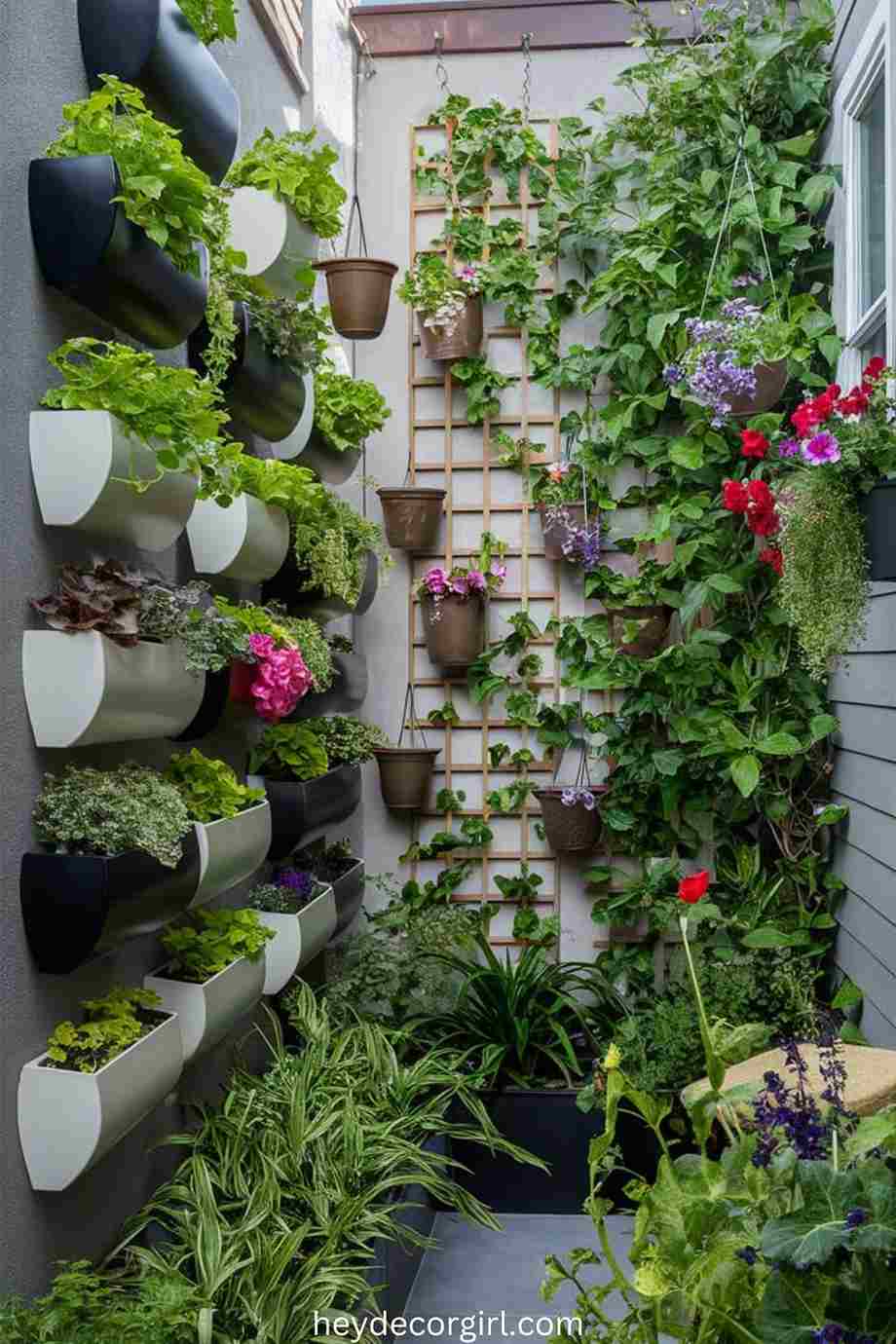
Wall-Mounted Planters
- Description: Wall-mounted planters are pots that simply match your walls or fences, enabling you to plant vertically. They are used in different styles such as pockets, shelves, and modular systems.
- Advantages: The planters do not take up a lot of space and hence are ideal in small backyards. They are also aesthetically pleasing as a means of displaying a range of plants, both herbs and succulents, and flowering plants.
Hanging Pots
- Description: Hanging pots are suspended on hooks, brackets, or trellises , frequently via chains or ropes. A variety of plants can be cultivated in the m , such as flowers, herbs, and even small vegetable varieties.
- Pros: Hanging pots would clear up space on the ground and would produce a green-layered appearance. They can also be used to create vertical interest and can be installed at varying heights to add visual interest in your backyard.
Trellises
- Definition: Trellises are the vertical structures that aid in the growth of climbing plants, including vines and creeping flowers. They may be constructed of wood or metal, or other materials, and may be built into a wall or can be free-standing.
- Advantages: Trellises use the vertical space and hence the plants are able to grow in an upward manner instead of outwards. They provide a texture and depth to your garden in addition to providing privacy screens or decor.
Overall Benefits
- Space-Saving: Vertical gardens are an effective utilization of limited ground space, which enables more plants to be produced in a small space.
- Aesthetic Appeal: They are visual interests and can make ordinary walls or fences a green area. The stratification of various plant heights makes your garden deep and attractive.
- More Plant Variety: Vertical space allows you to raise a variety of different plants that would not have easily fit in a typical garden bed or pot.
As a way of making your small backyard more functional and more attractive, adding vertical gardens to your design will considerably improve your outdoor area.
2. Raised Garden Beds
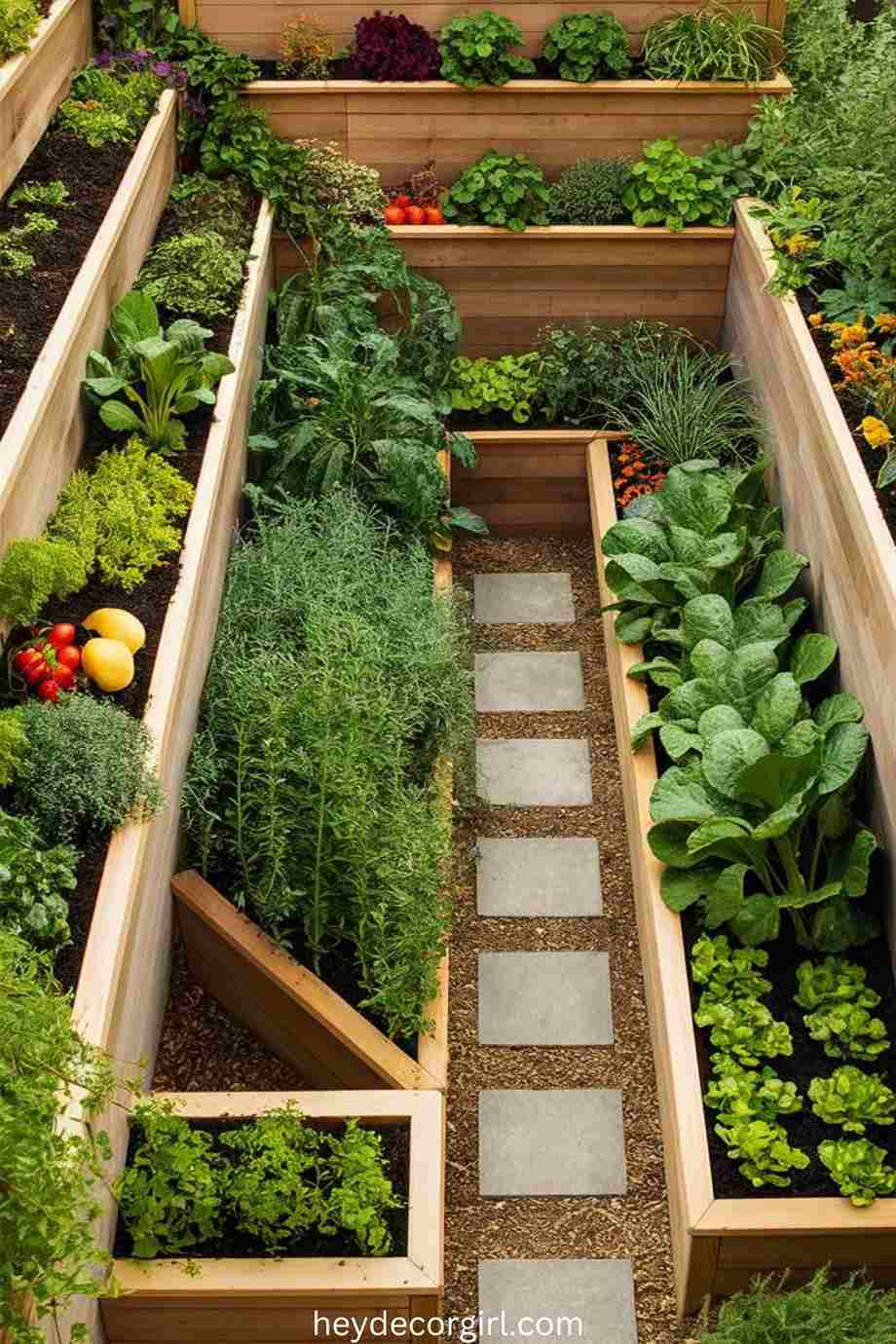
Design Ideas for Compact Garden Beds
- Tiered Beds: In stack garden beds, planting levels are arranged vertically to maximize the available space and form a beautiful garden. The different tiers can be devoted to various plants, and therefore they are easily controlled and harvested.
- Narrow Beds: Choose narrow, long beds to be placed along the sides of your backyard or garden. They are perfect beds in which to cultivate a wide range of herbs and vegetables, and they are easily accessible on either side.
- Corner Beds: Corner spaces may be used by placing L-shaped or U-shaped raised beds. These designs utilize space that is usually wasted on the corner and can be constructed to fit into the design of your backyard.
- Modular Beds: Modular garden bed systems are interlocking systems of beds which can be designed and extended on demand. They are ideal where there is a limited space and can be moved or included as you need to restructure your gardening.
Advantages for Growing Herbs and Vegetables in Small Spaces
- Better Soil Quality: Raised beds permit a higher control over the quality of soil and drainage. They can be filled with a quality soil mixture, and this is especially useful in planting herbs and vegetables in a small area.
- Simpler to Maintain: Raised beds are easier to maintain because their high height means that they do not require bending and kneeling. This is particularly useful in small back yards where there may not be much room to walk and work.
- Long Growing Season: Raised beds heat up quicker during the spring and drain better, and this may result in a long growing season and healthier plants. This benefits the cultivation of all types of herbs and vegetables all year round.
Tips for Choosing Materials and Placement
- Materials: Select your building materials carefully and use non-toxic, long-lasting materials (cedar, redwood, composite wood) to build your raised beds. Do not use pressure-treated wood because it might have chemicals that are likely to be washed into soil. It can also be done using metal and stone in a more modern appearance.
- Placement: Place raised beds in an area that receives a lot of sunlight, preferably 6-8 hours a day to maximize the growth of your plants. You can also keep a bed close to your kitchen so that you can have easy access to fresh herbs and vegetables.
- Accessibility: The raised beds should be easily accessible on all sides so that planting, watering, and harvesting can be easy. Prepare paths or stepping stones between beds to be able to move around your small backyard.
- Height: Choose the height of the raised beds to use, depending on what you would like to do in a garden. Most vegetables and herbs need a height of 12-24 inches, which is normally good enough to access and manage the soil easily.
Raised garden beds in your small backyard can make a great difference in your herbs and vegetable growing capabilities and can help you effectively use the available space, as well as create a functional and appealing garden space.
3. Container Gardens
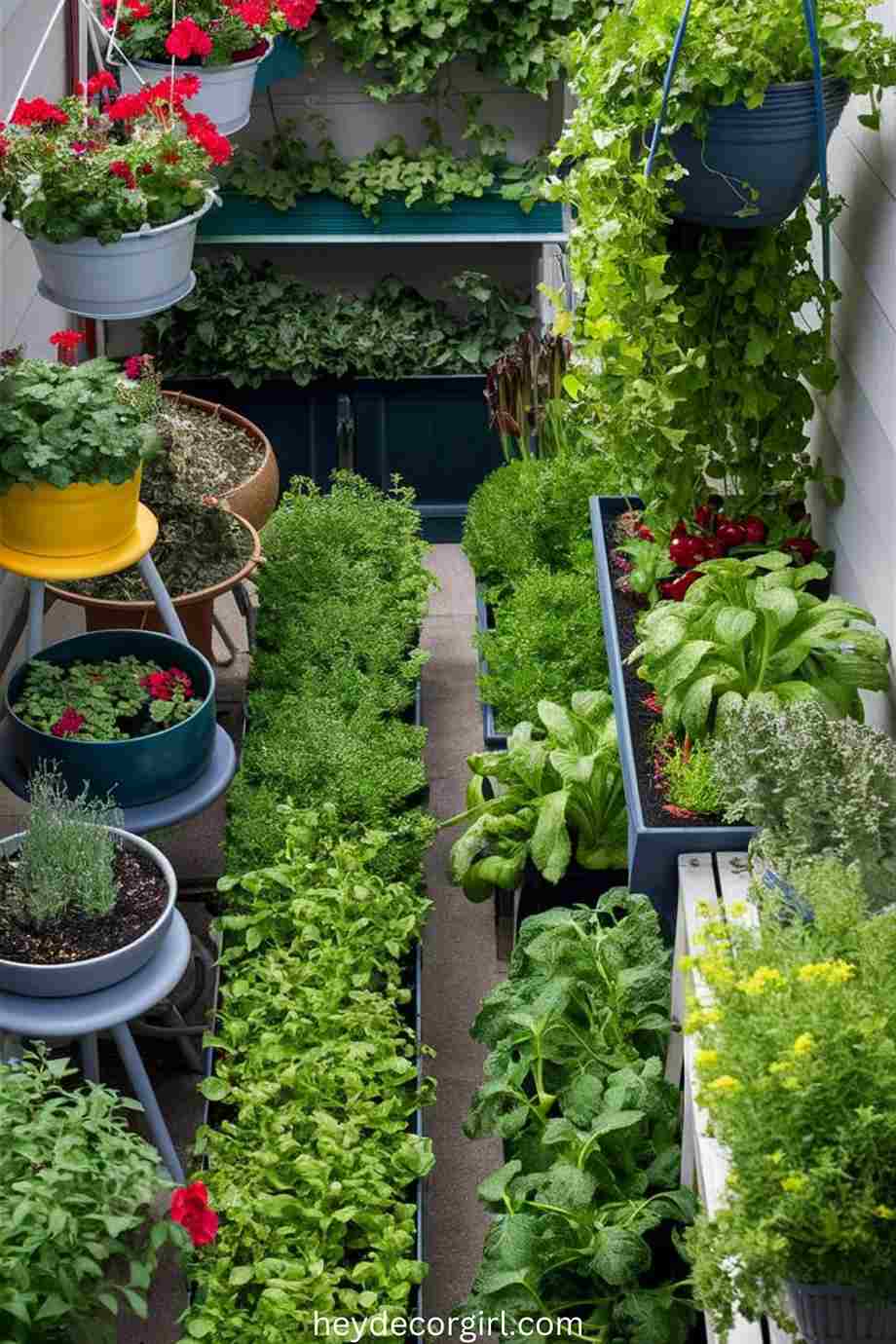
Variety of Containers
- Pots: Round or square pots that are constructed using materials like clay, plastic, or ceramic. They are available in different sizes and can be used to grow different types of plants. Use pots that are well-drained so that they do not waterlog.
- Troughs: Deep veinings that are usually used to plant herbs, succulents, or small vegetables. They may be wood-made, metal-made, or concrete-based and are best suited to a linear display.
- Hanging Baskets: Containers that are hung off of hooks or brackets and are lined with trailing or cascading plants. They give it vertical interest and can be utilized to cultivate flowers, herbs, or small vegetables.
Tips for Arranging Containers to Maximize Space
- Group Containers: Place containers in groups and not singly. Bunching containers will give it a unified appearance and simplify the process of watering and taking care of your plants. Plant stands or shelves can be used to bring about height and dimension.
- Make use of Vertical Space: Hanging baskets or wall-mounted planters can be used to release ground space. Vertical arrangements will not only save space, but also provide ornament to your garden.
- Mix and Match Sizes: Mix up the shapes and sizes of containers to come up with an interesting and dynamic layout of your garden. Use big containers as accents and fillers with smaller containers.
- Think Mobility: Use wheels to move your containers around or lightweight materials so that you can easily rearrange and reconfigure your garden when necessary. You can change your garden design with the changing season or requirements with this flexibility.
Examples of Plants that Thrive in Containers
- Herbs: Herbs are ideal to plant in the container garden; basil, parsley, cilantro, and mint. They possess small root systems, nd they grow in smaller areas.
- Flowers: Petunias, geraniums, and marigolds would be excellent flowers to add color and beauty to the containers. They come in all kinds of colors, and they may be in the shop during the growing season.
- Vegetables: Cherry tomatoes, radishes, and lettuce are good vegetables in containers. Select small or miniature types that are suitable for planting in containers to guarantee successful growth.
- Succulents: Aloe, jade plants, and echeveria are well-suited to containers because they do not need much water, and they do not take up too much space. They give your garden a fashionable and classy look.
The use of container gardens in your small backyard will enable you to cultivate a large number of plants with minimal use of space. After choosing the appropriate containers and strategically placing them, you can come up with an attractive and practical garden that will beautify your outdoor environment..
4. Garden Pathways
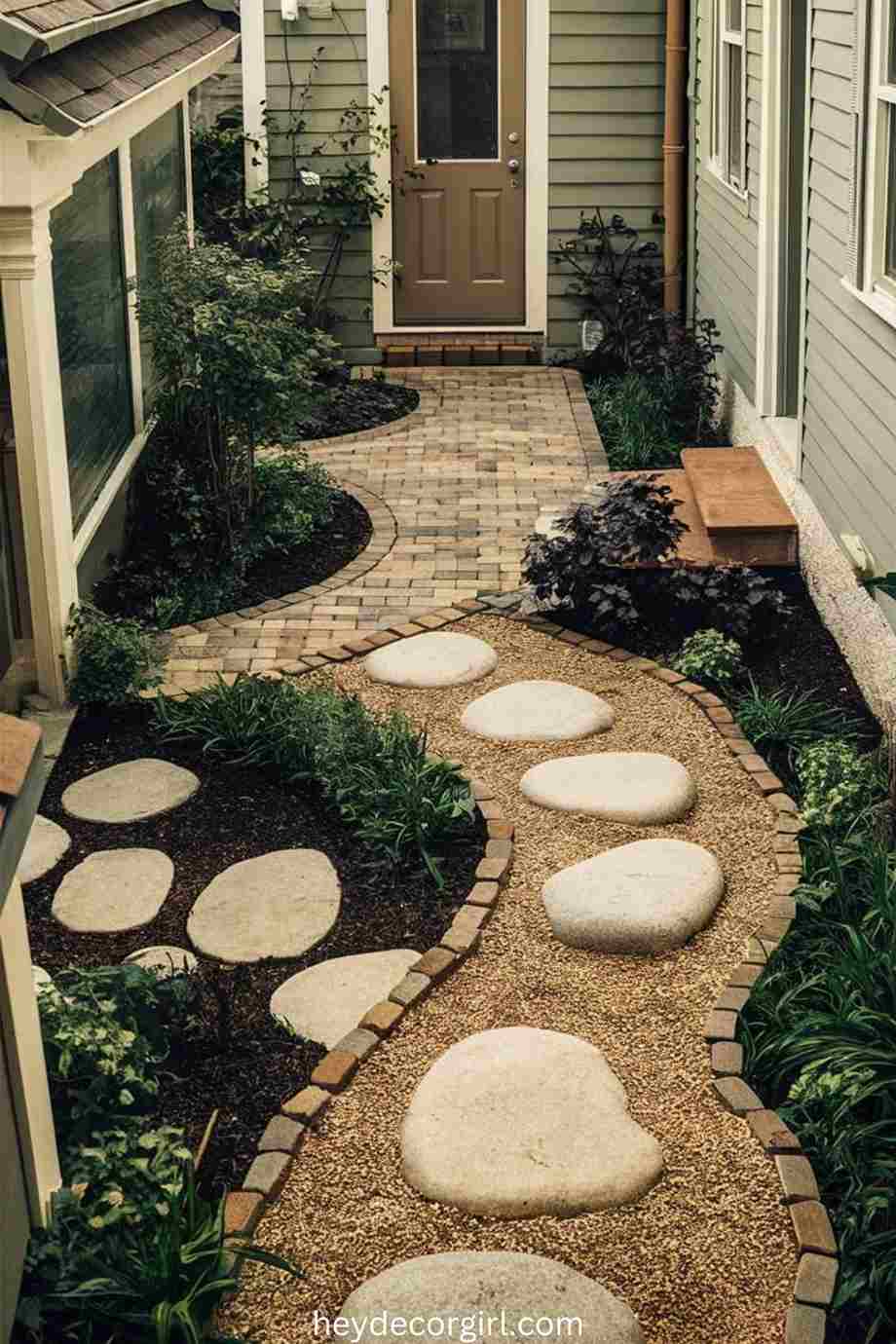
Ideas for Creating Charming Paths with Pavers or Gravel
- Paver Paths: Check out several types of pavers (cobblestones, flagstone, or concrete pavers) to make a durable and attractive path. You can use them in straight lines or designs such as herringbone or basket weave in order to make them add personality and shape to your backyard.
- Gravel Paths: Use gravel paths to give it a natural appearance, which is more casual. Plant landscaping cloth below to thwart weeds and select the type of gravel, such as pea gravel or river rock, that matches your style of garden. The gravel can be contained with edging material such as metal or wood.
- Stepping Stones: Lay down slabs of stone that are very large and flat, with a space between them, to make a natural and friendly walkway. They may also be planted in gravel or be flanked with ground cover plants to create a smooth appearance.
How Pathways Can Define Different Areas in a Small Backyard
- Zoning: Use pathways to establish different zones of your backyard, e.g, to distinguish dining areas and garden beds or play areas. It will assist in the organization of the space and make it more purposeful and practical.
- Access Routes: Design routes which allow easy access between major parts of the garden, e.g., between the house and the garden, seating, or outdoor elements. This improves usability and the circulation of the space.
- Focal Areas: As an element of aesthetic design, bring out focal points like a small fountain, sculpture, or a comfortable sitting area with paths that lead visitors to these elements. This attracts some attention to certain details and creates a visual appeal.
Incorporating Curves and Shapes to Enhance Visual Interest
- Curved Routes: Add some curves and wavy lines to your routes so that they look more organic and natural. Curvy shapes may also help to make a very small area look bigger and more action-filled, since they guide the eye through the garden.
- Geometric Shapes: Geometric shapes such as circles, squares, or hexagons can be used to create a structured and modern look. Geometric designs may introduce some order and elegance into your garden.
- Mixed Materials: Use various materials, e.g., pavers and gravel, to form visual appeal patterns or transitions between various parts of the garden. Blending is also another way of providing texture and depth to your pathways.
The functionality and the beauty of your small backyard can be improved by carefully planning and laying out garden paths. Pathways are used as a way of defining various spaces, directing traffic, and giving beauty by using forms and materials creatively.
5. Small Water Features
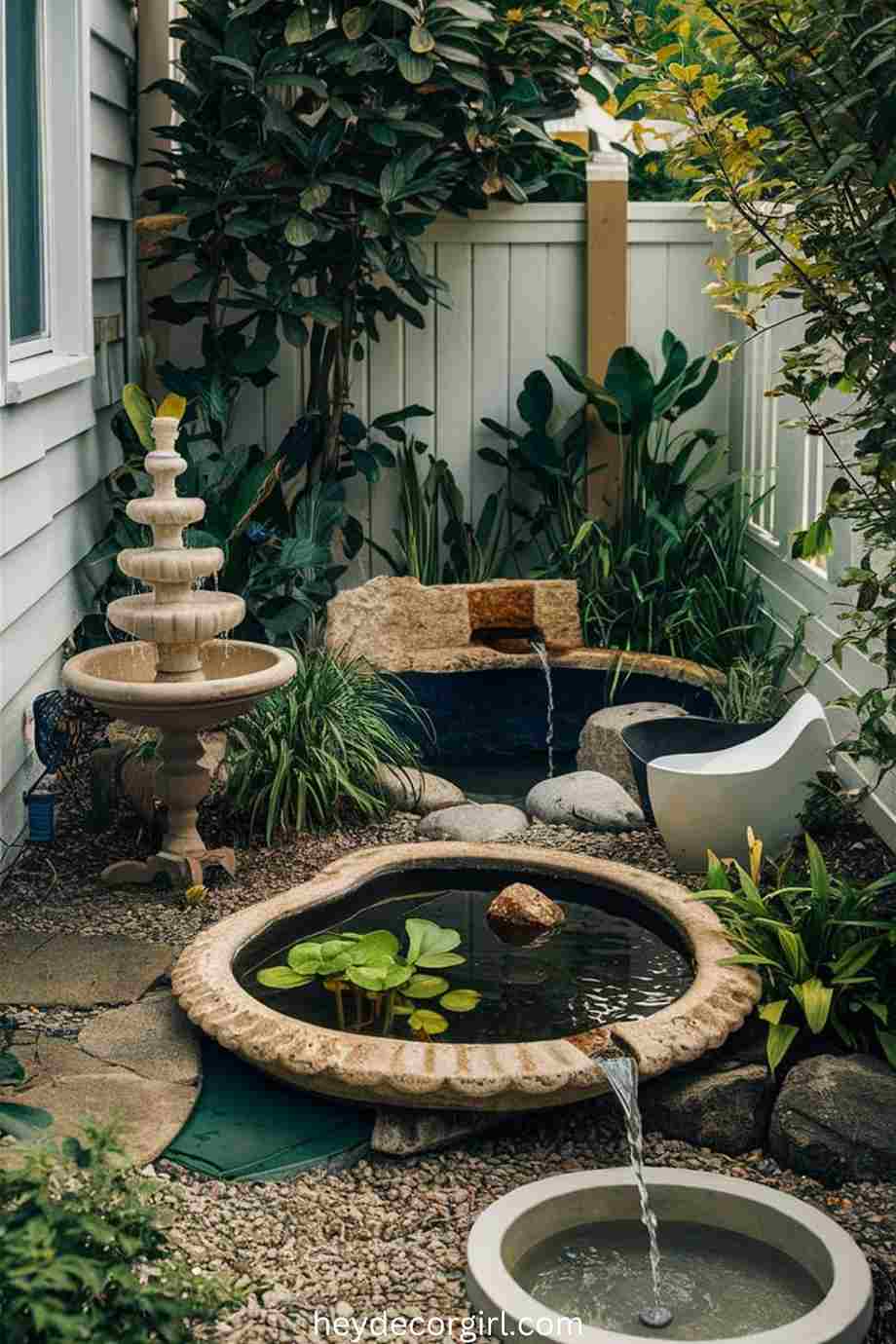
Options for Mini Fountains, Ponds, or Waterfalls
- Mini Fountains: Small, ornamental fountains that can be installed in small areas. Tabletop fountains, tiered fountains, or wall-mounted fountains can be used. They are usually designed beautifully with water flowing down and may be constructed using such materials as ceramic, stone, or metal.
- Mini Ponds: These are small, ready-made pond liners or containers could be set up in small spaces. Mini ponds may be supplemented with water plants such as water lilies or small fish, and may have such elements as miniature waterfalls or stones.
- Micro Waterfalls: Small falls of water which may be used in the incorporation into garden walls or rockeries. These falls are also made to fit into narrow areas and, in most cases, have a small basin or reservoir where the water can be collected and made to go back upstream.
Tips for Maintaining Water Features in Limited Space
- Size Appropriateness: Select water features that match the size of your backyard. Instead of using large designs, which might take up more space, use smaller ones, which are smaller and reduced by a smaller margin.
- Water Quality: It is essential to inspect and maintain the quality of water to avoid such problems as the growth of algae and debris. Filters, pumps, and other water treatments should be used to maintain clean and clear water.
- Placement and Access: water features should be located in areas where there is easy access maintenance. The use of a small pump with a filter should be considered so that the cleaning will not be necessary regularly , and the maintenance becomes less laborious.
- Winter Care: Get ready for the seasonal changes by winterizing the water feature. This can include emptying the water, or cloth-wrapping the feature, or installing a heater in case you have fish or plants that cannot survive freezing temperatures.
How to Incorporate Water Features into the Overall Design
- Co-ordination with Landscaping: Locate water features in a coordinated way with other things in the garden. A mini pond close to a flower bed or a fountain close to a sitting area are just some examples of how to make the environment coherent and relaxing.
- Visual Focal Points: Water features are to be used as focal points in the garden design. Place them in the strategic positions to create attention and visual interest. A fountain or waterfall should be placed well to form the centre of your small backyard.
- Complementary Elements: Pair water features that have complementary components like surrounding plants, stones, or lighting. Examples are planting water plants at a small pond or lighting up a small waterfall at night.
- Sound and Atmosphere: Take into account the sound of the water feature and how it will improve the nature of your garden. Select the features with soft soothing sounds that contribute to the general impression of your outdoor area.
Having mini water features in your backyard will help provide a feeling of serenity and aestheticism to the garden experience. When choosing the appropriate features and keeping them in good condition, you will be able to make your small space a wonderful and useful water feature.
6. Creative Fencing
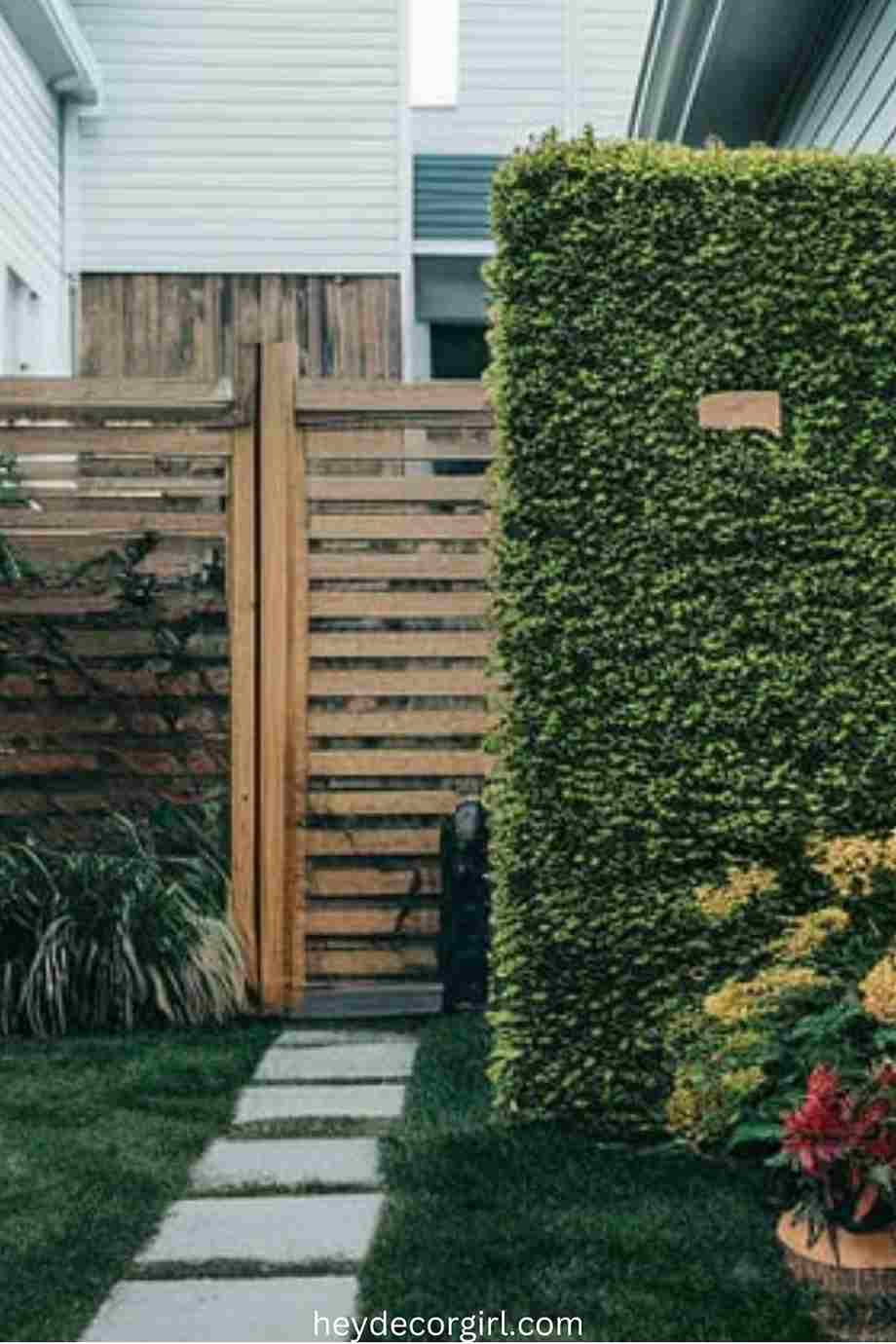
Use of Trellises, Lattice Panels, and Living Fences
- Trellises: These are vertical structures that are used to support climbing plants, e.g., flowers or vines. Trellises may be employed as screens to the garden, or as decoration, and introduce some interest vertically, with a partially open obstacle.
- Lattice Panels: Ornamental panels that are in the shape of an open grid that may be utilized to either form fences or privacy screens. The lattice panels may be implemented to support climbing plants or be used as an independent, modern, stylish fencing system.
- Living Fences: Fences that are made through the plantings or shrubs that are growing closely together to make a natural barrier. Living fences are green and natural in appearance and may be utilized to form privacy and also merge well with the garden
Ideas for Adding Privacy and Vertical Interest
- Vertical Gardens: A vertical garden is a combination of trellises, lattice panels, and elements of a vertical garden to make a fence that is both functional and adds greenery to a yard. Plant vines or cascading flowers the fence to improve the privacy and beauty of the fence.
- Privacy Screens: Tall, narrow, dense foliage or ornamental items can be used to screen out the backyard to create intimate spaces. Use plants of different heights and textures to make the appearance more interesting.
- Decorative Features: Use ornaments like hanging planters, fairy lights , or decorative screens to trellises and lattice panels. These factors have the potential of rendering the fencing more appealing as well as bringing in added functionality.
Materials and Styles That Suit Small Backyards
- Materials:
- Wood: Traditional and versatile, wood may be utilized as trellises, lattice panels, and living fences. It has the freedom to be painted or stained to fit your garden style and can be adapted to all types of design.
- Metal: Metal trellises and lattice panels are sleek and modern, and are made of durable metal and may have complex designs. They give a modern twist, and they can fit in small rooms since they are narrow-bodied.
- Composite: Composite fencing is constructed using a mixture of materials, which gives it the appearance of wooden fencing with extra durability and low maintenance. It is an effective option in contemporary gardens.
- Bamboo: Bamboo fencing is a natural and eco-friendly alternative, and it can be incorporated into a variety of styles, including traditional and contemporary. It is light and can be applied either as a screen or as decoration
Styles:
- Minimalist: Clean and simple lines and emphasis on functionality. They are perfect in the contemporary small backyards, with metal or composite material in simple designs.
- Rustic: Trellises and lattice panels are made of wood with a natural finish. Ideal to make a quaint, cottage impression in a small garden.
- Modern: Clean lines made of metal and composite materials, and may have geometric designs or built-in lighting to make it look modern.
Adding some of their innovative fencing solutions to your small backyard space can make it more private and entertaining to look at. Using the appropriate materials and designs can bring you a working and beautiful boundary that can fit with the whole aesthetic of your garden.
7. Multi-Functional Furniture
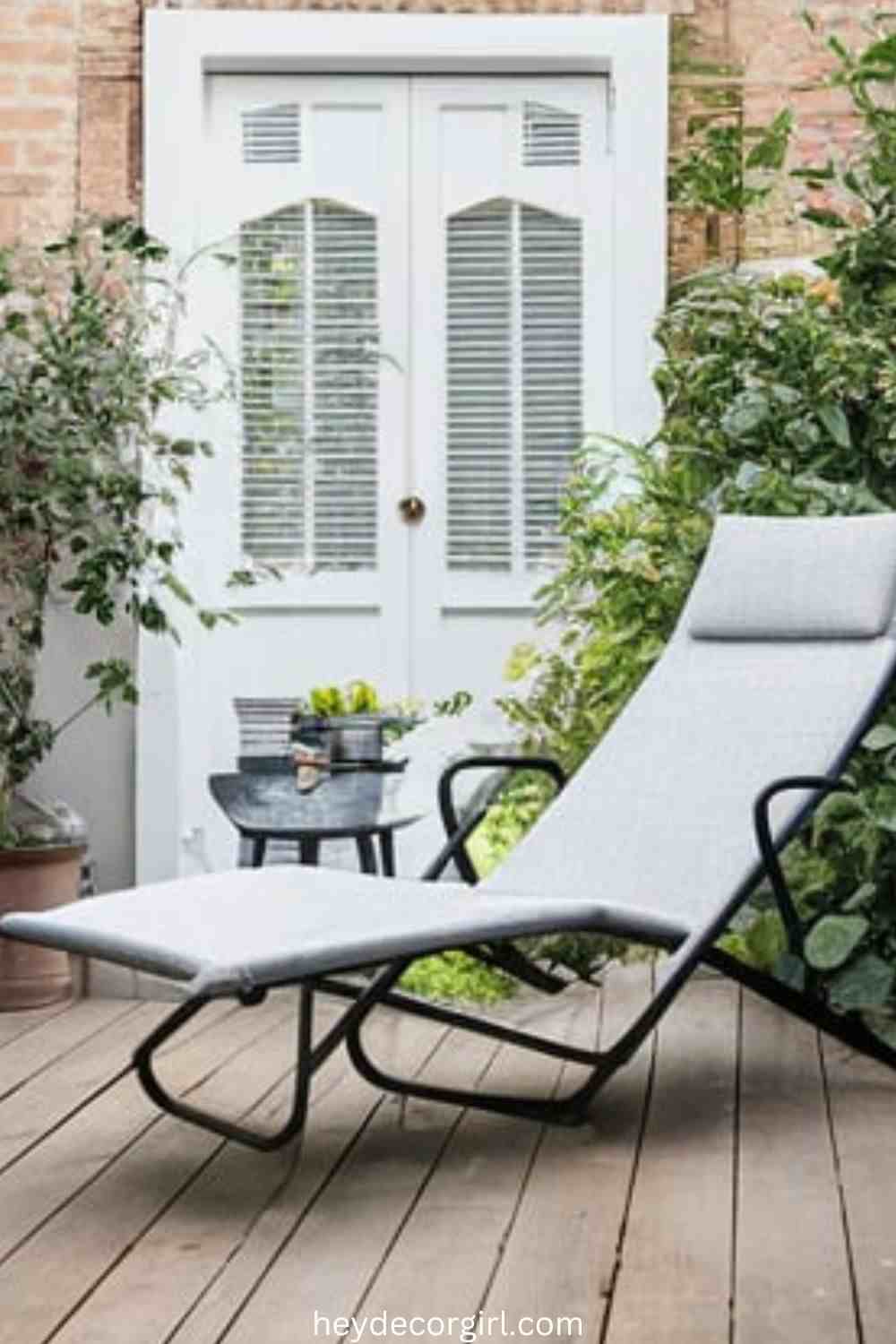
Examples of Foldable, Stackable, or Built-In Furniture
- Foldable furniture: Items such as foldable tables and chairs can be easily stored when not in use. Examples include a wall-mounted drop-leaf table, a foldable dining chair, and collapsible outdoor lounge chairs. These pieces offer flexibility and save space.
- Stable furniture: chairs or tables that can be stacked to reduce your footprint when not in use. Stacable chairs are ideal for small dining areas or external locations, while stacked tables can be used for events or meetings and can be stored away when not needed.
- Building furniture: integrated into the design of furniture space, such as a bench with inherent storage, window seats with hidden couches or integrated cold storage units. The underlying furniture maximizes space efficiency and can be adapted to fit the dimensions of the area.
How to Choose Pieces that Provide Storage and Seating
- Dual-purpose design: select furniture that serves more than one function, such as a storage ottoman that doubles as additional seating or a bench with built-in storage compartments. This approach helps reduce dislocation and maximize utility.
- Space-saving features: Look for pieces that include hidden storage, such as a bed with drawers, or a coffee table with shelves. These characteristics help to keep the space systematic when providing extra seating or surface area.
- Relaxation and functionality: Ensure that multi-functional furniture is comfortable and practical for your needs. For example, choose a foldable sofa bed with good cushioning and support, or a storage bench that offers adequate seating and convenient storage space.
Tips for Arranging Furniture in a Small Space
- Choose Must-Have Pieces: You have to prioritize the most needed pieces of furniture and select the multi-purpose pieces. This prevents congestion and also maintains order.
- Make Use of Vertical Space: Accept the use of vertical space; this would mean using shelves/cabinets that extend towards the ceiling. This will enable you to store things out of the way, leaving the floor space free.
- Establish Zones: Establish various spaces in the room with furniture. As an illustration, a built-in bench can be used to divide a dining space and a living space, or stackable chairs and a foldable table can be placed in one corner that can be set up and folded down any time they are needed.
- Flexible Layout: This is to position furniture in a manner that is flexible and easy to reconfigure. Modular furniture should be used, which can be moved to suit various requirements or various events, and keep the passageways clear to enable free movement throughout the space.
- Light and Airy: Select furnishings that are light-colored or transparent in style in order to make the interior look open. Eschew heavy or substantial pieces and thus reduce the size of the space and make the space seem smaller.
As a result of using furniture with multiple functions, the utilization of a small area is more flexible and efficient, and the available space can be optimized in terms of storage and seating without cluttering the space or creating an untidy appearance.
8. Outdoor Lighting
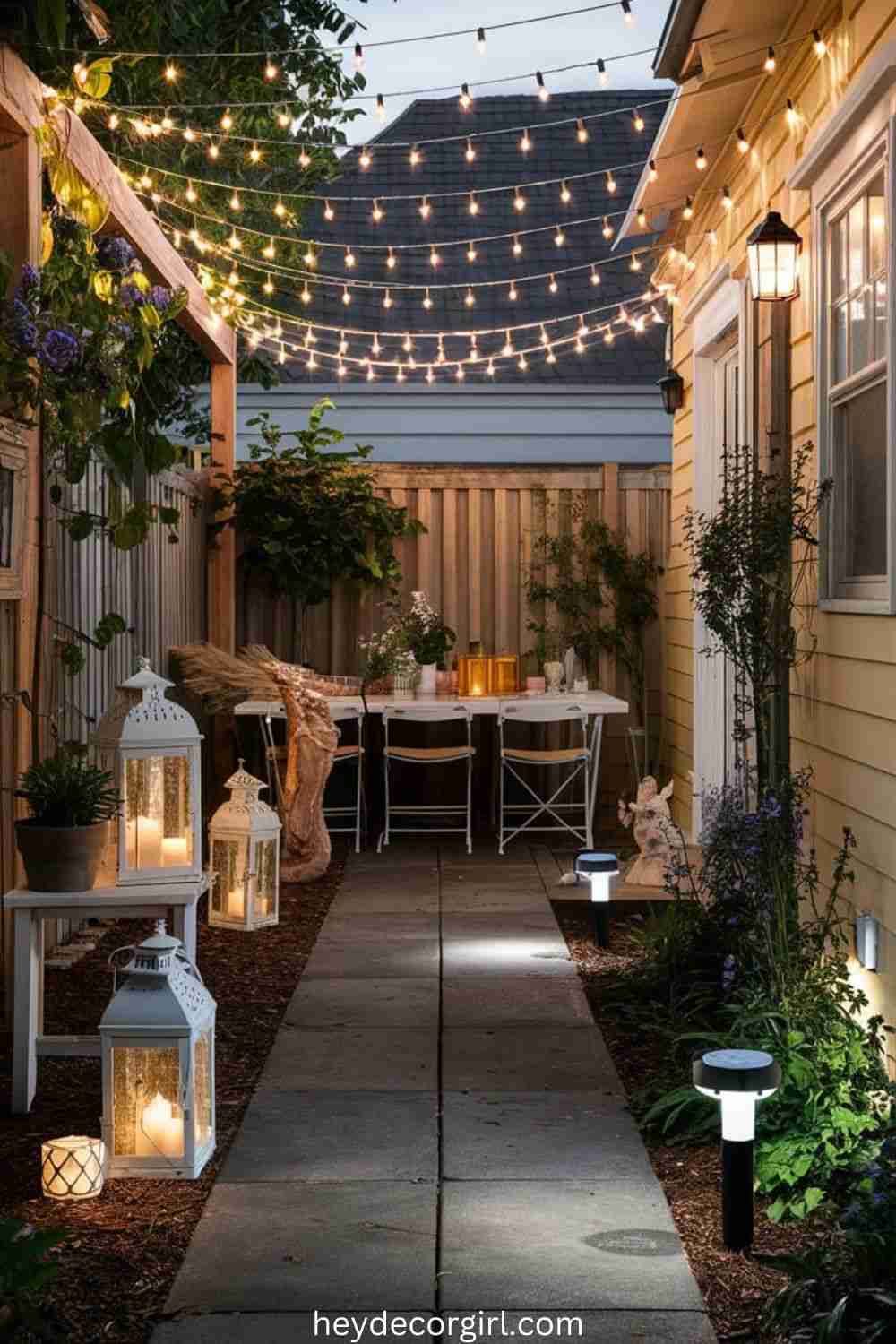
Ideas for String Lights, Lanterns, and Solar Lights
- String Lights: These are fine, twinkling lights that are hung on fences, pergolas, or even trees. There are fairy lights, bistro lights, or globe lights. They produce a friendly, welcoming atmosphere and are ideal for putting it into a festive or romantic mood.
- Lanterns: Ornamental lanterns that may be suspended on hooks, put on tables, or be laid along the walks. They are available in different designs, including traditional, modern, and rustic, as well as battery-operated or candles to provide a low, cozy light.
- Solar Lights: Solar-powered lights which use solar energy, such as path lights, spotlights, and uplights. Solar lights are also practical to give light to walkways, accentuate the andscapes of a garden, and also provide ambient light without any electrical connections.
How to Use Lighting to Create Ambiance and Highlight Features
- Light Zones: Lighting can be used to mark various sections of your backyard, including dining, lounge, or pathways. String lights may be hung around a dining room, and solar path lights may indicate walkways.
- Highlight Features: These are lights directed to highlight certain features in the garden, such as sculptures, water features, and architectural structures. Spotlights or uplights have the potential to highlight the trees, plants, or architectural features.
- Add Warmth: Add soft and warm lighting, so that the atmosphere was inviting. Outdoor lights used are string lights, lanterns, and warm colored solar lights, which help to create a relaxing environment.
- Layer Lighting: Mix the various forms of lighting such as ambient string lights, task-oriented lan, terms, and accent solar lights to produce a layered effect. It is a method that gives the space depth and visuality.
Placement Tips for Small Backyards
- Pay attention to Key Areas: ht one should be concentrated in areas where it is going to be the most effective. As an example, put the lights on the strings above a seat or lanterns around a dining table.
- Use Vertical Space: Use lights or lanterns suspended over a structure such as a pergola, trellis, or fence to make the most out of this space and make the structure look elegant without occupying ground space.
- Pathway Lighting: Place solar path lights or low lanterns along walks and landscapes to offer both practical light and also to increase security and directional movement in the area.
- Adjust for Scale: Select the right size lighting fixtures for your backyard. You should not use excessively big lights, which can fill a small area, and instead, should use smaller or lighter designs.
- Take into Account Multipurpose Lighting: Try to use lighting that can perform a variety of tasks, like solar lights with adjustable heads to have both accent and pathway lights, or lanterns that also serve as decoration objects and light sources.
With a carefully considered design of outdoor lighting your little backyard, you can improve the functionality and atmosphere of the place. Through the choice of the appropriate type of lights and their effective positioning, you will be able to achieve a gorgeous, welcoming atmosphere, which will allow you to spend more time outside in the evening.
9. Miniature Gardens
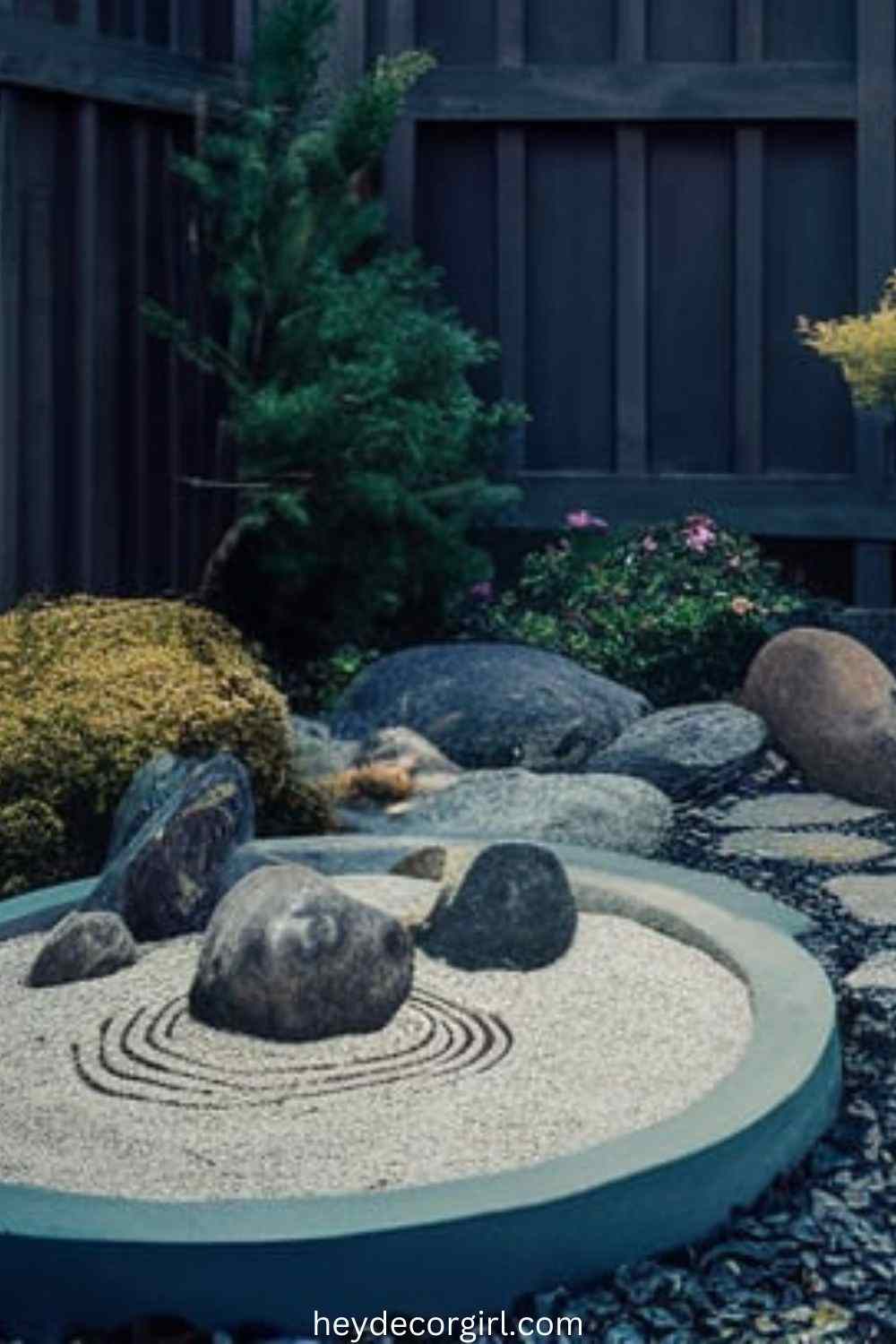
Concept of Fairy Gardens or Zen Gardens
- Fairy Gardens: Tiny but fanciful gardens meant to be used to make fairy-tale sceneries for small creatures. Such gardens also include small houses, small furnishings, fairy lights, and richly detailed vegetation. They can be put into containers, garden beds, or even into terrariums.
- Zen Gardens: These are small, peaceful gardens that are designed according to the Japanese Zen ideals. These gardens normally involve features such as sand or gravel raked in designs, miniature rocks or stones, as well as low-maintenance landscaped plants. Zen gardens are about tranquility, minimalism, and meditation.
Ideas for Incorporating Small-Scale Garden Designs
- Containers and Terrariums: To introduce a miniature garden to any area, use containers or terrariums to implement a miniature garden. Your fairy garden or Zen garden should be encased in glass jars, wooden boxes, or ceramic pots, so that its design can fit into the scale of the container.
- Miniature Plantings: Select small, slow-growing plants such as succulents, moss, or small versions of shrubs and flowers. These plants are well-suited for small areas and can be used to make the whole miniature garden look attractive.
- Themed Accessories: Add themed accessories such as miniature furniture, small garden tootoolsor decorative elements that suit the magical theme of the fairy garden or the minimalist design of the Zen garden. Accessories used should not clutter the space but should add value to the whole appearance.
- Pathways and Features: Install miniature pathways, bridges, or water features to add interest to the design of the garden. There can also be small pebbles, mini water fountain,s or small stepping stones which add to the beauty and purpose of the garden.
- Seasonal Decor: Add thematic and seasonal decorations to the miniature garden. As a rule, you can add pumpkins in fall, tiny leaves of fall, or add snowflakes and trees in winter.
Benefits of Adding a Touch of Whimsy and Tranquility
- Whimsy and Creativity: Miniature gardens provide an artistic release to come up with whimsical and magical spaces. They enable the use of personal style and imagination and offer a fun and exciting project.
- Calmness and tranquility: Zen gardens encourage tranquility and mindfulness, as this provides a peaceful retreat in a limited area. The act of organizing and sustaining a Zen garden itself may be a relaxing and meditative activity.
- Space Saving: Miniature gardens can be placed in small areas or spaces where a normal garden design does not fit. They may be placed on desks, wwindow sillson small corners of the garden, and contribute to beauty and interest without taking up a great deal of space.
- Educational Opportunities: Miniature gardening can be both an educational experience and la earnina learningw to care for plants, how to design the garden, and finally the principles of landscaping on a small scale.
Miniature gardens are a beautiful feature to incorporate in your place, which gives it a special touch of elegance and calm. Be it whimsical fairy gardens or calm Zen gardens, these ssmall-scsmall-scale gardens wonderful addition to add beauty to your surroundings and bring about magic and harmony.
10. Pergolas and Gazebos
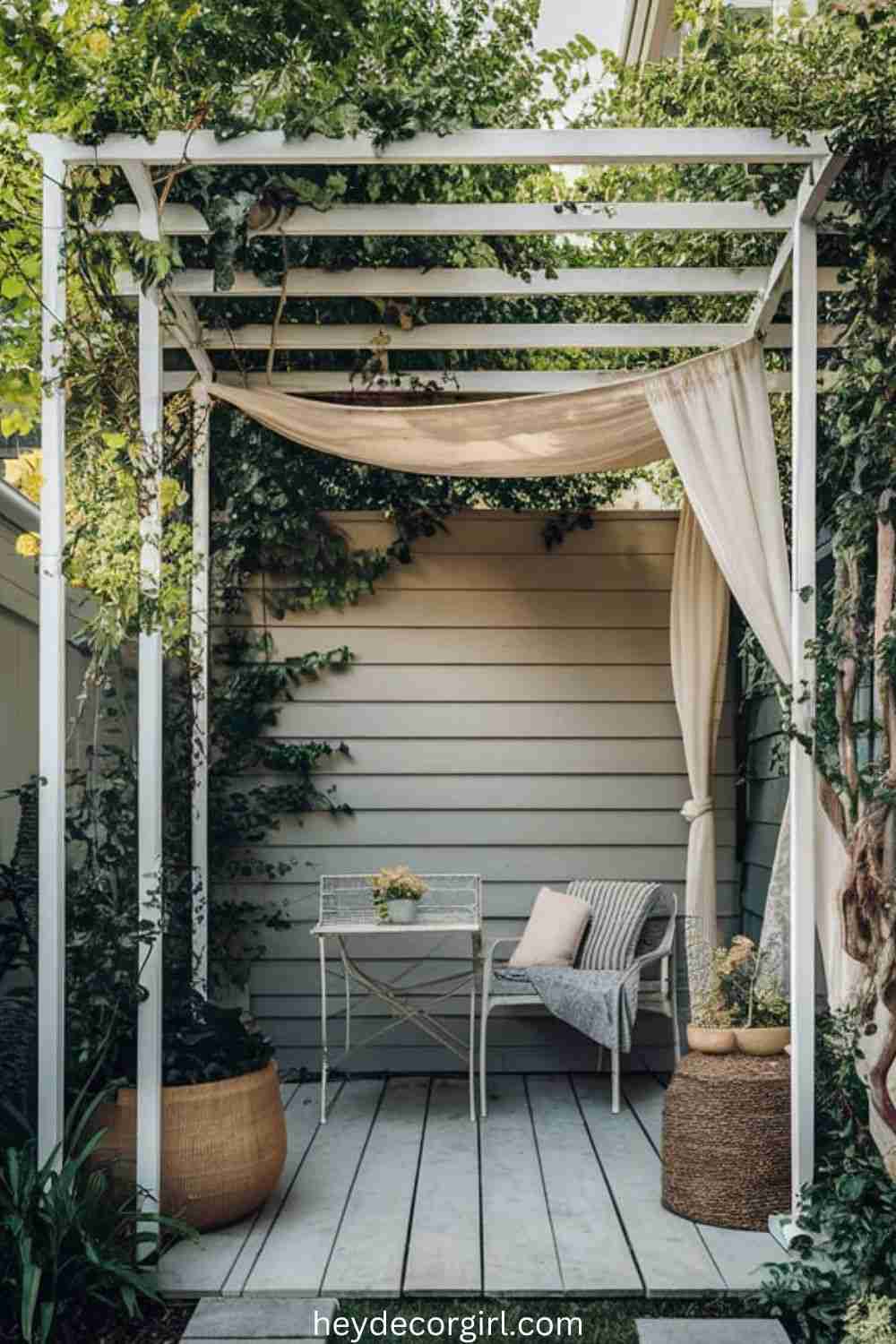
Small-Scale Structures that Offer Shade and Style
- Pergolas: Open-roofed buildings that have vertical posts or pillars and have a lattice or beam structure. Pergolas are also a source of partial protection and may be utilized to make more demarcated outdoor areas. Climbing plants can be planted along i , or it can be covered with fabric to provide additional privacy and shade.
- Gazebos: Structures with a roof that are usually circular or polygonal, and are enclosed or semi-enclosed. Gazebos are also more effective against the elements than pergolas and may be lovely focal points or seats.
Design Tips for Fitting These Structures into a Small Backyard
- Select Pergolas or Gazebos appropriately: Select smaller pergolas or gazebos that fit the proportions of your backyard. Do not have so many big structures that will occupy the space. Choose the designs that can match the overall look of your garden.
- Locate Strategically: Have pergolas or gazebos positioned at such a place that they will complement the use of the backyard. You can have them close to a seating space, garden bed, or footpath to make the most out of them and make them look attractive.
- Multi-Purpose: The structures may be used in a variety of ways, including to form a dining table outdoors, a relaxation seat, or a vertical garden. This is a way of maximizing space.
- Integration with Landscape: Incorporate the pergola or gazebo into the landscape through the integration of the adjacent plants, pathways,o r outdoor furniture. Make sure that the structure does not seem isolated and that it adds to the overall design of the garden.
Examples of Materials and Designs
Materials:
- Wood: Wood is traditional and flexible,a nd has a natural appearanc , and can be stained or painted in accordance with your style in the garden. Wood is used as a common element in pergolas and gazebos, and can be customized in different finishes and details.
- Metal: Metal structures (e.g,.aluminum or wrought iron) are smooth and modern and offer toughness and a modern appearance. Minimalist designs and clean lines may be introduced into metal pergolas and gazebos.
- Vinyl: Vinyl pergolas and gazebos are easy to maintain and easy to keep clean in terms of weather, and do not require regular maintenance. They come in different colors and designs.
- Composite: Composite structures are made by the combination of materials, providing them with the appearance of wood and high durability and low maintenance. They can be used in contemporary designs and extreme weather.
Designs:
- Traditional: Traditional designs with elaborate woodwork, latticedesigni,gn and gabled roofing. These buildings may give a classical appeal to your backyard, and they are compatible with the conventional garden designs.
- Modern: Clean lines, geometric forms and metal or composite material. The contemporary gazebos and pergolas have a smooth contemporary appearance that fits in with urban or modern gardens.
- Rustic: Buildings that appear to have a natural and worn aspect and may also use reclaimed wood or rough-cut beams. The rustics are compatible with cottage or farmhouse gardens.
Since they allow the addition of shade and further beautify the design of your small backyard, utilizing pergolas or gazebos can help to achieve the effect of stylized and useful outdoor pspacesThe selection of appropriate materials and designs, and the location of these elements, will allow you to utilize your garden area to the fullest extent.
FAQ
Q1. What are the main considerations iin the andscape of a small backyard?
A. In landscaping a small backyard, the size and proportion of your design materials should be taken into consideration to ensure that you do not overuse the small space available. Oriented on the maximization of vertical space, multi-functional furnishing,space-saving gardenn elements, and the selection of plants that match your climate and garden environment. Give priority to functionality, aesthetics, and ensure that it is easy to maintain.
Q2. What can I do to make a small backyard look big?
A. The tricks to make a backyard that is very small look bigger are to create a sense of depth (i.e, plantings in layers), use reflective surfaces (mirrors or fountains), as well as vertical plantings (trellises,o r wall-mounted planters). Furniture and accessories should be light to give a airy and open impression, and not be overcrowded with too much furniture.
Q3. What are the space-saving garden features for small backyards?
A. The elements of space saving are vertical gardens, garden raised beds, container gardens, and multi-purpose furniture. Choose small or shrub plant species, and employ features such as pergolas or trellises to add interest to the vertical dimension and make the most out of the planting space. Install intelligent storage tools to store gardening tools and accessories.
Q4. What are some ways I can integrate seating with a small backyard?
A. To integrate seating into a small backyard, explore such suggestions asas built-inn benches, foldable or stackable chairs, and versatile seating such as storage ottomans or small bistro sets. Use the corners or the sides of the backyard and put the seating there so that they are comfortable and accessible.
Q5. Which kind of plants are the best in the smallbackyardd
A. Select smaller, slow-growing, and cclimate-adapted plants Examples are small flowering plants, ornamental grasses, and dwarf shrubs. Plant climbing or vines on a trellis to have greenery without occupying the grounds. Take into account low-maintenance plants with minimum pruning and care.
Q6. What can I do to provide privacy in a small backyard that will not take up excessive space?
A. Tall planters, filled with thick and upright vegetation, or lattice panels that have climbing vines, can be used to create privacy. Privacy screens or trellises that can be moved or adjusted whenever they are required may be considered. Plant hedges or bushes at the borders of the backyard to have natural walls that are not tooclosee
Q7. How can lighting be used creatively in a small back yard?
A. Install string lights or fairy lights to create a magical effect and to provide light in the outdoor seating area. Have solar path lights or low-level lanterns installed along the walkways and the edges of the gardens in order to have some functional lighting. Install spotlights or wall-mounted consoles to emphasize the important areas and provide a visual focus.
Q8. What can I do to make a small backyard sound so peaceful?
A. Establish calmness by including features such as a small water feature,,such as a mini fountain or pond, and comfortable seating, using soft cushions. Keep your design with quiet colors and natural materials, and incorporate other ZZen-like features, like gravel or sand gardens. Background music or wind chimes can also be used to improve the tranquil mood.
Q9. What are low-cost landscape suggestions for a small backyard?
A. Some cost-effective things that you can do on your own could be creating your own raised garden beds, using recycled materials as planters or garden decorations, and planting cheaper seeds or seedlings. Use low-maintenance plants that do not need regular replenishment, and use natural materials such as gravel or mulch in the paths and the garden beds.
Q10. What can I do to make my small backyard low-maintenance?
A. To maintain at a low cost, select plants that are low-maintenance and hardy, and which need minimal care. Install drip hose irrigation or automated irrigation systems. Hardscape with strong materials and use easy-to-clean outdoor furniture. Frequently trim and care for plants, so that they do not grow out of control and the area is clean and manageable.