![Hey Decor Girl [Latest Trending Decor Design Ideas]](https://heydecorgirl.com/wordpress/wp-content/uploads/2024/08/Heygirldecor-Logo.png)
Feng Shui Bedroom Design Ideas and layout strategies, where you will receive tips to use and creativity to follow to maximize your bedroom with respect to these classical principles. You may need to rearrange the existing room, or you could be starting the entire makeover, but regardless, these 21+ thoughts will help you make your bedroom a balanced and soothing environment that will be in line with the positive energy flow.
The ancient Chinese concept of Feng Shui is based on the notion that people should be aligned with their immediate environment through the careful arrangement of space. Feng Shui, in essence, is focused on the circulation of energy or Chi in a bid to establish a harmonious and nurturing environment. The core of these principles is the idea that the way we design and organize our rooms can have a great influence on our well-being, our feelings, and the quality of our life in general.
Feng Shui is especially important in the area of bedroom design. The bedroom is a place of rest, refreshment, self-reflection, and therefore the layout and the flow of energy in the bedroom are critical in creating a peaceful and restorative ambiance. Following the principles of Feng Shui, you can increase the serenity of your bedroom, achieve restful sleep, and create a heaven that can contribute to your physical and emotional well-being.

Feng Shui Bedroom Design Ideas
1. Understanding Feng Shui Basics for Bedrooms
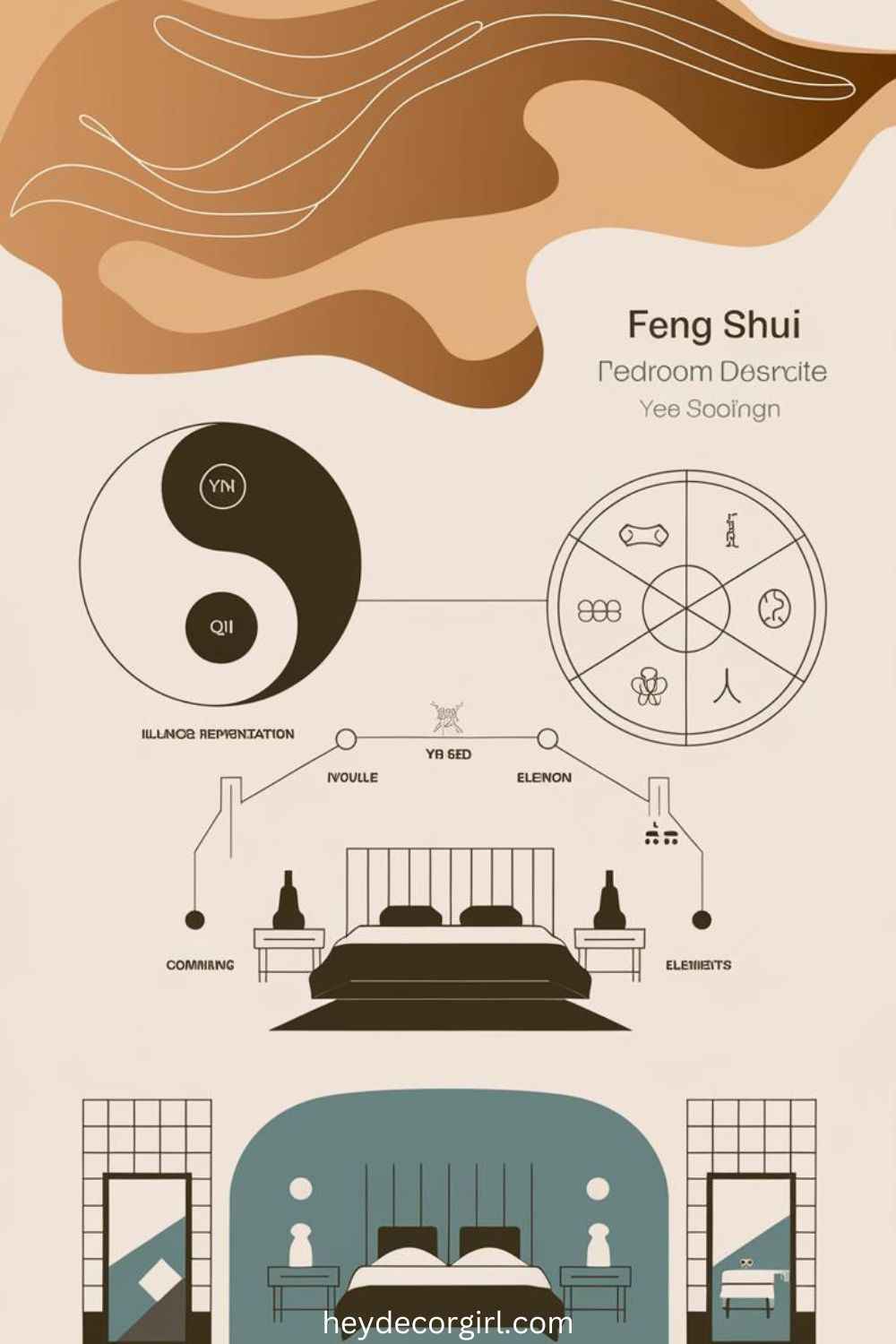
An introduction to Feng Shui.
Feng Shui focuses on chi (Qii, which is also known as life force or energy flow. The invisible energy is the same that passes through our environment, affecting our well-being and mood. In Feng Shui, it is aimed to make sure that Chi moves freely and without any obstacles in a space, which is thought to provide harmony and balance.
Yin/Yang The Yin and Yang concept can be considered the dual nature of energy, whereby Yin is considered the calm, restful, and receptive, and Yang is the active, energetic, and moving. According to Feng Shui, the equilibrium of Yin and Yang is the key to a harmonious environment. A bedroom must be inclined toward Yin-advantageous features and create a peaceful and calm environment.
Five Elements The Five Elements in Feng Shui are known as Wood, Fire, Earth, Metal, and Water, and are considered to be various forms of energy and material. The elements are unique, and each element is associated with specific elements, and maintainingthe equilibrium of the elements is very important to ensure harmony. For instance:
- Wood is a sign of prosperity and development.
- Fire is a symbol of passion and warmth.
- Earth symbolizes a sense of stability and nourishment.
- Metal is the symbol of clearness and accuracy.
- Water is dynamic and fluid.
By adding these components in the right amount, it is possible to increase the circulation and balance of energy in a room.The
Bedroom Layout is significant in Feng Shui.
The design of the room and bedroom is the most vital factor in Feng Shui since it will influence the quality of Chi and the general environment. Key considerations include:
Bed Placement: The location of the bed is very important in feng shui. Preferably, the location to place it is such that you can spot the door and not directly face the door, which is referred to as the command position. This position also gives the feeling of safety and dominance, which is crucial to good sleep.
Door and Window Positioning: The doors and windows are placed in a way that affects the passage of Chi in the room. Preferably, the doors should not be directed towards the bed, and the windows should be put in a way that tolerates natural lighting without causing too many drafts or glare. The right placement will ensure that energy is not disturbed, and it aids in maintaining a harmonized environment.
Mirrors may amplify as well as interfere with energy flow. With respect to Feng Shui, it is usually recommended that direct mirrors not be placed directly opposite the bed since they will reflect and disrupt the calm energy there. Rather, mirrors must be smartly utilized as they can be expanded to create more space and light without one feeling uncomfortable.
With these Feng Shui principles, it is possible to design a bedroom that is both visually appealing and that helps your well-being and sleep.
2. Ideal Bedroom Layouts
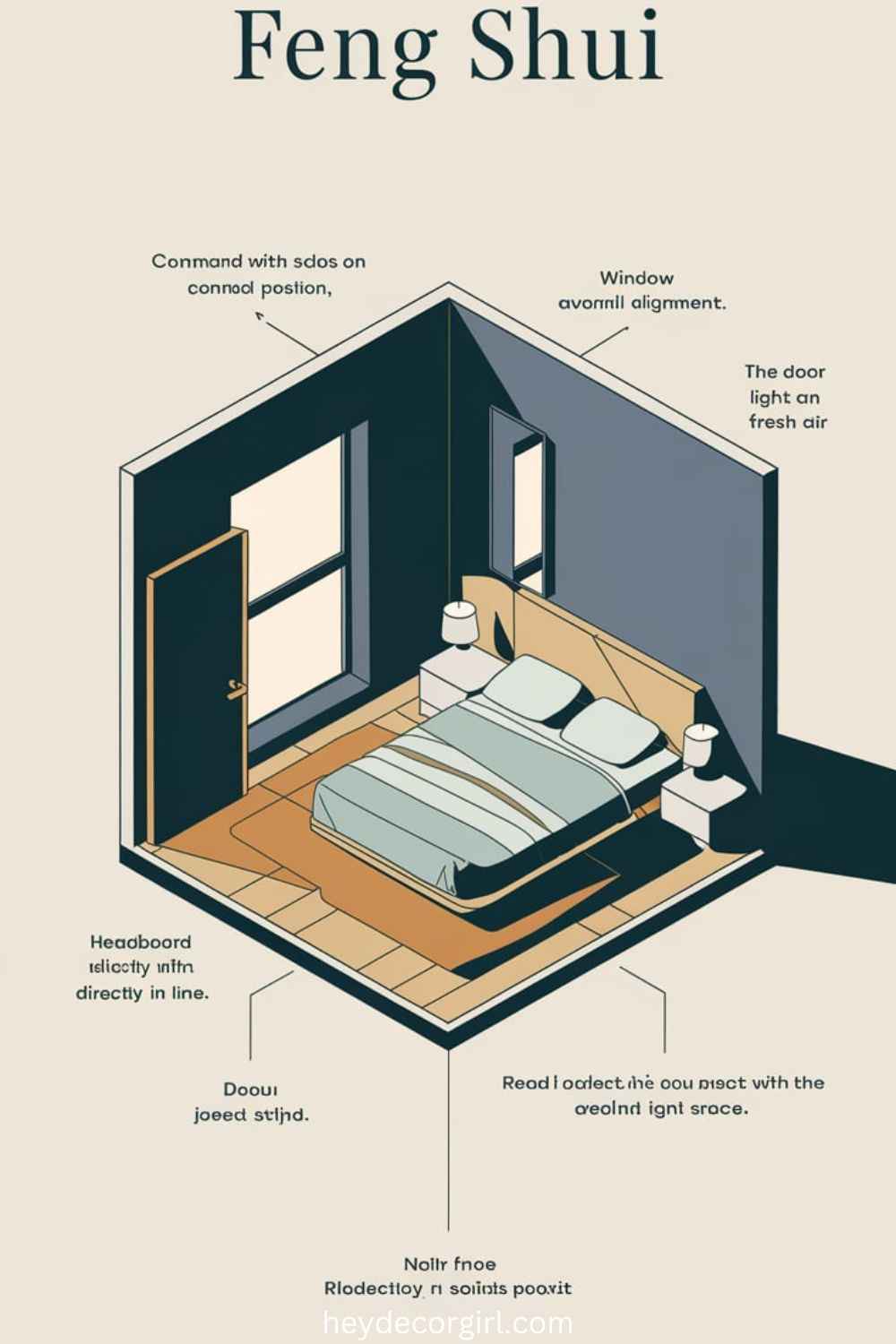
Bed Position: Ideal Poses to maximize the energy circulation.
Command Position The bed must be positioned in the command position as a means of feeling control and safety. This is to make sure that the bed is placed such that the door can be viewed from the bed, but without being directly facing the door. This arrangement provides the opportunity to sleep much better and feel safe.
Direct Alignment is to be avoided. Place the bed in such a way that it is not aligned directly with the door- at this point, it would create a disturbed energy flow. Where feasible, have the bed diagonally opposite the door, with a good view of the entrance but not facing the entrance.
Positioning of the headboard ensures that the bed has a firm headboard to support it. A good headboard is something to attach to and make one feel safe. One should not place the bed beneath a window, or have the headboard positioned directly facing a window, as this will disrupt the circulation of Chi and cause restlessness.
Space on Either Side Ideally, there ought to be equal space on either side of the bed to facilitate a balanced flow of energy. This makes it easier to move and access as well.
Door and Window Positioning: the way to prevent disruptive energy and provide a balance.
Door Positioning: Make sure that the doors of the bedroom open completely without any obstruction. It is also not advisable to place the bed facing the door straight because then it will form a direct shot of energy, which may disrupt sleep.
The Positioning of Windows Windows are to be placed in a way that gives access to natural light and air, but not to cause draft overglare. Do not keep the bed directly before a window or bed headboard too close to the windows, as this causes poor sleep and loss of energy.
Balancing Chi Flow: Take note of a clear passage between the door and the window to have an unhindered circulation of energy. These spaces should not be cluttered, as this may block Chi and create an unbalanced room.
Mirrors in the Bedroom: Two and Three Things to Keep in Mind when Placing a Mirror.
Dos
- Use Mirrors to Expand Space: Mirrors can literally make a room bigger and allow the light to reflect, forming a brighter and more open room.
- Locate Mirrors Strategically: Mirrors should be placed in a strategic position, which will add to the room flow without reflecting the bed. An example is thatWhenn when a window is opposite a wall, a mirror is fitted there so as to reflect the natural light and illuminate the room.
- Avoid Reflections of Clutter: Be sure that mirrors do not reflect clutter and messy spaces, as this creates an impression of chaos.
Don’ts
- No Mirrors Facing the Bed: Do not use mirrors that are directly facing the bed because they disrupt the sleep and energy flow. This posture may cause a disturbing impression and disrupt rest.
- Avoid Overhead Mirrors: Never use the mirror in a place that is above the bed or somewhere that may cause some sense of disorientation or awkwardness.
- No Mirrors Reflecting the Door: Do not put mirrors in such a way that they turn out to be a reflection of the door, because that may make one feel exposed or feel like they do not have their privacy.
With these tips about where to place the bed, doors and windows, and mirrors, you can establish a well-organized and peaceful bedroom environment that will help you to sleep and to have a positive energy flow.
3. Feng Shui Bedroom Design Ideas for Different Needs
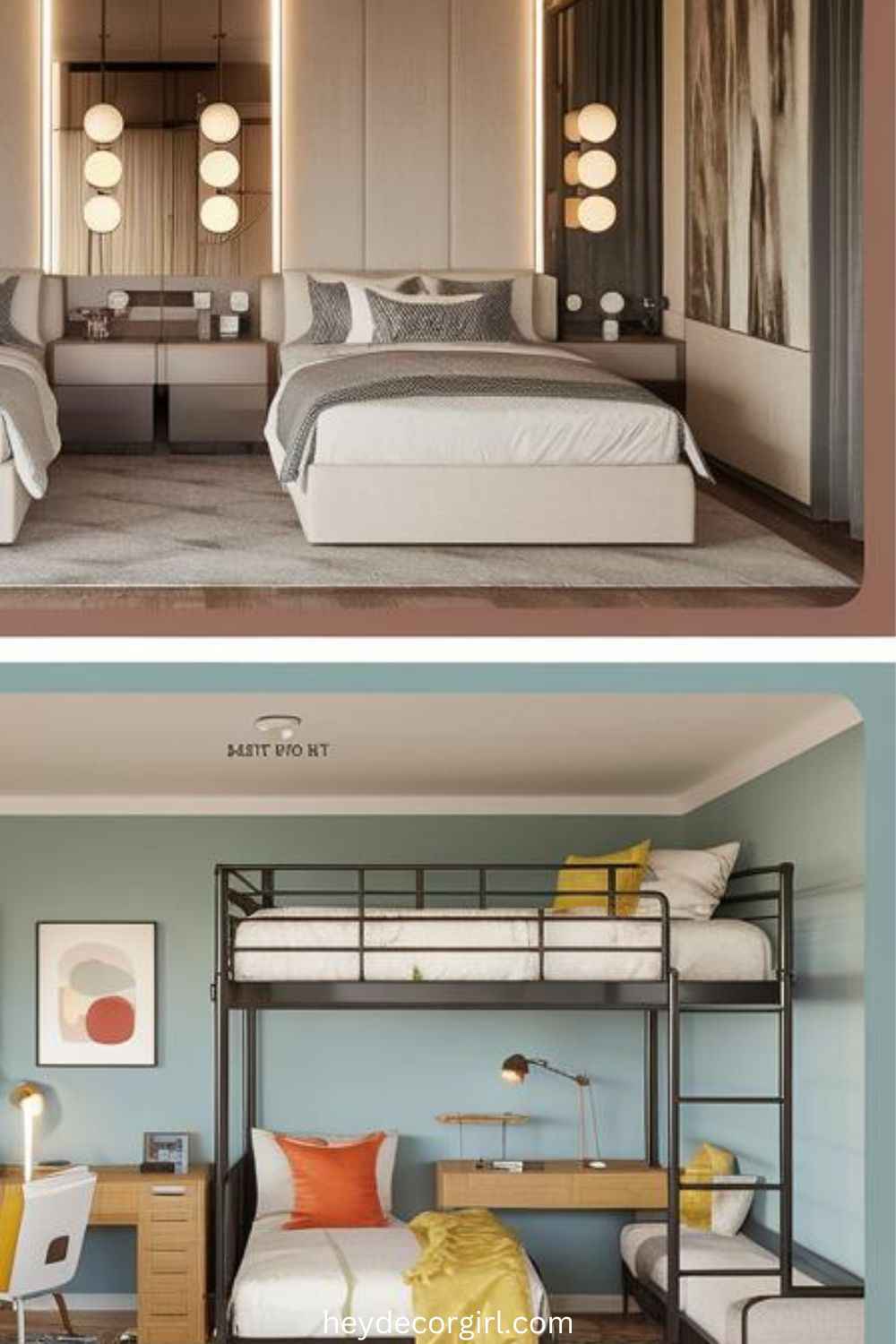
Small Bedrooms: How to save space without compromising the feng shui principles.
Maximize Vertical Space
- Wall-Mounted Shelves: Wall-mounted shelves should be used to free the floor area and ensure that the items are well-positioned.
- Lofted Bed Frames: Lofted beds can be considered to make up more storage or a work area beneath.
- Multi-Functional Furniture: You should choose a piece of furniture that can be used in more than one way, e.g., a bed with an integrated storage drawer or a foldable table.
Optimize Layout
- Mirrors Wisely: Mirrors ought to be used strategically to show a feeling of space by the use of mirrors. Do not put them directly opposite the bed.
- Light Colors and Reflective Surface: Use light colors on the walls and furniture to make the room appear bigger and more open. The feeling of space can also be increased by the reflective surfaces.
Clutter Control
- Declutter Often: Have the bedroom space in order by cleaning it out on a regular basis and using storage to reduce visual clutter.
- Hidden Storage: Make use of concealed storage space, such as storage boxes under the bed or ottomans that have space to store items.
- Bedrooms of couples: designing concepts to facilitate harmony in the relationship.
Balanced Layout
- Symmetrical Arrangement: Balance and equality.Your furniture should be arranged symmetrically to encourage balance and equality in the relationship. Make sure that one does not have a sofa in the bed that is not easily reachable or comfortable.
- Shared Decor: This is to have the shared decor with the tastes and preferences of both partners to form a harmonious and personal atmosphere.
Color and Lighting
- Warm Colors: Warm and relaxing colors like soft reds, pinks, or earthy colors are used to promote connection and intimacy.
- Adjustable Lighting: Add variable lighting that can produce varying moods and ambiences to increase the sense of relaxation and intimacy.
Personal Touches
- Personal Items: Add personal items, or mementos that are valuable to both partners, providing sentimental quality to the space.
- Bedding: Spend on linen bedding that is comfortable and high-quality to have a good and together sleeping experience.
- Single Occupancy: To Build a Cozy and Relaxing Haven.
Personalized Decor
- Customize Space: Have the space be a representation of the individual’s style and preferences, and include the favorite colors, patterns, and artwork.
- Comfort and function: be concerned with the creation of a comfortable and practical environment that is based on relaxation and personal enjoyment; it should be functionalized; in other words, it should be individualized.
Design for Relaxation
- Cozy Nook: Prepare a cozy place to read, to meditate, or to have a rest, like a comfortable chair, a soft blanket, and lots of light.
- Soothing Effects: Add the calming effects, which may include calming colours, low intensity lighting, and soft textures, to make the atmosphere calming.
Organization and Storage
- Effective Storage Systems: Be creative with the storage so that the area is iswell-maintainedd and clear of stuff. This may consist of built-in shelves, under-bed storage, or a modular unit of storage.
- Declutter Often: Keep a clean space and update it regularly by organizing and evaluating what you need and what you can get rid of.Children’s Rooms: Feng Shui Advice to Grow and Learn.
Supportive Design
- Age-Appropriate Design: Design the room layout based on the age of the child and stage of development of the child, and make sure the rooms are safe and easy to move around.
- Promote Imagination: In a given play area, a study nook, or learning decor should be integrated to promote creativity and learning.
Color and Energy
- Stimulating Colors: Colors that stimulate growth and learning are soft yellows or greens. Do not make it too stimulating by over bright colors or harsh colors.
- Positive Energy: Add positive images and symbols providing a feeling of safety and well-being, like animal imagery or nature-related decor.
Functional Furniture
- Adjustable Furniture: Select pieces of furniture that can be expanded with the child, e.g., adjustable desks and beds that have removable components.
Safe and Durable: Furniture and decor must be safe, durable, and age-appropriate so that they can be used in everyday life and activities.
The Feng Shui concepts can be translated into individual requirements such as a tiny bedroom, a couple, a personal room, or a child’s room and establish a balance and functional environment that promotes health and development.
Also Read: Best Dresser Alternatives For A Stylish Bedroom
4. Color Schemes and Feng Shui
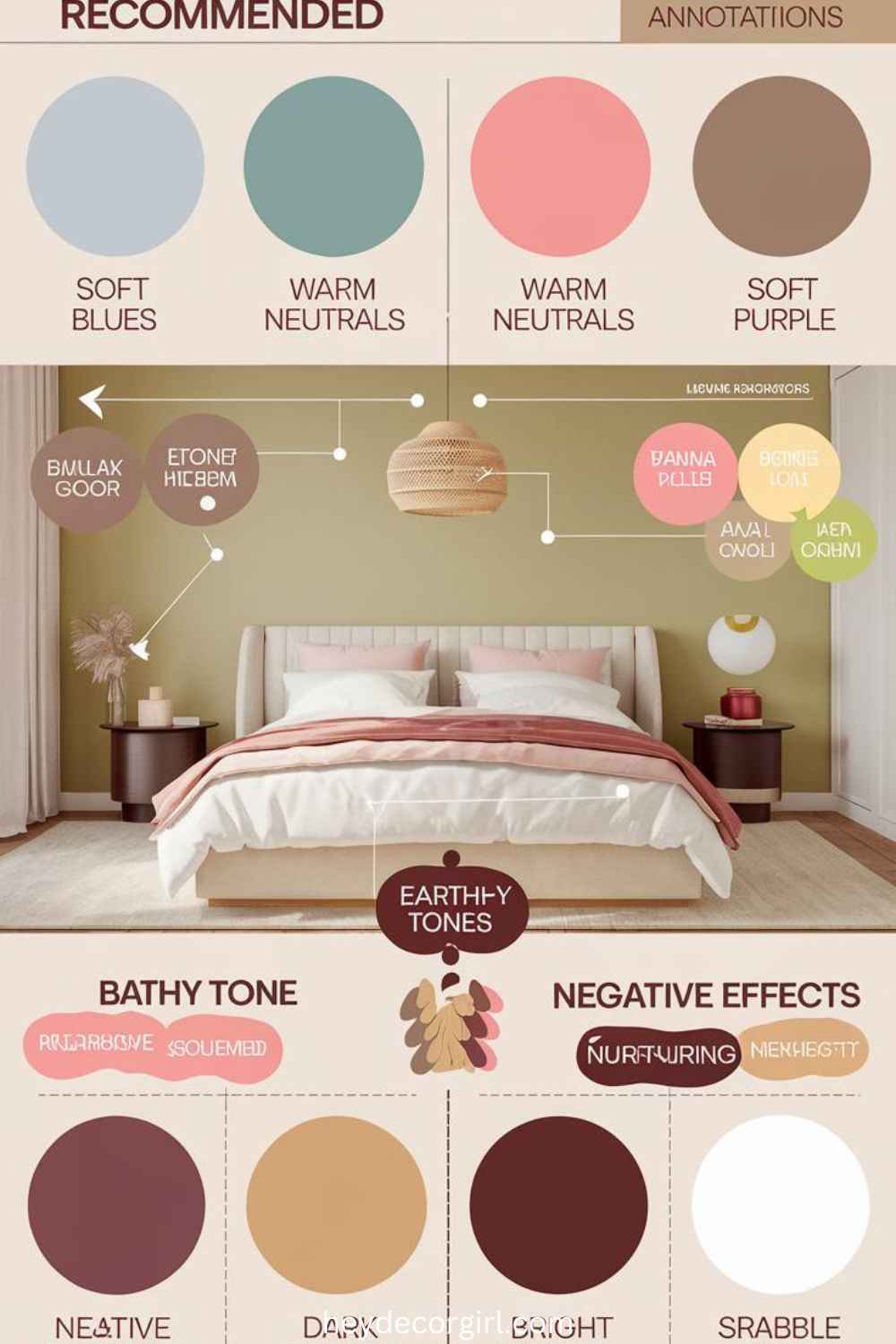
Recommended Colours: The effects of the different colours on energy and mood.
1. Soft Blues and Greens
- Effect: These are the colors that have soothing effects. The soft blues and greens are very relaxing, and they are the best to use to create a calm environment in the bedroom.
- Applications: These colours are ideal for walls and bedding, and accents. They assist in reducing stress and in establishing a calm atmosphere that will allow one to sleep peacefully.
2. Warm Neutrals
- Impact: Neutral hues such as beige, tau, pe, and soft gray make the room warm, welcoming. With these colours, there is an impression of stability and safety.
- Application: Larger surfaces, such as walls and flooring, should be used with warm neutrals. Warmer accent colors or textures can be added to complement them in order to create a sense of warmth and security.
3. Soft Pinks and Corals
- Effects: These colors encourage a calming and affectionate feeling and are therefore perfect to add a romantic and caring vibe in the bedroom of the two lovers.
- Application: Soft pinks and corals can be used as accent colors or on fabrics such as bedding and cushions to create a cozy and friendly atmosphere in a room.
4. Earthy Tones
- Effect: Grounded and grounded warm brown and olive green are earthly colors that relate to nature and make the atmosphere grounded and stable.
- Application: These colors can be used in furniture, carpet, or as decoratives to create a feeling of natural balance and stability in the bedroom.
5. White and Off-White
- Effect: White and off-white colors help to create an impression of purity and simplicity. They can make a room look larger and open.
- Use: These colors can be used on walls and on large furniture items to design a light and airy atmosphere. Use lighter colors to make it warm and richer.
- The Colors to avoid: Colors that could be disruptive to sleep or tranquility.
1. Bright Red
- Effect: Red is energizing and may raise the energy levels, which may disrupt relaxation and sleep.
- Avoid: Do not apply on large areas or on the walls, but use sparingly on the bedroom or as an accent color. Rather, use softer pinks or reds to achieve a softer look.
2. Dark Purple
- Dark purple can be oppressive and can add to a sense of seriousness or discomfort.
- Precaution: Darker. Darker shades of purple should be used sparingly. You can use a light color in case you want or dark purple as an accent color instead of being a primary one.
3. Neon Colors
- Effect: The colors are neon and too stimulating, and can interfere with the feeling of tranquility required to sleep well.
- Neon colors: Do not use neon colors in the bedroom. Rather, use muted and softer sounds that encourage relaxation.
4. Dark Brown
- Impact: Dark brown can cause a room to look confined, and it can also produce the impression of weight.
- Avoid: Dark brown is to be used sparingly or as an accent colour. Look at lighter colors of brown or earth colors, which make it feel more open and balanced.
5. Bright Yellow
- Effect: Yellow can be jovial; however, bright yellow might be excessively stimulating and may cause restlessness.
- Do not: Use more gentle tones of yellow or use it as an accent color instead of a primary one.
With the help of the right colors in your bedroom according to the Feng Shui rules, it is possible to improve the mood of the room and create a soothing and harmonious environment to rest in.
5. Furniture Arrangement Tips
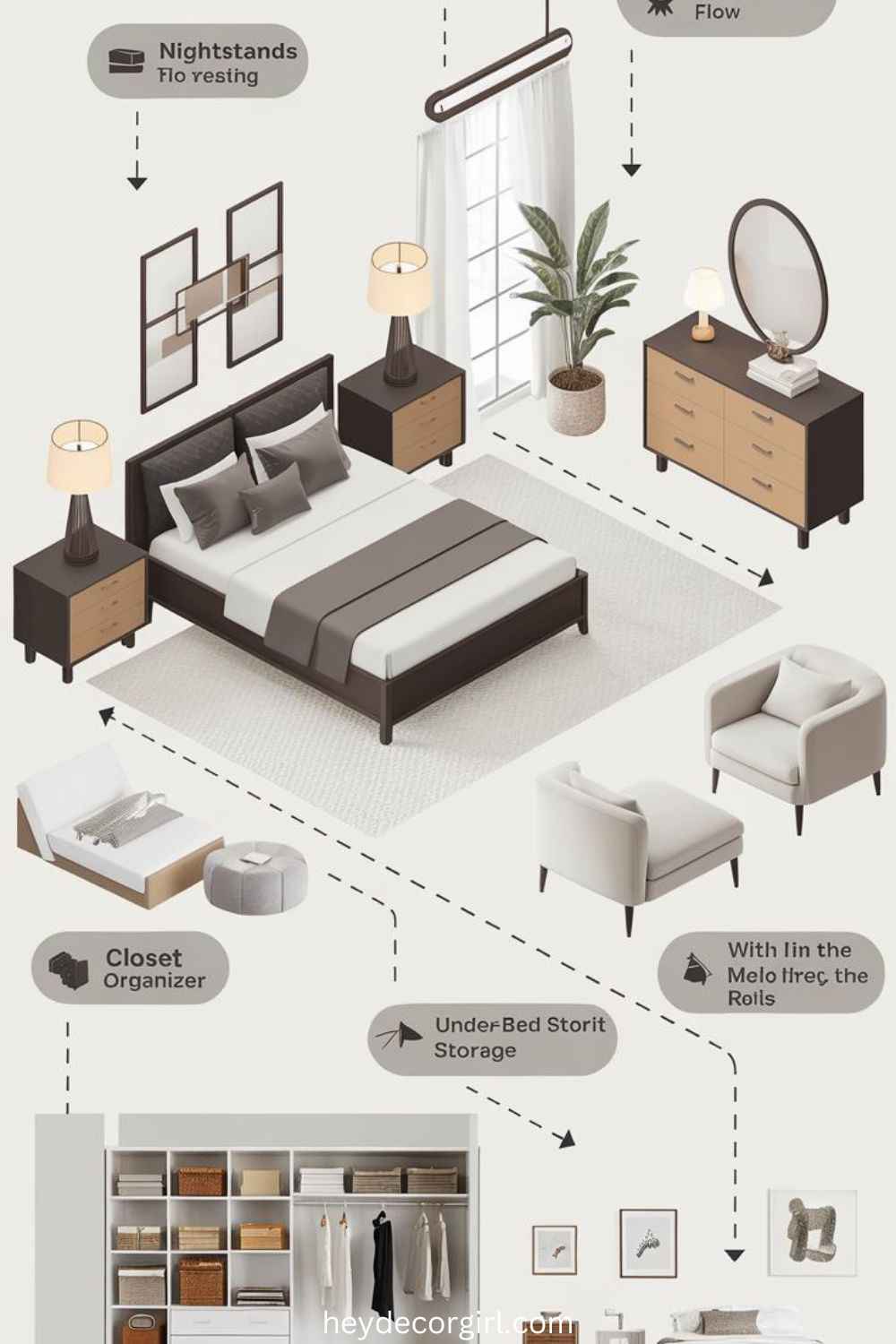
Furniture balancing: Making sure that the essential furniture is placed in a harmonious way.
1. Bed Placement
- Position: Position the bed in the command position where the bed is in sight of the door but is not facing the door directly. This positioning gives the feeling of being safe and in charge.
- Symmetry: The space on both sides of the bed should be balanced with the nightstand and lamp being equal to each other, so as to create harmony and equality.
2. Nightstands and Lamps
- Matching Nightstands: Nightstands on either side of the bed should be used in the same style to be symmetrical. This equilibrium contributes to the development of a feeling of balance in the relationship.
- Adequate Lighting: Place nightstands with position lamps at a comfortable level that gives good lighting when reading or relaxing.
3. Dresser and Storage
- Easy to get Storage: The dresser or storage units should be situated in a place that is readily accessible and yet should not be a hindrance to energy movement. Do not put them in front of the door or the bed.
- Balanced Placement: Place bigger furniture tall items such as dressers, in front of walls so that they do not crowd the area, and to create a balanced layout.
4. Seating Areas
- Functional Seating: Add a seating area the bedroom, though this is optional; a small chair or bench is all that is needed should the space permit. Place it outside the bed yet in the flow of the room so that it is a comfortable place without causing any disturbance to the energy.
5. Avoiding Overcrowding
- Room Flow: Furniture should be placed in such a way that it can easily move around the room. Make sure that there are well-defined lines and that furniture does not fit so close to each other.
- Proportional Sizing: Choose furniture that fits the size of the room so that it does not overwhelm the room. Big pieces are to be held with the smaller ones to create the balance.
How to avoid Clutter: How to keep the Bedroom Great and Clean.
1. Storage Solutions
- Built-In Storage: Use built-in storage like closets with organizational systems or under-bed storage to store the belongings away of sight to create a clean look.
- Multi-Functional Furniture: Select furniture with integrated storage capacity, i.e. bed with drawers or an ottoman with compartments, to make maximum use of space and minimize clutter.
2. Decluttering Regularly
- Routine Organization: Clean the bedroom on a regular basis by evaluating and eliminating unnecessary items in the bedroom. Surface areas should be kept minimal, and one should not have items on the surface that will contribute to the noise of the room.
- Storage Bins and Baskets: Keen on using pretty storage bins or baskets to store smaller items and have them neatly enclosed. Store them in bedroom closets, beneath beds, or on shelves.
3. Minimalistic Approach
- Essentials Only: Minimalist style: Have only the basic furniture and decoration pieces in the bedroom. This eliminates eye pollution and enhances calmness.
- Minimal Decor: Choose minimal and functional decor that does not create any unnecessary clutter in the ambiance of the room.
4. Organized Closets
- Efficient Closet Systems: Have a good closet system where there are shelves and hangers, and drawers to store clothes and accessories effectively.
- Clear Space: Clean the closet and neatly arrange the items at least once every month to avoid clutter and have a clean and easy-to-access closet.
Positioning furniture and employing efficient clutter-control measures will help you organize your bedroom into a harmonious and well-organized environment that induces relaxation and the flow of energy.
6. Lighting and Feng Shui
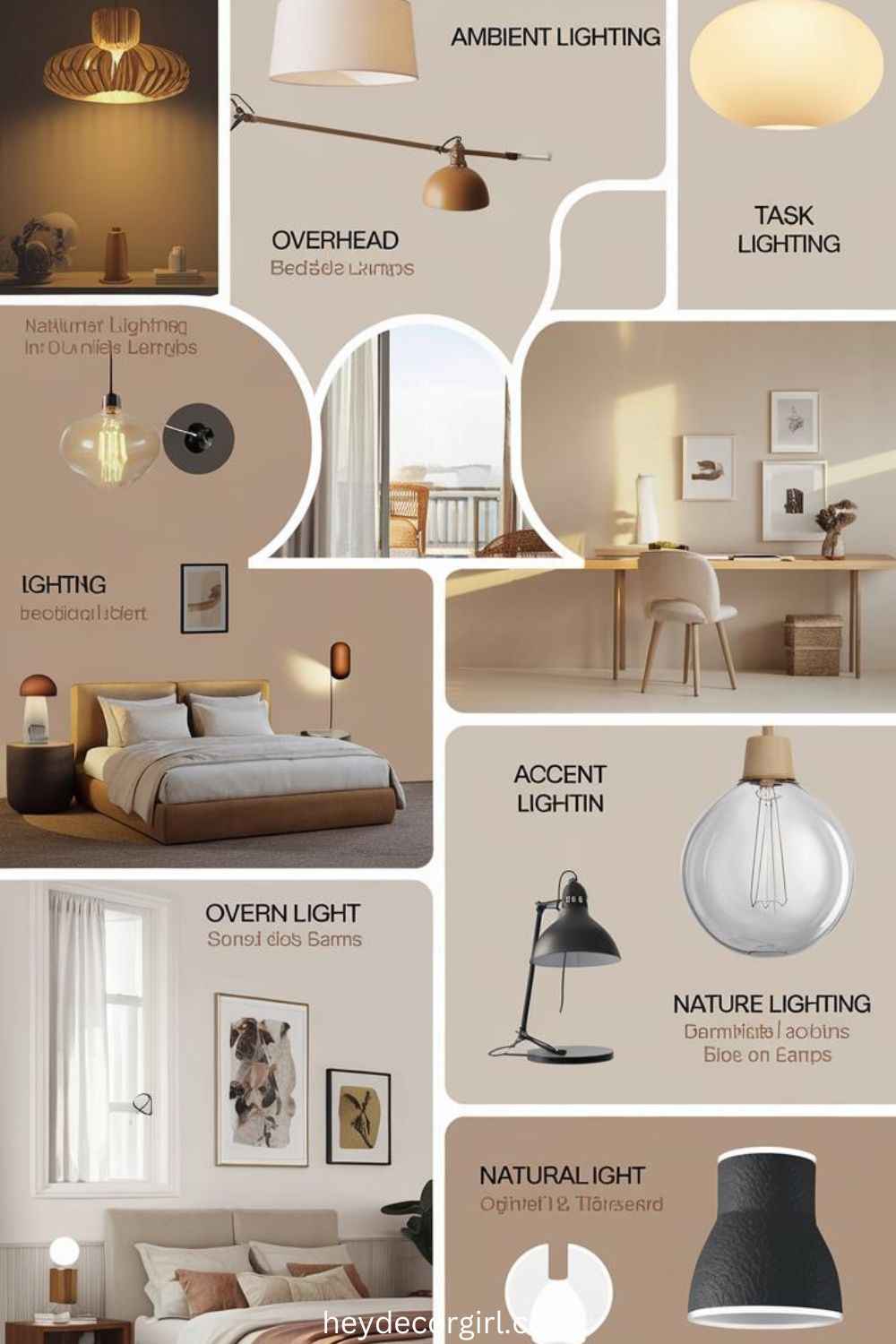
Feng Shui Lighting: The Best Lighting To Use to Enhance Feng Shui.
1. Ambient Lighting
- Intention: Generates general light in the room and offers a homely feel to the room.
- Examples: Wall-mounted lights, recessed lighting, or ceiling fixtures.
- Feng Shui Hints: Select low-key diffused lights to make the environment balanced and harmonious. Do not have too much strong direct lighting, which may cause negative energy.
2. Task Lighting
- Purpose: The area being dealt with is specific, as an activity such as reading or writing takes place.
- Examples: Reading lights, bedside lamps, or desk lamps.
- Feng Shui Tips: Have task lighting in the places where it is required without creating glare. Make sure that it can be used to supplement the rest of the lighting system, and it adds functionality without interfering with the flow of the room.
3. Accent Lighting
- Purpose: Promotes particular aspects or zones, e.g,. Artwork or architectural detail.
- Examples: under-cabinet lights, spotlights, or track lighting.
- Feng Shui Advice: Accent lighting should be used to highlight good features in the room, including beautiful furniture or a plant. Accent lights should not be used in spaces that can cause disproportion or points of focus, which will disrupt the harmony of the room.
4. Natural Light
- Purpose: Optimises daylight and establishes a relationship with the external world.
Examples: Windows, skylight, or curtain filters. - Feng Shui Hint: Maximize the natural lighting through clean windows and light-filtering curtains to enable the sunlight to trickle in. The bed and other important pieces of furniture should be placed in a position that makes use of natural light, but at the same time avoids direct sunlight, ht which may be excessive stimulation.
- Positioning Lamps: The Best places to place lamps and lights overhead.
1. Bedside Lamps
- Perfect Placement: Have two lamps on either side of the bed so that they are symmetrical and balanced. Have them posted at a level that lets them read easily and access them.
- Feng Shui Tricks: Do not keep bedside lamps cclosebeside the headboard of the bed. Make sure that they are placed to provide a relaxing, harmonious energy on both sides.
2. Overhead Lighting
- Perfect Place: Place overhead lighting at the center of the room so as to create balanced lighting in the room. Do not have it hanging above the bed.
It is so close to the ceiling that you can use soft, diffuse lights so that there are no sharp shadows, and a relaxing effect in the room is created. Look into the possibility of dimmers to regulate the amount of light based on the time of day and the activity.
3. Desk and Task Lighting
- Ideal Location: Mount task lights or desk lamps in an area where it is good enough to work or read without glare, or shadowy areas.
- Feng Shui Facts: To allow harmonious energy circulation in your working area, make sure that your task lighting is situated either on one side or behind you, so that it is not brought into direct focus.
4. Accent Lighting
- Ideal Location: Accent lighting can be used to emphasize artwork, plants, or architectural design. Locate it in a manner that attracts attention to the good aspects in the room without causing distractions.
- Feng Shui Hints: Do not install accent lights where they will cause lopsides or too much emphasis. Use them to increase the aesthetics and positive energy of the room.
5. Natural Light Optimization
- Perfect Place: Keep windows and skylights in place to allow natural lighting to be at its best, and at the same time, avoid direct sunlight that can be uncomfortable.
- Feng Shui Tips: The light-filtering curtain/shades can be used to control the natural light. Arrange the bed and other key furniture to take advantage of natural lighting, but they should not be directly exposed to sunlight.
With the proper choice and placement of various kinds of lighting, you can improve the Feng Shui of your bedroom and make it a well-lit and balanced place where you can relax and feel harmonious.
Also Read: Loft Style Bedroom Ideas To Maximize Your Space
7. Incorporating Natural Elements
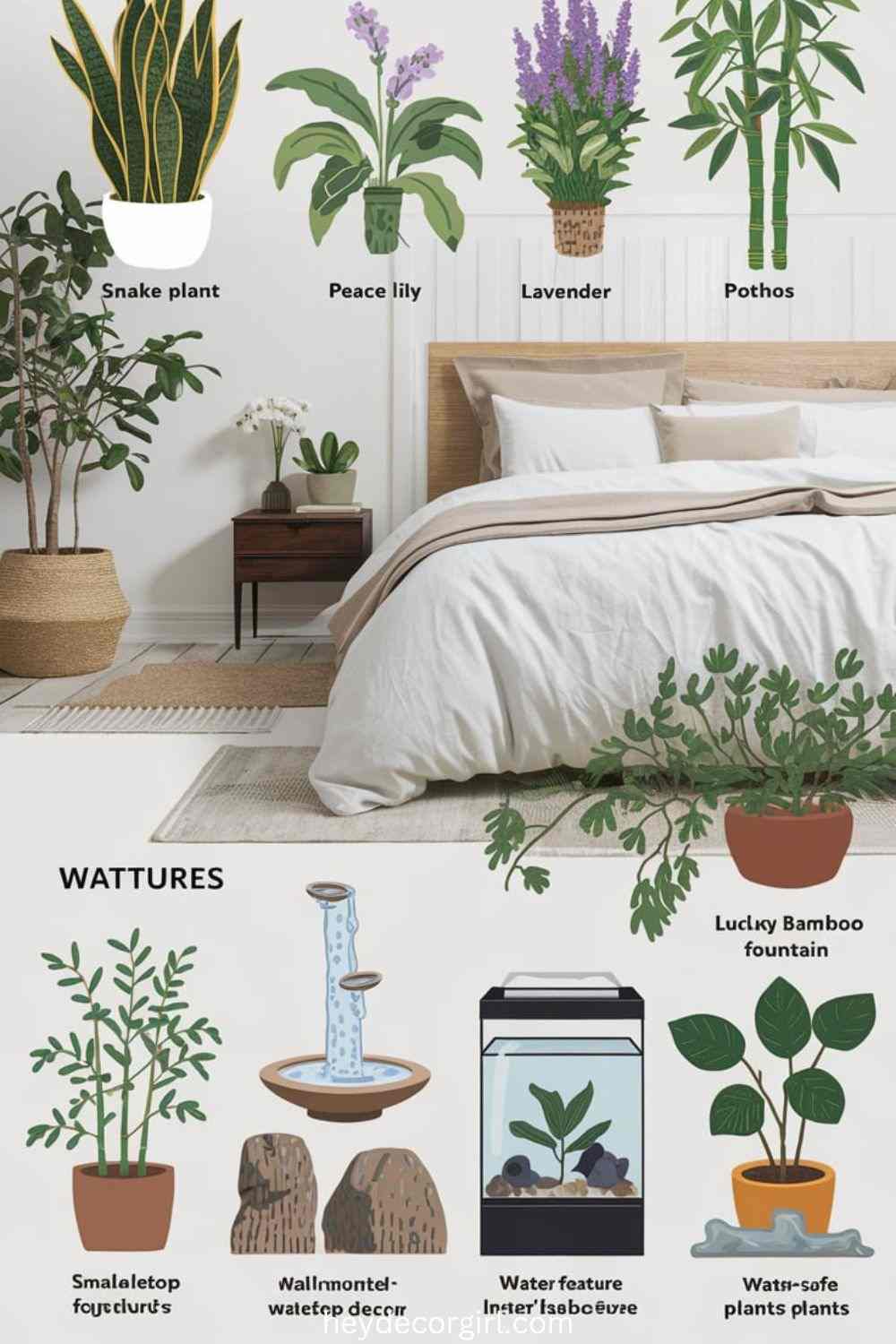
Plants: Feng Shui Bedroom Plants: The Top Ten Best Plants.
1. Snake Plant (Sansevieria)
- Advantages: It is known to have air-cleaning properties and can grow even in low light. It is a representation of stability and safety.
- Placement: Put in corners or places where improvement is required, like at the entrance or bedstand.
2. Peace Lily (Spathiphyllum)
- Advantages: Soothes calmness, and it works well to eliminate toxins in the air. It is a symbol of peace and purity.
- Location: Perfect in the north eastern or south western corner of the bedroom or close to the bed, but not directly under the sunlight.
3. Lavender
- Practical uses: Provides cooling effects and a relaxing scent that may help to improve relaxation and sleep.
- Placement: Place in small pots on nightstands or windowsills where it will get the necessary amount of light.
4. Bamboo (Lucky Bamboo)
- Good luck: It is a token of prosperity and success. The positive energy is believed to be brought by it and improve personal relations.
- Placement: This should be placed at the eastern or southeastern end of the bedroom to have prosperity or close to the entrance.
5. Pothos (Devil’s Ivy)
- Advantages: Not difficult to keep and purifies the air. It is a representation of prosperity.
- Placement: To support or suspend in high place or on shelves, or to allow it to dangle out of an ornamental pot.
- Water Features: The use of Little Water features to improve the flow of energy.
1. Small Tabletop Fountains
- Advantages: Produces a relaxing sound and movement, which enhances relaxation and energizes the flow of energy. It is a sign of plenty and prosperity.
- Placement: Place on a nightstand, dresser, or corner table so that it can be seen and heard without being obtrusive.
2. Aquariums
- Advantages: Will provide a dynamic and relaxing effect in the room. Peaceful fish in small aquariums can lead to a successful and peaceful life.
- Placement: To be placed in a corner of the room or by the entrance, as it attracts positive energy.
3. Water-Feature Decor
- Benefits: Contains such items as decorative water bowls or small, indoor water gardens. They also help to create an atmosphere of peace and encourage the positive energy flow.
- Placement: Serve as a centerpiece on the tables or as a part of a decorative piece. Make them clean and in good condition to prevent stagnant energy.
4. Wall-Mounted Water Features
- Advantages: Provides visual and auditory stimulation as flowing water is used to produce a relaxing and invigorating impact.
- Placement: Hang on a wall in a place that will be seen and enjoyed, but the placement should not cause cluttering and blockage in the room.
5. Water-Safe Plants
- Pros: Water plants such as water lilies or lotuses may be used to add effect to a water feature.
- Placement: Combine them with small water features or pots with water to increase the soothing effects of water within the room.
Incorporating these natural elements, like plants and small water features, you can also improve the Feng Shui of your bedroom and make it a place that fosters harmony, tranquility, and good vibes.
8. Personalizing Your Feng Shui Bedroom
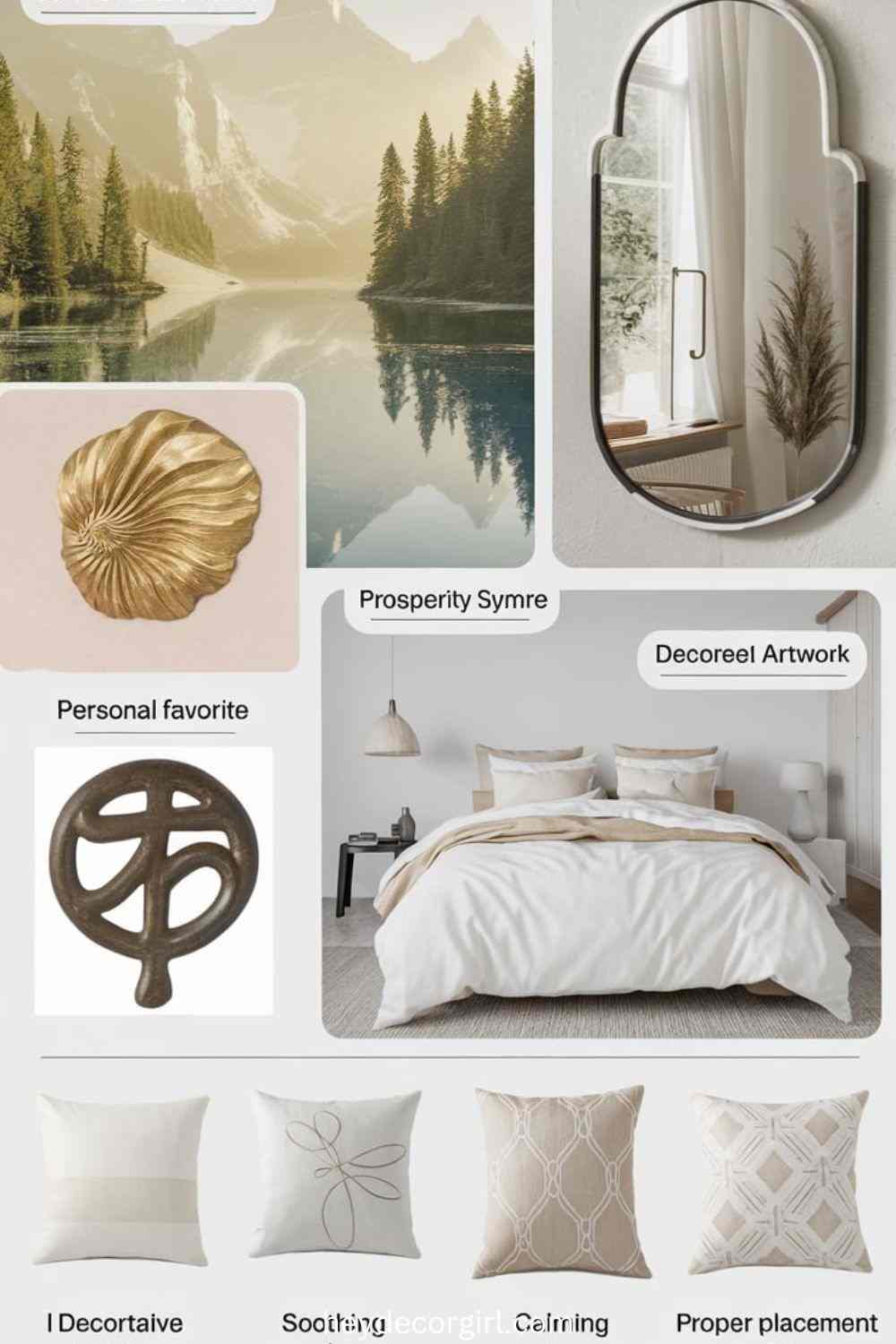
Art and Decor: Selecting Objects That Help to Favorable Energy.
1. Art with Positive Imagery
- Nature Scenes: Select paintings of relaxing nature scenes, including peaceful scenery, flowers, or water. These images advertise peace a a communion with nature.
- Prosperity-related symbols: Use symbols of prosperity and good fortune in Art, including blooming flowers or plenty symbols.
Personal Preferences: Choose the art that appeals to a person and brings out positive feelings. The intimacy with art increases its dynamism in the space.
2. Avoiding Negative Imagery
- Avoid Aggressive or Chaotic Scenes: Do not use artwork that has aggressive or chaotic imagery, which is capable of producing an unpleasant energy.
- No Representation of Strife: Do not have paintings that portray strife, tension, or stress because they will break the peaceful atmosphere of the room.
3. Decorative Accents
- Meaningful Objects: Incorporate objects that hold some personal meaning or good symbolism, including personal heirlooms or gifts.
- Balanced Display: Display decorative objects in a balanced and organised way. It is better not to clutter the room, but make every detail contribute to the positive energy of the room.
4. Mirrors
- Positive Reflection: Reflect positive things in the room, like natural lighting or beautiful scenes with mirrors. Place them in such a way as to complement and not interfere with the flow of energy.
- Avoid Reflection of Clutter: Make sure mirrors are not reflective of clutter or bad places in the room, since this can cause the amplification of negative energy.
- Textiles and Bedding: How to choose the material that fits the feng shui.
1. Cozy and warm Materials.
- Natural Fibers: Select bedding that is made of natural fibers such as cotton, linen, or silk. These substances are breathable, and they help to create a relaxing and peaceful atmosphere.
- Soft Textures: Use soft, luxurious textures that will make it more comfortable and relaxed. Rough or abrasive clothes should be avoided and cause discomfort.
2. Color Choices
- Calming Bedding: Choose soft-colored bedding (soft blues, soft greens, or soft neutrals) and soft colors. These are the hues that facilitate tranquility and harmony.
- Dark and Soft Colors: Do not use bright, ht stimulating colors such as neon or bright reds, which can be too stimulating for a restful bedroom setting.
3. Patterns and Designs
- Calming Patterns: Select soft, restful patterns such as faint floral patterns, striped or pl,ain geometric patterns. Do not use very busy patterns.
- Balance in Design: Make sure that patterns and designs are balanced and do not take over the space. Combine them so that they will complement the entire Feng Shui of the room.
4. Proper Placement
- In line with the Bed: The bedding and the textiles should lie in place with the bed and should be smooth and free of wrinkles. This alignment is endorsing the notion of order and serenity.
- Stability of Theme: Have the same theme throughout textiles and decor that calls out to the overall Feng Shui themes of the room and the personal style.
Through careful selection of artwork, decor, textiles, and bedding that facilitates positive energy, you will be able to design a personalized Feng Shui bedroom that will improve relaxation, harmony, and well-being.
9. Feng Shui Tips for Bedroom Maintenance
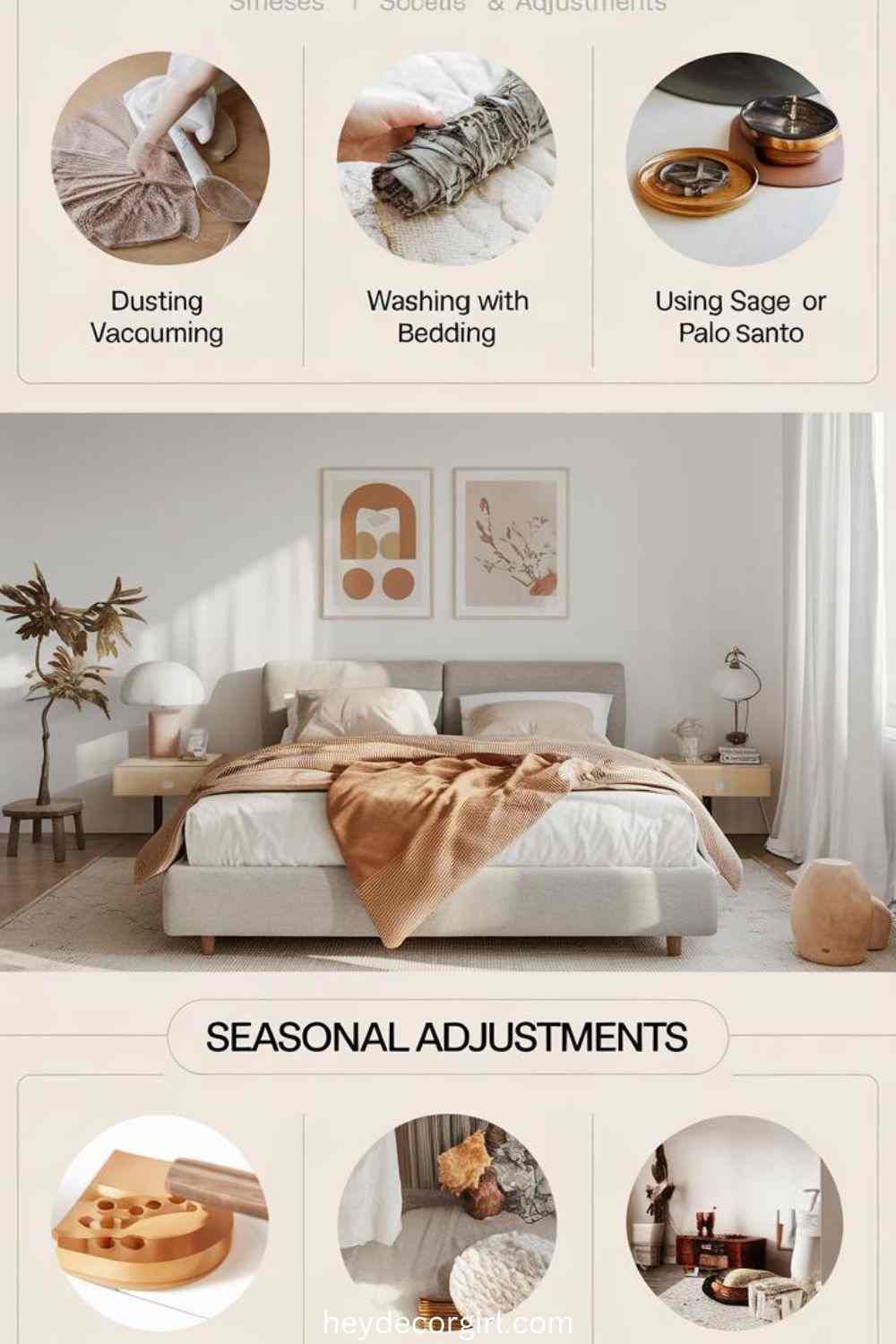
Every Day: How to Be in Good Energy and keepKeep Space in Balance.
1. Physical Cleaning
- Dusting and Vacuuming: Clean the surfaces and vacuum the floor regularly to clean up dust and debris. Attic space beneath furniture should be clean to allow the free flow of energy.
- Bedding Cleaning: Bedding, pillow cases, and curtains should be washed often to ensure that the place is clean and fresh. Wash with natural detergents to prevent the use of chemicals.
2. Energetic Cleansing
- Smudging: Smudge with sage or palo santo, or any other smudging herb, to clear stagnant energy. Light the herb and allow the smoke to permeate the room in sections and areas that may be obstructing energy.
- Sound Cleansing: Make use of sound healing devices such as bells, chimes, and singing bowls to dispel stagnant energy and reanimate the atmosphere in the room.
3. Decluttering
- Regular Organization: Maintain the room clean and in order by routinely cleaning out the room of things that are not needed any longer. Make sure that there is a place where each object is supposed to be to create a feeling of order.
- Avoiding Accumulation of Clutter: It is better to evaluate and eliminate unused or unneeded items and objects every time because clutter hinders the energy flow.
4. Air Quality
- Ventilation: Open windows often to get fresh air into the room to streplace ale air. Think about air purifiers in order to have a healthy air quality.
- Plants Indoors: It is advisable to keep the place of work, that is, the indoor plants, to help purify the air and generate positive energy.
- Seasonal Adjustments: The Changing-Season Adjustments in your Feng Shui Design.
1. Spring
- Fresh Starts: Focus on the renewal with the use of fresh colors, plants, and textiles that are airy. Clean and get ridoff clutter . Newenergy can come in.
- Plants and Flowers: Put some greenery and flowers, as the element is used to represent growth and renewal.
2. Summer
- Bright and Energetic: Light colors and light clothing should be used to reflect the energy of the season. Add things that facilitate a feeling of ease and fun.
- Cool Elements: Include cool colors such as blues and greens, and it would be a good idea to include a small water counter the summer heat.
3. Autumn
- Warm and Cozy: Adding warm colors (oranges, browns, deep reds) is one of the elements to reflect the changes of the season. Blankets and throws can be used as heavier clothing to make the room appear more homely.
- Theme of Harvest: Fill the place with the things of the season, such as pumpkins and autumn leaves, to represent plenty and thanksgiving.
4. Winter
- Comfort and Rest: Concentration on the establishment of a cozy and relaxing atmosphere with warm and soft materials and muted coloring. Include things that help acclimatize and cozy things.
- Winter Whites and Blues: White color combined with gray and navy colors will create a feeling of tranquility during winter. Such additions as soft lighting or a warm blanket can be considered to make it extra comfortable.
With a proper cleaning routine and seasonal changes, you can keep the bedroom in positive energy and balance and create a harmonious and restful environment all year round.
Also Read: Loft Bed Ideas That Feel All Grown-Up
10. Wall-Mounted Water Features
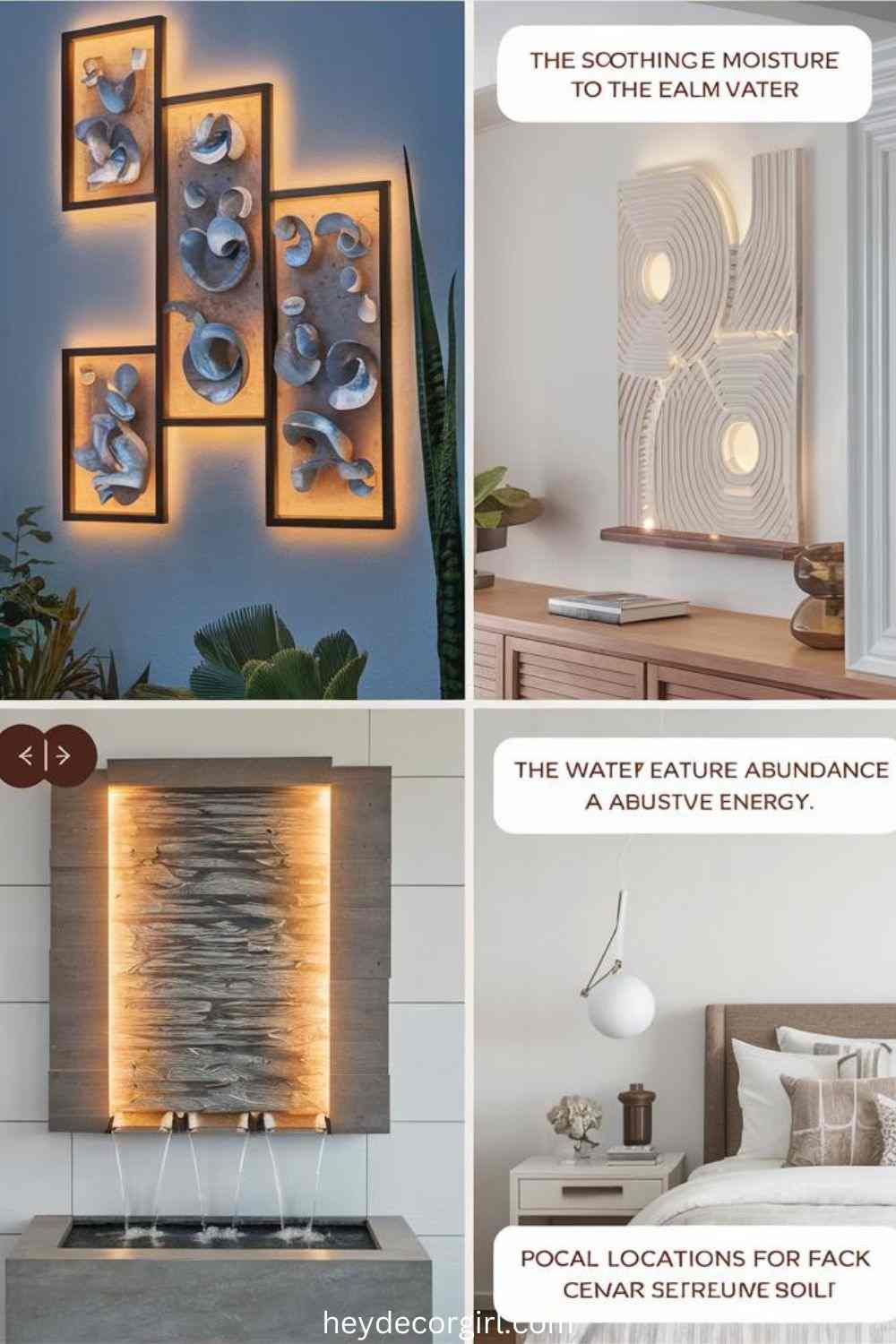
Advantages: Gives Visual and auditory Appeal with flowing water to create a relaxing and revitalizing effect.
1. Visual Appeal
- Aesthetic Enhancement: Wall-mounted water features are a beautiful focal point and bring beauty and sophistication to the room. Their running water forms a dynamic visual interest.
- Artistic Element: Artistic elements are used in many designs, including the use of lighted panels or detailed patterns of water, which adds beauty to the entire decor.
2. Auditory Appeal
- Soothing Music: Soothing soft sounds of water flowing can be soothing, and they induce relaxation and relieve stress. It hides the unwanted noise and generates a quiet atmosphere.
- Energizing Effect: Water sound may also be refreshing and stimulating, and help in maintaining a harmonious flow of energy in the room.
3. Enhanced Air Quality
Humidification: Water features create moisture in the air, which may be helpful in dry climates. This contributes to a healthy and comfortable indoor environment.
4. Feng Shui Benefits
- Positive Energy Movements: A flowing water in Feng Shui represents prosperity and also abundance. It can capture positive energy and promote the overall harmony of the room.
- Placement: Put on the Wall where it can be seen and enjoyed, but make sure it does not provide clutter and does not block the room.
1. Ideal Locations
- Focal Points: Put the water feature on a conspicuous wall so that it may act as a focal point. Make sure that it can be seen well at different angles within the room.
- Opposite Wall: Take into consideration placing it on the wall before the entrance to the room or the bed so that the flowing water can be experienced when entering or when lying.
2. Avoiding Clutter
- Unobstructed View: The feature should be installed in a place where pathways are not blocked or the view is important. Make sure that it does not seem like it is taking over the room.
- Complementary Decor: Select a design that would be compatible with existing decor. There should be no excessive cluttering of the space with other objects; instead, the attention should be on the water feature.
3. Practical Considerations
- Maintenance: Alternatively, choose a place that is easily accessible with regard to maintenanclike replenishing water or cleaning the feature. Make sure that it is close to a source of power in case it needs to be used.
- Water Drainage: Water should be drained properly so that it does not damage the wall or the floor. Make sure that the feature is properly attached and is not dangerous due to any leaks.
4. Combination with Room Design.
- Color and Style: Coordinate the color and style of the water feature with the other decor of the room to make it look seamless. Take into account the features wtthat compatible with the color scheme and the theme of the room.
Through the consideration and location of a wall-mounted water feature, it is possible to add both aesthetic and auditory value to your environment, bringing a sense of relaxation and revitalization, ch is in line with the concept of Feng Shui.
You May Also Like:
FAQ
1. What is Feng Shui ,a nd what is its application to the design of a bedroom?
A. Feng Shui is an ancient Chinese art that aims at establishing harmony and balance in our living spaces by organizing space towards enabling free-flowing energy (Chi). In designing a bedroom, the Feng Shui beliefs can be used to aid in improving relaxation, sleep quality, and positive energy through layout and color choices, and decorations.
2. What is the significance of bed position in Feng Shui?
A. Feng Shui places great emphasis on bed placement since it influences the movement of energy in the bedroom. There is also a good place where you can view the door, but you are not in direct contact with it, which encourages safety and control. This correct positioning facilitates good sleep and good health.
3. What do you consider to be some of the Feng Shui guidelines about bedroom color?
A. The Feng Shui principles oof bedroomcolors are oriented on the establishment of a peaceful and balanced atmosphere. Neutral colors, such as pastels, light blues, greens, and warm, earthy color,s are encouraged because they are soft and facilitate relaxation. Do not use too bright or stimulating colors, which can interfere with the feeling of calm.
4. What are some ways of employing mirrors in my Feng Shui bedroom?
A. Mirrors may also be useful in Feng Shui ,i provided they are used properly. They ought to be positioned to capture positive impressions like beautiful scenery or natural light, and they should not be in a position that they capture clutter or the bed as such. Never put mirrors towards the bed because this may interfere with the energy to relax.
5. What do I think about choosing artwork in a Feng Shui bedroom?
A. When choosing artwork to decorate a Feng Shui bedroom, make sure you select art that invokes positive feelings and brings about calmness. Choose landscapes, relaxing pictures, and prosperity signs. Do not have any art that portrays fighting or violent motifs since this will form bad energy.
6. What can I use to bring nature to my bedroom?
A. The use of natural element,s such as water and plan,ts can also be used with Feng Shui as a way of creating a healthy and balanced environment. Plants that are easily maintainable, like peace lilies or snake plants, should be chosen to do well indoors. Adding the soothing sounds and moisturizing air, small water features may be used.
7. What are some Feng Shui secrets of a small bedroom?
In small bedrooms, the design is more about maximising space whilst having harmony in the layout. Multifunctional furniture, clean room, light, and neutral colors should be used to provide the impression of openness. Look into vertical storage machines and mirrors to make the space look bigger.
8. What is the impact of seasonal variations on the Feng Shui in the bedroom?
A. The energy of your bedroom might be affected by the changes in seasons, and you can make your Feng Shui layout and increase comfort and harmony. During spring, emphasis may be made on renewal and new colors, during summer, gilded and airy decor may be used, during autumn, warm colors and cozy fabrics, and during winter, the accent should be made on comfort and rest.
9. How is it possible to preserve good Feng Shui in the bedroom?
A. As a way of keeping the bedroom in a positive Feng Shui, keep the room tidy and fresh, do energetic cleansing exercises such as smudging or sound healing, and change with the seasons. Maintain neatness, good air quality, and regularly review the layout and decor to make sure it still maintains a balanced atmosphere.
10. Is it possible to mix Feng Shui principles with other styles of design?
A. Of course, it is possible to integrate Feng Shui with other design styles. The trick here is to incorporate Feng Shui features in a manner that complements and adds to your preferred design,n and make sure that the general layouis twell-balancedd and would facilitate good energy circulation.