![Hey Decor Girl [Latest Trending Decor Design Ideas]](https://heydecorgirl.com/wordpress/wp-content/uploads/2024/08/Heygirldecor-Logo.png)
Home Office Setup Ideas, it is understood that space constraints can introduce their own special problems. We will discuss innovative ideas that address shorter spaces where every inch will matter, along with incorporating functional and stylish features. We strive to help you design an efficient and motivating workspace that improves your productivity and pleasure by improving such common problems as space limitations and messiness.
Having a productive and pleasant workspace at home is essential to ensure that you have a well-organized and attractive office environment. The proper design at home can have a profound effect on your work life and overall health, whether you work full-time or just need a specific area where you can perform the occasional duties.
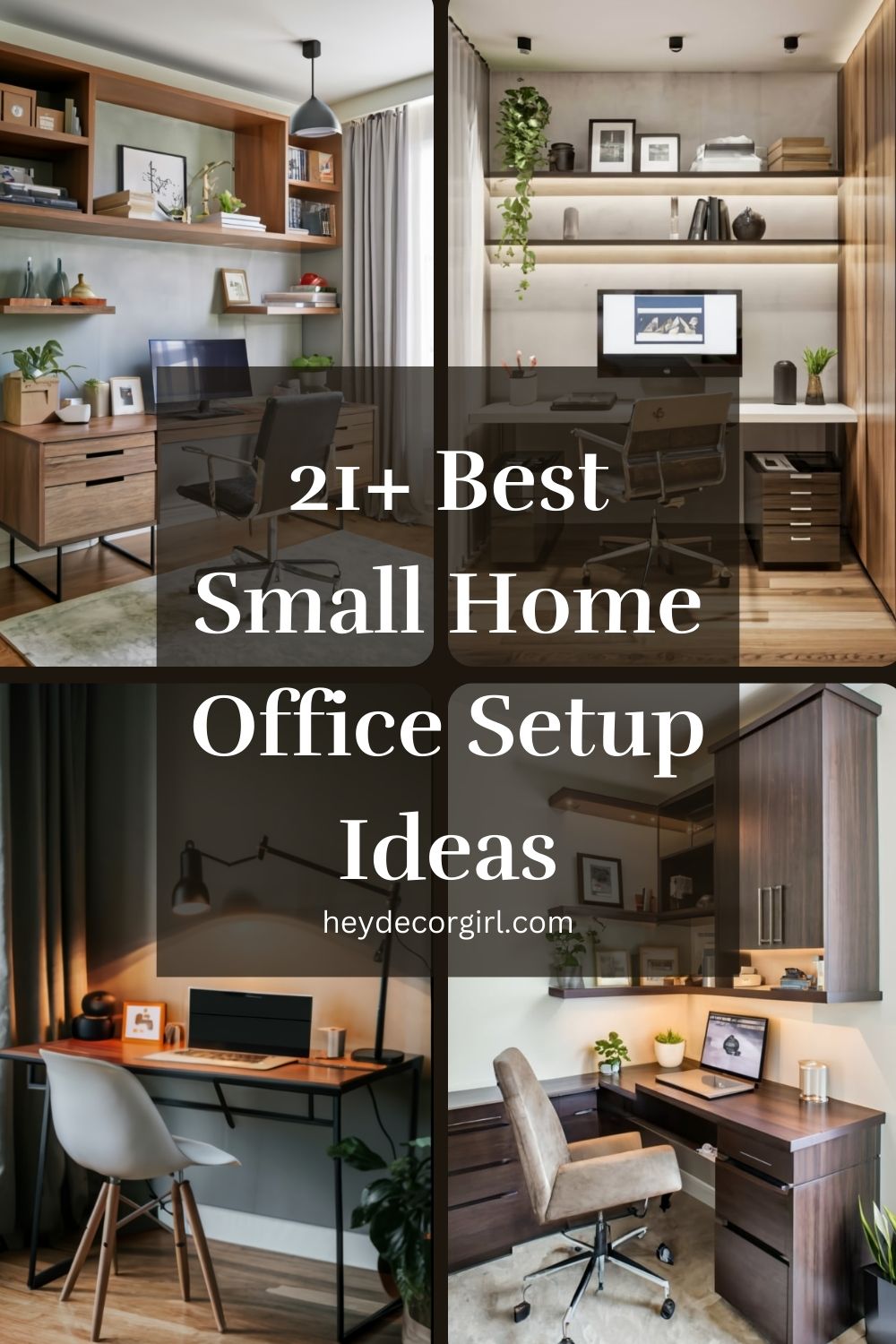
Best Small Home Office Setup Ideas
1. Maximizing Space
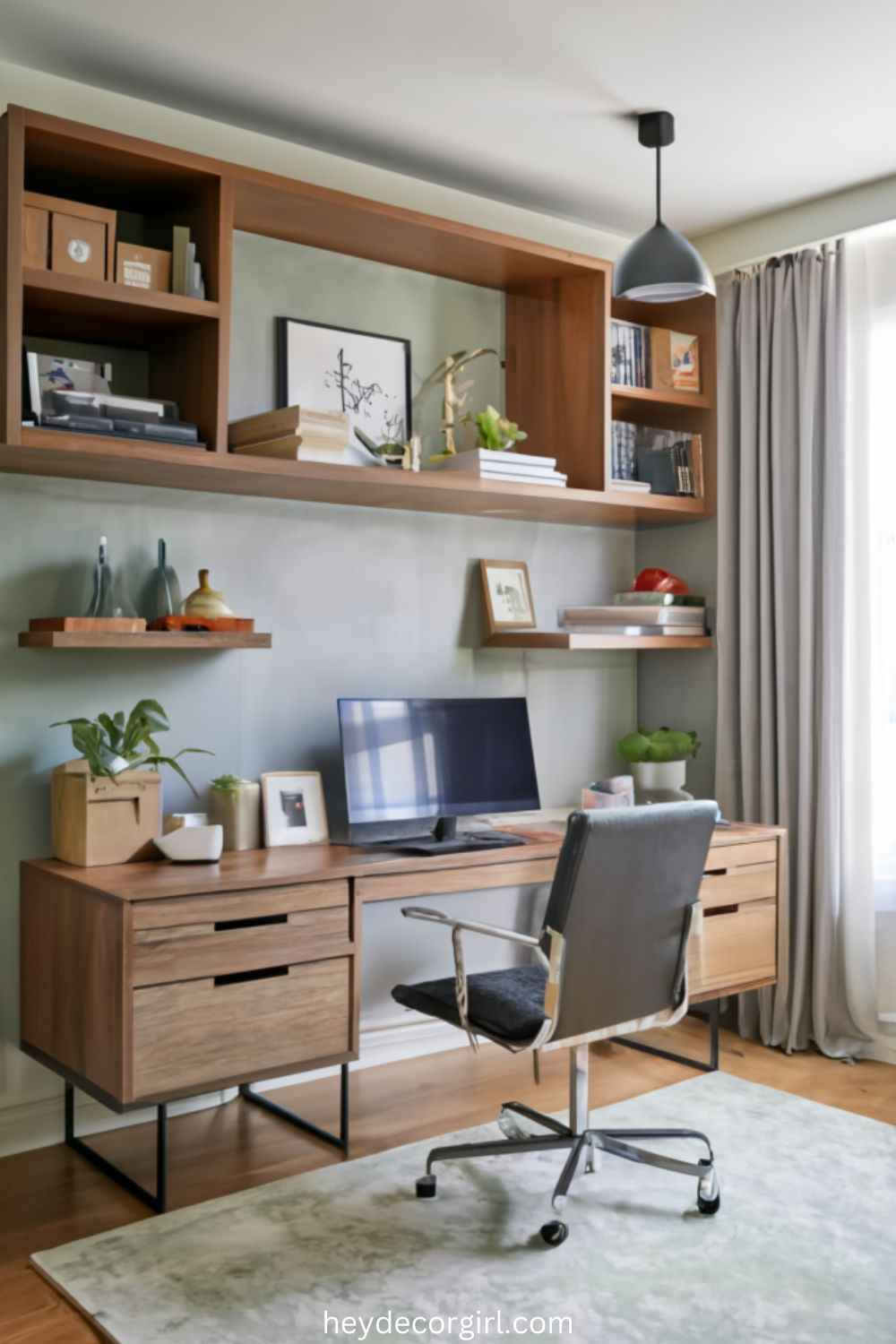
Vertical Storage Solutions
- Shelving: Books, office supplies, and decorations should be stored using wall-mounted shelves to clear extensive space at the desk. Think about floating shelves or tall, thin, not consuming too much floor space devices.
- Wall-Mounted Organizers: Use wall-mounted organizers pegboards or cubbies, to store your necessities in reach without wasting desk and floor space. These can store office materials, cables, and even personal details such as pictures or paintings.
Multi-Functional Furniture
- Desks with built-in storage: Go with desks having built-in storage options such as drawers, shelves, or cubbies. This will minimize the amount of clutter and will keep your workspace clean without the need to add extra furniture.
- Foldable Chairs: The chairs used should be foldable or stackable and should be easy to put away when not in use. This is particularly handy in small areas where every inch counts.
2. Smart Layout Choices
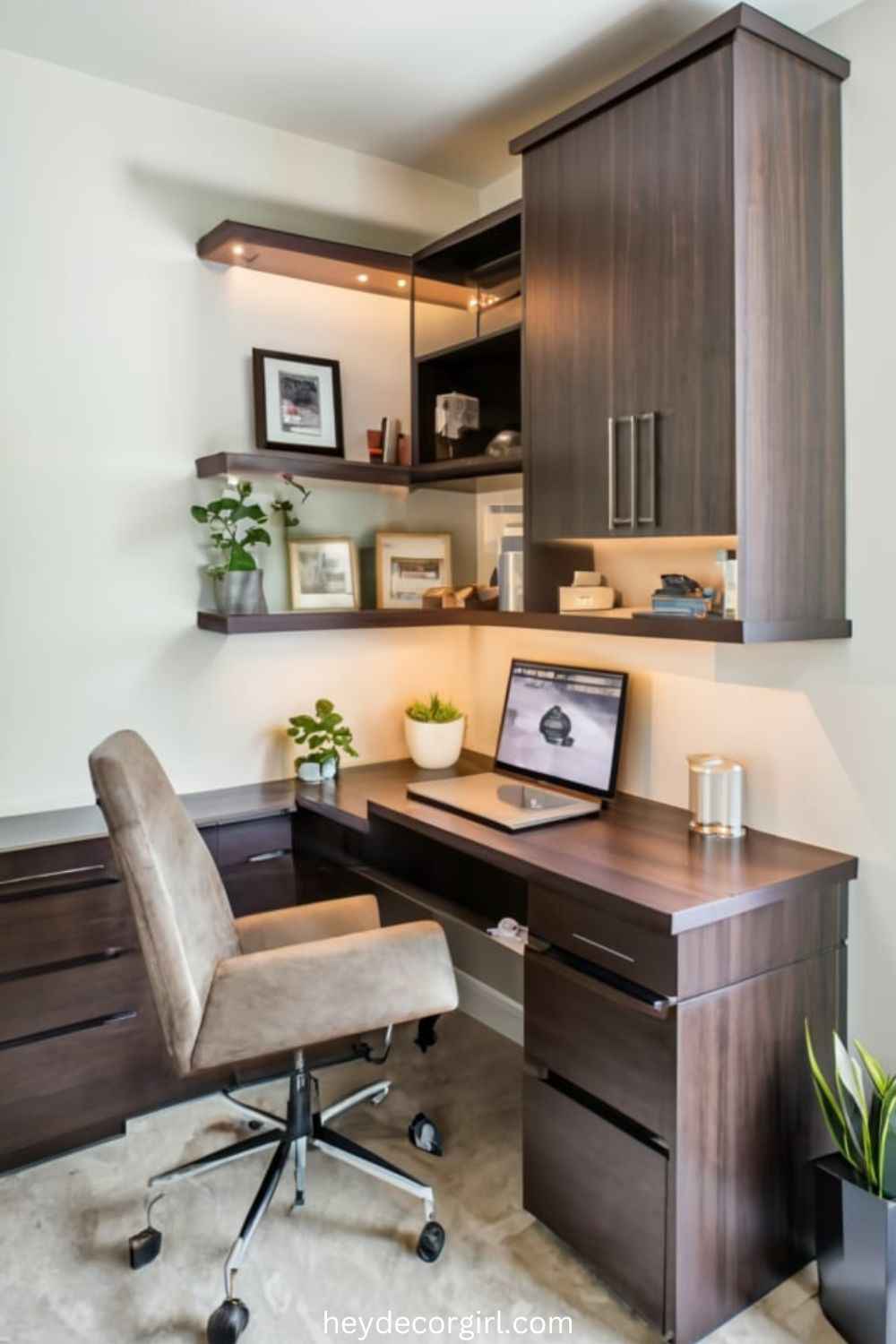
Corner Desks
- Making the most of Corner Spaces: A corner desk is a good solution to small home offices because it utilizes otherwise unused corner spaces. Find desks that can be fitted in the corner of a room so that you can use the full amount of the available space to create a work area without interfering with other sections. Instead, use designs with plenty of storage and work surface, but have a small footprint.
Wall-Mounted Desks
- Conserving Space on the Ground with Wall-Mounted Workspaces: Wall-mounted desks can be installed in small areas because they do not occupy as much ground space as a standard desk. These desks are fixed directly against the wall, a fact that contributes to maintaining the area open and airy. Select a design that has folding or retracting features to increase on space even more. This system may come in handy, especially in those rooms whose space has to be flexible for many purposes.
Overall Setup
- Design: Place the corner desk inside an empty corner and make sure it fits properly, without blocking the pathways. In the case of the wall-mounted desk, choose a wall that can be easily accessed, but the workspace should not be intrusive. Both arrangements must show how intelligent design decisions can be used successfully to improve the capabilities of a compact office.
3. Creative Use of Lighting
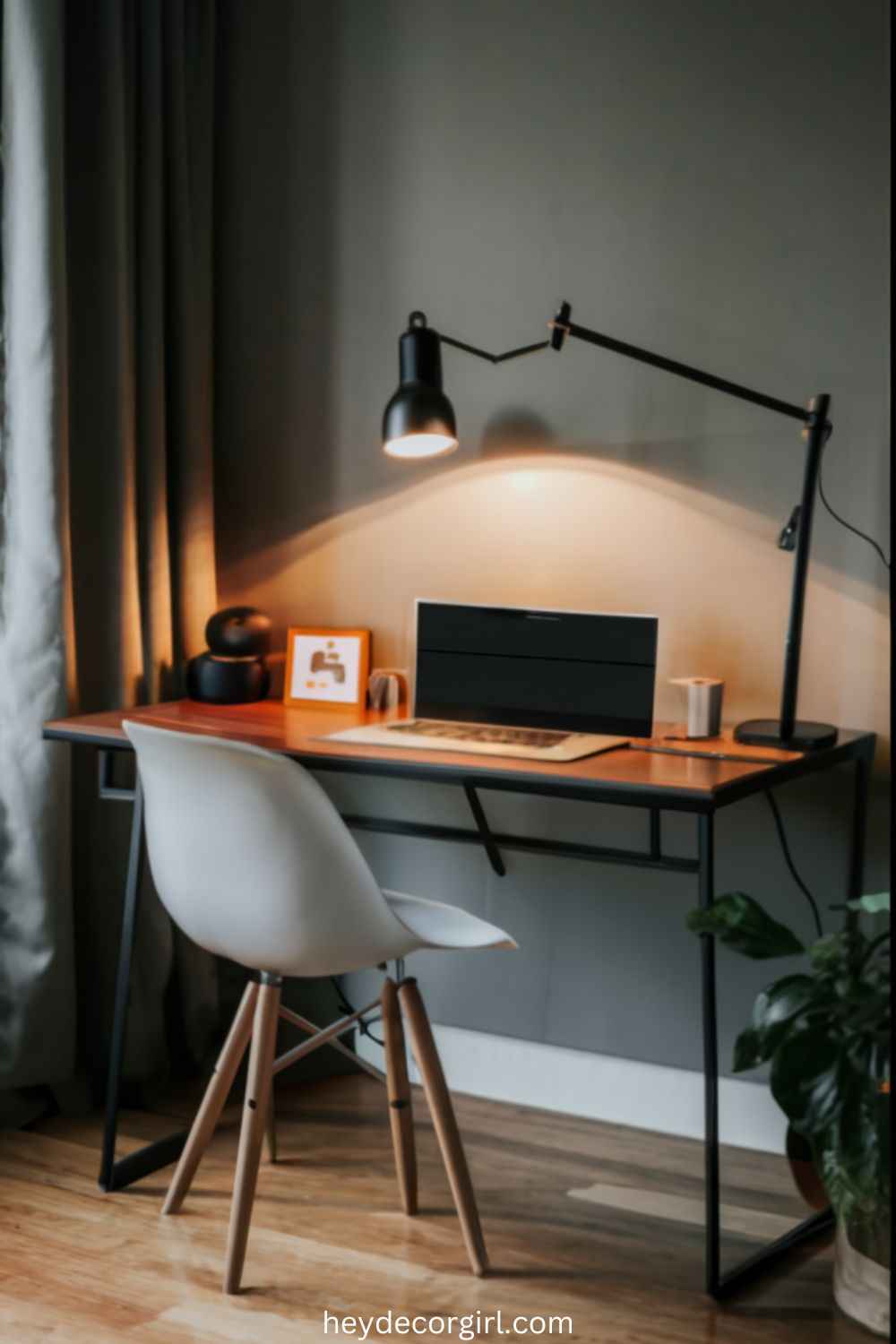
Task Lighting
- Adjustable Desk Lamps: Add a decorative, adjustable desk lamp to get concentrated light for work. The lamp must have an adjustable brightness or a flexible arm to suit different needs and to limit eye strain. Select a design that will match the general appearance of the home office but provide practical lighting.
Ambient Lighting
- Soft Overhead Lighting: Use soft and diffused overhead lighting to make the environment comfortable and properly lit. Possible solutions include recessed, pendant lighting, or LED fixtures that would reduce the glare and produce a balanced distribution of light across the room. Make sure the lighting is diffused, not to eliminate harsh shadows, but to keep a pleasant working environment.
Overall Setup
- Lighting setup: The home office environment should have both task and ambient lighting in the picture. Have the adjustable desk lamp active at the workspace, and its light directed toward the desk. The dim ambient lighting must be seen, and it should be warm and welcoming. The general arrangement must emphasize the benefits of using a mix of various lighting sources in the functioning of a small office.
4. Ergonomic Considerations
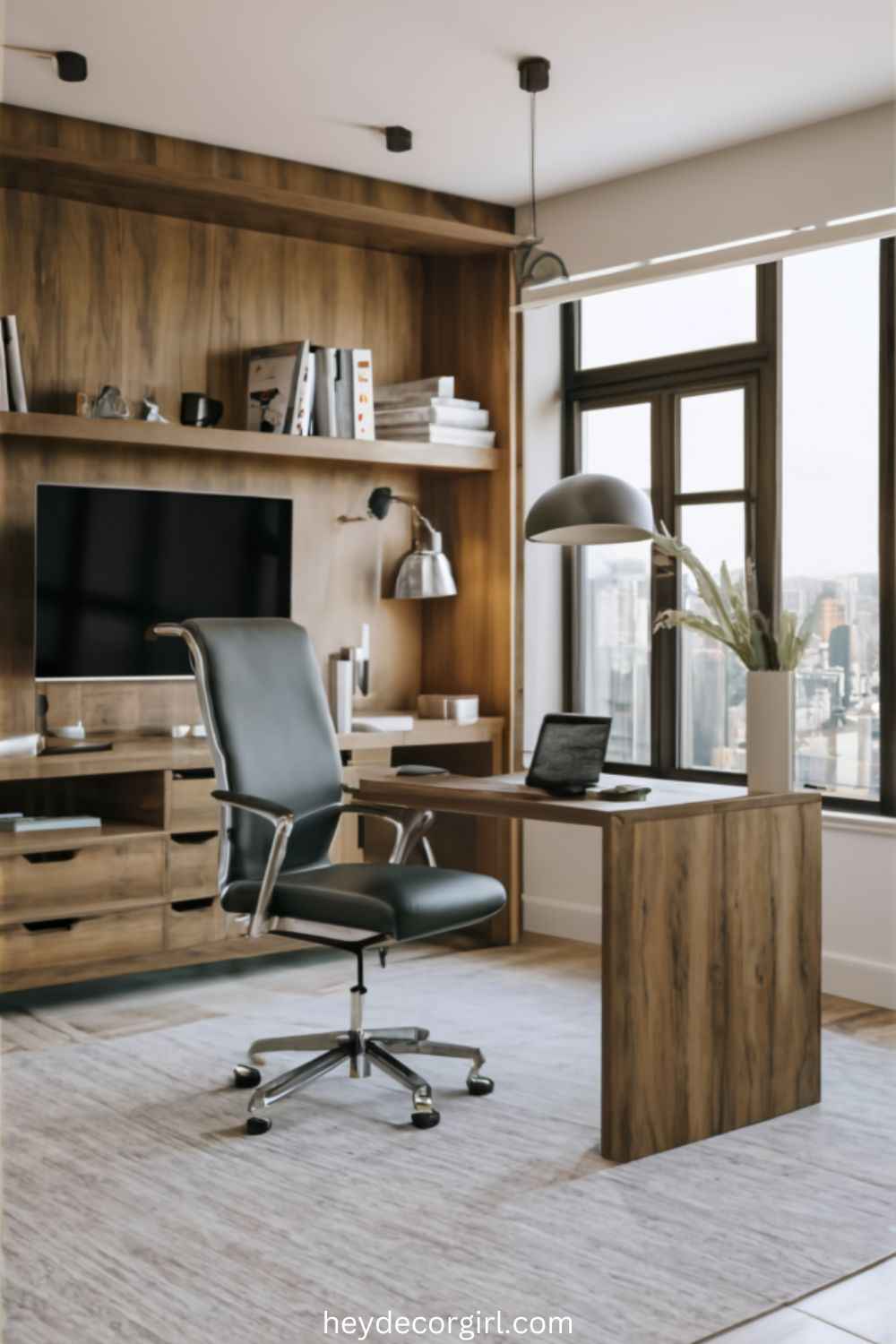
Adjustable Chairs
- Feeling Comfortable with Adjustable Seating: Select a chair with several adjustable options, such as seat height, backrest position, and armrest position. The chair must be in the right position and comfortable enough to work throughout the day. Seek out things such as lumbar and cushioned seating that would improve the ergonomic value.
Proper Desk Height
- Preventing Fatigue in Ergonomic Desk Situations: Make sure the desk is tall enough to maintain a neutral wrist position during typing and a comfortably placed arm. The desk must match the chair in a way that your elbows make a 90-degree angle when sitting. Such an arrangement will contribute to improved posture, which will reduce strain and contribute to overall comfort and productivity.
Overall Setup
- Ergonomic Arrangement: The picture must include the adjustable chair, as well as the correctly set desk. Place the chair where the adjustments are visible and the desk set to an ergonomic height with the user sitting ergonomically. The workspace must highlight how these ergonomic features add to a better and more comfortable working environment at home.
5. Personalized Decor
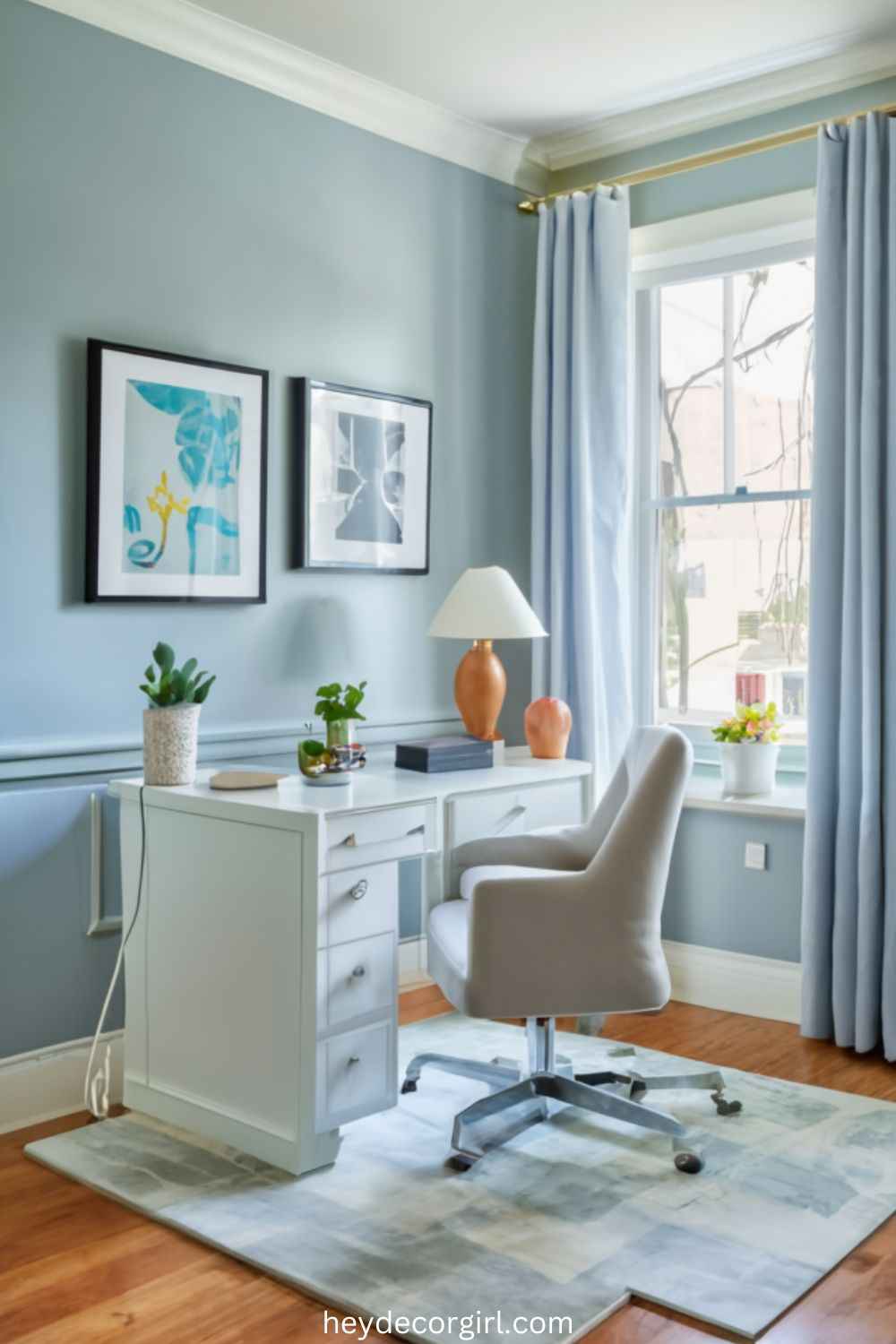
Color Schemes
- Picking Colors that Increase Productivity and Mood: Find a color scheme that will create a positive and productive workspace. Blues and greens are calming, whereas yellows and oranges are energizing and stimulating. Be sure that the selected colors match the home office look as a whole and make the home office look friendly.
Personal Touches
- Adding Artwork and Photos: Include personal details like artwork, photographs, or motivational quotes to add character to the workspace. Select furniture that appeals to your personality and style, and set it up so that the office is a unique creation. This might involve framed photos, a gallery wall, or a corkboard with our personal souvenirs.
Overall Setup
- Decor Arrangement: The image should reflect the selection of color scheme used on the walls, furniture, and accessories. Add personal elements, such as artwork and photographs, in the office. It must be a setting that is both work-friendly and full of inspiration, with a balance between professional functionality and personal style.
6. Tech Integration
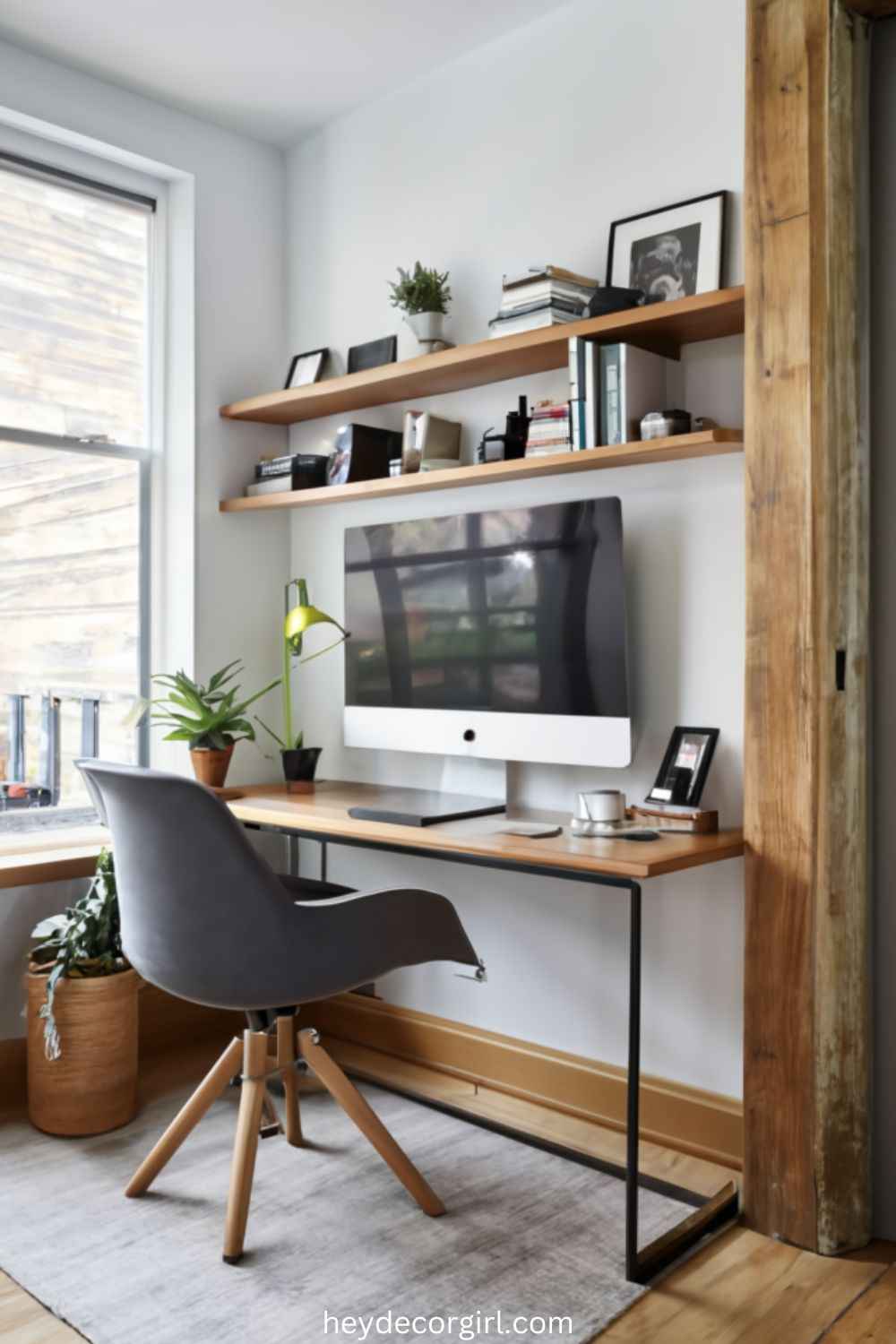
Cable Management
- Arranging Cables with Clips and Sleeves: Introducing a method of managing cables is important to have the cords organized and hidden. Attach cable sleeves or cable clips and bundle and route the cables along the desk and walls. Make sure the arrangement is as uncluttered as possible, and there is no tangling of wires and cables in the workspace.
Smart Devices
- Adding Technology such as Smart Speakers or Assistants: Add smart devices that will make work easier and more convenient. Add a smart speaker or virtual assistant to the desk or close by, and show how the devices can be utilized to perform tasks like setting reminders or lighting, or playing music. Make sure that the devices fit perfectly into the workspace without contributing to the mess.
Overall Setup
- Tech Arrangement: The picture must demonstrate cable management and integration of f smart device into the home office. Especially emphasize the way cables are arranged and controlled, the way intelligent devices are placed and used. The installation must demonstrate a technologically advanced office environment where technology is in support, but not dominating the look.
7. Space-Saving Accessories
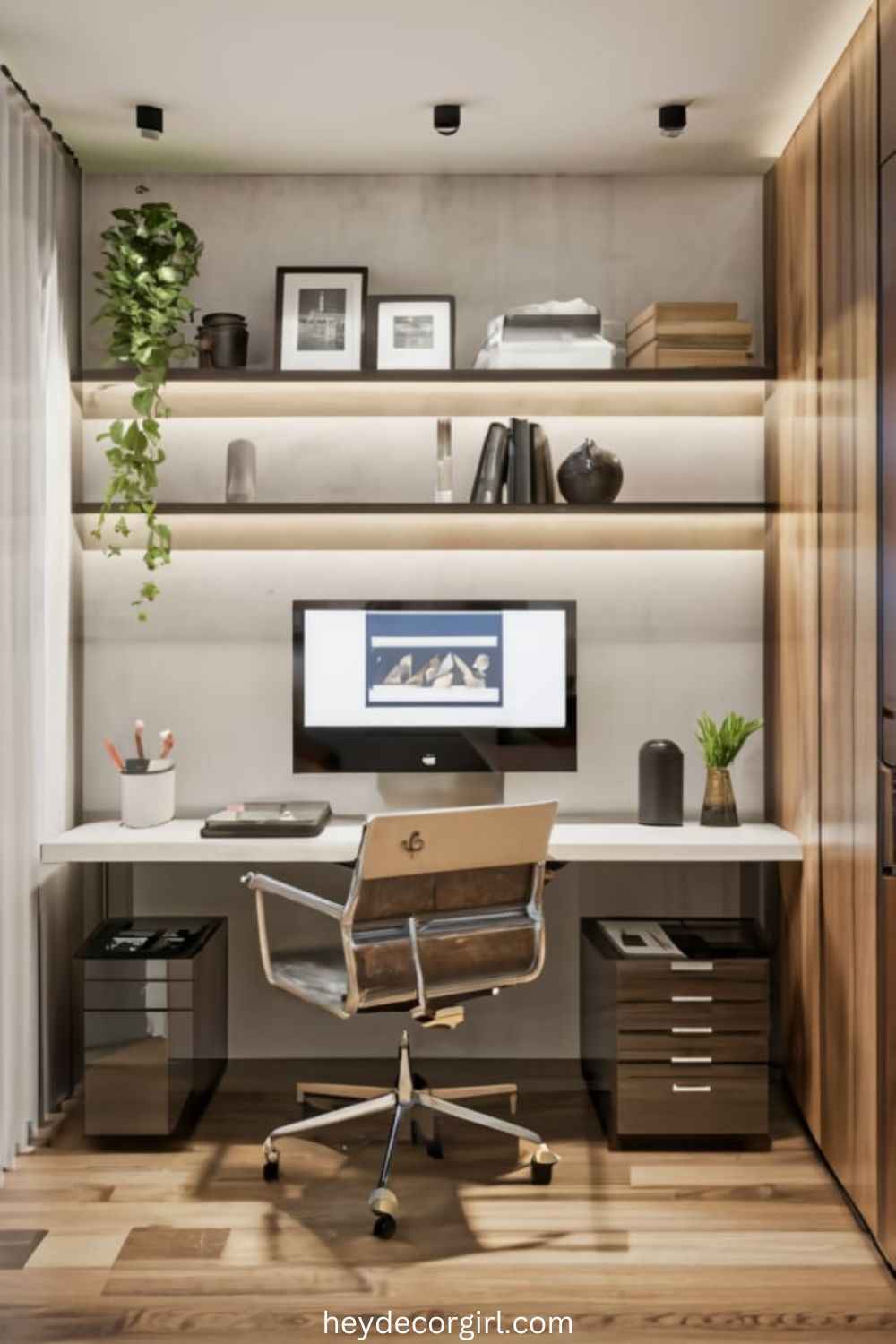
Under-Desk Organizers
- So the Essentials are Within Reach but Out of Sight: Organize the items that are necessary and always needed in your office, like notebooks, pens, and other office necessities, using under-desk organizers, either in a drawer unit or hanging tray. These accessories are useful to maintain a clear workspace and make sure that the necessary things are conveniently close by. Use narrow, subtle shapes that do not occupy too much leg space or cause movement difficulties.
Small Printers and Scanners.
- Opting to Use Smaller Devices to Free Up Space: Choose small and all-in-one printers and scanners that can fit t a shelf or under a desk. These miniature gadgets provide equal capabilities like their bigger counterparts, but occupy less space, thus ideal in a small home office. Select smooth and contemporary designs, contributing to the aesthetic of the space.
Overall Setup
- Space-Saving Arrangement: Under-desk organizers and space-saving devices should be included in the workspace. Storage under the desk needs to be discreet, fitting in with the rest of the setting, whereas the small printer or scanner is easily stashed in a corner or underneath the desk. The installation must focus on the effective utilization of space without compromising on functionality.
8. Inspirational Themes
Minimalist Designs
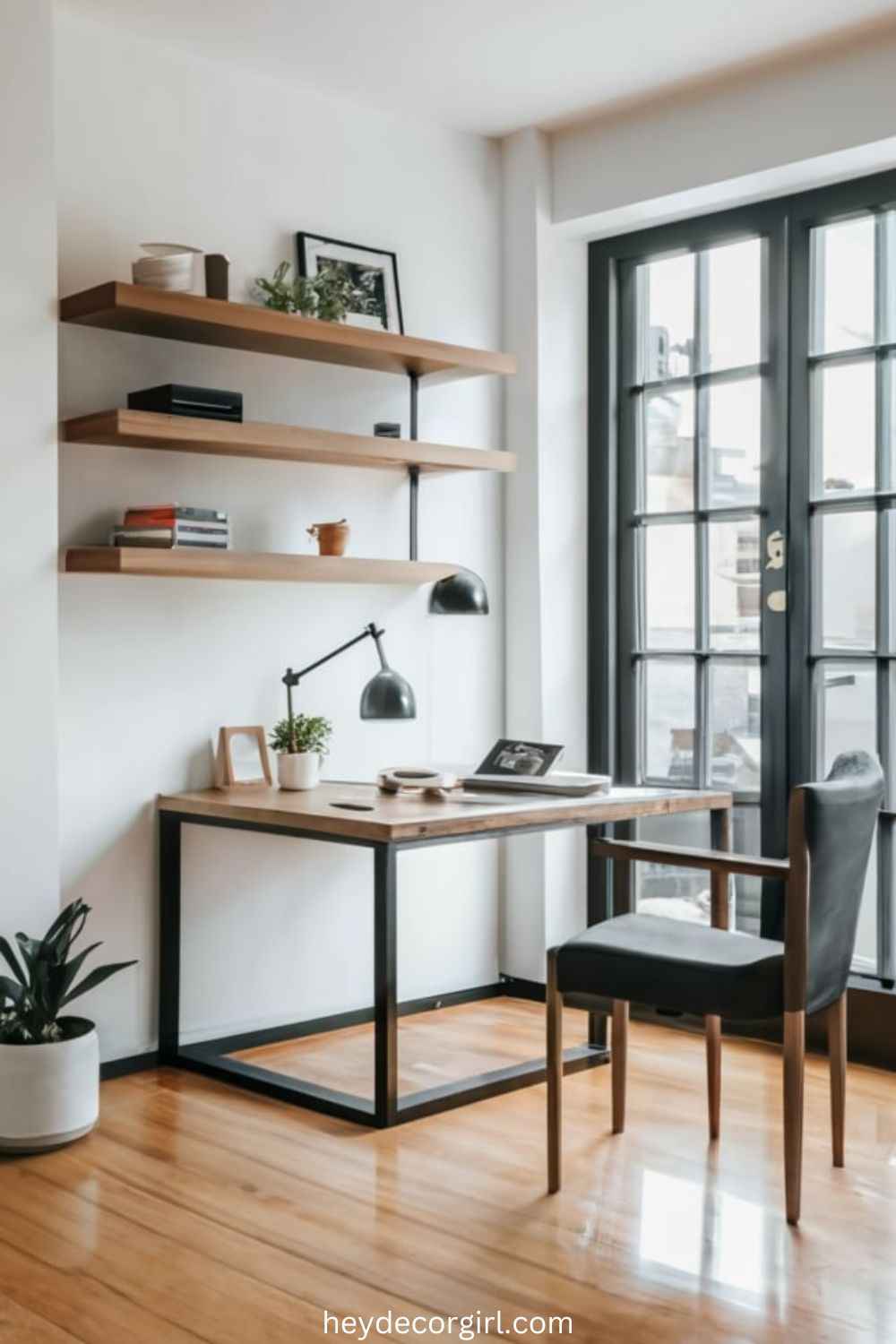
- Designing a Clean, Clutter-Free Workplace: Worry about minimalist design that emphasizes simplicity and functionality. Paint in a colorless or gray palette with straight lines and few or no decorations. Choose smooth furniture and storage systems that will keep the workspace tidy and devoid of unnecessary clutter. The idea is to make the environment open and airy, encouraging concentration and output.
Industrial Style
- Modern with Metal and Wood: Add some industrialism to a workspace with exposed metal frames, rustic or reclaimed wood surfaces, and neutral colors. Select furniture that looks raw and unfinished in a way that displays the natural materials. Complete the industrial aesthetic with metal lighting, shelves, and details, fusing form and functionality visually to impressive effect.
Overall Setup
- Inspirational Arrangement: The picture must also consist of minimalist and industrial design to demonstrate how the style can form a motivating and effective home office. Emphasize the clear and uncluttered interior with a minimum amount of furniture and decor, and include some elements of the industrial, such as metal and wood, to offer a contemporary flair. The working environment must be practical and pleasing to the eye.
9. Plant Life and Greenery
Desk Plants
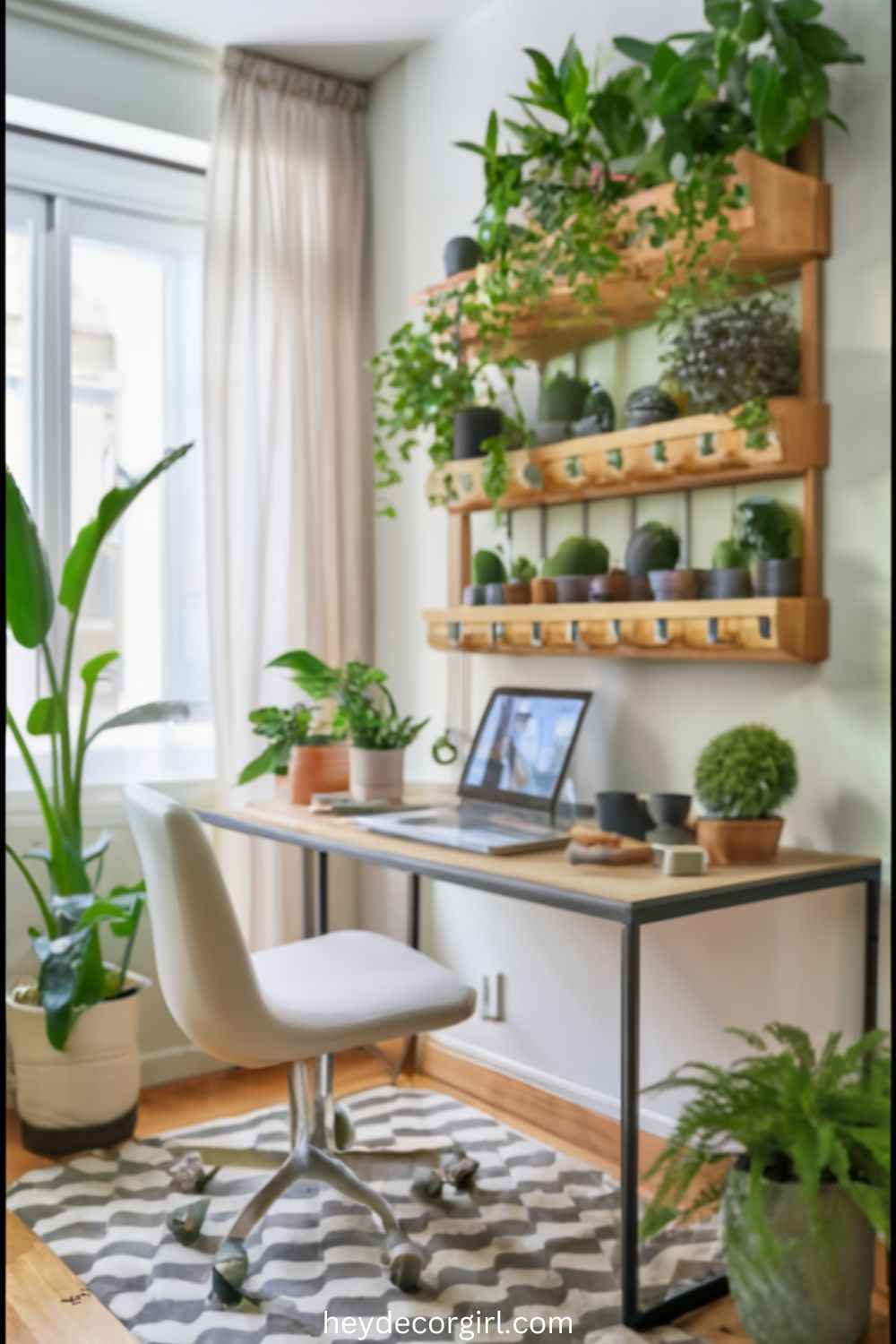
- Bringing in Small Plants to Add Nature: Add small, low-maintenance desk plants such as succulents, cacti, or small potted ferns into your workspace to add a touch of nature. Plants can help improve mood and productivity, and are also calming and refreshing in the office. Buy stylish planters that will match the office decoration and position them on the desk or shelves.
Vertical Gardens
- Using Wall-Mounted Planters to Plant More: Including vertical gardens or the use of wall-mounted planters by taking advantage of the wall space. They can be used to plant a mix of small plants or herbs to provide a living wall that enriches the environment without consuming floor space. Vertical gardens can be planted that not only contribute to the office atmosphere of greenery but also purify the air.
Overall Setup
- Planting: Small desktop plants must be displayed on the desk or shelves, and a vertical garden on the wall in the background or near the desk. The mixture of desk greens with a vertical garden must give the workspace a new and fresh look, adding natural components to the workspace and keeping the office space tidy and orderly.
10. Flexibility and Adaptability
Desk Plants
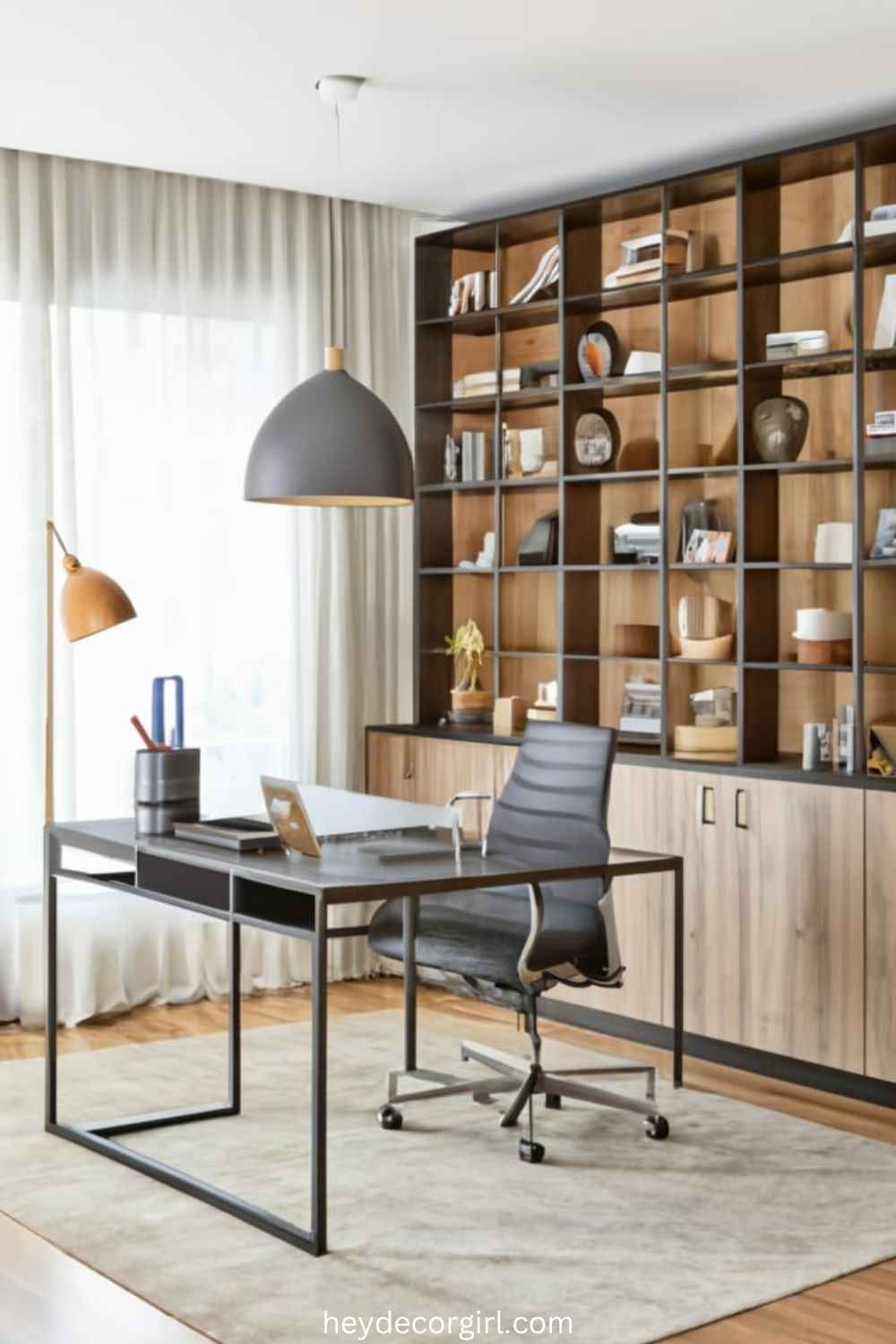
- Bringing the Outdoors Indoors: To include some greenery to your work area, add low-maintenance, small desk plants, such as succulents, cacti, or ferns in a small pot. These plants also bring a relaxing, de-stressing effect to the office and may enhance mood and productivity. Select beautiful planters that will match the office setting and place them on the desk or shelves.
Vertical Gardens
- Planting More Greenery: Use the wall space by planting walls with vertical garden setups or wall-mounted planters. They can be planted with all sorts of small plants or herbs, thus forming a living wall which adds more ambience without consuming floor space. Not only do vertical gardens create a green atmosphere, but falso acilitate air purification in the office.
Overall Setup
- Plants on the desk: There should be small plants on the desk or shelves and a vertical garden on the wall behind or next to the desk. Desk plants and a vertical garden must form a refreshing, colorful atmosphere in the workspace, adding to the environment organic materials without a disorderly appearance.
FAQ
1. What can I get out of a small home office?
Free floor space by using vertical storage systems like wall-mounted shelves or organizers. Choose versatile furniture such as desks with integrated storage or collapsible seats in order to maximize a small space.
2. What are a few suggestions on how to have an ergonomic home office?
To maintain a good posture, invest in an adjustable chair, and your desk has to be of the right height, so you do not strain. See about adding a footrest and positioning your monitor to eye level to make work as comfortable as possible during long working hours.
3. What can I do to better lighten a small home office?
To minimize eye strain, use both task lighting (adaptable desk lamps) and ambient light. Make sure that your lights are low but bright enough to keep you attentive all day long.
4. What are some cool ideas for decorating a small home office?
Make your own space unique and in a harmonious color scheme that promotes productivity. To make the space friendly and encouraging, add personal details like framed paintings, photographs, or inspirational quotes.
5. What is the best way to incorporate technology in a home office that is small and not crowded with clutter?
Use cables with clips and sleeves to organize them. Add functionality with smart devices such as smart assistants or orspeakerss, but use smaller technology options that do not clutter the space as much.
6. What are the space-saving furniture options in small home offices?
Use under-desk storage, small printers, and modular furniture, which can be reconfigured as necessary. Folding furniture includes desks and chairs that are not only good in small areas but also flexible and not bulky.
7. What is the appropriate color scheme in my home office?
Use colors that facilitate concentration and creativity in character, like cool blues to give the space a sense of calm or warm colors like yellow to give the space a sense of energy. Make it even with the neutral base and accent color personality.
8. Which plants should be in small home offices?
Small ferns and cacti, succulents, and other plants that thrive in dry conditions are best since they need little care. Vertical gardens or planters mounted on the walls can be included as well because they do not occupy floor space.
9. What can I do to ensure that my home office is flexible and adaptive?
Install a modular work that can be easily rearranged to suit another activity. Select folding or expanding pieces, such as desks or chairs, that can be folded up when not in use to stretch as much as possible in the office.
10. What could be the bare bones of a small home office design?
The work environment should be clean and simple, with few or no ornaments or unnecessary furniture. Use straight lines, a neutral color scheme, and practical items that increase concentration and efficiency, yet are sleek and modern.