![Hey Decor Girl [Latest Trending Decor Design Ideas]](https://heydecorgirl.com/wordpress/wp-content/uploads/2024/08/Heygirldecor-Logo.png)
The Staircases Design Ideas can be used to redesign your home in outstanding ways that can enhance both its beauty and functionality. A good staircase is not merely a tool to access a different level; it is a fascinating element to look at, and can greatly improve the overall aesthetic of your own space. An up-to-date modern staircase can make your house skyrocket, or a classical staircase can be the most traditional and integrated with the functionality of your house. After reading this article, you will get motivated and start outfitting your home by using the 30 best staircase designs suggested by the leading designers.
Best Staircase Design Ideas To Elevate Your Home
1. Modern Minimalist Staircases
Description
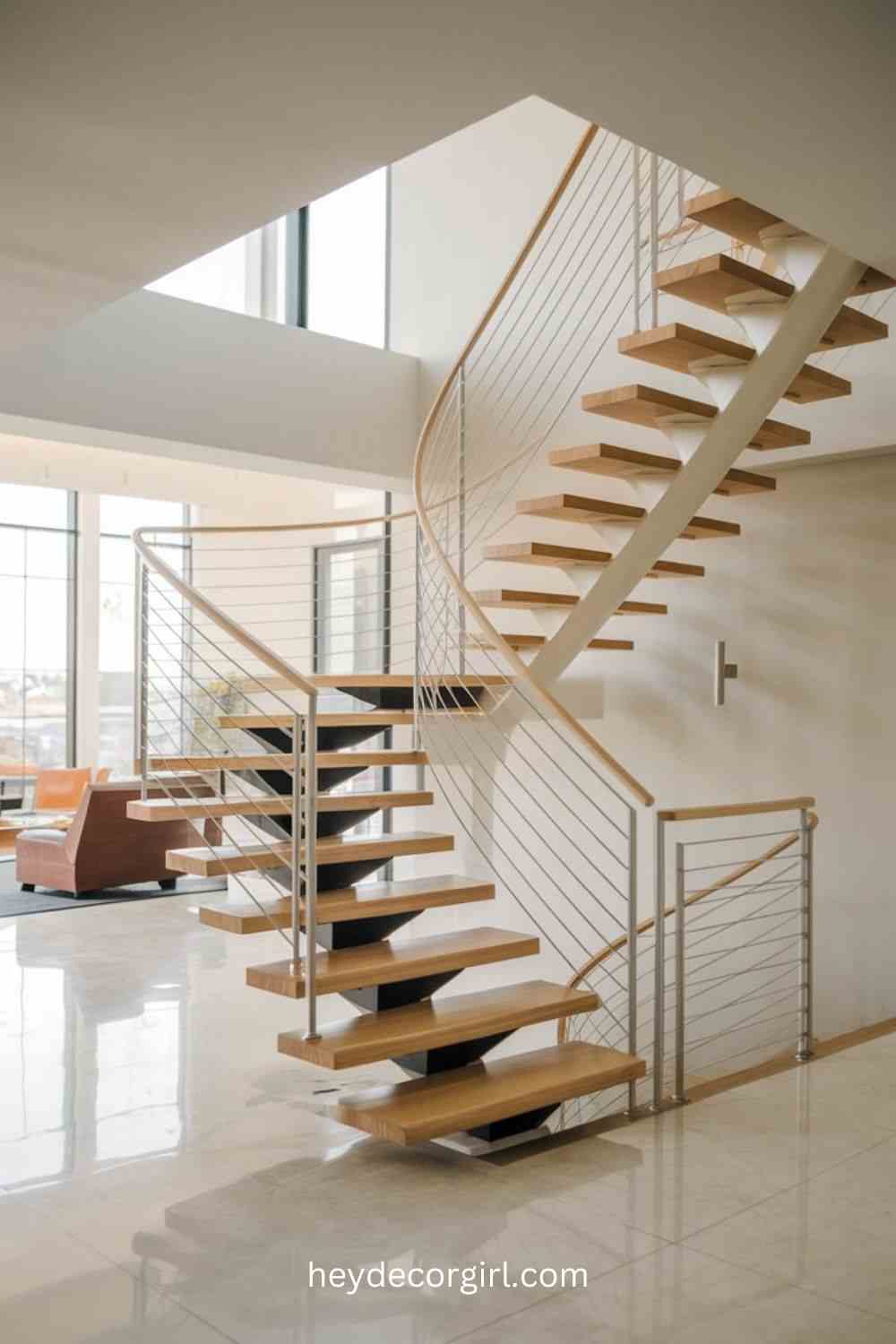
The main features of modern minimalistic staircases include clean line, simple shapes, and clean lines. These stairs usually focus on the feeling of openness and simplicity, which are the main values of minimalism.
Key features include:
- Straight Lines and Simple Shapes: The design tends to emphasize geometrical shapes that have a straight or mildly curved line.
- Open Risers: Open risers bring a sense of light and transparency to the staircase and make it look less imposing.
- Glass or Metal Railings: Glass or smooth metal railings ensure that the view is not obscured and the minimalistic style is supported.
- Colorless Palette: The Color palette is usually muted, having whites, grays, and natural wood coloring as abundant to ensure the appearance is clean.
Examples from Designers:
- Tadao Ando: Ando is recognized by his exercise of concrete and minimalism, whereby his staircases are usually adorned with smooth steps of concrete with minimal or no railing, which is a modern and tranquil appearance.
- John Pawson: The designs of Pawson are simple and pure. His staircases are usually made of such materials as stone or wood, whose lines are not ornamented with any decorations.
- Zaha Hadid: The forms used by Hadid tend to be more futuristic, and her minimalistic staircases might be filled with elements of sculpture that do not sacrifice the minimalist look but could introduce a twist of design.
Benefits and Design Tips:
Benefits:
- Outstanding Space Perception: Minimalistic staircases tend to enlarge and open up spaces by eliminating bulky and cumbersome staircase designs.
- Classical Minimalism: Modern minimalist staircases have simple, neat lines which provide a classical appeal and can be applied to a great variety of interior designs.
- Low Maintenance: Decoration is reduced, which results in a reduced amount of dust and dirt and makes cleaning and maintenance of these stairs easier.
Design Tips:
- Focus on Lighting: Emphasize lighting: It should be highlighted with the help of strategically located lighting that will help to draw attention to the clean lines and materials of the staircase. There can be LED strips along the steps or under the handrail that will create drama.
- Select Materials of Good Quality: Select high-quality materials so that the staircase can withstand day-to-day usage, like tempered glass, stainless steel, or highly polished wood, to maintain the minimalism style of the staircase.
- Blend with the Space: It is important to make sure that the staircase fits the space. The design must flow with the rest of the things in the room in the overall minimalist theme.
2. Floating Staircases
Description and Features:
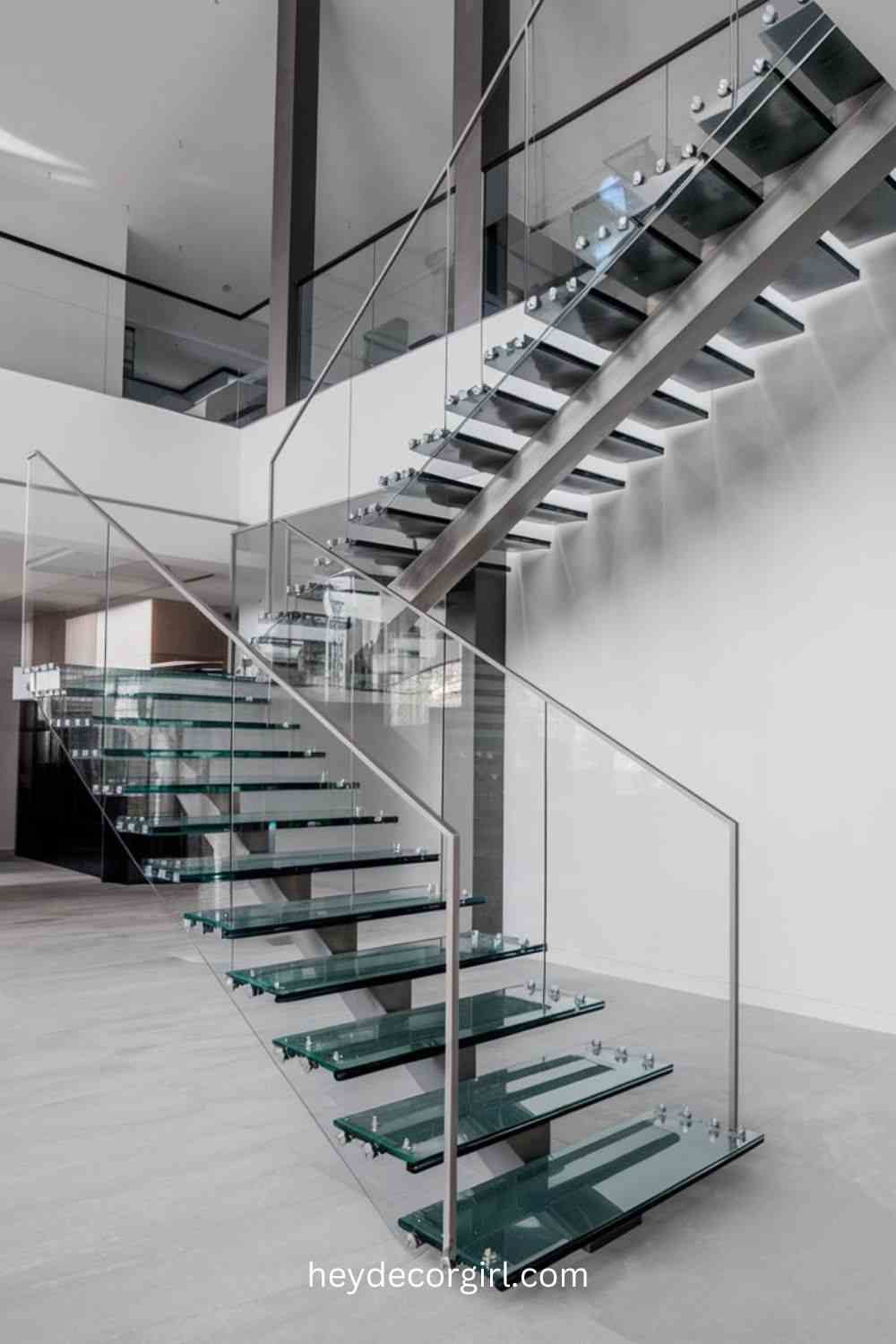
Cantilevered or floating staircases are staircases that appear to be weightless to the eye since they are suspended. This design gives a dramatic impression and provides a contemporary feel to any interior.
Key features include:
- Cantilevered Design: Steps are seen to be floating without apparent support, typically attached to a single wall or a central support beam.
- Glass or Minimalist Railings: These types of railings are commonly made of transparent glass or minimalistic railings in order to keep the clear picture and underline the floating impression.
- Hidden Supports: Structural supports are concealed either in the wall or under the steps to create the effect of floating.
- Floating Treads: It is characterized by the fact that each step is usually fixed separately, without any obvious contact with other steps, which adds to the smooth, modern appearance.
Graphical Impression and Space Saving Advantages:
Visual Appeal:
- Smooth and Modern Appeal: Floating stairs have a modern and sophisticated appearance, which leaves a powerful impression.
- Light and Airy: The open architecture brings out the feeling of space and openness, making the rooms look bigger and less cramped.
- Attention to Design: The floating effect makes the staircase the center of the room, which will be frequently referred to as the center in contemporary interior design.
Space-Saving Benefits:
- Saves Floor Space: Floating staircases also economize floor space by removing the boxy supports and minimalistic designs that make smaller spaces less crowded.
- Open Views: The open layout also ensures unhindered crossover of floor to floor, increasing the space flow of a house.
- Design Flexibility: Traditional supports are not required, which implies that floating staircases may be created to be installed in unusual places and configurations.
Designer Recommendations:
- Oda (Norway): Oda floating staircases are made of sleek, Scandinavian design, and their design features can be used to create the minimalist look of a floating staircase made of high-quality material, despite the structural integrity.
- Studio McGee (USA): McGee designs have floating stairs that are used to combine both the modern, classy look and functionality. They are designed using wood and glass as some of the materials used in the construction.
- Nils Holger Moormann (Germany): Moormann is well-known for his floating staircases: most of his staircases have unique structural solutions, which sustain the floating effect and are safe and durable.
In designing or selecting a floating staircase, it is important to:
- Staircase Structural Integrity: Cooperation with a structural engineer should be carried out to ensure that the staircase is securely and safely fixed.
- Select Quality Materials: Select materials that are also strong enough to bear the structure of the staircase and ensure the staircase looks the same even after years.
- Add Decent Lighting: Lighting will be used to emphasize the floating effect and beautify the staircase. The LED lights can be used as strips or recessed lights to enhance a dramatic effect and enhance safety.
The floating staircases are a great blend of visual beauty and utility, which is why they are a favorite in modern home design.
3. Spiral Staircases
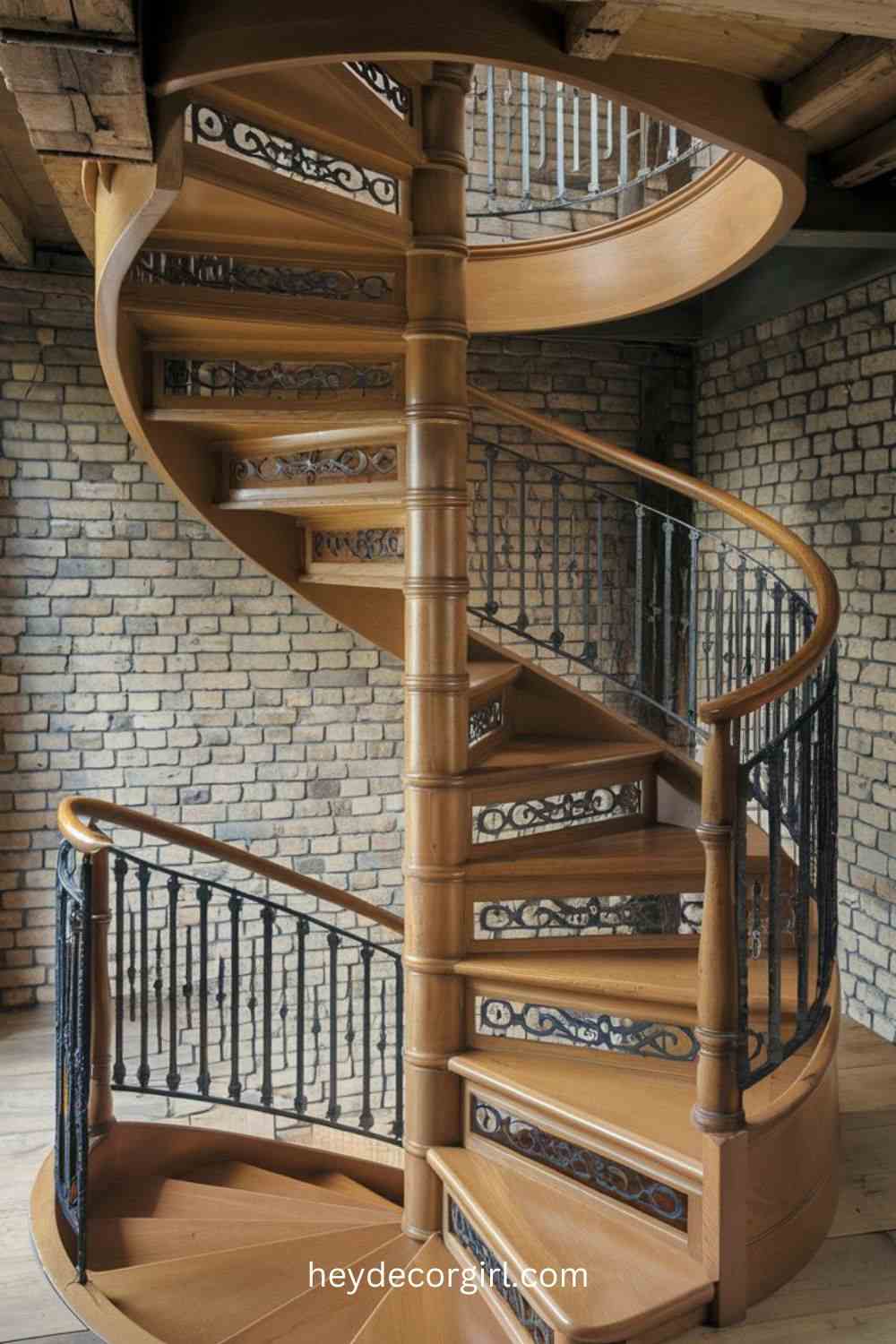
Description and Features:
The design of the spiral staircases is compact and elegant, thus able to fit into small unconventional spaces and provides a unique architectural feature.
Key features include:
- Central Column: The steps are spiraling around one central support column or pole.
- Curved Treads: Steps are spiraled around the column at the centre, usually curved slightly.
- Small size: The spiral staircases are less wide than the traditional ones, hence they are good in spaces that are small or narrow.
- Variations in Design: They may be either simple or utilitarian designs, or elaborate decorative designs with elaborate details.
The perfect places where a spiral staircase can be installed include:
- Small Homes or Apartments: This suits best in small homes where a conventional staircase may be too massive.
- Loft Conversions: Ideal for using the loft or attic area without consuming much space.
- Compact Urban Homes: This type is applicable in urban areas where the floor area is important.
- Feature Spaces: These may be applied to open architecture plans or dramatic features in entrances.
Changes in design and Expert Hints:
Design Variations:
- Contemporary Spiral Staircases: These designs are typified by smooth lines and bare materials such as glass, metal, and concrete, which give them a modern appearance.
- Classic Spiral Staircases: These are usually manufactured using wrought iron or wood, and are highly detailed and traditional designs.
- Floating Staircases: This is a type of staircase that consists of steps that seem to float around the center column and gives a smooth and contemporary effect.
- Industrial Spiral Staircases: Use raw steel or reclaimed wood as a material to obtain a rough, industrial appearance.
Expert Tips:
- Take into account the Scale: Make sure that the spiral staircase fits into the space. In the case of the small areas, a staircase whose treads are narrower and the spiral is stricter is important to enable efficiency in the use of space.
- Put Safety First: The staircase has sufficient railing, and the step is designed properly so that they do not cause slips and falls. Handrails and floors need to have non-slip treads and be robust.
- Blend with Interior Design: Select materials and finishes that match the surroundings. As an example, a glass spiral staircase can be used in the interior of a modern house, whereas a wooden spiral staircase can be used in the interior of a more traditional one.
- Lighting: Add lighting to make the spiral shape noticeable and make it safe. They could be recessed lighting of the steps, LED strips of the railing, or a chandelier over the staircase.
Spiral staircases are useful and attractive in design and can therefore be applied in many locations and in any design style.
4. Glass Staircases
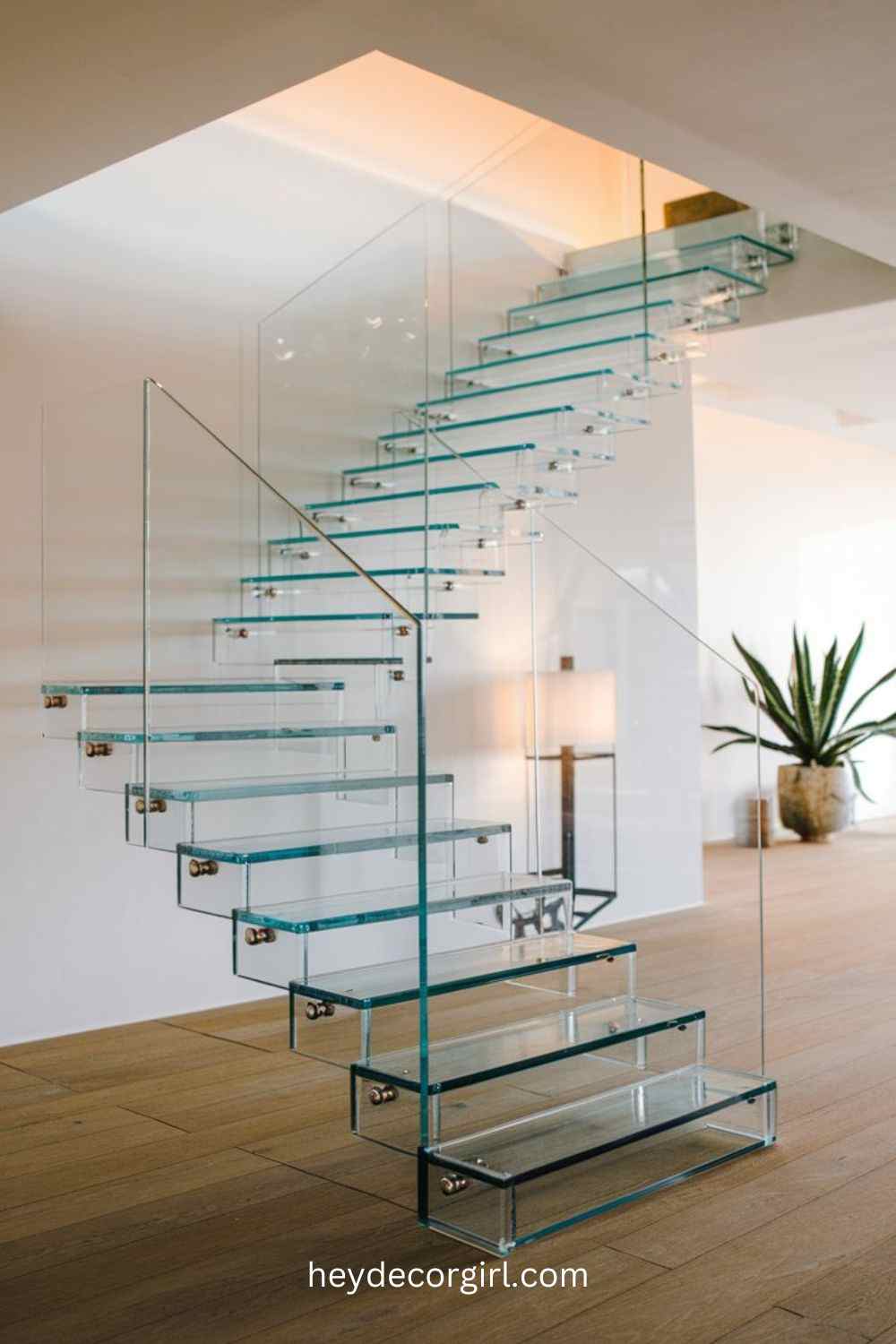
Description and Features:
Glass staircases are characterized by the smooth modern look and the opportunity to develop the feeling of openness and lightness.
Key features include:
- Transparent or Frosted Glass: It is the use of clear or frosted glass as a step or railing to make a visual effect of nothing there.
- Minimalistic Supports: Glass staircases may have very few visible supports, using discrete fixtures or structural elements as a part of the design.
- Floating Effect: Numerous glass staircases provide the floating effect, whereby the steps appear to be floating, making the appearance of space appear even more.
- Personalized Designs: Glass can be mixed with other surfaces, i.e,. Metal or wood, to bring a bit of personalization and contrast.
Light-Enhancing Benefits:
- More Natural Light: Glass staircases will enable natural light to penetrate through the staircases and illuminate the spaces, and also make the interior look less closed and airy.
- Visual Expansion: The glass transparency creates a continuity between levels, making the rooms seem bigger and more intertwined.
- Patterned Reflections: Glass surfaces can reflect light as well, creating a brighter space and showing emphasis on other design features inside the space.
Designer-Approved Designs:
- Maya Lin: Maya Lin uniquely uses materials, and her glass staircases are usually designed in minimalist forms with clean lines and incorporated lighting.
- David Adjaye: In his work, David Adjaye often employs dramatic elements of glass to create an impressive structure, making it transparent and modern.
- Zaha Hadid’s approach to the glass staircases is usually a mixture of futuristic and sculptural shapes, and splices the innovative design with practicality.
Design Tips:
- Ensure structural integrity: Glass staircases should be properly engineered to make them safe and permanent. Collaborate with the professionals to make sure that the glass is supported and installed correctly.
- Select Quality Glass: Select tempered or laminated glass, as it is strong and safe. The durability and appearance of the glass will be influenced by the type and thickness of the material used.
- Add Lighting: Lighting should be used to highlight the glass staircase. Strips of LEDs attached to the steps or handrails are capable of producing a very beautiful effect and enhancing the safety.
- Take into Account Privacy: In case you are worried about privacy, use frosted or etched glass on sections of the staircase to provide an open space and, at the same time, some amount of separation.
Glass staircases provide a sleek and stylish way of furnishing modern interiors and improving the aesthetics and functionality of a particular space.
5. Industrial-Style Staircases
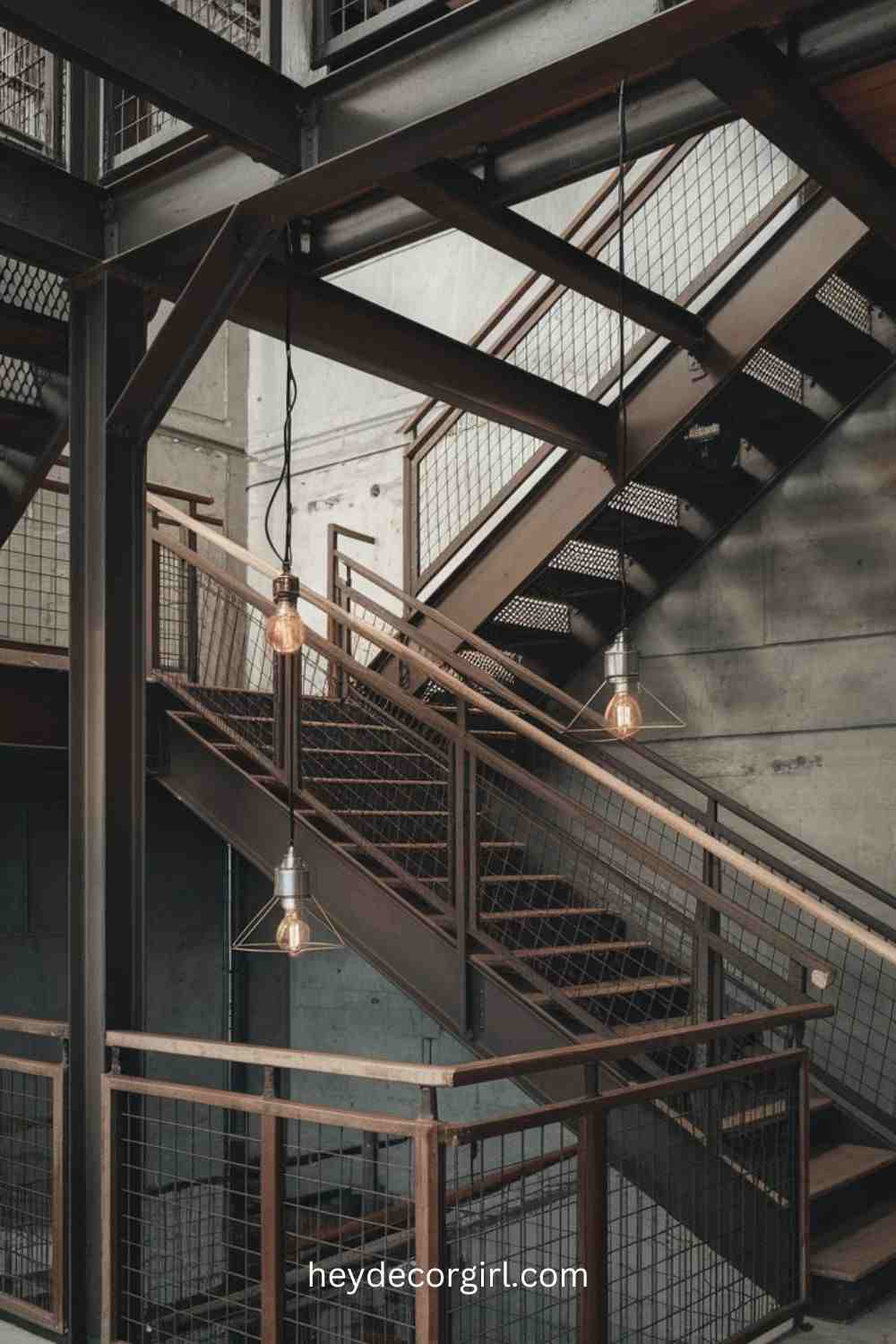
Description and Features:
The industrial style of staircase is famous for its utilitarian and rough style, where the beauty of open materials and structural features is emphasized.
Key features include:
- Exposed Materials: This involves the use of raw, unfinished materials like metal, concrete, and reclaimed wood.
- Functional Design: Practicality and longevity, usually visible structural elements, and minimalist design.
- Metal Railings and Supports: The metal railings, handrails, and supports are heavy-duty and are used to supplement the industrial appearance.
- Concrete Treads: Concrete or concrete-like materials applied as steps to give concrete a rough and tough look.
Key Elements:
- Raw Metal: Raw and unpolished steel or iron items are used to display their industrial nature. These can be metal treads, railings, and supports.
- Concrete: Concrete treads or even complete staircases add to the industrial feel with their hard and rough appearance. At other times, concrete is mixed with metal to have a unified design.
- Reclaimed Wood: Reclaimed wood can be used as a way of balancing the coldness of metals and concrete with the rustic feel that is so good to touch.
- Exposed Hardware: There are exposed bolts, screws, and other hardware to highlight how the staircase is built and the functionality of the staircase.
Designer Knowledge and Examples:
- Jean Prouve: Prouve is associated with functional and industrial design, but his staircases are usually designed with metal and simple construction, emphasizing the industrial style.
- David Chipperfield: Chipperfield has a range of designs that use raw materials such as concrete and steel that combine modernist ideas with industrial ones.
- Neri and Hu: In this type of stair, a metal and wood combination (reclaimed or not) is often used to provide a balance of the ruggedness of industry and the comfort of metal and wood.
Design Tips:
- Use Exposed Metal and Concrete: Exposed metal and concrete convey an authentic industrial appearance and should be embraced.
- Finishes should not be over-polished to preserve the rough appearance.
- Balance Elements: Mixing hard industrial materials with soft touches, e.g., reclaimed wood, brings in a friendlier and more balanced look.
- Focus on Functionality: Be more durable and practical. Staircases used in industries must be both nice and practical.
- Consider Lighting: Add industrial-style lamps, including pendant lighting or an exposed bulb sconce, to complement the staircase and to add an industrial feel in general.
Industrial-style stairs add a strong architectural feature to the interior, focusing on the materials and practicality, and giving a different and stylish touch to the interiors.
6. Wooden Staircases with Custom Railing
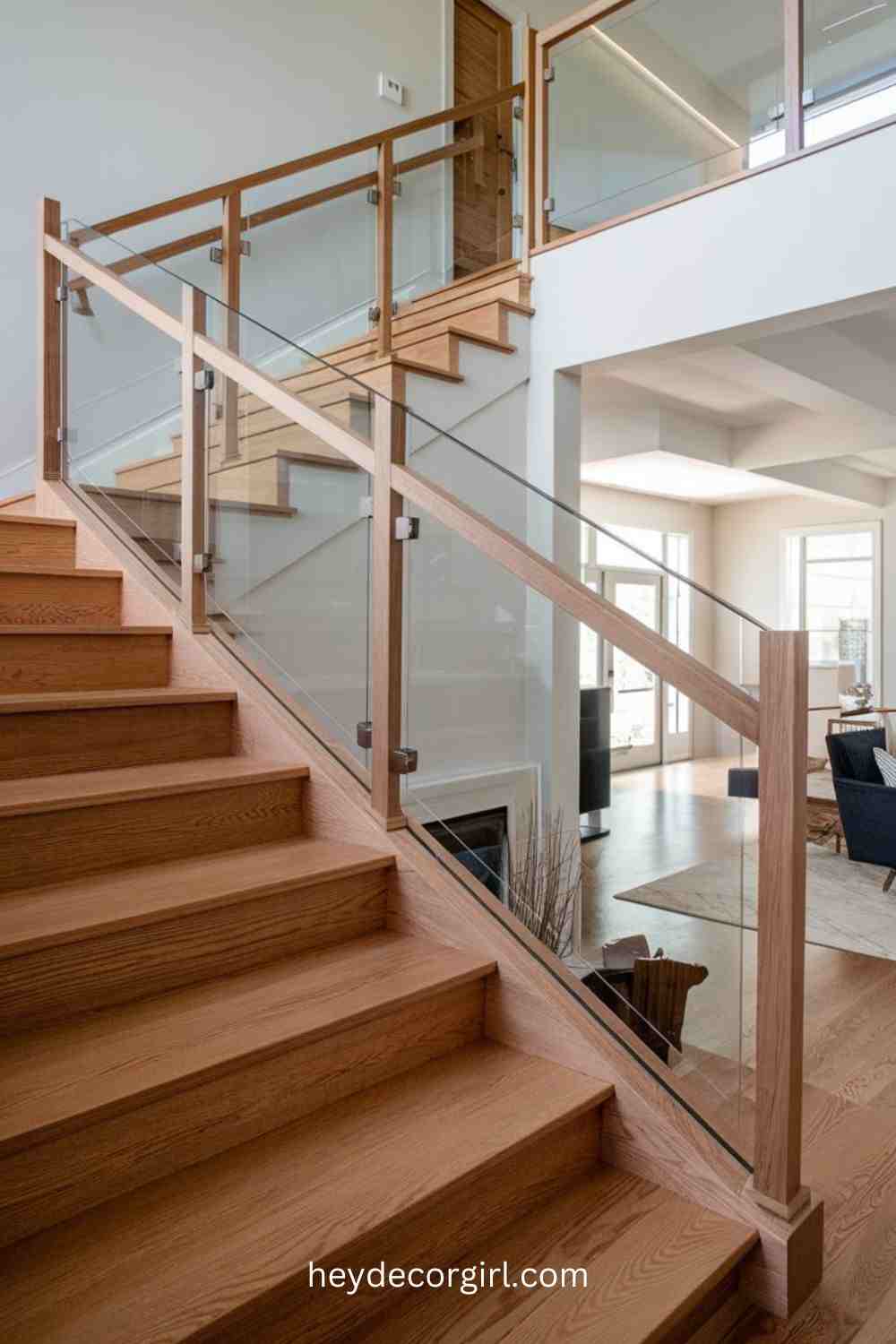
Description and Features:
The custom-made staircase rails on wooded stairs combine traditional beauty and uniqueness. These staircases can also be designed in a way that will meet different styles and preferences, while also being functional and attractive.
Key features include:
- Warmth and Texture: Staircases made of wood introduce natural warmth and coziness to a room; the wood grain and color of the wood introduce personality.
- Custom Railings: Custom railings are also available in order to match the wooden staircase, where they can be made with different materials, different patterns, and styles to ensure a unique appearance.
- Craftsmanship: There is high-quality craftsmanship in the making of both the stairs and the railings, which will make it durable and refined.
Different types of wood and finishes:
- Oak: Oak is widely known as a durable and traditional-looking staircase material and is commonly used on traditional and modern wooden staircases. It may be completed in different shades of light to dark.
- Maple: A finer wood, lighter in nature, and is good to use in modern designs. Maple can be stained or painted with a clear finish on it to make it even more beautiful.
- Cherry: Has a warm, rich taste that matures with time. Cherry wood is the most suitable material to use in the development of a traditional appearance.
- Walnut: Walnut is luxurious, dark, and is usually placed in high-end designs.
- Reclaimed Wood: Reclaimed wood offers a rustic and unique appearance and can be applied to environmentally sustainable designs or to bring a retro appearance.
Designer Recommendations to Design Railings:
- Minimalist Metal Railings: Clean lines and simple designs of sleek metal railings are used in line with modern wooden staircases to bring a modern touch.
- Glass Panels: Add glass panels to the railings to achieve a modern open feel. Glass is applicable with the wooden posts, or it can be a standalone feature.
- Wrought Iron: Wrought iron railings, which are decorative, can be used to enhance the traditional appearance of wooden staircases.
- Patterns in Geometrical rails: Geometric designs or elaborate designs on custom railings may make a point of interest and make the staircase design more impressive.
- Cable Railing: Stainless steel cable railings will give an uncluttered, minimalist appearance and remain safe, offering clear viewpoints.
Design Tips:
- Matching Interior Style: It is important to make sure that the type of wood and railings used fit with the whole design of the house. A case in point, a smooth staircase of walnut with the bare steel railings may fit a modern surrounding, whereas a cherry staircase of wrought iron railings may fit a conventional place.
- Keep in mind Safety and Functionality: Railing to be installed must be attractive as well as satisfying safety requirements. Make sure that the design is supportive enough and in accordance with the building codes.
- Finish and Maintenance: Select a finish that prevents the wear and tear of the wood and railing material. The staircase can be maintained and finished regularly to maintain the beauty and functionality of the staircase.
The staircases made of wood with personalized railings provide almost limitless design options and enable residents to design a staircase that not only serves their practical needs but is also created to match their individual tastes and preferences.
7. Open-Riser Staircases
Description and Features:
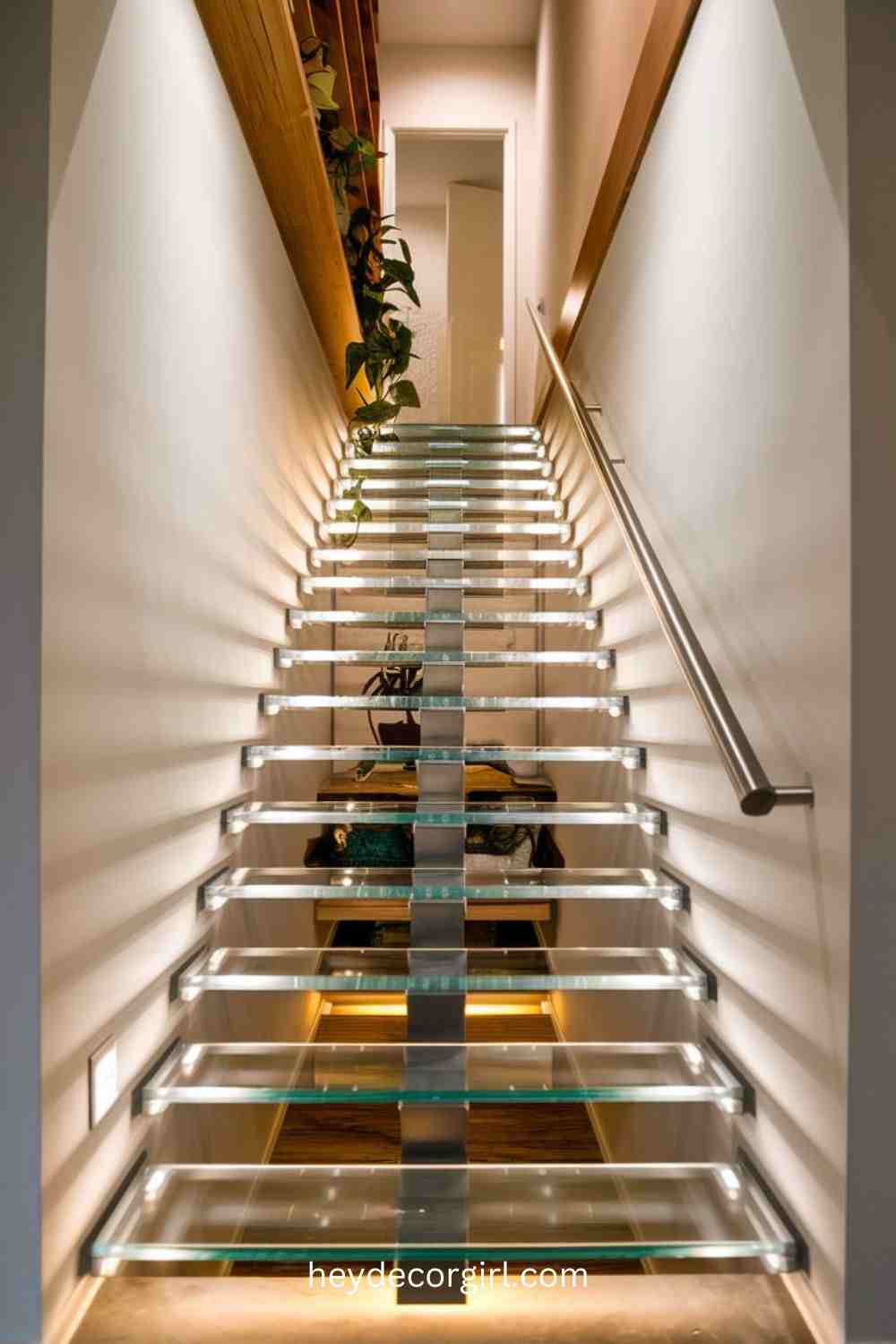
The open-riser staircases are also set with spacing between the steps, and this effect gives the impression that the staircases are airy and floating, which consequently increases the size of the space.
Key features include:
- Open Risers: Risers (the vertical section of the stairs) are not there, and this gives the stairs an open look and increases the visibility.
- Floating Effect: The open construction will give the feeling that the staircase is floating, which will be a modern and classy touch.
- Minimalist Construction: This type is characterized by the use of smooth and simple forms and clean lines with few visible supports.
- Diverse Materials: It can be constructed of different materials such as wood, metal, glass, or a mixture of both, giving it the flexibility of design.
Benefits for Small Spaces:
- Visual Openness: The open design contributes to the maintenance of the feeling of openness and space, thus fitting the small or cramped space.
- Improved Light penetration: Will permit either natural or artificial light to enter it, illuminating the space and making it less claustrophobic.
- Heightened Spatial Perception: The openness of the staircase makes it look like there is continuity of the various levels, which makes it feel bigger and more connected.
- Versatile Design: It can be adapted to different interior designs, making it a versatile choice for small space design.
Design Inspiration and Tips:
- Minimalist and Modern: Use plain materials such as glass or metal and have clean lines so that it looks cool and modern. Floating steps with less support should be used since they give a clean look.
- Add Lighting: Add in-built lighting, e.g., LED strips down the steps or under the treads, to emphasise the floating effect and ambiance.
- Blending of Materials: Play around with various materials such as wood, metal, or glass to make a distinct design to fit your style. As an example, wooden treads supported by metal can be used to give it warmth and texture.
- Safety Consideration: Ma Makesure the open-riser design is in line with safety codes and regulations. Alternatively, one can also look at adding such features as transparent glass barriers or secure handrails to ensure a safe feel without losing the open feel.
- Design Harmony: Design the stairs to be coordinated with the interior design. As an example, in case the space is furnished with modern pieces, make the staircase the same as the similar material and finishes.
Aesthetically pleasing and created considering small spaces, open-riser staircases allow for an increase in the amount of light and sense of space, and offer a modern, minimalist design.
8. Wrought Iron Staircases
Description and Features:
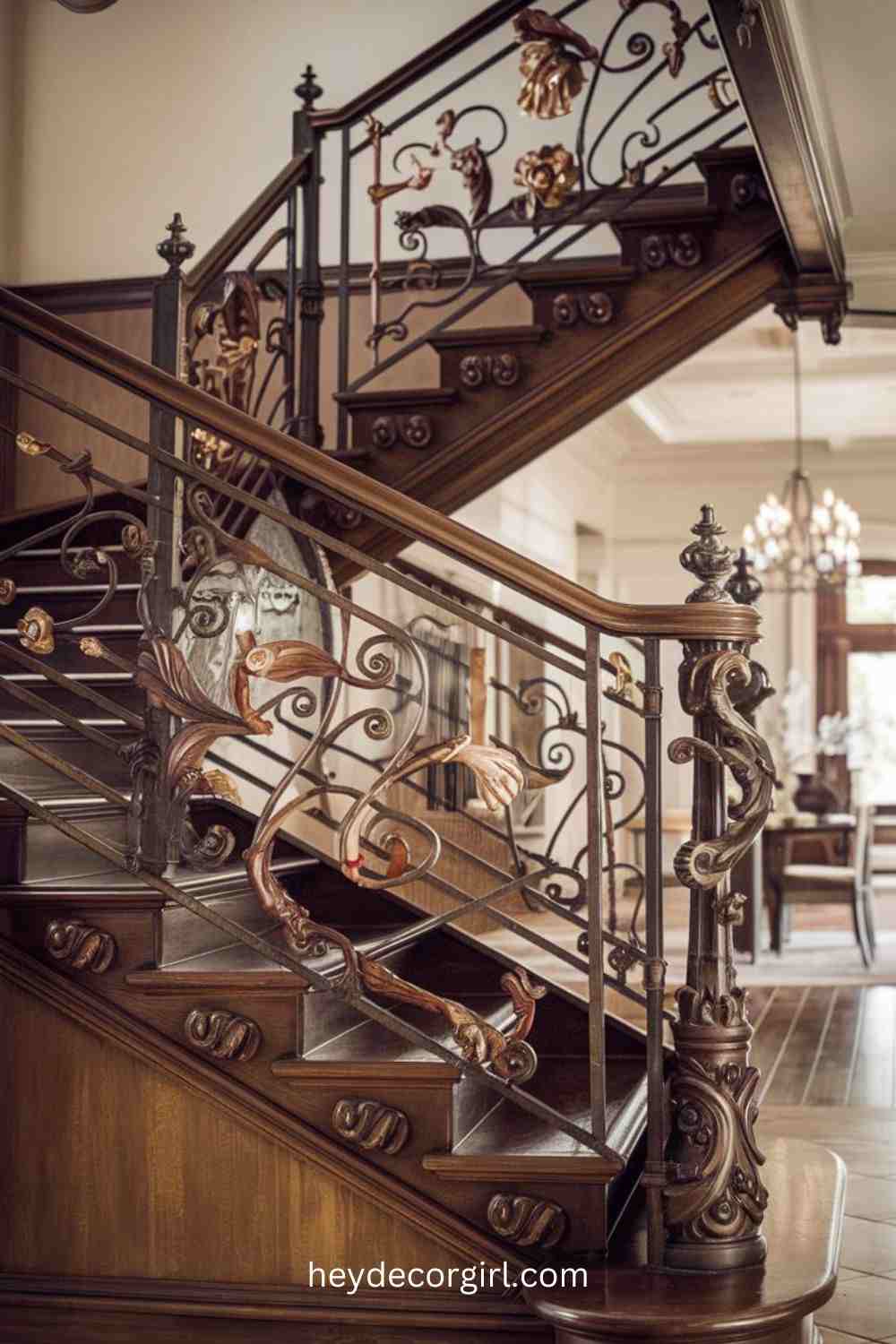
The wrought iron staircases are associated with complicated and durable design, and they provide a classic and timeless look.
Key features include:
- Complicated Ironwork: Complicated, hand-made ironwork may contain scrollwork, flowery designs, and motifs.
- Durability: Wrought iron has been known to be a strong and durable material, a nd hence may be used on stairs.
- Designs which may be customized: It can be designed based on the design of the ironwork, or custom designs that range between traditional and modern.
- Finishes and Patinas: It also has different finishes with a range of classic black, bronze, and custom patinas to give it more versatility and beauty.
Traditional and elegant Design Components:
- Scrollwork and Flourishes: Iron scrollwork and flourishes are seen at a more specific level, which is detailed as well to provide elegance and sophistication to the staircase.
- Balusters and Railings: Decorative balusters and railings, in many cases, have ornate design and decoration, which adds beauty to the staircase.
- Newel Posts: Newel posts that are ornamented with intricate designs in iron are used as a point of interest and anchor to the staircase.
- Combining with Wood: Wrought iron may be used together with wooden treads and handrails to achieve the appearance of a classical and cozy look.
As examples and style tips:
- Charles Rennie Mackintosh: Mackintosh was famous because of his unique and complicated ironwork, and the staircase in his home has a lot of patterns and luxurious details.
- Christopher Wren: Wren was famous for the use of wrought iron in classical buildings. His design was grand and highly detailed.
- Michael Graves: Among the architects who use wrought iron in his modern works, Graves combines the old school of ironwork with the new one.
Style Tips:
- Mingle with Architecture: Make sure that the wrought iron staircase matches the architectural design of the house, be it traditional, contemporary, or a combination of both.
- Finish and Color: Select finishes that complement the design of the ironwork and the color scheme of the whole space. Classic black and bronze are eternal choices, and custom patinas can be used to bring a new touch to them.
- Combine Materials: Use wrought iron in combination with other materials, e.g., wood or glass, to create a balanced and dynamic design. An example of this is the wooden tread, which has wrought iron railings and which can provide durability and sophistication at the same time.
- Maintenance: Clean and maintain the wrought iron frequently to avoid rust and to make sure that it lasts longer. Think about coating it with some protective covering to ensure that the finish remains and is more durable.
Wrought iron staircases are a mix of traditional style and stability, and their designs are complex and can be adjusted according to any style. Their classic status gives them a high demand in terms of enhancing classiness and the appearance of any room.
9. Floating Tread Staircases
Description and Features:
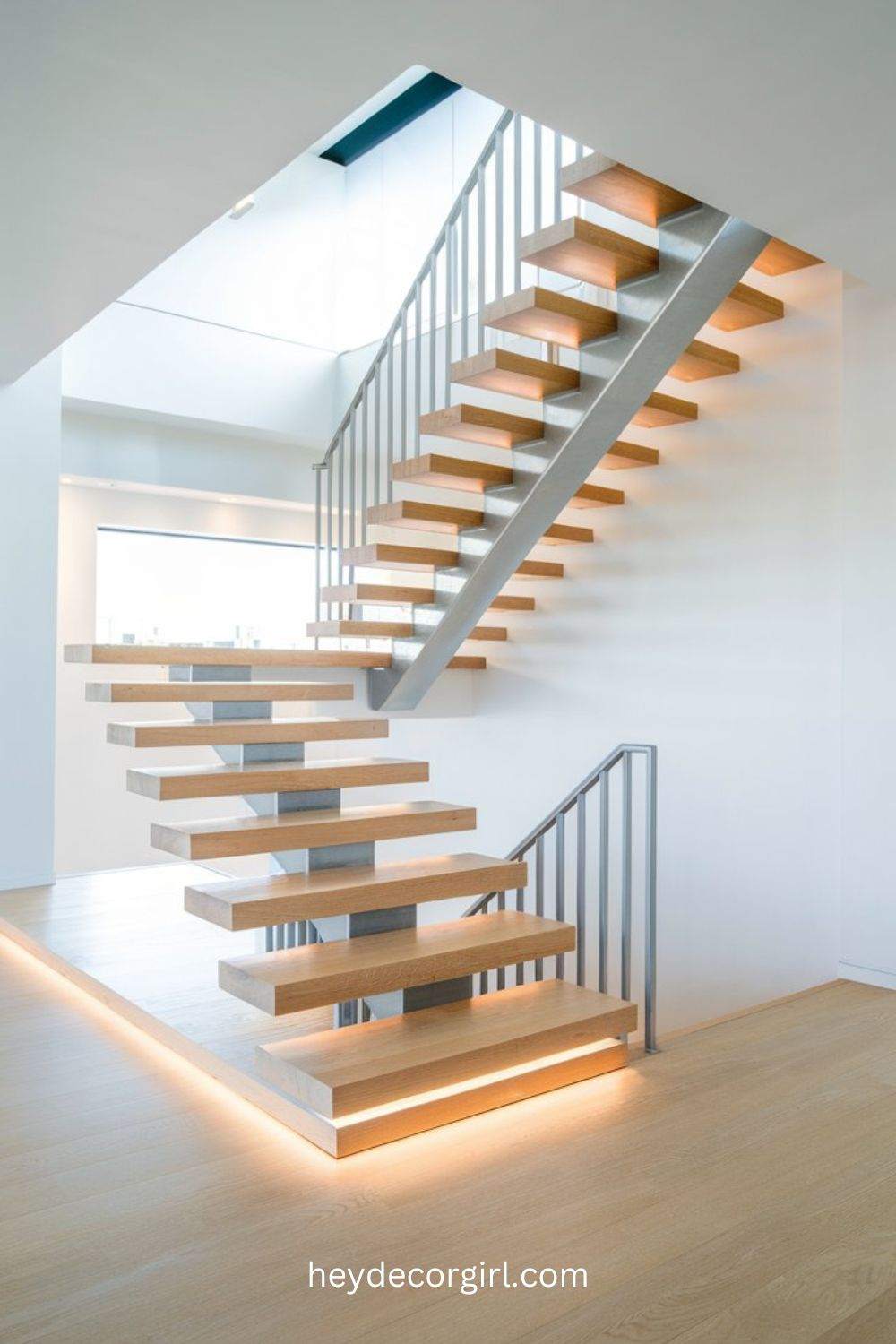
The tread staircases are floating, which also gives the staircase a smooth, contemporary appearance and demonstrates the steps that seem to be floating with no noticeable support provided by the risers.
Key features include:
- Exposed Treads: Steps are one at a time and are commonly attached to a central support or wall, giving the appearance of floating.
- Minimalist Design: These types of staircases are marked by minimal lines and are supported by no visible elements, which is why they focus on simplicity and beauty.
- Material Variety: The treads can be of different types and kinds of material, e.g., wood, metal, glass, or concrete, giving variety in design.
- Lighting: Many will have inbuilt lighting, including LED lights under the treads, to give the floating effect and create atmosphere.
How They Create a Modern Look:
- Visual Lightness: There are no old-fashioned risers and visible supports, which makes the staircase appear light and airy, further adding to the modern look of the space.
- Smooth Lines: The floating treads have smooth, uninterrupted lines that add to the sleek and modern design.
- Transparency: It is also possible to enhance the floating effect with such materials as glass treads or railings and introduce the element of modern elegance.
- The Space: Floating tread staircases fit well with contemporary interior design, and are frequently used with open floor plans and minimalist designs.
Design Tips from Experts:
- Material Selection: It is important to pick materials that not only enrich the floating effect but also complement the overall design of the interior. Wood treads will be an example, as they can be used to make a modern space warmer, whereas glass treads will make a more light and transparent touch.
- Lighting Integration: Add lighting underneath or along the treads to highlight the appearance of floating and also offer adequate lighting. This can be well achieved by LED strips or recessed lights.
- Support Structure: Choose a central support or wall-mounted system that supports the floating look of the staircase but provides a feeling of stability and security.
- Complementing Décor: It is important to make sure that the design of the staircases will be in harmony with other room elements, including flooring, walls, and railings. An example of this is that a floating tread staircase with metal treads can be used with industrial or modern furniture.
- Safety Considerations: Although the staircase is modern, it is necessary to make sure that it complies with all safety standards. Be sure to tread well and be mindful of doing so with some safety features, such as clear glass railings or handrails.
Floating tread staircases are a beautiful and contemporary style that will make a lot of impact on the look of an area, and at the same time will be functional. By including new concepts of staircase design, including the right choice of material, incorporation of lighting, stability, etc, you may build a modern staircase that will be not only beautiful, but also functional.
10. Staircases with Built-In Storage
Description and Features:
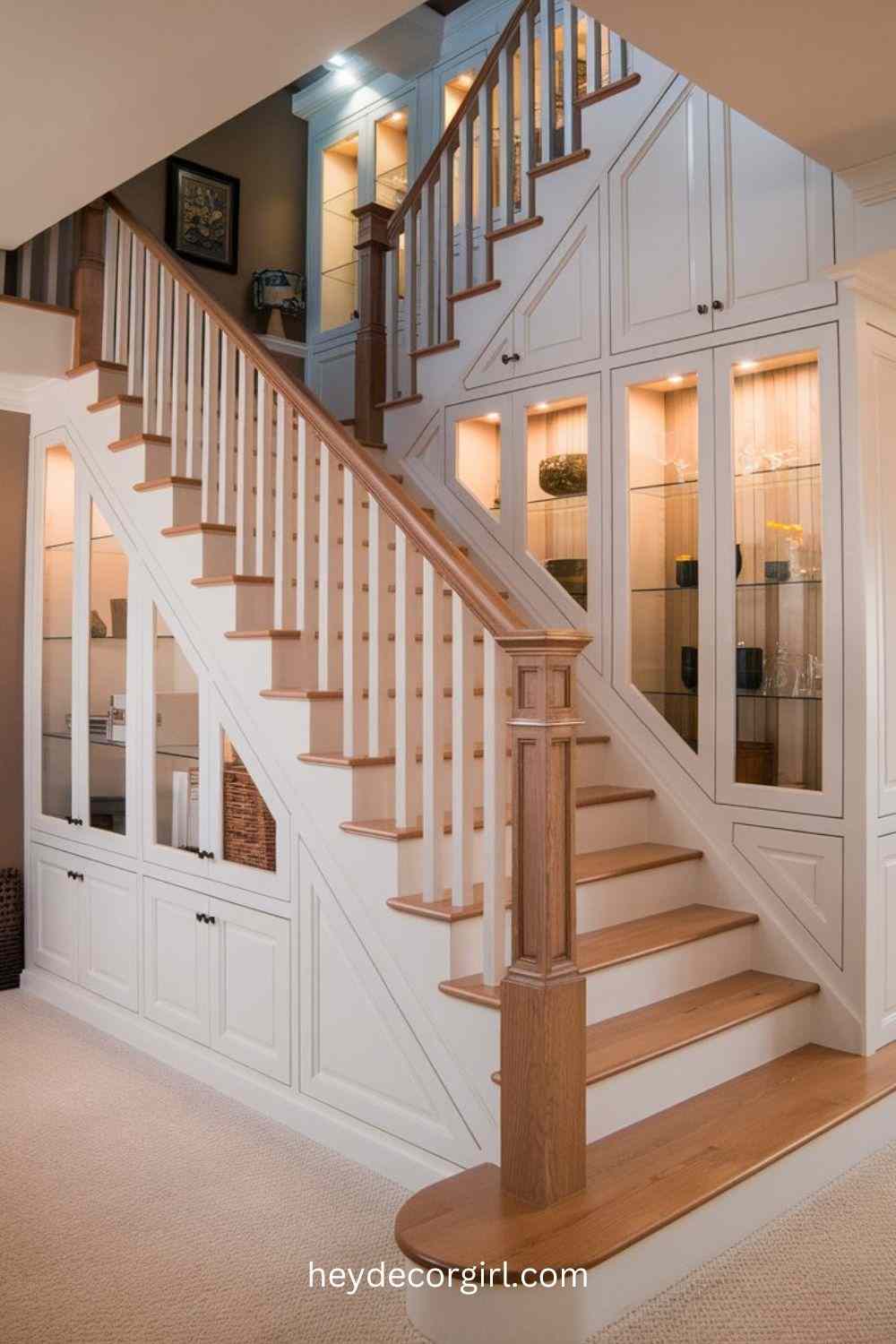
Built-in storage Staircase Design Ideas uses built-in storage as a part of the staircase design or adjacent to the staircase.
Key features include:
- Integrated Shelving: The storage spaces or shelves are built in the stair risers, sides, or beneath the treads.
- Custom Cabinets: There are staircases that have custom cabinetry installed in the staircase system, which adds storage capacity.
- Multi-Functional Design: The stairs are combined with extra storage features, which use the same traditional purpose of the stairs but add functionality and beauty.
Clearly, the storage should integrate seamlessly with the staircase, which in most cases is similar to the materials and furnishings in the rest of the house.
Forms of Built-In Storage Choice:
- Under-Stair Cabinets: Cabinets or drawers located under the staircase will give a lot of storage to different objects, including shoes and coats, as well as cleaning materials.
- Staircase Riser Drawers: Staircase riser drawers are drawers fitted into the stair risers to provide convenient storage of small household products, nd utilize the unused space.
- Shelving Units– Shelf units may be open or closed and may be mounted on the sides of the staircase, and may be used to store books, decor, or everyday items.
- Pull-Out Drawers: Innovative pull-out drawers that are incorporated into the staircase structure can provide added storage with the clean lines of the design not disturbed.
- Bench Seating with Storage: Bench seating with storage is a type of staircase that has built-in benches with storage underneath, which is handy as an entryway or mudroom.
Approved storage solutions by the designer:
- Maximize Space: Use all the inches of space surrounding and under the staircase to store. As an illustration, deep cabinets and pull-out drawers will help maximize the space.
- Store Stuff away: Cabinetry with doors or sliding panels will make the storage space look neat and disperse the visual clutter.
- Custom Design: Have a designer custom-design your storage to fit the size and style of your staircase and home. The storage becomes functional and appealing with custom-made designs.
- Material Matching: the similarity or contrast of the material and finishes of the built-in storage to the staircase and the surrounding decor should be balanced to create a harmonious appearance.
- Accessibility: make the storage solutions easily accessible: add such features to it as ergonomic handles, soft-close systems, and clearly-organized compartments.
- Lighting: Add lights to the storage sections to improve the visibility and ease of locating something. Cabinets and shelving may be fitted with LED strips or spotlights.
Born staircases that are designed in a way that they provide storage options are a convenient and elegant way of maximizing available space. The incorporation of storage into the staircase design can help to improve the functionality and aesthetic value of the staircase to provide a seamless and organised living space.
FAQ
1. What are floating tread staircases, and why do they become so popular?
Answer: Floating steps in staircases are made to look like they are floating and do not have risers. They are trendy due to their smooth, contemporary appearance and the light feeling that they create in a room. The floating tread staircase designs may incorporate minimalistic features, straight lines, and may incorporate wood, metal, or glass to improve the contemporary look.
2. What are the benefits of glass staircases to a home design?
Answer: Glass staircases can be used to improve the design of a home since they provide natural lighting, and they can help a room to look brighter and open. Glass staircases are also a contemporary, airy design that can be easily blended with modern interiors, when it comes to the staircase design concepts. Treads and railings made of glass are transparent, and there is a classy touch to any area.
3. Why would we use wrought iron in staircase construction?
Answer: Wrought iron staircases are durable and come in a classical appearance, thus they are the choice when it comes to staircase design thoughts. They are characterized by elaborate designs that can bring beauty and personality to a house. Wrought iron is also customizable in terms of the number of finishes and patterns, so it is applicable in both traditional and modern designs.
4. Can I add a storage to my staircase?
Answer: Ideas on how storage can be incorporated into staircase design would include under-stair cabinets, staircase riser drawers, built-in shelving units, and bench seating with storage space. These solutions utilize maximum space and offer good storage space, while still preserving the aesthetic value of the staircase.
5. What are the main peculiarities of a modern minimalistic staircase?
Answer: The contemporary minimalistic designs of stairs focus on simplicity and linearity. They tend to have open risers, smooth surfaces such as glass or metal, and discrete railings. The emphasis is laid on designing a smooth and non-obtrusive design, which would match the interiors of moderns.
6. What should be the location of spiral staircases?
Answer: The spiral staircase is suitable in situations that have limited space, and the normal staircase may not fit. Their usage is common in houses with limited floor area, lofts, or as a classy element in open spaces. Spiral staircases can contribute to the dramatic design of the staircase when considering the idea of staircases and save space.
7. What are the pros of floating staircases?
Answer: Floating staircases can be used to give the room a modern and airy look by removing the noticeable supports and risers. They increase the feeling of openness and are capable of visual expansion of a space. Floating staircases provide more options for designing a staircase and can be tailored to specific materials and finishes.
8. What is the difference between industrial-style staircases and others?
Answer: Staircases in the industrial style are characterized by the rough and bare substances in the form of metal and concrete. The ideas of staircase design usually involve some features, such as the use of exposed beams, metal railing, and a simple design. The style is a complement to the urban and industrial-themed interiors that are given a rugged and contemporary touch.
9. What are the things to consider when picking materials for my staircase?
Answer: Factors to consider when looking into the staircase design ideas are durability, maintenance, and aesthetics. The materials are supposed to be in line with your general home design and also in accordance with your lifestyle requirements. Wood can be used as an example, and can be used as a source of warmth; metal is sleek and modern, and glass is transparent, allowing light to enter.
10. Is it possible to have a functional and a decorative staircase?
Answer: Yes, a staircase can either be practical or ornamental. The staircase design concepts usually carry the features both practical, i.e., the storage or lighting in-built, and aesthetic features of the room. The integration of usefulness and the beauty of your house can enhance the general appearance of your house.