![Hey Decor Girl [Latest Trending Decor Design Ideas]](https://heydecorgirl.com/wordpress/wp-content/uploads/2024/08/Heygirldecor-Logo.png)
Locating helpful Clothing Storage Ideas may be tricky, in particular, when you lack a closet. No matter whether you live in a small apartment, a studio room, or an older house with no storage options built in, you must learn to be clever and creative when storing your clothes. Even when you do not have room in your closet, you do not need to lose out on organization and style. Using creative thinking, you can come up with systems of storage, and it is important to make sure that they look beautiful and effective by fitting perfectly in your living room.
Whether it is a sleek set of garment racks and freestanding wardrobes, under-bed storage, and shelving mounted on the wall, there is no shortage of creative options to store your clothes. Small places could be transformed with the help of the correct combination of storage concepts. You can utilize multi-purpose furniture, trendy baskets, or even homemade alternatives to use every inch of your room.
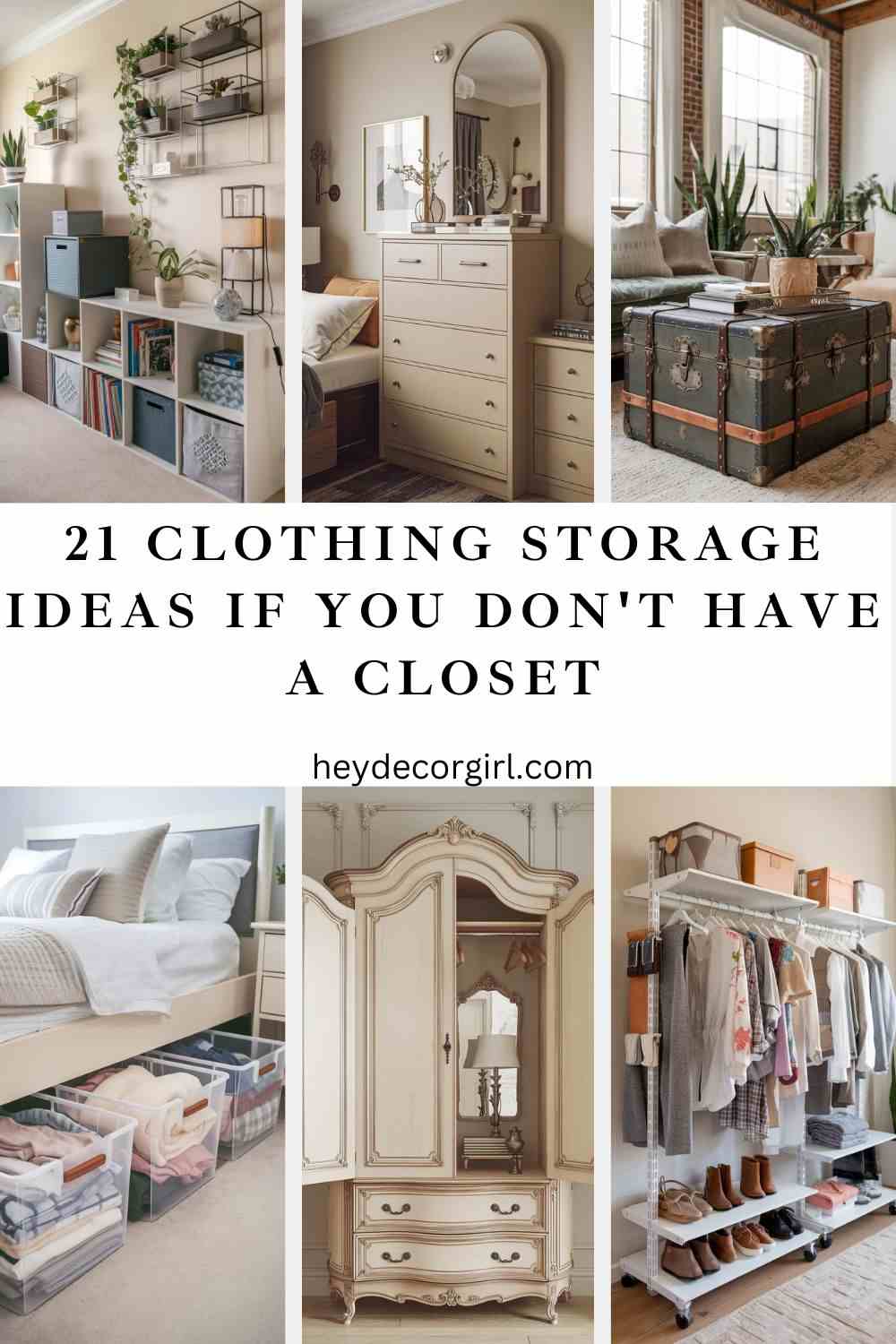
Best Clothing Storage Ideas If You Don’t Have a Closet
1. Freestanding Wardrobes
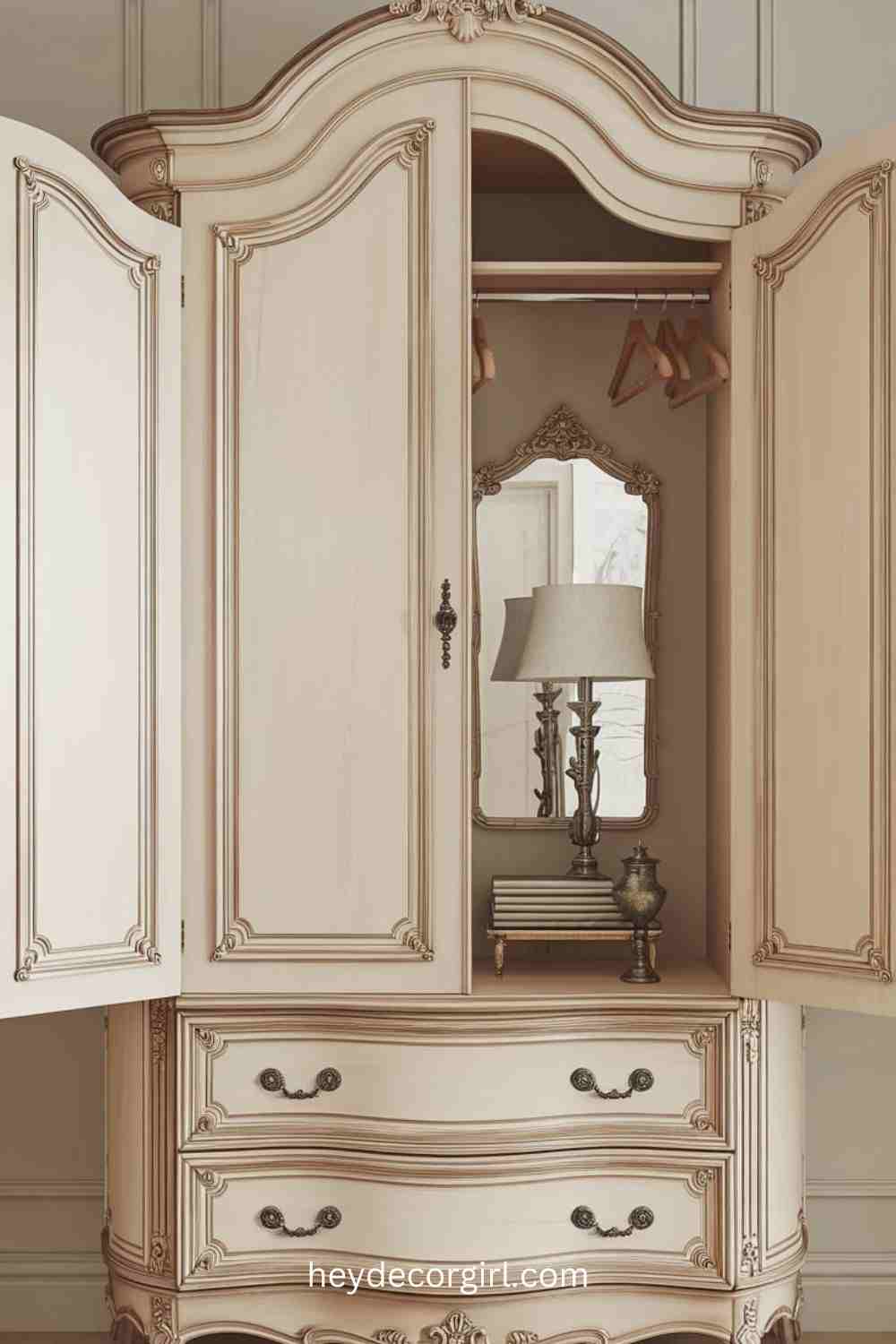
Freestanding wardrobes are a moderately priced and sleek substitute to built-in wardrobes, thereby making them an excellent choice all across living rooms. Freestanding wardrobes may be useful and sophisticated, whether you have a limited space or just want a more versatile storage tool.
Types and Styles
- Armoire: The armoire is a traditional item; the wardrobe is heavy and enclosed, has doors, and frequently has a combination of hanging room, shelves, and, in some cases, drawers. It can be installed in any room or even used as a focal centre in a bedroom or living room due to its traditional design,gn which gives it sophistication.
- Armoires are usually wood-made, and may be painted or stained to suit different decorations.
Open Wardrobe: Open wardrobes are more of a modern style with an open design that allows your clothes to be readily available and on display. These generally comprise hanging rods, open shelves, and occasionally built-in drawers. Open wardrobes could also be adorned with accessories and decorations to produce a pleasing appearance, which makes open wardrobes a perfect fit for displaying favorite outfits or bringing a personal touch to the area.
Benefits
- Portability: Portability of freestanding wardrobes is one of the highlights of these products. They can be taken anywhere in the room or can even be relocated to another house, unlike built-in closets that cannot. This flexibility is particularly useful to tenants or individuals who relocate their living arrangements so often.
- Flexibility: Freestanding wardrobes are available in a variety of designs and sizes, so you can select the one that suits your needs and tastes. They can be installed almost in any room, be it a bedroom, a hall, a way, or even a guest room, and they could have various purposes, including extra storage or even decoration. They are very flexible and can be used as a great way of maximizing space and improving the functionality of your home.
Free-standing wardrobes offer an easy and trendy way of keeping clothes without the hassles of the traditional closet. They are practical to use in any living situation because of the variety of styles and advantages.
2. Clothing Racks
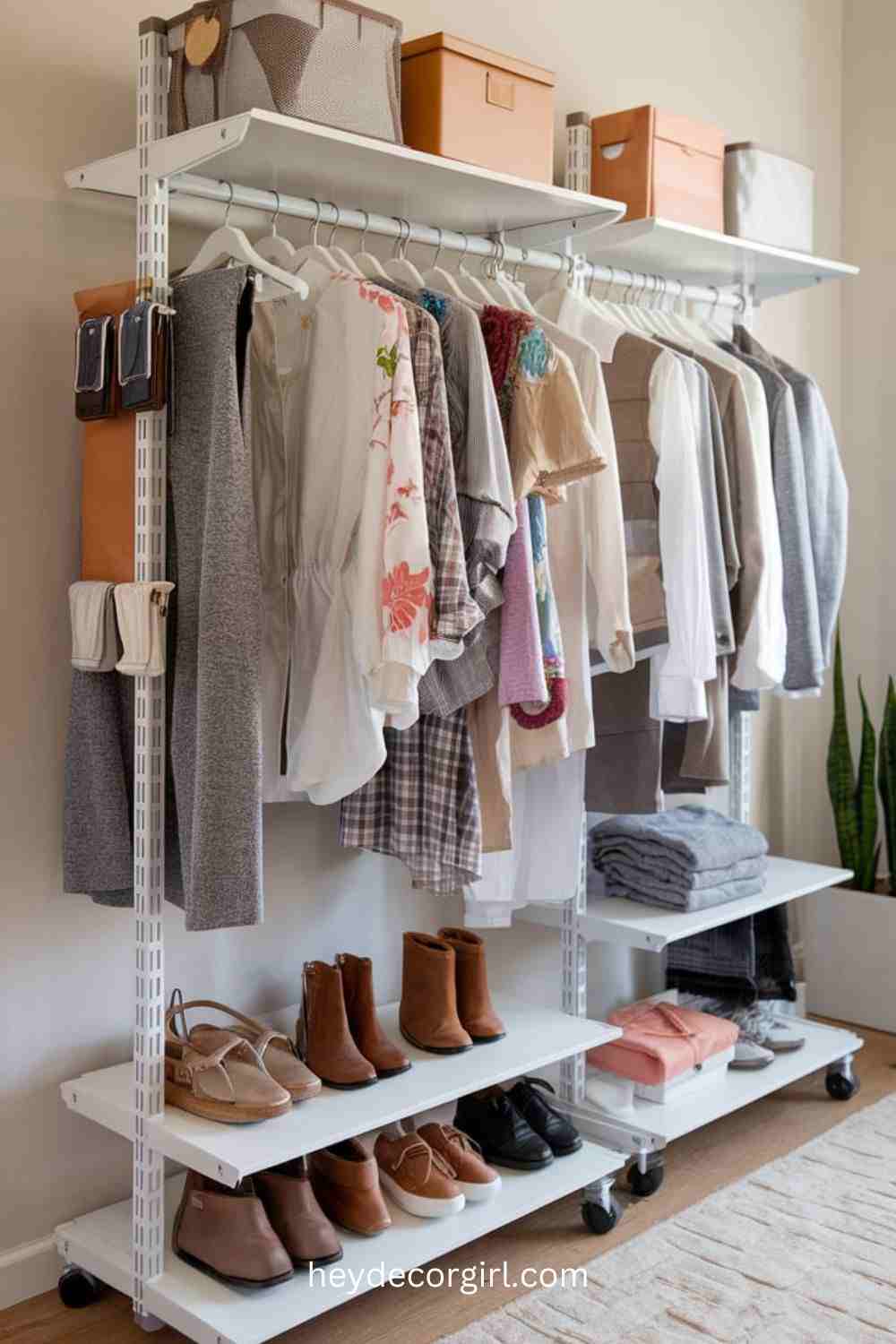
Clothing racks are a convenient and good-looking method of storing and displaying your wardrobe. They are available in many different designs to meet many different needs and aesthetics, making them a versatile choice in both functional use and decorative presentation.
Different Designs
- Rolling Racks: These clothing racks have wheels or casters that make them very movable, and they can be moved in and out of the rooms with ease. Rolling racks are the ones that do not require rigidity in the storage department, or those that often change the way things are organized in their area. They are usually minimalistic and smooth with a sleek design, and can carry a lot of clothes without occupying too much of the floor area.
- Industrial-Style Racks: These racks adopt a rough, industrial appearance and are usually fashioned out of metallic pipes or reused materials. Their utilitarian appearance is very strong and robust, and brings a bit of urban elegance to any room. Industrial-type racks are frequently open in nature and may be used with wooden shelves or hanging rods to further provide functionality and aesthetics.
Organizing and Styling Advice.
- Sort and Group: sort your wardrobe into categories (e.g., dresses, shirts, pants) or by color to form a well-presented and convenient display. Hangers should be of a similar kind so as to have a unified appearance and to prevent crowding the rack, so as to have everything easily seen and reached.
- Add Accessories: add Accessories to your clothing rack, whether it is hats, scarves, or small bi, ns or an adjustable shelf of folded items. This will assist in maintaining order in your wardrobe and give more space.
- Include Decorative Sources: Style your clothing rack with decorations. Hang clothes differently, either in a different shape or material, and also give thought to covering the rack with a fancy scarf or embellished garment. Place some lights or plants around the rack so that it becomes the key element of the room, and it can be personalized.
- Use Vertical Space: In rolling racks or industrial-style racks that have vertical poles, it is worth the effort to have hanging organizers with extendable arms to increase storage capacity. This will enable you to utilize the maximum height of the rack and generate extra levels of organization.
- Establish Areas: Design zones on the rack to differentiate the types of clothing used or to use seasonal items. This assists in the preservation of order and makes it easier to locate what you require in a short period of time.
With the proper design choice and efficient organizing and styling techniques, clothing racks can be both practical storage and aesthetic features in your household.
3. Under-Bed Storage
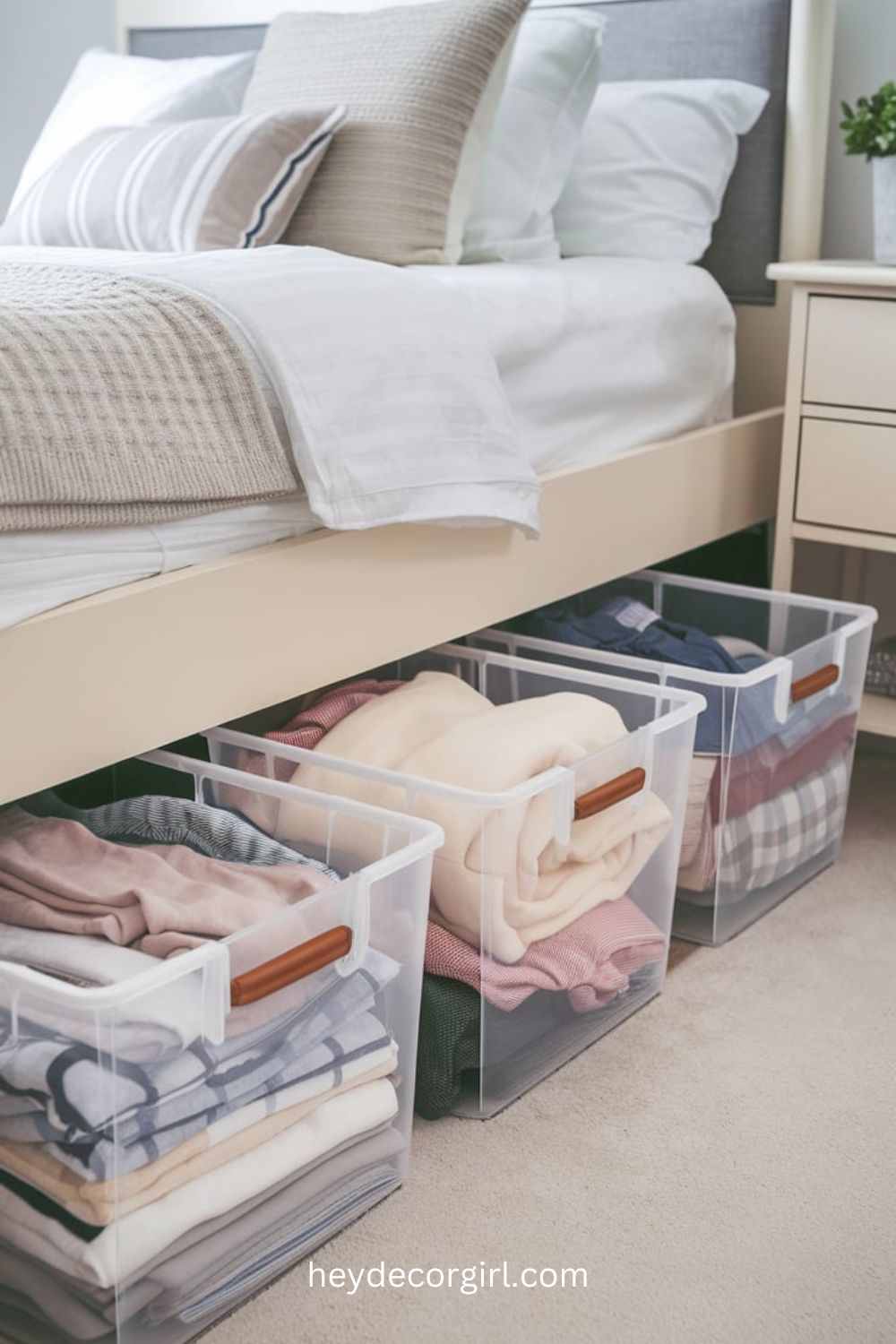
One of the cool and underused space-maximizing solutions in any room is under-bed storage. Through the space underneath your bed, you can clear up the living space, get it tidy, and utilize the maximum of your square inch space.
Storage Bins and Drawers
- Storage Bins: This is a versatile storage item, which can be rolled beneath the bed to store a host of other items, such as seasonal clothes and bedding, to shoes and toys. Use clear bins so you can easily see what is inside, or use opaque ones so that it looks clean. They can be pulled out and accessed easily with the help of bins with handles, and stackable bins can be used to arrange several items effectively.
- Drawers: Under-bed drawers are offered as a more permanent storage device, and may be installed into a bed frame or come as a standalone unit. They usually have liquid gliding systems, and they might have a divider or compartments to store the smaller stuff. Drawers are best for storing those things you frequently need, such as extra linens or daily essentials.
Use as much Space Under the Bed as possible.
- Select the Right Bed Height: When buying a bed, you need to consider one that has lots of space underneath. A bed with a frame will have a lot more storage capacity, though make sure it is not so high that it will make it look cluttered.
- Use Slim Storage Choices: In the low-clearance beds, use slim, low-profile storage bins or drawers. They can be easily slipped under the bed without consuming too much space, and they can be ideal for storing flat items such as additional sheets or seasonal clothing.
- Sort by Type: Save similar items in bins or drawers so that you can find what you need more easily. Labeled or clear bins help to identify items easily without digging through a lot of items.
- Keep It Accessible: The storage solutions should be easily accessible. Do not over-stuff bins or cram things in such a manner that you can easily reach and access stuff without any trouble.
- Keep it Clean: Clean under the bed frequently to avoid dust accumulation and to make sure that what is stored under the bed is not spoiled. Use storage containers that have lids or covers to ensure that the contents are dust-free.
With these measures and selecting the appropriate storage options, you can use the area under your bed to arrange your belongings and make it orderly and clean.
4. Over-the-Door Organizers
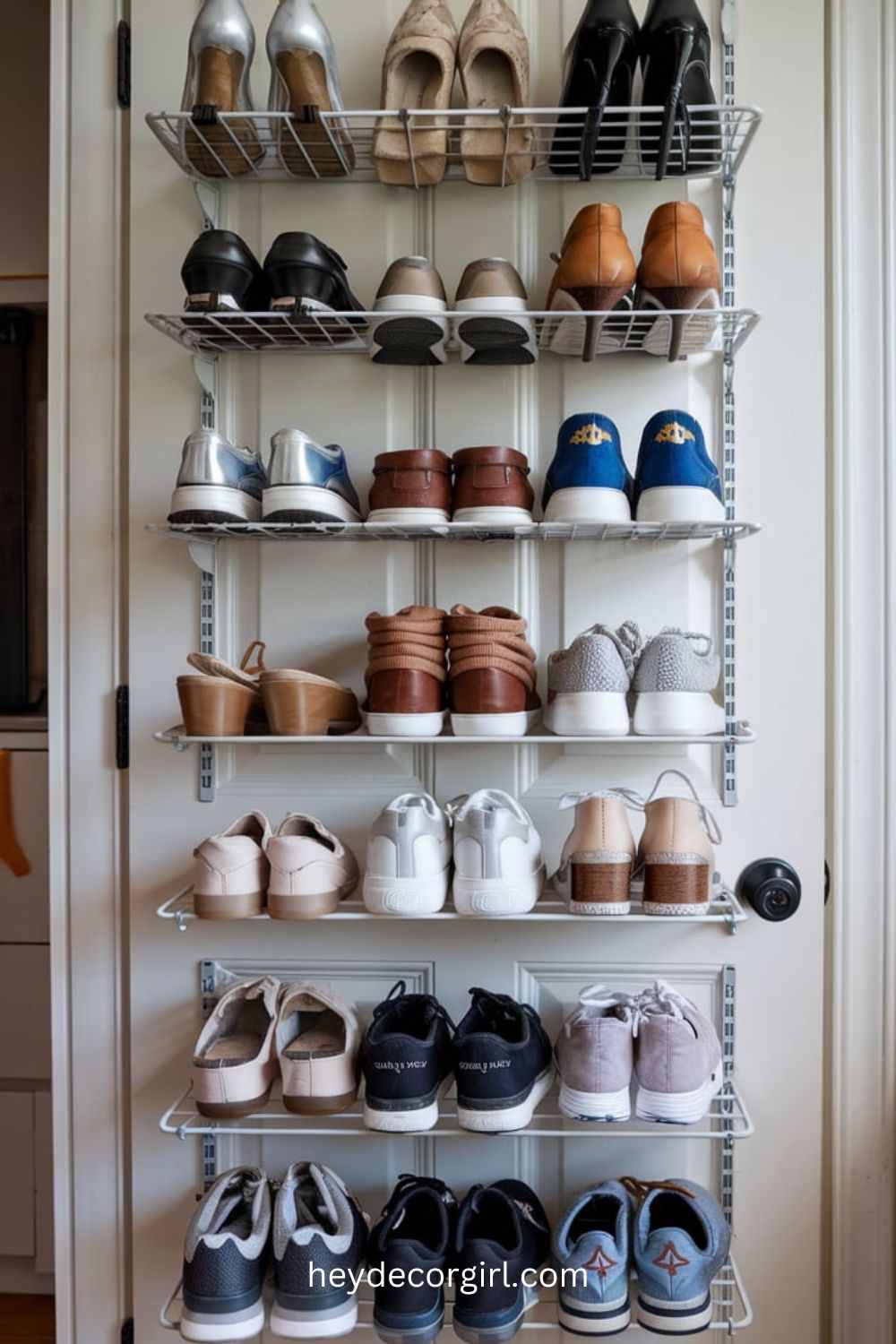
Over-door organizers are an intelligent and space-efficient method of ensuring your home is clean and orderly. They are versatile organizers that can be applied in different rooms to make the most of the storage space without consuming much space.
Various Types
- Shoe Racks: Shoe racks are supposed to hold several pairs of shoes; there are many types of over-the-door shoe racks, including tiered shelves or pocket racks. These are normally mesh or solid shelves that may be used to hold various forms of footwear, such as heels, sneakers, or boots.
- Hanging Shelves: These types of organizers have multiple shelves or pockets that hang over the door and provide an area where various items can be stored or kept. They are versatile in their application in storing books, toiletries, office supplies, or small household objects.
- Pocket Organizers: Pocket-style organizers feature a row of fabric/mesh pockets hanging over the door. Such pockets may contain small objects like cleaning agents or accessories, or craft material. The pockets are usually opaque or marked so that it can be easily recognized what is in them.
- Hooks and Holders: Over the door hooks or holders can be used to hang things such as coats, hats, bags, and even kitchen utensils. These are the best organizers to maximize the vertical space and to have the often-used items close by.
Best Practices to be used in various Rooms.
- Entryway: Have an over-the-door shoe rack or hooks where you can keep your footwear, bags, and keys. A pocket organizer would also come in handy to put mail or small necessities in, so that the entryway is not cluttered.
- Bedroom: In the bedroom, pocket organizers or over-the-door hanging bedroom shelves are a great way to store accessories, shoes, or additional bedding. Personal items such as makeup, jewelry, or office supplies can also be stored, utilizing little space in the closet.
- Bathroom: Place an over-the-door organizer with pockets or shelves to keep toiletries, cleaning supplies, or additional towels. This assists in maintaining order in the bathroom, and it also creates more space in the counter and cabinet.
- Pantry: The pantry or kitchen includes over-the-door shelves or racks, where canned goods, spices, ices, or cleaning substances should be stored. This can be used to ensure that the pantry is clean and organized so that it is easy to locate what one wants.
- Office: A pocket organizer with an over-the-door can be seen in an office or a study to store any stationery, documents, or even a small office item. This makes the working area clean, and the necessary things are always at hand.
Guided by the best practices and selecting the correct kind of over-the-door organizer, different parts of your house will be organized and usable by utilizing the vertical space.
5. Floating Shelves
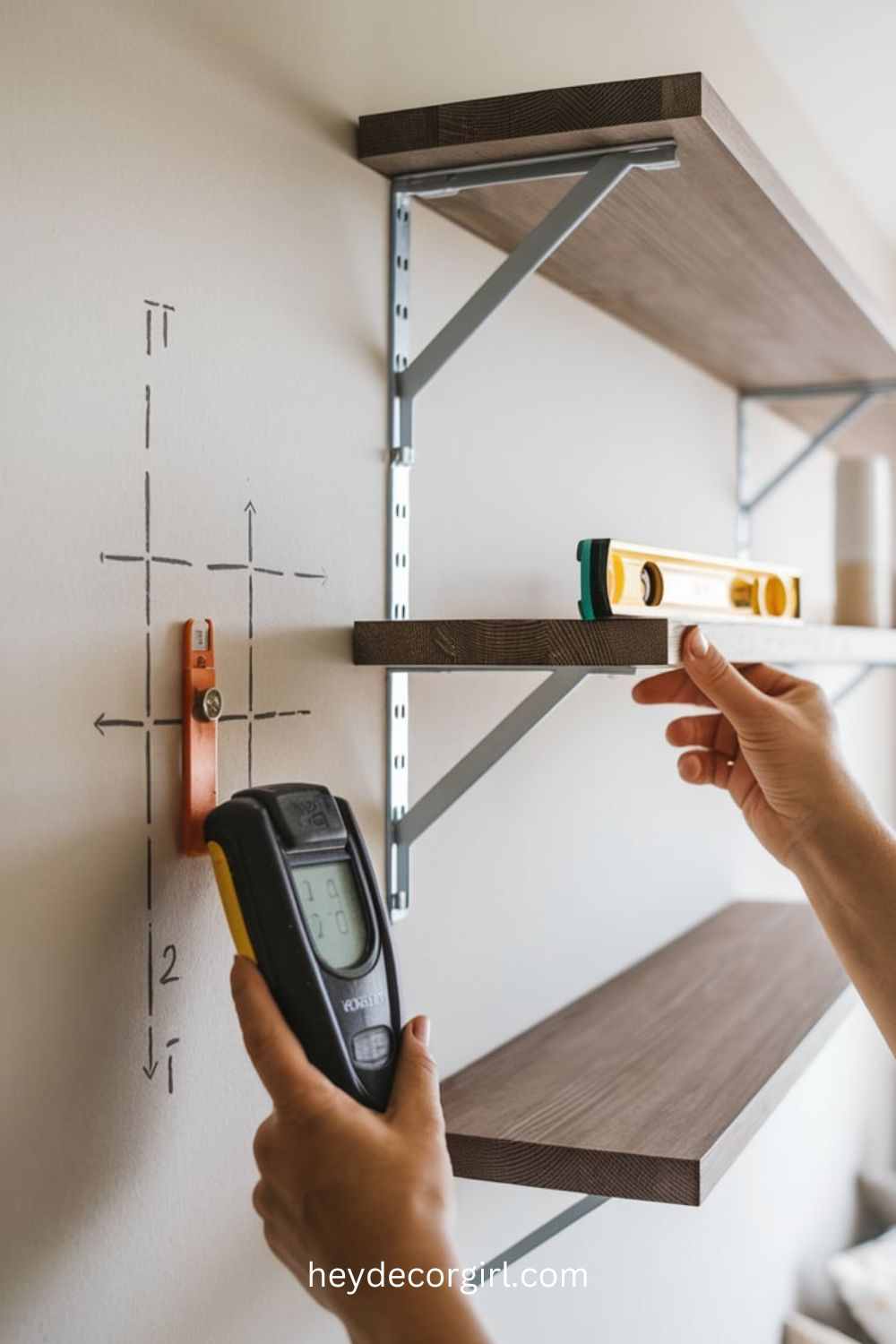
Floating shelves are a trendy and convenient way of supplementing any room with storage and display space. Low-cut design, where all the brackets are not visible, makes them easy to be easily integrate into your decor and also offers a flexible storage facility.
Installation Instructions and Best Locations.
- Select the Right Wall: The wall you use to install the floating shelves must be sturdy enough to hold the weight of the shelves. To perform optimally, shelves should be put in the wall stud and not just the drywall. Find out the study positions, and mark the points where you will mount the studs with a stud finder.
- Install with a Level: To make sure that your floating shelves are straight, apply a level when installing. Place marks on the wall at the desired height, position the shelf brackets or mounting hardware, and ensure that it is level, then fix it in place.
- Measure and Space: Design how you want your floating shelves to be placed, depending on what you want to put there. Measure spacing between shelves when placing more than one unit in case they are not straight, and in order to make them attractive to the sight of the eye. Make sure that the height and reach are low so that one can easily access the items that he or she might require most of the time.
- Install Safely: Follow the instructions on how to secure the floating shelves to the wall. This is usually done by fitting mounting brackets or some sort of support mechanism, which will keep the shelf steady. Have all screws and anchors fitted in place to carry the weight of the shelf and the shelf contents.
Adding Baskets and Bins to get things organized.
- Select Complementary Sizes: Select baskets and bins that will fit in your floating shelves without crowding the shelves. Use a combination of sizes to fit in various kinds of items and have a balanced appearance.
- Organize by Category: Get baskets and bins to sort and systematize what is in your shelves. As an example, one can put books in a basket, decorative objects in another, office supplies or small objects in other baskets. It can be beneficial to label the bins and keep them more organized, and easy to locate what you require.
- Mix and Match: Add baskets and bins to other decorative items like plants, picture frames, or vases to make a decoratively pleasing sight. The combination of textures and materials can be used to bring some visual value and a balance to the overall room decoration.
- Be Accessible: The baskets and bins should be able to be easy to access and not too high or deep. In case the floating shelves occupy a spot where the regularly used things are kept, then stock the bins such that those that are used most are within easy reach.
- Style and Decor: You can add decorative baskets that have some patterns or textures that are attractive to the decor of your room. Select bins that match the floating shelves and the rest of the decor in terms of color or material.
With these installation suggestions and the use of baskets and bins to put things in order, you will be able to use the floating shelves to make your space practical and attractive.
6. Ladder Racks
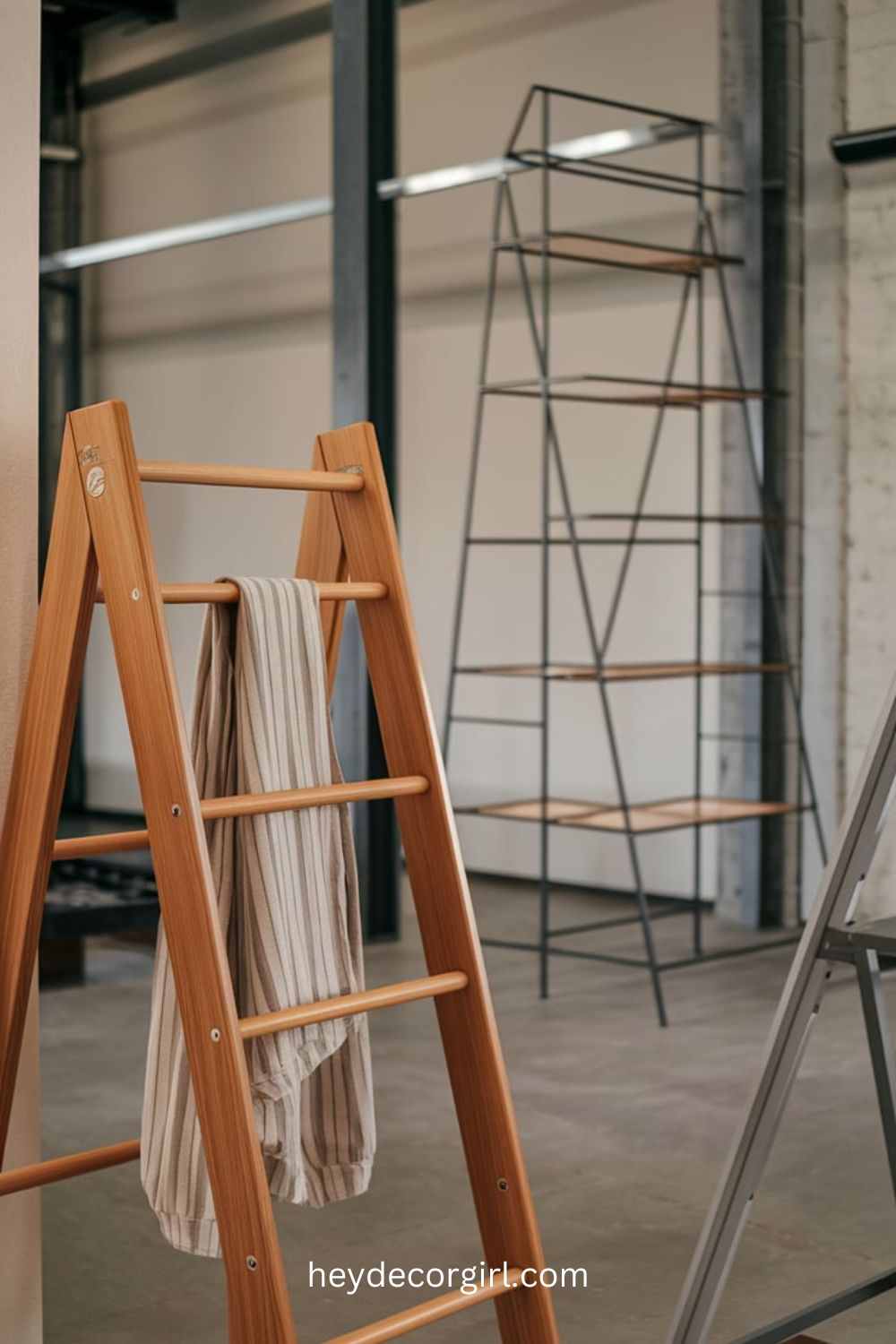
Ladder racks are a dynamic and multi-purpose storage device, and they are stylish as well as functional. Their distinctiveness makes them the best Clothing Storage Ideas, because they can display and organize various clothes and accessories in any environment they are put in.
Plans and Fittings.
Design Options:
- Wooden Ladder Racks: These racks are traditional, warm, and usually made out of solid wood or reclaimed wood. They are able to be completed in different colours or painted to suit your decor. Ladder racks made of wood provide a natural or rustic look to any room.
- Metal Ladder Racks: Metal ladder rack is constructed of steel or aluminum and have a smooth and industrial appearance. They can be either in minimalist designs with clean lines or can be finished in different colors or metallic finishes.
- Combination Ladder Racks: There are also ladder racks that are made up of a combination of wood and metal, which gives them a hybrid style that is both traditional and contemporary. Such a design is usually made up of wooden rungs that have metal frameworks or supports.
Installation:
- Freestanding: The majority of ladder racks are made to be freestanding, which means that they are easy to relocate and place in various spaces. Make sure that the rack lies on a level area and is not wobbly.
- Wall-Mounted: Wall-mounted ladder racks are more permanent in that a rack is fixed to the wall brackets or directly to the wall. Put in the rack, fix the rack using proper anchors and screws to make sure the rack is in place and level.
- Over-the-Door: There are ladder racks that are mounted on the door. Make sure that the rack is supported by the door and that it does not interfere with the operation of the door.
How to Style Hanging Clothes and Accessories.
Clothing Display:
Arranged Closet: Clothes should be arranged in order in the closet; those of a similar type should be stored together. E.g., wear jackets and dresses on the upper rungs and shirts and trousers on the bottom rungs.
- Color Coordination: Departmentalize clothes according to color to form a visual appeal. It helps to identify certain things more easily and provides the rack with a fashionable element.
Accessories Display:
- Layered Approach: display accessories like scarves, hats, or bags using the ladder rack. Wrap scarves around the rungs, hang hats on hooks or loo, ps, and position bags in strategic positions to bring out their design.
- Decoration: Add decorative objects like small potted plants, pictures in frames, or artwork to the ladder rack in order to add aesthetics and make the display more personal.
Seasonal Updates:
- Seasonal Rotation: Change the clothes and other accessories depending on the time of year. Display seasonal products such as summer dresses or winter coats on the ladder rack and rearrange as required.
- Seasonal Decor: Use seasonal decorations on the ladder rack, including garlands, lights, or seasonal decorations, to match a holiday or another special occasion.
Functional Use:
- Simple Accessibility: Make certain that the frequently used things are located at an easy reach level. This makes it easy to access or hang something when the need arises.
- Avoid Overcrowding: Do not overload the ladder rack in order to have a clean and organized appearance. Some of the rungs should be left loose so as not to make the rungs cluttered, but this is to make sure that all items are easily accessed.
With the correct design, an appropriately mounted ladder rack, and these style hints, you can have an organized, functional, and pleasing display of clothes and accessories.
7. Hooks and Wall-Mounted Systems
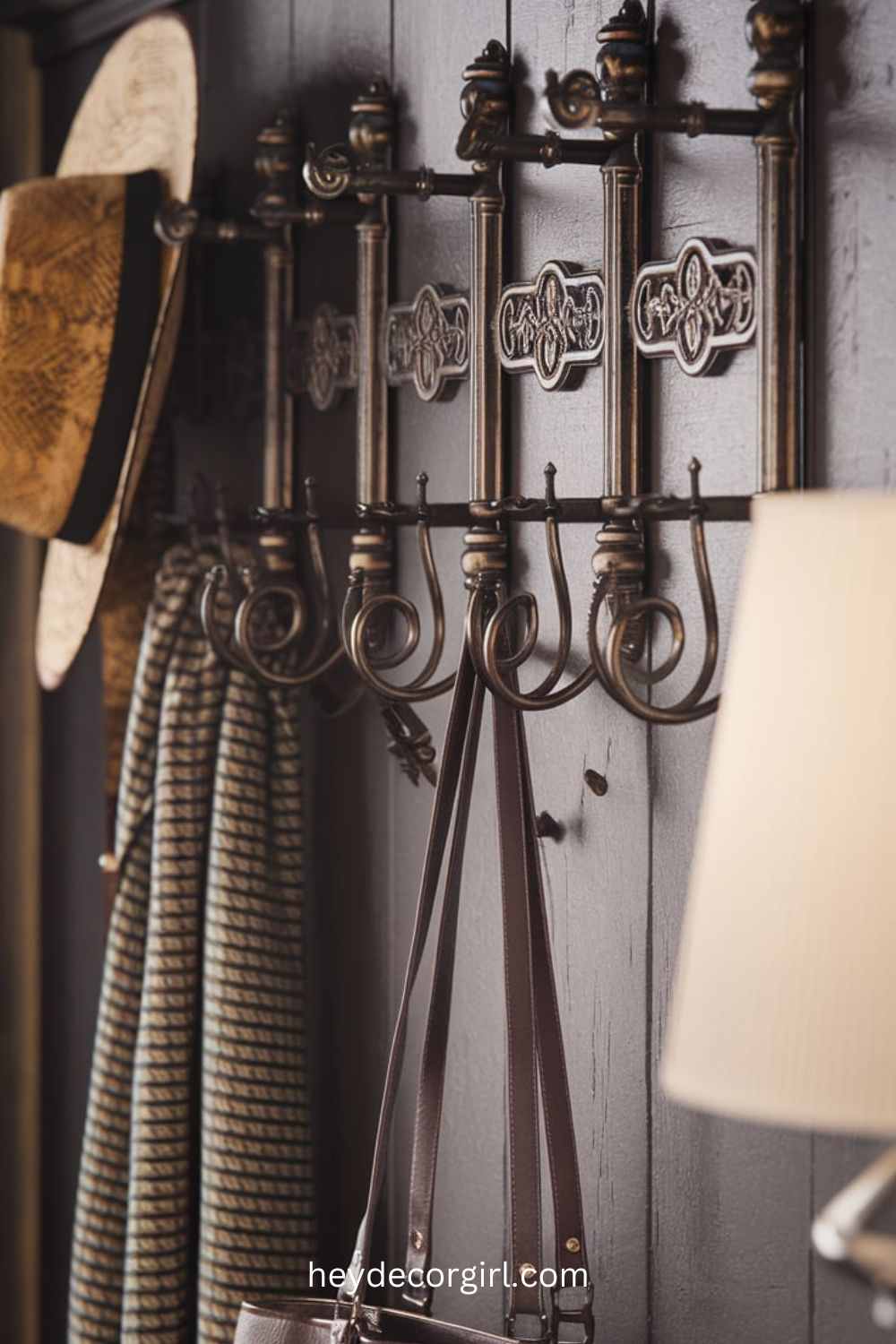
Wall mount and hook systems are flexible options when it comes to utilizing wall space to the maximum and placing clothes and accessories. These Clothing Storage Ideas are of different designs and may be utilized creatively towards perfection in any room in terms of functionality as well as appearance.
Types of Hooks
Decorative Hooks:
- Aesthetic Designs: Decorative hooks are available in several different forms, such as ornate, vintage, or modern designs. They are usually of unusual shapes, finishes, or patterns and therefore useful as well as ornamental.
- Material Choices: These hooks may be crafted of materials such as brass, ceramic, metal, or wood, and commonly serve to provide a decorative touch to any room, such as in an entryway, bathroom, or bedroom.
- Example: A picture of decoration hooks in a bedroom or a corridor, where the items are presented in the form of hats, bags, or scarves, emphasizing both their design and functionality.
Heavy-Duty Hooks:
Sturdy Construction: Hooks are heavy-duty and are engineered to support heavier objects like coats, bags, or tools. They are mostly constructed out of durable materials such as metaindustrial-grade plastic.
Mounting: The hooks can be mounted on the wall or set into studs so that they can hold a lot of weight without jeopardizing safety.
This is illustrated by the following example: a photograph depicting heavy-duty hooks in a mudroom or garage, where we find winter coats, backpacks, or tools.
Multi-Hook Systems:
- Universal Mounting: The multi-hook systems will have more than one hook on the same mount, thus offering a variety of options for hanging objects. They may be in straight construction or in zigzag formations.
- Space Efficiency: This is the best in places where several items should be placed in a small area, like an entrance door or a closet.
- Examples: A picture of a multi-hook system in a store room or laundry, where various types of clothes or other accessories are well tied.
Smart Ideas To Utilize Wall Space with Clothing.
Entryways and Mudrooms:
- Hooks on Coats and Bags: Use hooks with different lengths to ensure that various items are hooked, like coats, hats, ts, and bags. The ornamental hooks will add style to the structure, whereas the heavy-duty hook will be enduring.
- Built-In Solutions: Add hooks and mini shelves or cubbies so that you may store more of your gloves, keys, or mail.
Bedrooms:
- Accent Walls: This is a decorative accent wall that has a repeated decorative hook as part of a pattern. Hang the accessories and the bags or the lightweight clothing using the hooks.
- Hook: Hooks can be used as an element of a functional decor, e.g. set of scarves or a bunch of hats can be hung as decoration.
Bathrooms:
- Towel Hooks: Install towel and robe hooks. Select decorative or corresponding hooks to match the bathroom.
- Space-Saving: Hooks hung on the walls can be used to add more storage for toiletries or bath accessories, and this should release space on the countertop.
Closets:
- Utilize Vertical Space: Add more wall hooks to get more hanging space to hold accessories, bags, or hats. This may particularly come in handy in closets where there is a lack of enough hanging rod space.
- Organizational Systems: Hooks and wall-mounted shelves or racks can be used together to make your closet a complete organization system.
Home Offices:
- Accessory Storage: With hooks, place office accessories, including headphones, bags, or hats, that need to be easy to reach. Select hooks that do not look out of place in the office.
- Creative Displays: Essentially, use hooks to hang commonly used objects visually, er including art supplies hanging or office supplies hanging.
Choosing the right kind of hooks and getting creative with the wall space can make any room functional and stylish, and maximize the use of vertical space and ensure items are arranged and reachable.
8. Vintage Trunks and Chests
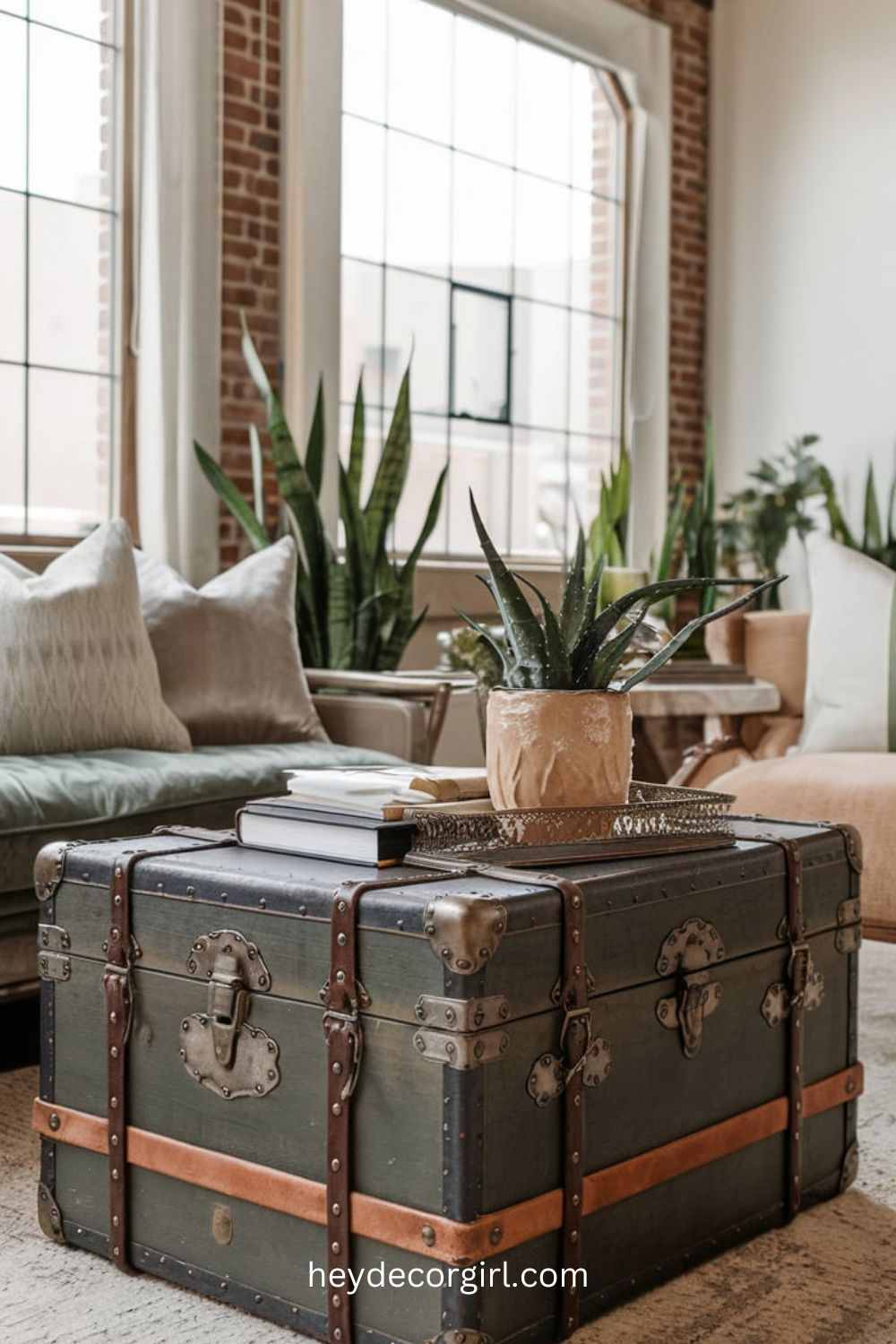
Another option that has an evergreen appeal and usefulness is the use of vintage trunks and chests as a storage option. They are not only fashionable, but they also offer extra storage space, something very useful in a home. To those in need of creative Clothing Storage Ideas, these vintage pieces can be both decorative as well as useful storage units for clothing and accessories.
Bonuses: Style and Additional Storage.
Style:
- Classic Appeal: Vintage trunks and chests are frequently decorated with quite elaborate designs, including elaborate metal work, leather straps, or antique finishes. Their distinctiveness is capable of adding beauty to the design of different room types, such as rustic and eclectic.
- Conversation Pieces: They can be used in the centre of the room as a source of historical records and character. Their unique appearance can be used to match the modern, classic, or industrial interior.
Additional Storage:
- Multiple Purpose: Vintage trunks and chests offer a lot of storage space in which blankets, clothing, books, or seasonal decorations can be stored. They can be installed in different rooms such as living rooms, bedrooms, and entryways.
- Space Efficiency: Adding old trunks or chests to your home will allow you to increase the amount of storage without compromising style. They provide an effective way of organizing and decluttering your place.
Tips on Finding and Refurbishing.
Victorian trunks, chests:
- Antique Stores: Go to antique shops or flea markets. Sometimes one can find vintage trunks or chests. These shops may be a goldmine for discovering unique and well-preserved things.
- Online Marketplaces: Websites including Etsy, eBay, or dedicated sites to vintage furniture. Find sellers that provide descriptions and pictures in order to verify the state of the item.
- Estate Sales and Auctions: Visit estate sales or auctions to discover vintage trunks and chests. These events have the opportunity to sell genuine historical works at a relatively low price.
To refurbish Vintages Trunks and Chests:
- Check the Condition: Before buying, the trunk or the chest should be examined thoroughly to check whether it is damaged or worn out. Inspect structural integrity, including hinges, locks, and handles. Determine the state of the wood, fabric, or metal work.
- Cleaning and Restoration: Clean the surface using the right cleaners depending on the material (wood, metal, leather). In the case of wooden trunks, one can polish or wax them to give them a shine again. In the case of metal, rust removers and some paint (where necessary) should be used.
- Next: Adding a Look: You can add a look to the trunk or chest with new paint or a new piece of fabric, depending on what you want. Use colors and designs that would be compatible with your existing decor without taking away the vintage nature.
- Surface Protection: Coat the trunk or chest finish with a protective finish. In the case of wooden pieces, apply a transparent sealant or a varnish. In the case of metal parts, the parts should be well-coated to avoid rust and wear.
Styling and Integration:
- Practical Decor: The old trunk or chest may be used as a coffee table, end-of-bed storage, or a decoration in an entryway. Light it up with some decorative trays, books, or plants to make it look more attractive.
- Complementary Decor: Have the trunk or chest fitted in with other vintage or antiques in the room. Pair it with complementary furniture and decor to produce a harmonious appearance.
9. Dressers and Chests of Drawers
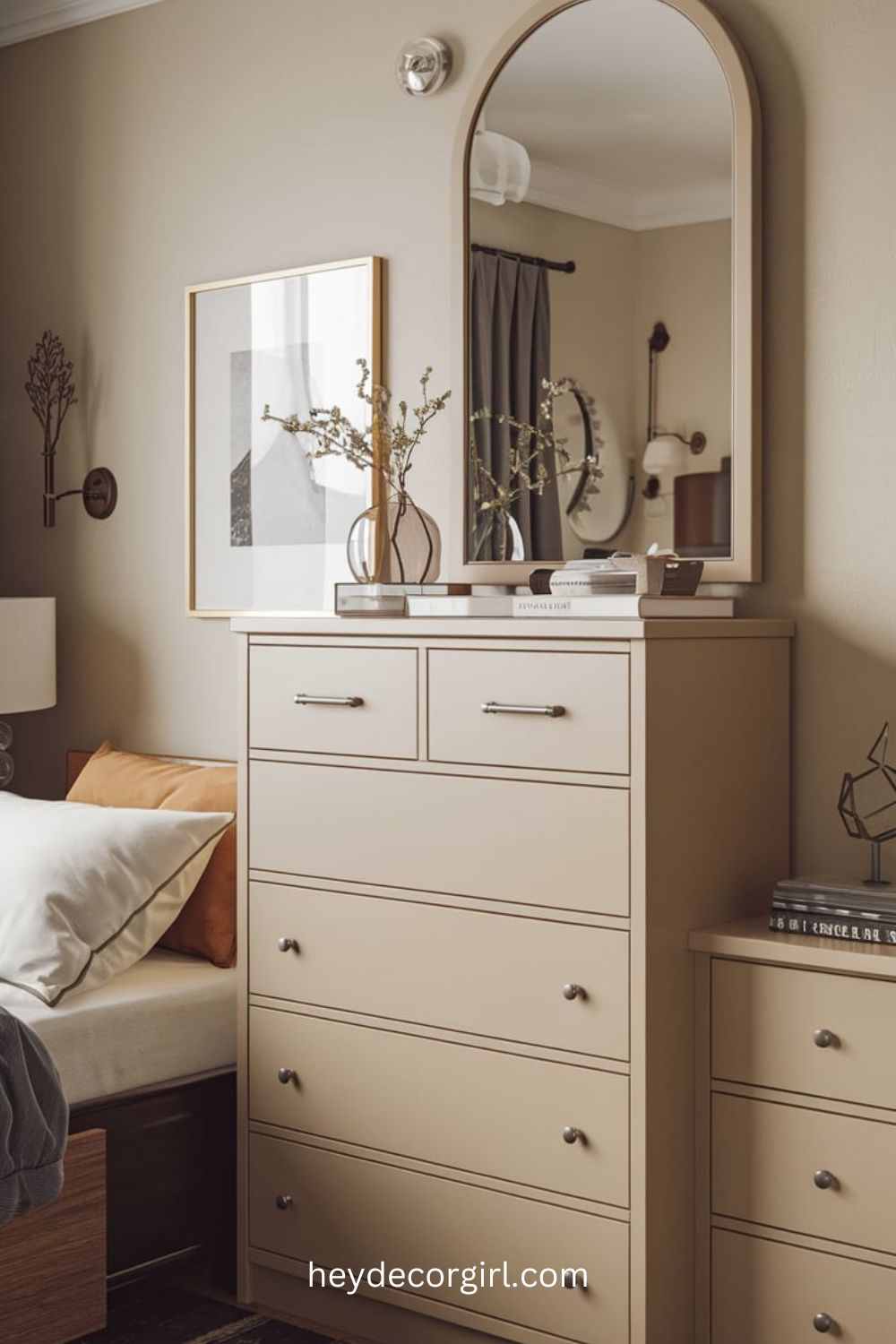
The dressers and chests of drawers are furniture that is important to an organization and storing clothing and at the same time are practical and appealing. Investigating Clothing Storage Ideas, you will discover that these works exist in different designs and sizes, which can be accommodated in various spaces, and offer effective storage solutions.
Space Saving Designs and Sizes.
Compact Dressers:
- Designs: Smaller spaces are occupied by compact dressers, which have a slimmer figure or fewer drawers. They fit perfectly in a bedroom, an apartment, or a room where there is not much space.
- Sizes: These dressers usually have between 4 to 6 drawers, and they can be placed in small areas like below the windows or between other furniture. It should be either high and narrow or rather short and broad, according to the space at your disposal.
Vertical Dressers:
- Designs: Vertical dressers make good use of the vertical space by stacking the drawers one at a time. They are normally thin and tall and can fit into small spaces.
- Sizes: Vertical dressers come in different heights and drawer arrangements, that is, 5 to 8 drawers. They fit in rooms that have limited floor space but have a lot of vertical space.
Horizontal Dressers:
- Designs: Horizontal dressers are broader, with the option of low profile, which is good for storing under the window or can support other decorative elements such as lamps or mirrors.
- Sizing: The dressers are usually 6 or 10 drawers and may be utilized in bigger rooms where the width is not a factor. They have enough storage and can be used as a changing table in nurseries, too.
Chest of Drawers:
- Designs: Chests of drawers are usually in more of an old-fashioned appearance and may be either tall and narrow or shorter and wider. They are adaptable and can be used in different room designs.
- Sizes: There are heights and widths of chests of drawers with sizes varying between 4 to 7. They can be installed in bedrooms, closets, or even as supplementary storage in the living rooms.
Organization Ideas in Clothing Drawers.
Drawer Dividers:
- Instructions: Place the items in each of the drawers with drawer dividers. This aids in arranging small objects such as socks and undergarments, and aids in avoiding their jumble.
- Types: Select adjustable dividers or removable and customizable trays to suit the size of your own drawers and individual tastes.
Folding Techniques:
- File Folding: The file-folding technique should be used on such items as T-shirts, jeans, and sweaters. The clothes should be folded into small, tidy rectangles that stand erectly in the drawer, and that way, it is easy to see and reach an item.
- Rolling: Rolling clothes, particularly when one is traveling or using smaller drawers, will save some space and decrease wrinkles. This method is suitable when it comes to such pieces as exercise garments and casual clothing.
Labeling:
- Labels: Write on the inside of the drawer dividers or with small bins, sort the items into categories. It can assist with the fast search for certain clothes and keep things organized in the long run.
Custom Labels: Design custom labels that give the contents of each drawer, e.g., T-T-shirtsJeans, or Accessories.
Seasonal Rotation:
- Swap Items: Cleanse the clothing according to the season. Keep off-season clothes in drawers that are harder to access or in vacuum-sealed bags to store the clothes and preserve their freshness.
- Seasonal Organization: Organize the drawers depending on the season, with those items that are most used at the top, followed by those that are used less frequently.
Maximize Vertical Space:
- Stacking: When using deeper drawers, it is best to stack the products in the vertical direction to ensure the maximum use of the height. e.g., stacking sweaters or just arranging shoes in rows.
- Use Corners: Small bins or containers are important to be used in the corners of the drawers to store smaller things and make good use of the available space.
10. Modular Storage Units
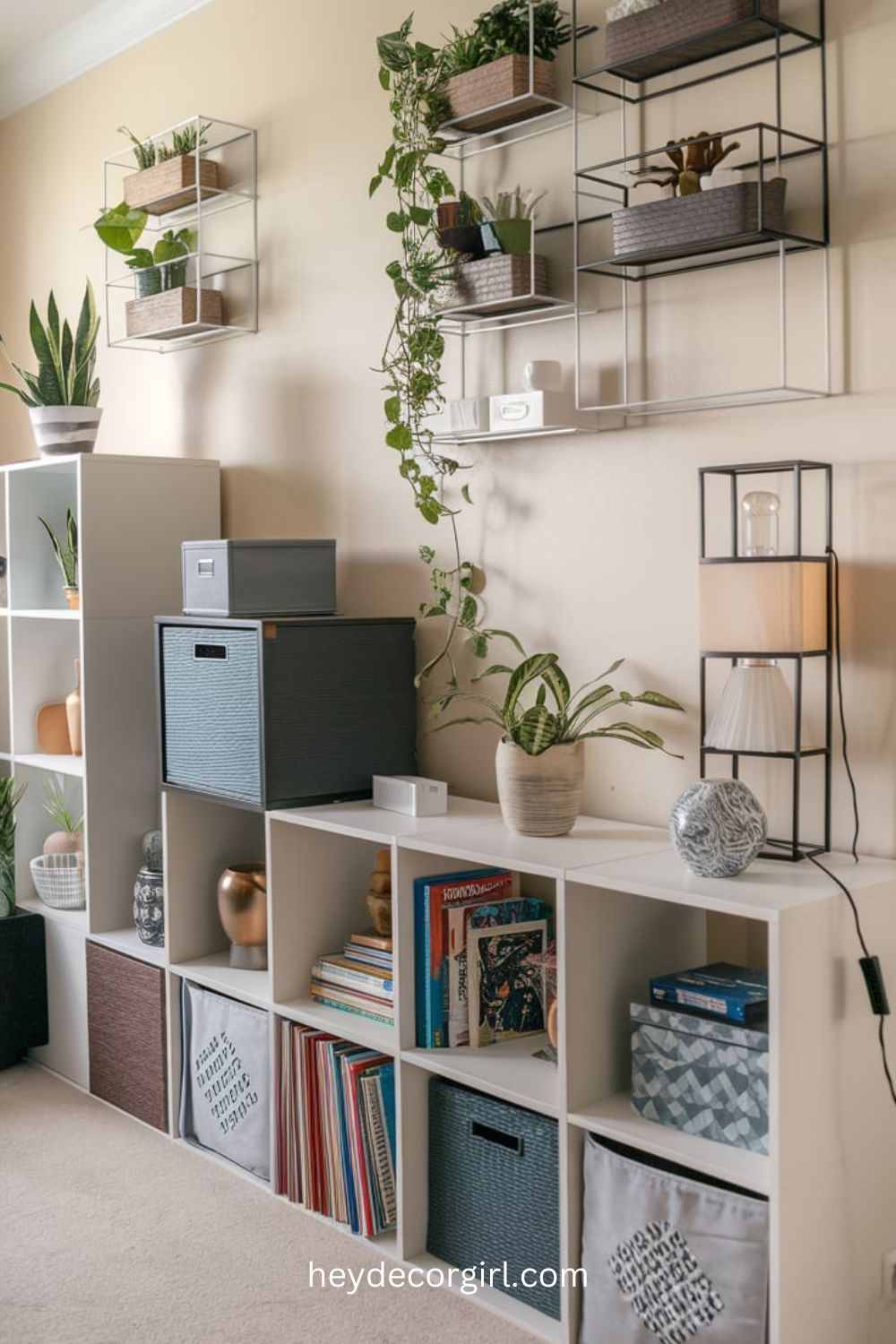
Modular storage units are customizable and flexible in their design to organize and store items. The units are especially useful in terms of clothing storage ideas, since they can be modified to suit the needs and space of different sizes, so they have become a common choice in the small and large spaces.
Storage unit types: Modular storage.
Cube Storage:
- Designs: Cube storage units are made up of single cubes or compartments, which may be utilized to store books, boxes, or ornamental objects. They may be mounted on a wall or free-standing, and they are designed in different sizes and configurations.
- Applications: Can be used to store items in a bedroom, a living room, or an office. Cube storage may serve to store the decorative pieces, keep playing with to, and store books and magazines.
- Examples: Display several different types of cube storage, including open cubes that allow easy access, and closed cubes with doors that look cleaner.
Stackable Shelves:
- Designs: Stackable shelves may be stacked vertically or horizontally based on the space and storage requirements. They can be a modular design where you can add and take away shelves when required.
- Applications: Ideal for designing bespoke shelving systems in a home office, a laundry, or ora living room. Books, collectibles, or storage bins can be stacked on top of each other.
- Example: Display stackable shelves in various shapes, including a tall tower of shelves or a short, wide one. Demonstrate how they may be customized or tailored to fit particular spaces.
Modular Cabinets:
- Designs: Modular cabinets are assembled out of different units, which can be assembled to form customized storage systems. They can contain open shelves, drawers, and doors.
- Applications: Acceptable for most types of storage needs, such as office goods and clothing. The modular cabinets may be designed to suit the various room patterns and storage capabilities.
- Examples: Use illustrations to show the modular cabinets that have various combinations of drawers, shelves, and doors. Demonstrate how these cabinets may be modified for different spaces and applications.
Wall-Mounted Units:
- Designs: Wall-mounted modular storage units are directly mounted to the wall to release floor space as well as to provide a clean appearance. These can be shelves, hooks, and cubbies.
- Applications: Excellent in small areas where there is a lack of floor space. In doorways, home office, or kitchens, one may install wall-mounted units.
- Examples: Demonstrate wall-mounted units in different locations, such as kitchens that have shelves with spices and entryways with hooks with keys and bags.
Custom-made to fit your space.
Adjustable Components:
- Design: Often, modular storage units have customizable shelves or compartments, which can be moved to hold various items or modify the format of that unit.
- Examples: Show adjustable shelves being either raised up or down to accommodate items of various sizes, or apertures being rearranged to form new storage spaces.
Expandable Units:
- Design: Certain modular storage systems may be extended by adding new units or parts. This enables you to expand your storage solution on demand.
- Examples: Exhibit expandable units added to an existing system, e.,g. adding extra shelves to an existing base unit, or adding extra cubes to a modular system.
Custom Finishes and Colors:
- Design: Modular storage units are available in a range of finishes and colors, so you can find one that fits your decor. Flexible finishes may consist of wood, me, or laminate.
- Examples: Show various finishes and colors of modular storage units with an emphasis on their ability to match existing decor or create a statement.
Fits Other Furniture:
- Design: Modular storage would also be compatible with other pieces of furniture, like desks or seating areas, to create a unified appearance and to maximize utility.
- Examples: Display modular storage furniture in conjunction with tables or chairs, as an example of how they can be integrated into a more comprehensive furniture system that adds form and functionality.
FAQ
1. What can I use as an alternative to using a closet to store my clothes?
Freestanding wardrobes, open storage shelves, garment racks, under-bed storage, or fashionable storage boxes and baskets may be considered. Other Clothing Storage Solutions involve having a clothing rack or a room divider that has built-in storage.
2. What do I do with clothes in the absence of a closet?
Some of the Clothing Storage Ideas are multi-tiered racks, vertical storage such as hanging organizers, and over-the-door hooks. Look at using wall space that is not being used to mount shelves or rods.
3. Can seasonal clothes be stored?
Yes, pack away clothing that is not needed in vacuum-sealed bags or storage bins to save space and preserve the clothing. Name the bins so they can be easily identified, and it is one of the most effective clothing storage concepts to make the most of the space and organization.
4. What can I do to have my clothes storage appear stylish?
Choose the clothes storage ideas in decorative baskets, wooden crates, or cloth bins. You should use a sleek-looking clothing rack and add such touches as an elegant garment bag or a colorful hanger.
5. Is it possible to use furniture to keep clothes?
Absolutely! Furniture like ottomans with storage options, storage benches, or a dresser can be used as clothing storage solutions.
6. What is the way to arrange clothes in a clothing rack?
The similar items should be grouped, slender hangers should be applied to fit in the maximum space, and additional storage may be achieved by adding shelves or bins to the bottom part of the rack. Such clothes storage concepts can allow you to maintain your wardrobe in order and efficiency.
7. What are the innovative ideas of using under-bed storage?
Keep a bed under the bed, a rolling bin, or storage boxes to store clothing. To get the best ideas on how to store clothing efficiently, use clear bins to easily view the content, or use a fabric bin that may appear softer.
8. Is it possible to hang clothes on the walls?
It is possible, sure, to hang clothes on shelves, hooks, or rods mounted on the wall. These ideas of clothes storage are very helpful to utilize the maximum of the vertical space and to store the goods where they can be seen.
9. So what do I do when I do not have a closet to store my shoes?
Store clothing items in shoe racks, cubbies, or hanging shoe organizers. Alternatively, you can have the over-the-door shoe racks or stackable bins, preferable to having them on the floor.
10. How do you keep accessories when you do not have a closet?
In the Clothing Storage Ideas category, one can use drawer organizers, hanging pocketed organizers, or ornamental trays to store accessories such as scarves, hats, and other jewelry in a place and easily accessible.