![Hey Decor Girl [Latest Trending Decor Design Ideas]](https://heydecorgirl.com/wordpress/wp-content/uploads/2024/08/Heygirldecor-Logo.png)
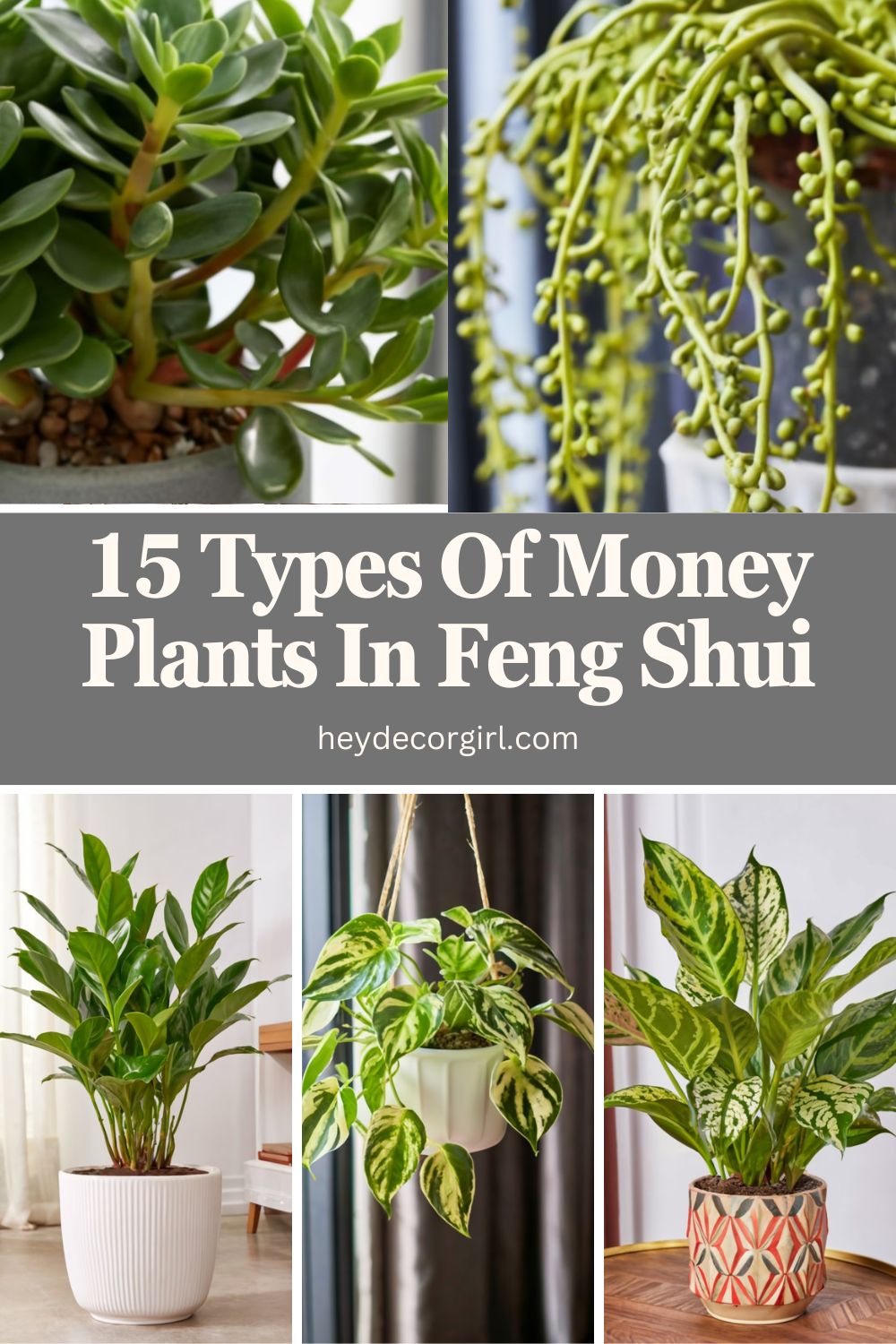
Money Plants In Feng Shui, the ancient Chinese art of furnishing the living space to harmonize with the environment, money plants play a great role. These plants are said to help bring prosperity, wealth, and positive energy into a household or office. Through planned sitings of money plants in certain locations, the practitioners seek to promote the circulation of Chi (life force) and a healthy and harmonious environment.
The influence of money plants in Feng Shui is not only in their beauty, but it is closely ingrained in the myth that some plants have the power to affect the energy of our surroundings. The various kinds of money plants possess distinct traits and positive outcomes, which help to lead to the general objective of empowering a space that can support success, prosperity, and well-being. Planting them in your homes can then be an effective method of harmonizing your environment with your financial and personal objectives.
Money Plants In Feng Shui
1. Jade Plant (Crassula ovata)
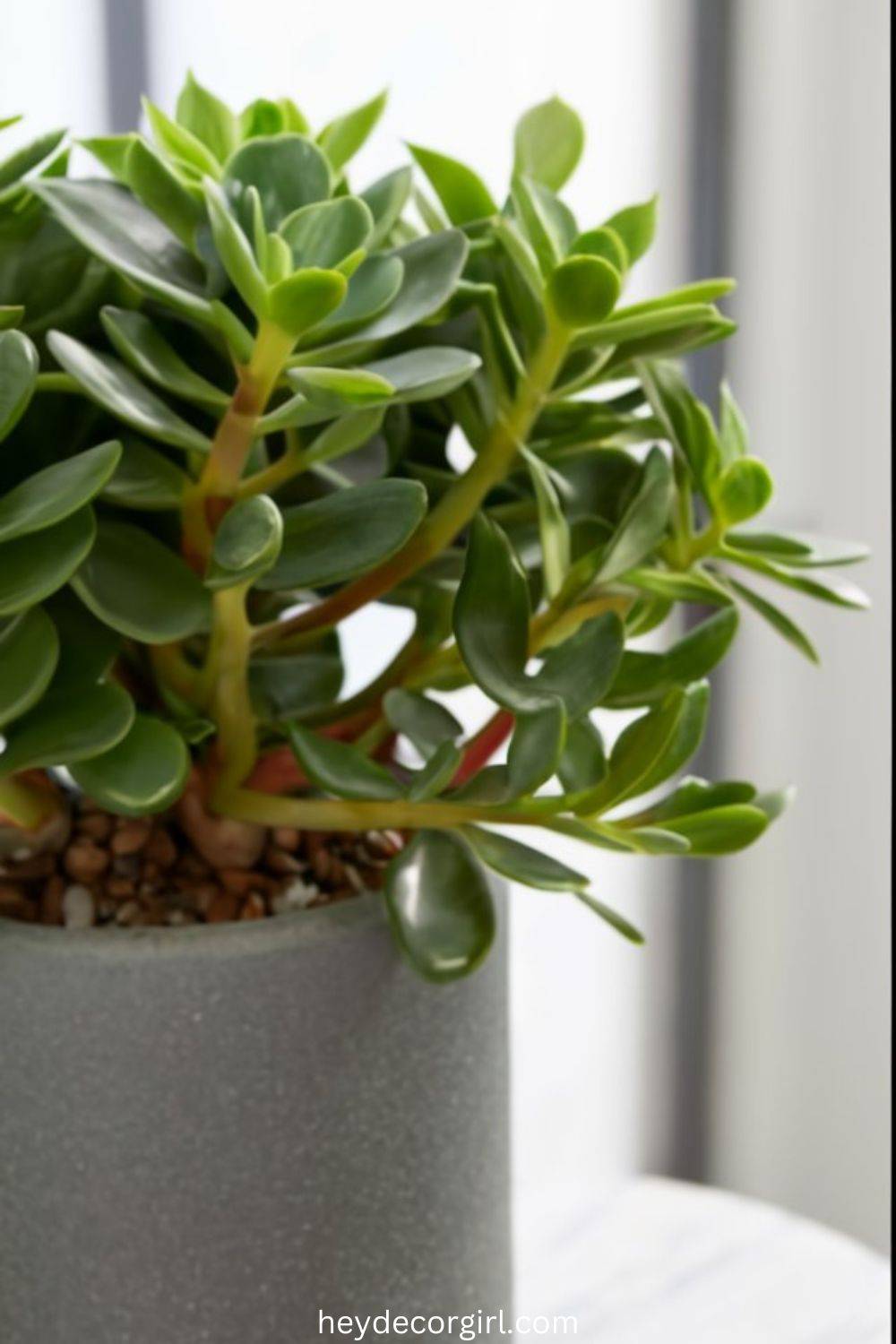
Description and Appearance The Jade Plant, also known as Crassula ovata, is a common succulent plant that is distinguished by thick, shiny, dark green foliage that resembles jade gemstones. When well grown, it is usually bushy and rounded and may grow to a height of approximately 3 feet (90 cm). When the plant matures, it may have small white or pink flowers in the form of stars. Its thick, fat leaves and shrub-like size of growth allow it to be popular both indoors and outdoors.
Feng Shui Placements and Benefits. The Jade Plant in the Feng Shui system is said to bring a lot of fortune and good fortune. Its coin-shaped, round leaves are believed to be good luck and wealth-attracting. The plant is commonly located at the southeast side of the house or workplace, and this is referred to as the Wealth area based on the Bagua map. A Jade Plant in this location is supposed to bring good luck in terms of money and general good fortune. It may as well be placed close to exits or cash counters in organizations to bring good fortune and prosperity.
Care Tips
- Light: Jade Plants grow well in indirect bright sunshine. They can withstand a bit of the direct sunshine, but excess may burn the leaves.
- Irrigation: Watering should not be done frequently. Excessive water may result in root rot; hence, it is advisable to water the plant sparsely, particularly in the winter season.
- Soil: Well-drained soil should be used, e.g., a cactus or succulent mix, to allow the soil to be well-aerated and avoid waterlogging.
- Temperature: Jade Plants like temperatures ranging between60-75°FF (15-24o °CC). They are not to be exposed to frost and cold drafts.
- Prune regularly to keep the plant in shape and promote branching. Take out any dead, spindly growth to encourage a more full-bodied look.
These care tips will help your Jade Plant to grow and be able to provide a harmonious and successful environment.
2. Lucky Bamboo (Dracaena sanderiana)
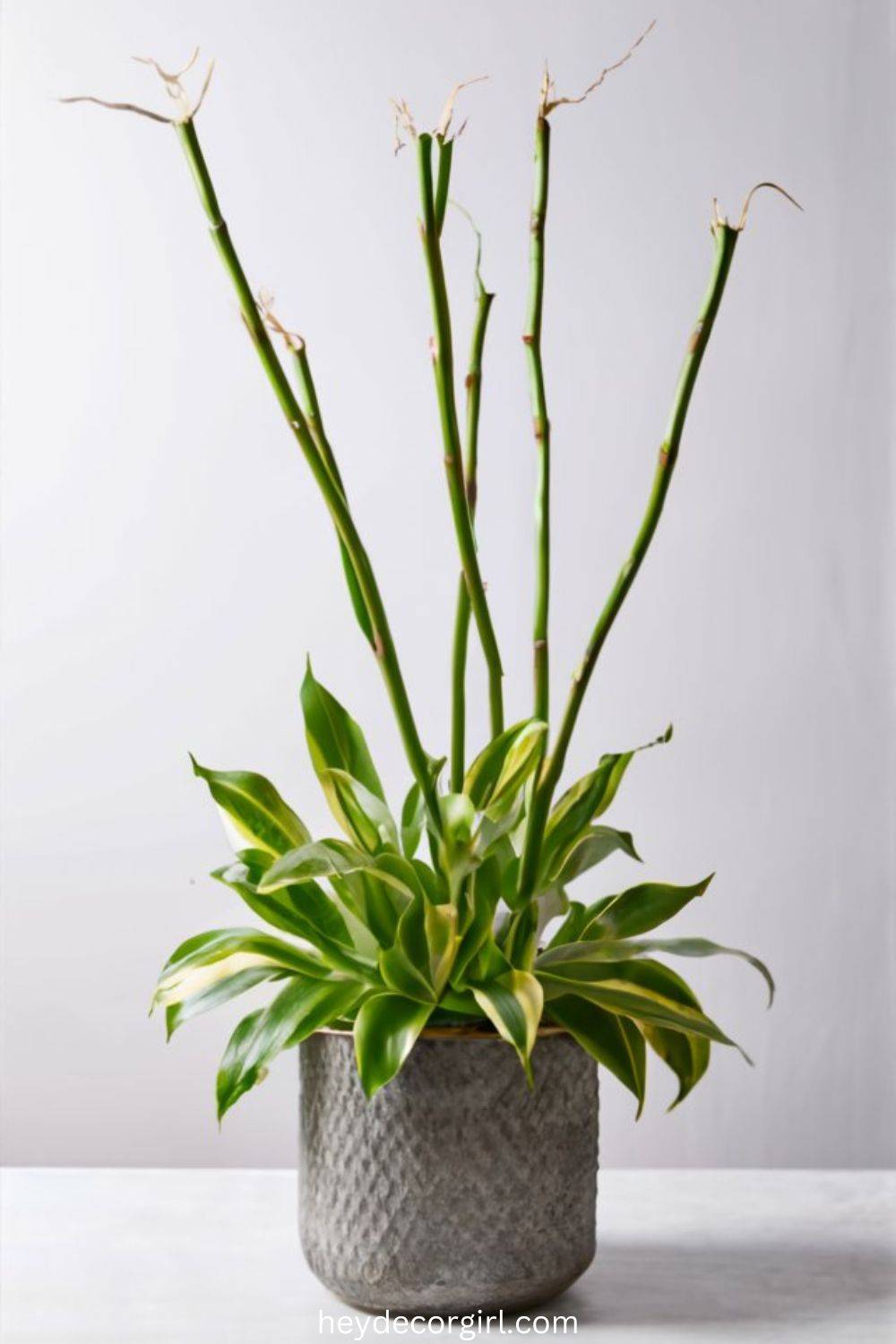
Description and Appearance Lucky Bamboo (Dracaena sanderiana) is a popular plant with slim, tall stems and thick, green, soft leaves. Although it is called a bamboo,o it is a form of Dracaena. The plant is characteristically equipped with multiple stalks that are decoratively styled in a spiral or braided structure, which makes the plant a visual catch in any area. Lucky bamboo may be grown in a variety of sizes, small enough to fit on the tabletop, or taller, and frequently with coloured green leaves at the end of each stalk.
Feng Shui Benefits and Placements. In Feng Shui, the Lucky Bamboo is a very popular plant in terms of its power in attracting good luck, positive energy, and prosperity. The element that is attributed to the plant is the Wood one, which enhances development and well-being. It is commonly employed to improve a range of things in life based on the number of stalks of the plant:
- Two stalks: Love and relationships.
- Three stalks: wealth, longevity, and happiness.
- Five stalks: Prosperity and plenty.
- Seven stalks: Good health.
- Nine stalks: Good luck, good fortune.
Lucky Bamboo fits perfectly in the southeast corner of the home or office to enhance monetary good fortune, or in the east in order to promote health and family balance. It may also be placed close to doors or the Wealth corner to capture the good energy.
Care Tips
- Light: Lucky Bamboo likes indirect light of the bright type. It is tolerant of low light conditions, but it might grow more slowly.
- Watering: The plant is able to grow in water or soil. When growing in water, make sure the roots are submerged and change the water every two weeks to avoid stagnation. When planted in soil, water when dry to the inch top.
- Water Quality: Distilled or filtered water should be used to prevent chlorine and fluoride, which may kill the plant.
- Temperature: Lucky Bamboo prefers a temperature of 65-85 85 o C. It should not be subjected to cold air or high temperatures.
- Pruning: When the plant has yellow or dead leaves, prune them to enable the plant to grow and retain its appearance.
Lucky Bamboo can be a beautiful and auspicious decoration, only with the proper care, which will bring well-being and good luck to your environment.
3. Money Tree (Pachira aquatica)
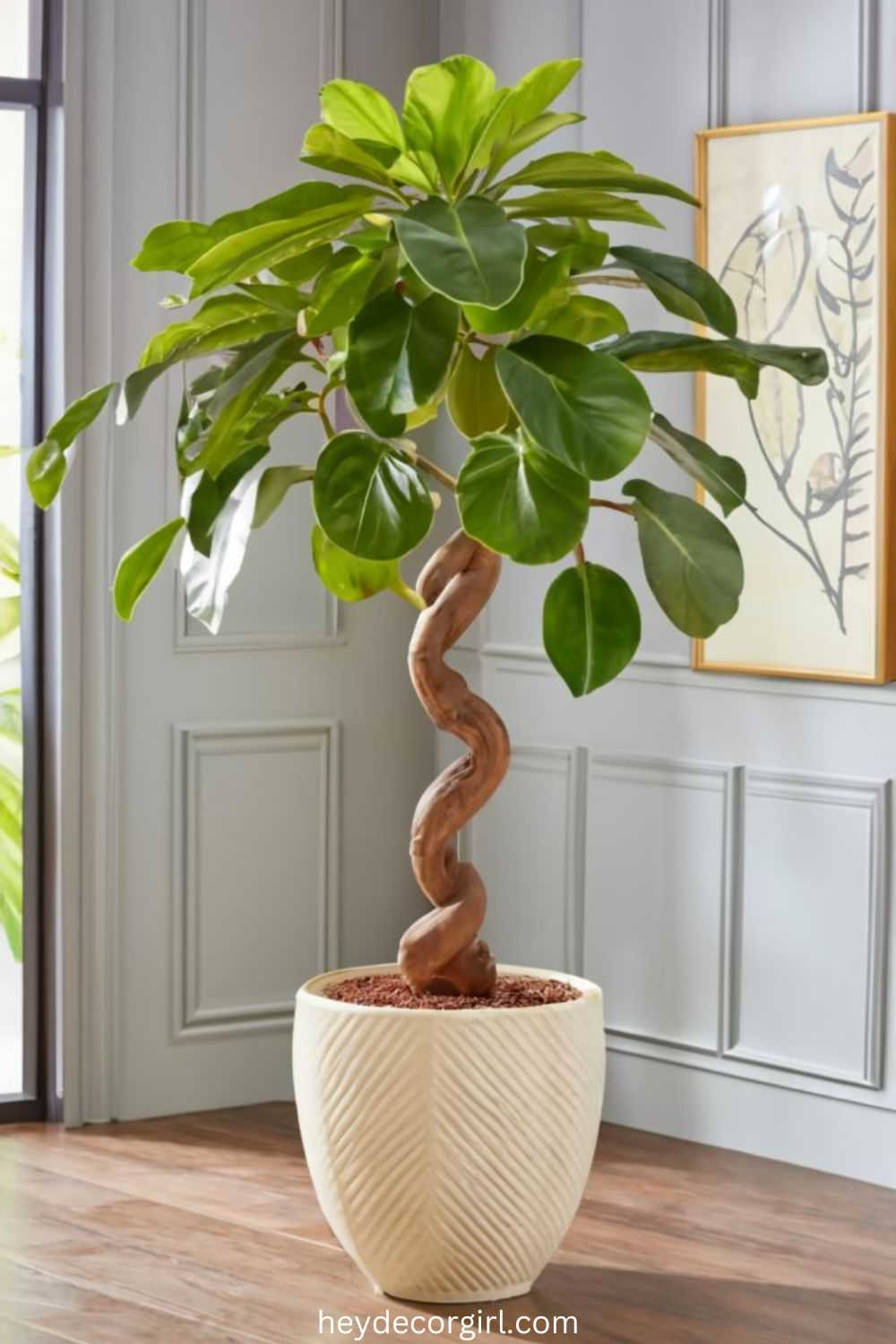
Description and Appearance The Money Tree (Pachira aquatica) is an indoor plant that is famous because of its braided trunk and massive and glossy palmate leaves. It is usually characterized by a trunk that has been twined or plaited, which is an ancient way of producing an unusual and appealing look. The leaves are wide and glossy, mostly forming clusters of five leaves, which gives the plant a tropical appearance. The Money Trees can reach several feet in height, ht thus becoming an eye-catching piece in any room.
Feng Shui Benefits and Placements Feng Shui The Money Tree is believed to be a symbol of wealth and prosperity. It is said to bring financial luck and fortune to the home or the office. The plant is connected with the element of the ear, which promotes stability and prosperity. The money tree is supposed to sit in the southeast part of the room or any other space according to the Feng Shui. This area is referred to as the Wealth area, which is the spot where finances are supposed to be increased and bring about prosperity. Also, it is believed that the Money Tree should be kept close to the door of a home or business to attract good fortune and energy.
Care Tips
- Light: Money Trees like indirect bright light. They can withstand low-light conditions but can develop at a slower pace, and also lose their bright colors.
- Watering: The top inch of soil should be dry before watering the plant. Do not overwater; too much water may cause root rot. Make sure that the pot is well-drained.
- Soil: Plant in well-draining soil, like a standard potting mix with perlite or sand added to improve aeration.
- Temperature: Money Trees grow well in temperatures ranging from 60-75 0 F (15-24 C). Keep the plant out of the draft, extreme temperatures, and direct sunlight.
- Humidity: Money Trees can withstand average humidity in the home, but they can be sprayed every now and then or put on a humidity tray, particularly in arid locations.
- Pruning: It is best to prune the plant regularly to maintain its shape and to remove any dead or yellow leaves. This assists in healthy growth and clean looks.
When well-maintained, the Money Tree will be able to thrive and remain to keep your environment positive and prosperous.
4. Pothos (Epipremnum aureum)
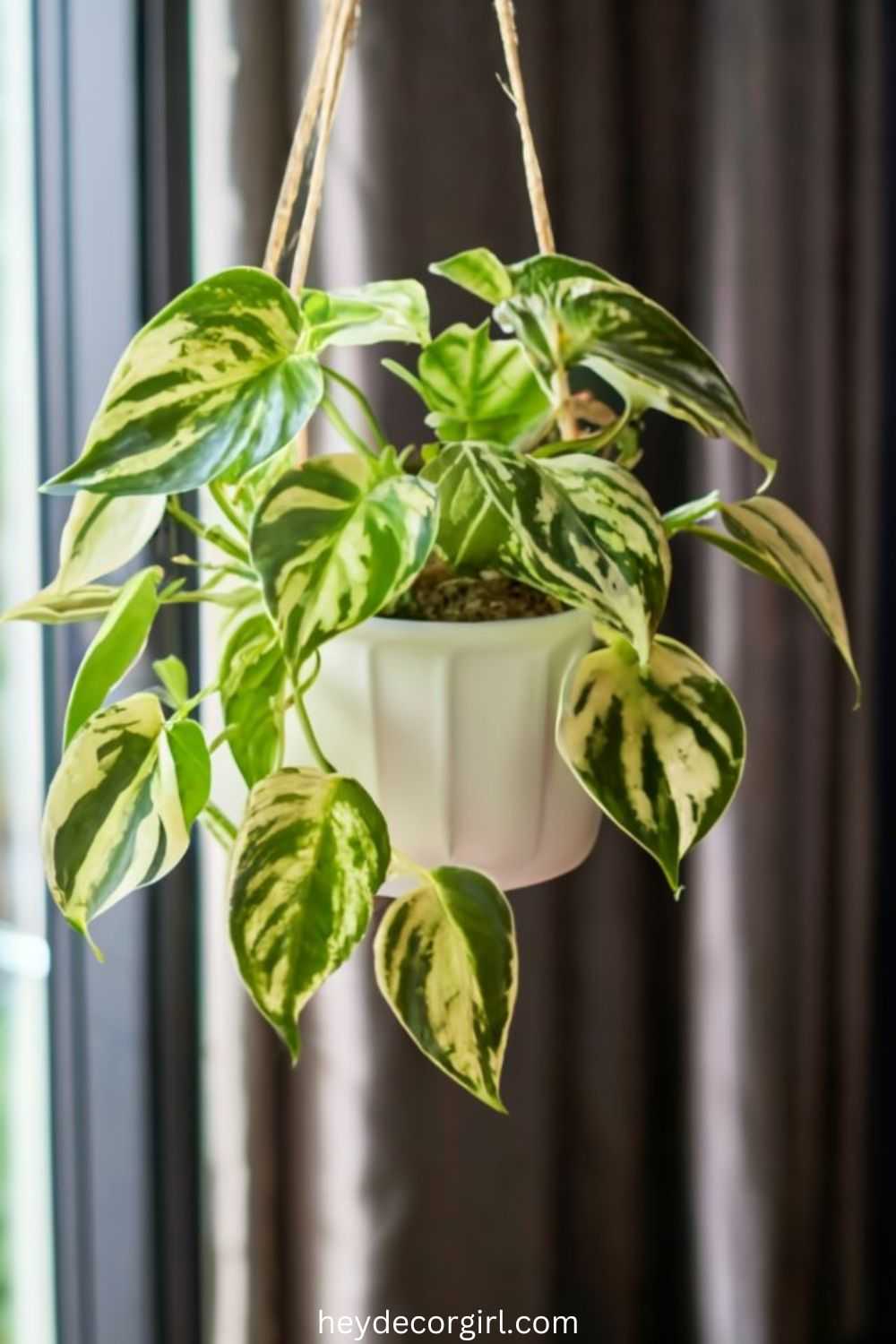
Description and Appearance Pothos (Epipremnum aureum) is a widespread houseplant in the form of trailing vines and heart-shaped leaves. The plant is lush with green foliage that may also be variegated with yellow, white, or light green between other varieties. The pothos vines are also capable of growing a few feet long, and this is the best plant to use in hanging baskets or shelves, or cascading over a plant stand. It is a popular indoor decor as it is low-maintenance and nicely presents itself.
Interest in Feng Shui. There are several benefits and placements of Pothos in Feng Shui, which include purifying the air and letting positive energy flow into the room. It is linked with the Wood element, which promotes growth and vitality. Pothos is supposed to help in eliminating negative energy and in adding a better mood to the general atmosphere of the space. It is usually found in the east or southeast of a room or office, which is a place of health and prosperity, respectively. The trailing vines in the plant are believed to symbolize endless development and success.
Care Tips
- Light: Pothos also likes bright and indirect light, and can also withstand low light conditions. New growth can, however, be slow, and variegation can decrease in low light.
- Watering: Before the surface of the soil gets dry, water the plant. Root rot may also be caused by overwatering, and it is necessary to ensure that, between waterings, the soil is allowed to dry.
- Soil: a potting mix with good drainage, i.e,. A standard houseplant mix with added perlite or sand to enhance its aeration.
Temperature: Pothos grows well at temperatures of 65-8°C.C. Do not expose the plant to cold drafts or temperatures that are below 50°F 10 °CC). - Humidity: Pothos can endure normal humidity levels within the home, although it might need the occasional mist or a humidity tray in drier areas.
- Pruning: Trim the plant regularly to keep it in shape and to get it to grow busher. Prune off any leggy or dead vines to encourage a fuller look.
Pothos can also survive with minimum care and attention and bring a peaceful and comfortable ambience to your environment.
5. Chinese Evergreen (Aglaonema)
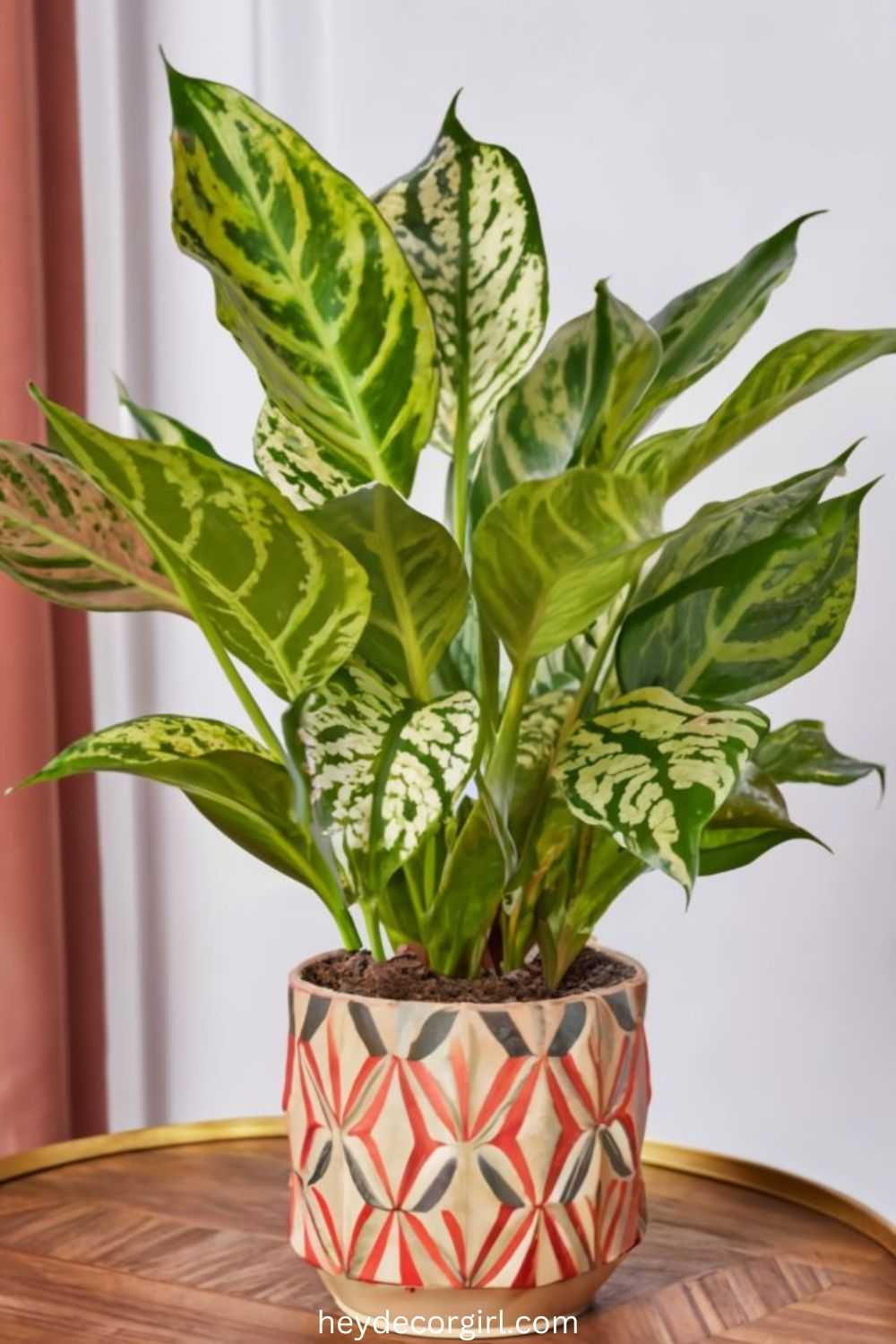
Description and Appearance The Chinese Evergreen (Aglaonema) is a common house plant with very impressive foliage and is very easy to maintain. It has very big, lance-shaped leaves, which are able to vary in their color and design, such as green, silver, and red. The leaves tend to be mottled or striped, which provides an aesthetic interest to any area. The Chinese Evergreens are generally small and shrublike and can be used to provide the desks, shelves, or low-light environments with greenery.
Feng Shui Benefits and Placements Feng Shui Chinese Evergreen is known to work in positive ways to increase the flow of energy in a place and to bring balance. It is related to the element of Wood that brings growth and prosperity. This plant is said to absorb good energy and enhance the general atmosphere of a room. It is often located in the east or southeast of a building or office, and, like symbols of health and wealth, fits in those locations. The stability and resilience of the plantain cause it to be a symbol of stability and strength.
Care Tips
- Light: Chinese Evergreens like low to medium and indirect light. They can endure low light conditions, although they might not grow as fast, and some of their color can be lost. Keep out of direct sunlight, which will scald the leaves.
- Watering: The plant should be watered when the top inch of soil dries up. Excessive watering may also cause root r,ot and therefore the soil should be left to dry between waterings. Minimize watering in the winter months.
- Soil: Soil Potting mix with good drainage can be used, like a normal houseplant mix with perlite or sand added to enhance aeration.
Temperature: Chinese Evergreens grow best with temperatures of80°F o F (18-27 o C). The cold drafts and temperatures below 50 o C (10°CC) should be avoided. - Humidity: This plant can withstand average indoor conditions, and it likes moderate humidity. Mist spraying or a humidity tray may be helpful in dry conditions.
- Pruning: Prune off any yellow or dead leaves regularly to keep the appearance of the plant looking good and promote new growth.
This lively foliage and low-maintenance needs make the Chinese Evergreen suitable to grow in any indoor setting, and it will add both beauty and good vibrations to your living room.
6. Rubber Plant (Ficus elastica)
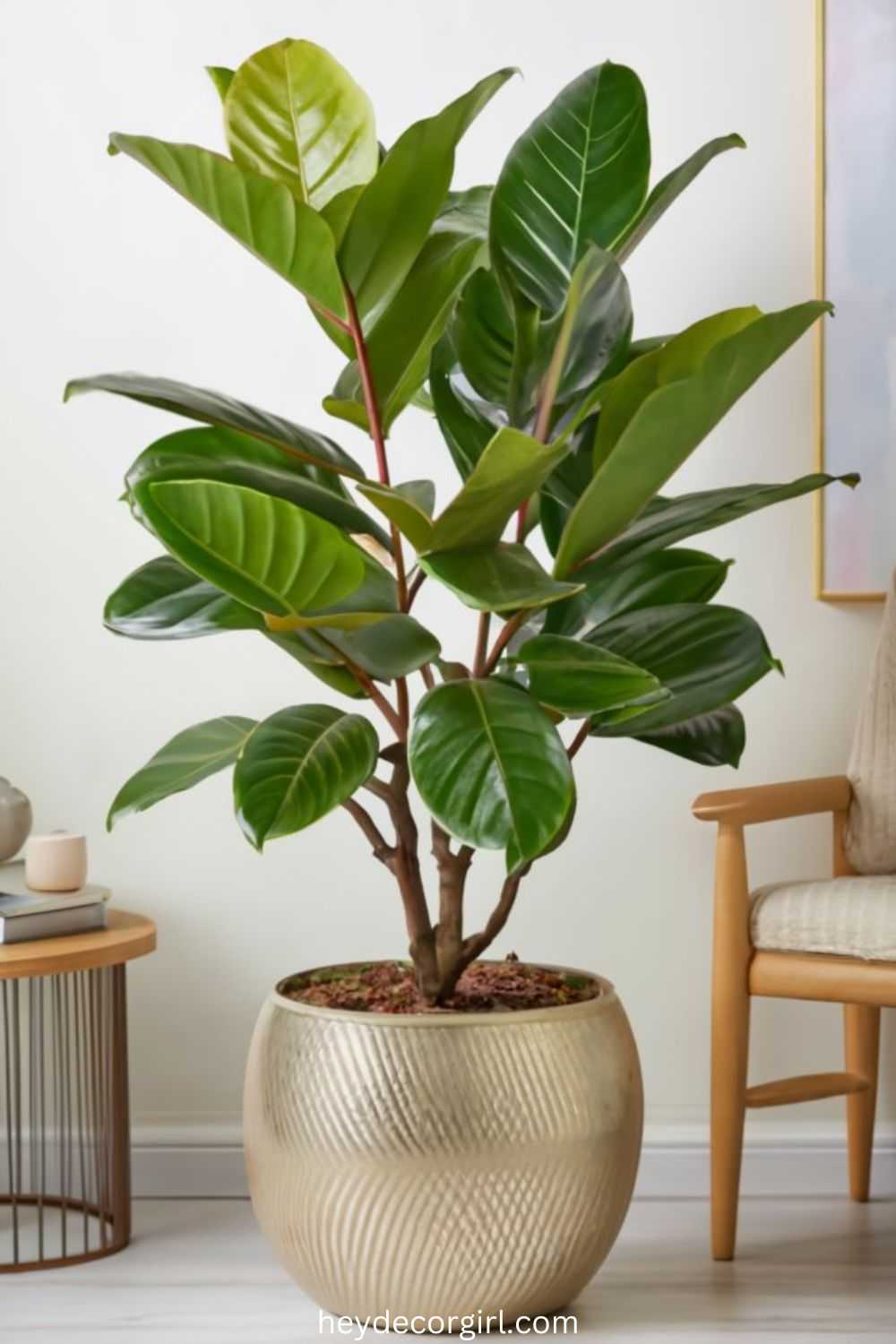
Description and Appearance The Rubber Plant (Ficus elastica) is an impressive houseplant that has big, shiny, dark green leaves. The plant may become a large tree-like plant, with a thick and strong trunk and full foliage. It is identified by its wi, leathery leaves that may extend to 12 inches (30 cm) in length. Rubber Plants are also capable of variegation of a reddish or burgundy color, particularly in the new growth. These are commonly cultivated either as a single trunk or multi-trunk, thus making them a spectacular, attention-capturing element in any given space.
Feng Shui Benefits and Placements. Feng Shui believes that the Rubber Plant is a great sign of prosperity and growth. It is connected with the Wood element, which is a symbol of vitality and prosperity. It is thought that the plant draws positive energy and financial prosperity, in addition to promoting good health. The Rubber Plant is usually located in the south-eastern part of a room or an office, a location associated with someone being wealthy and prosperous. Also, it can be placed in the south or east to promote fame and health, respectively. The leaves are large and bold and are believed to be useful in creating a strong and stable environment that fosters a feeling of security and stability.
Care Tips
- Light: Rubber Plants are fond of bright and indirect lighting, although they can withstand low levels of light. They must not be exposed to the sun’s rays, as these may result in burning of the leaves.
- Watering: Irrigate the plant when the first inch of soil is dry. Rubber Plants are quite drought-resistant, although when overwatered, root rot can occur. Make sure that the pot is well-drained
- Dirt: Use a potting soil that has good drainage, like a regular houseplant potting mix that has added perlite or sand to enhance aeration.
- Temperature: Rubber Plants can survive in temperatures of 60-75 °C (15- 24°CC). They are not supposed to be in cold drafts or temperatures that are belo50°F0F (°C0 C).
- Humidity: Although they are able to adjust to the average moisture in the house, Rubber Plants thrive in greater moisture. In drier climates, occasional misting or a humidity tray could be used.
- Pruning: Prune regularly to ensure the shape of the plant and to prune out any dead or damaged leaves. It can also be pruned so that it can grow bushier and look more appealing.
The Rubber Plant has dramatic foliage with a strong nature, which can improve the beauty and liveliness of your living or working environment.
7. Peace Lily (Spathiphyllum)
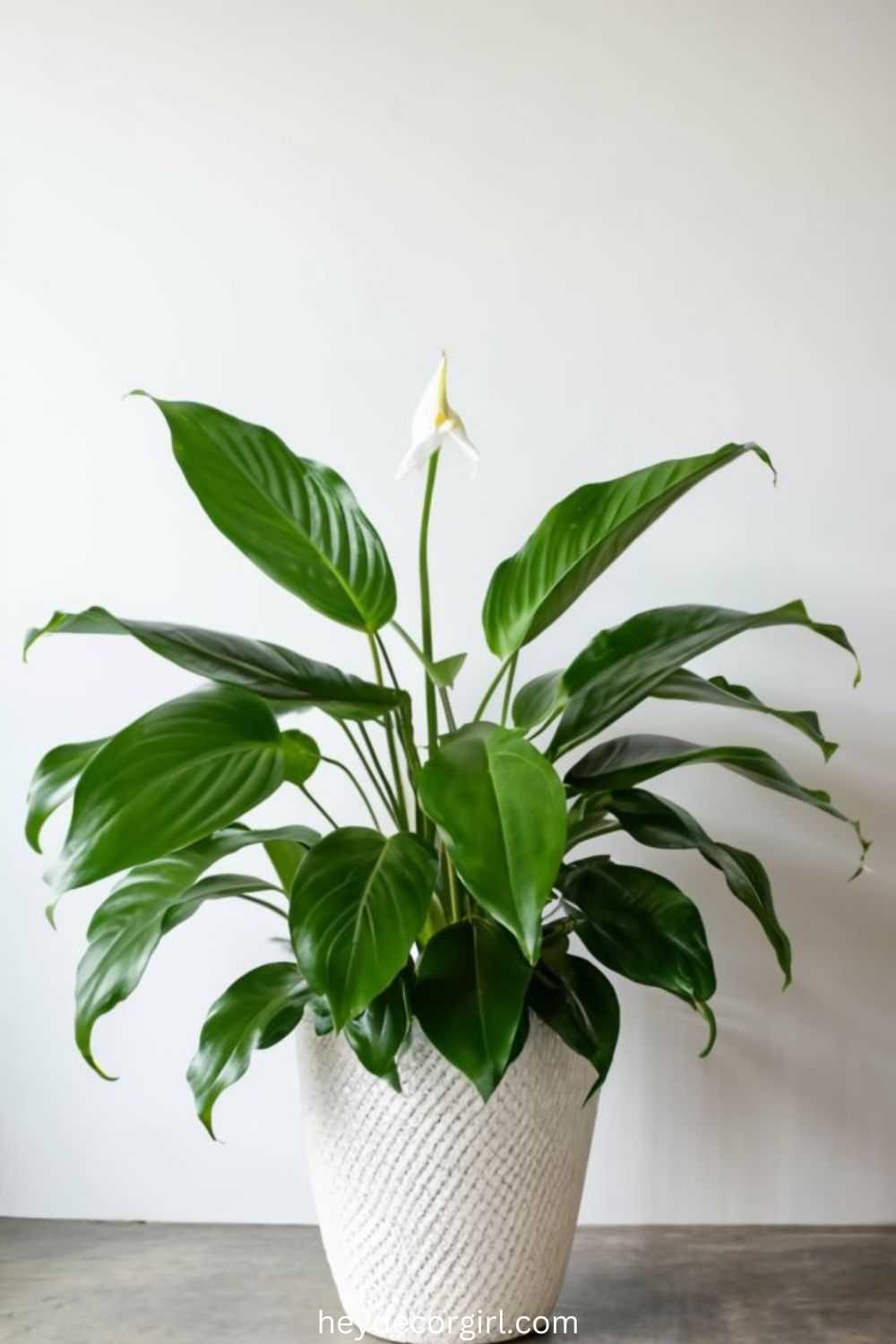
Description and Appearance The Peace Lily (Spathiphyllum) is a commonly used indoor plant that is characterized by its beautiful looks and ability to purify the air. It has dark green glossy leaves forming a thick and lush rosette. It has dramatic white flowers which are reputed to be of a distinctive shape comprising a white spathe (leaf-like bract) and a core spadix (a spike-like structure). The flowers tend to grow in a beautiful arc, which is a source of elegance to any place. Peace Lilies are not very large and can be located in small areas or as the main decoration in the bigger rooms.
The Feng Shui Benefits and Placements the Feng Shui, it is believed that the Peace Lily has the power to clean the air and increase the flow of energy in an area. It is attributed to the Water element, which is the image of calmness, tranquility, and emotional stability. The plant is said to bring peace, harmony, and protection, thus a good option to produce a peaceful environment. It is usually located in the bedroom or living room, especially in the southwest or north, to facilitate relationships, personal growth, and career development. It is also believed to alleviate stress and enhance the general mood of a room.
Care Tips
- Light: Peace Lilies prefer low and medium indirect light. They can withstand low light conditions, although the number of flowers might be low. Keep out of the direct sunlight, which will scald the leaves.
- Watering: Maintain a constant supply of water in the soil, but do not overwater it. When the first inch of soil is dry. Peace Lilies cannot withstand drought, and therefore, the soil should not get too dry. Nevertheless, they also tend to root rot, so good drainage.
- Soil: A well-draining potting mix is used, like a houseplant potting mix with additional perlite or peat to increase aeration.
- Temperature: Peace Lilies are comfortable when the temperatures range between 65-80o°CC (18-27 o C). They need to be avoided in cold drafts and temperatures that are low (below 50°F, 10 o C).
- Humidity: They like warmer, damper climates and can be sprayed occasionally or be on a humidity tray, particularly in dry indoor settings.
- Pruning: Prune away all the yellow or dead leaves in order to keep the plant in its appearance and promote new growth. Frequently wash the leaves so as to remove the dust and pests.
The Peace Lily is a beautiful and useful plant in any home or office with its stunning floral arrangement and powers to purify the indoor air.
8. String of Pearls (Senecio rowleyanus)
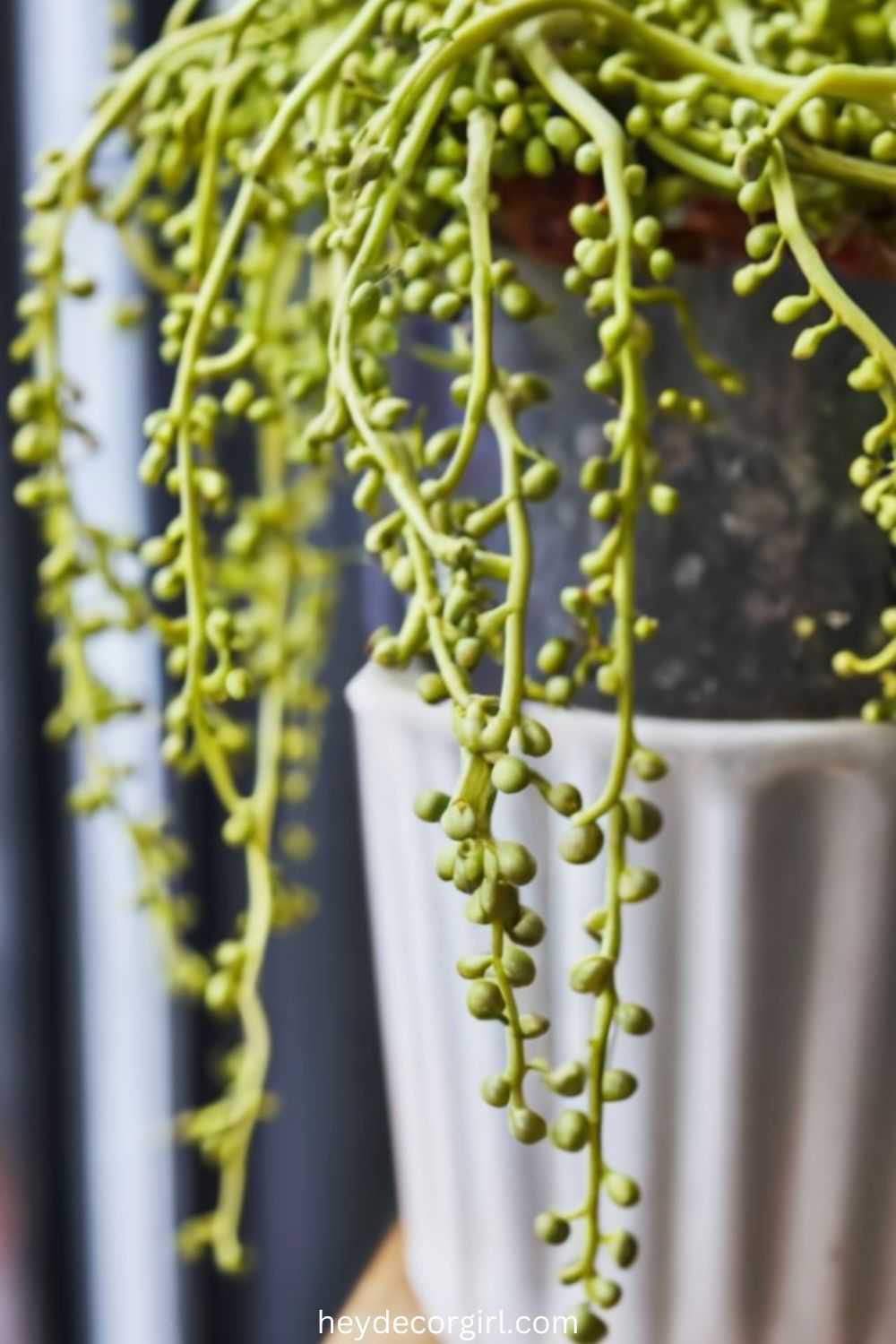
Description and Appearance The String of Pearls (Senecio rowleyanus) is an exclusive and aesthetic succulent, which is characterized by trailing and bead-like leaves. The plant has long and thin stems, which end with small and round bead-like green pearls. Such pearls are, in fact, the succulent leaves storing water, as a result of which the plant has its unique look. It is the perfect plant to be used as a hanging basket or cascading off shelves, and it can grow to several feet long. Besides its decorative value, String of Pearls also produces small, inconspicuous white or greenish flowers, provided they are in the best condition.
Feng Shui Advantages and Placements Feng Shui The String of Pearls is considered to add a good energy and a sense of whimsicality to the space. It is also related to the Wood element because it has a trailing vine-like growth, which is a sign of growth, prosperity, and abundance. It is believed that the special appearance of the plant improves the circulation of positive energy and introduces an element of vibrancy into the surroundings. It is commonly located either in the southeast or eastern corner of a house or workstation to bring wealth and prosperity or to bring health and peace within the family. It is also a good option to achieve a soothing and aesthetic effect because of its trailing character.
Care Tips
- Light: String of Pearls light that is indirect but can withstand some direct sunlight. The plant could degenerate into a leggy one and lose its compact look, especially in low light conditions.
- Watering: During the process of watering, the soil should be left to dry thoroughly before watering it. Root rot may also be caused by overwatering, and therefore, proper drainage and not allowing the soil to be damp should be ensured.
- Soil: The soil used should be a draining succulent or cactus soil, or add perlite or sand to normal potting soil to enhance drainage.
- Temperature: The plant grows in temperatures of 65-75 °CC (18- 24 °C). Do not expose it to temperatures less than 50 0 F (10 °C) and keep it out of drafts.
- Humidity: String of Pearls also likes low and moderate humidity. It can withstand a normal domestic environment, but must be avoided in excessively damp environments.
- Pruning: Cut off any dead or leggy stems in order to promote a fuller, more compact growth. Pruning frequently prevents the plant from getting out of shape.
Being very beautiful with its unusual look and the ability to need minimal care, the String of Pearls can bring something new to your interior and help create a positive and bright atmosphere.
9. ZZ Plant (Zamioculcas zamiifolia)
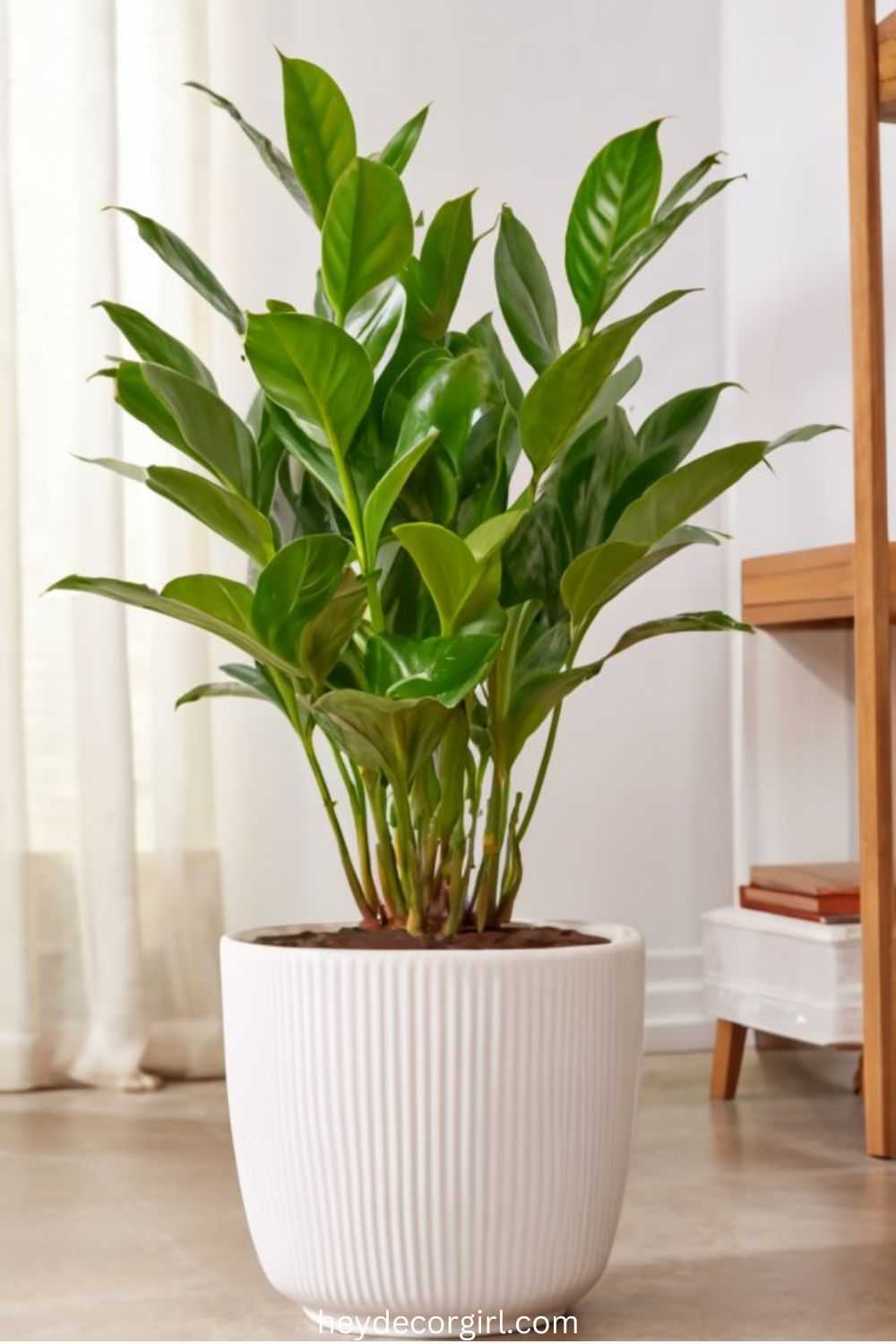
Description and Appearance Zamioculcas zamiifolia, or ZZ Plant, is a hardy and appealing interior plant, which is characterized by sleek and dark green leaves and toughness. It has thick, waxy leaves attached to the smooth upright stems, which makes it look sculptural and modern. The leaves of the plant are also oval in shape and differ in size, with a rich, shiny feel. ZZ Plants may reach a height of 2-3 feet (60-90 cm) and are frequently used as a statement plant as an interior element in a modern home because of their imposing and beautiful look.
Feng Shui: The ZZ Plant is Relished with Feng Shui because the ZZ plant can be used to add harmony and energy to an environment. It is also connected to the Earth element that brings about stability, grounding, and prosperity. People assume that the plant can bring good luck and help to increase a positive energy stream. ZZ Plants have traditionally been placed in the southeast part of a home or an office to promote wealth and prosperity. They could also be placed in the middle of a room or space to ensure harmony and balance. ZZ plants are usually applied in places where other plants may not perform well because they are very rugged, and thus are best suited to making an atmosphere conducive and lively.
Care Tips
- Light: ZZ Plants can survive in the broadest possible light conditions, from low light to bright, indirect light. But they grow best in moderate light. Do not expose the leaves to direct sunlight, as this may result in leaf burn.
- Watering: Water should be given to the soil only after it has dried up. ZZ Plants have a high level of drought-tolerance and do not need frequent watering. Root rot may develop because of overwatering; therefore, make sure the pot is well-drained.
- Soil: Add a well-draining potting mix, e.g., a cactus or succulent mix, or perlite or sand to standard potting soil to enhance drainage.
- Temperature: ZZ Plants grow well under temperatures of 60-75F (15- 24 °C). They must not be subjected to cold air and temperatures with a temperature of less than 45°F 7 °CC).
- Humidity: The plant can adjust to the average household humidity levels, and they do not need high humidity. Do not expose it to either too dry or too humid conditions.
- Pruning: Yellows and dead leaves can be trimmed off so as to keep the plant in shape and to spur growth. ZZ Plants typically do not need much maintenance and do not need regular pruning.
The ZZ plant is a versatile and attractive adornment to any home interior with its large foliage and low maintenance demands, making it a low-care, high-style feature that not only adds decor but also positive energy to the environment.
10. English Ivy (Hedera helix)
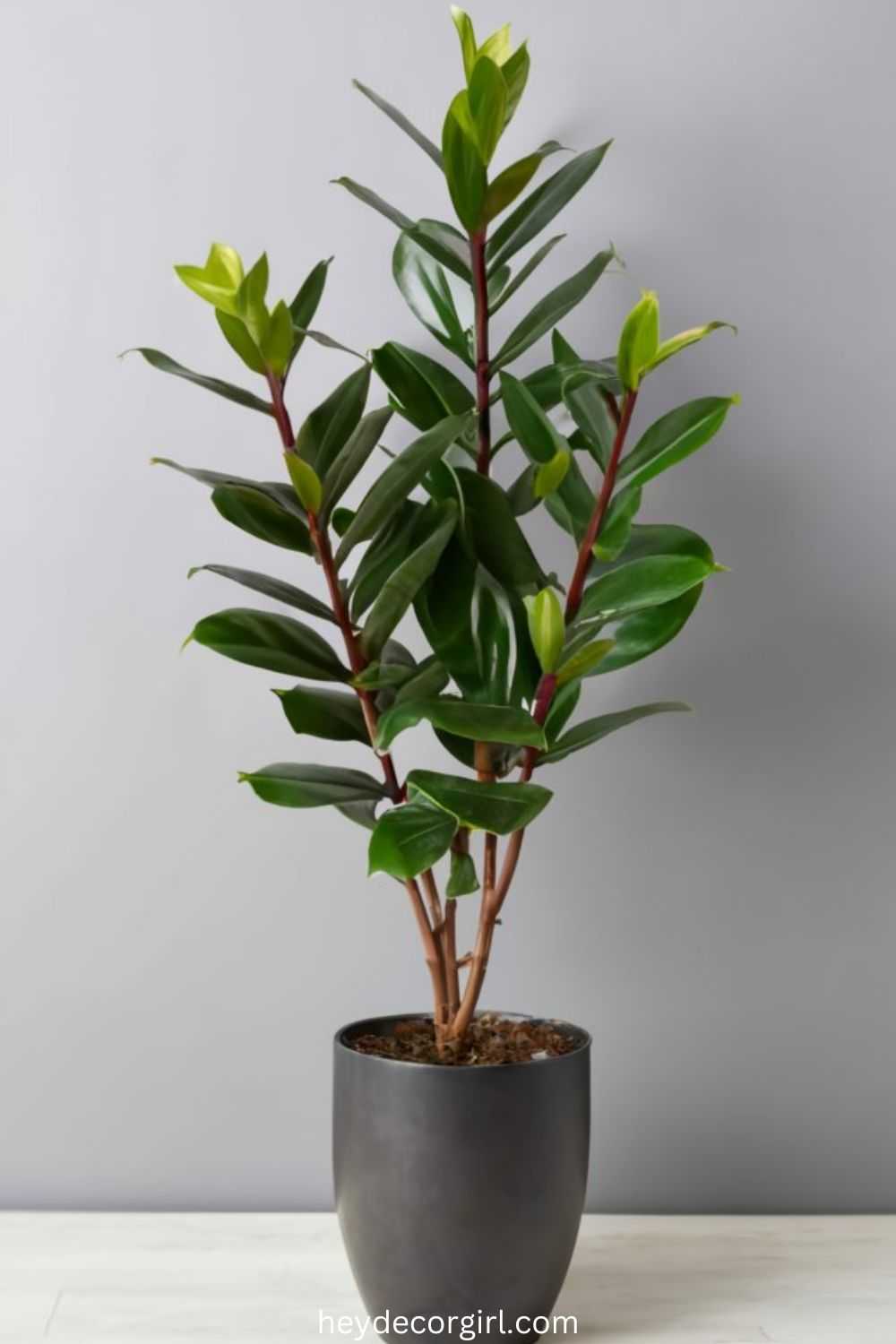
Description and Appearance The English Ivy (Hedera helix) is a multi-purpose and beautiful climbing or trailing plant, which is characterized by a classic, evergreen leaf with a rapid growth rate. It has dark-green, glossy, and lobate leaves, and has the ability to grow a thick and full cover over surfaces. It is possible to grow the plant in hanging baskets, letting it hang off the shelves, or to climb a support or trellis. It is also suitable to add greenery to other vertical or hanging areas because of its form of growth, and it can be cut to fit a preferred shape and size.
The Feng Shui Benefits and Placements 2 In the feng shui religion, the English Ivy plant is regarded as having the ability to clean the air and enhance the circulation of good energy. It is connected with the Wood element because of its climbing and trailing growth, which represents growth and prosperity. The English Ivy is said to assist in dissolving stagnant energy and allow a peaceful environment. This is usually installed in the east or southeast of a house or office to promote health, family harmony, and prosperity. Its trail aspect makes it appropriate for adding vibrancy and greenery to any area and can also be applied to bring an element of a serene and welcoming mood.
Care Tips
- Light: English Ivy does not like much light and can withstand low light conditions. It must also be kept out of direct sunlight, which may scald the leaves and make them fade.
- Watering: Keep the soil always wet, but not soaked. Water when the first inch of soil is dry. Root rot can be caused by overwatering;g, be sure the pot has sufficient drainage.
- Soil: Have a good quality potting mix (soil) like a regular houseplant mix with perlite or sand added to improve aeration.
- Temperature: The English Ivy can withstand an environment between 50-70 o C (10-21 °C). It must not be exposed to extreme temperatures and cold drafts.
- Humidity: The plant thrives in moderate and high humidity. Occasional misting or a humidity tray is used in dry areas to ensure the optimum conditions.
- Pruning: Have it pruned regularly to check its growth and to cut off any dead or decaying leaves. Pruning will also promote a bushier and fuller look as well as keep the plant healthy.
English Ivy, with its graceful foliage and air-purifying qualities, would be a classic addition to your decor and improve the liveliness and atmosphere of your living room.
FAQ
1. What are the money plants in feng shui?
A. Feng Shui money plants are plants that are supposed to bring wealth, prosperity, t,y, and good energy. They tend to be used because of the symbolism and their capacity to increase the movement of positive energy ( Chi ) in the office or home.
2. What are the benefits of money plants to Feng Shui?
A. Money plants serve to enhance the movement of energy and attract good fortune since they conform to different Feng Shui concepts. The different plants possess distinctive qualities that can be used in various ways to affect various life areas, e.g., wealth, health, and harmony. They are installed in strategic locations in order to strengthen certain spaces of a space based on the feng shui beliefs.
3. What money plants are the most effective to attract wealth?
A. Money plants that are popular in drawing wealth include:
- Jade Plant (Crassula ovata)
- Lucky Bamboo (Dracaena sanderiana)
- Money Tree (Pachira aquatica)
- Chinese Evergreen (Aglaonema)
- Rubber Plant Ficus carica). The plants are famous in their relation to prosperity and good fortune.
4. Where am I supposed to have money plants in my house or office?
A. The location diffefromith the plant and the Feng Shui advantage. Generally:
- Southeast Corner: This environment is linked to prosperity and good fortune, so it is a good location for numerous money plants.
- East: Takes care of health and family peace.
- South: Improves fame and reputation. There are certain rules to follow for each plant to get all the Feng Shui out of them.
5. May money plants be planted in any room?
A. Yes, the money plants may be placed in many rooms. But when they are placed, they should be in accordance with the principles of Feng Shui to get the desired effects. Indicatively, the Money Tree and Jade Plant tend to be located in the southeast area of a living room or office to bring wealth, whereas the Peace Lily is usually placed in the bedroom to ensure calming power.
6. How do I care for money plants?
The requirements of care are different in each plant but usually entail:
- Light: The majority of money plants like bright and indirect light.
- Watering: It is advisable to allow the soil to dry up between waterings; do not overwater.
- Soil: Potting mixes should be well-drained.
- Temperature: Do not keep cold, keep moderate temperatures.
7. Is it possible to utilize artificial money plants?
A. Although it is the living energy and symbolic connotation of plants that make real money plants preferential, high-quality artificial plants may also be used as an alternative decoration. Nevertheless, they will not offer similar Feng Shui benefits as those of live plants.
8. Are there any particular care tips for each type of money plant?
A. Yes, plants have more specific needs of care. For instance:
- Jade Plant: It prefers light and watering now and then.
- Lucky Bamboo: Grows in water and has some light occasionally.
- Money Tree: Requires light, indirect light, and average water.
- Chinese Evergreen: grows in low to medium light and must be frequently watered.
9. Is it possible to have various money plants together?
A. Yes, various money plants can be mixed to increase the positive energy of the space. Make sure that every plant is placed based on the Feng Shui advantage and take into consideration its care needs to have a harmonious atmosphere.
10. What is the frequency of refreshment or replacement of money plants?
A. Having the good practice of refreshing or replacing money plants once they are not healthy or when they develop stress is good. Consistently monitor pests, illnesses, or destruction and substitute any plants that are not flourishing anymore to uphold constructive energy.