![Hey Decor Girl [Latest Trending Decor Design Ideas]](https://heydecorgirl.com/wordpress/wp-content/uploads/2024/08/Heygirldecor-Logo.png)
Every pool owner dreams of a sparkling clean pool, and it does not mean that they have to work hard to maintain the pool in that condition. These Pool Cleaning Hacks Ideas, you will see that there are clever and easy methods of keeping your pool clean without using up too much time, money, or energy.
Starting with the reusing of household products, continuing with the clever methods of dealing with the unwanted stains and algae, these new ways of doing things will change the way you keep your pool clean. You will not only have crystal clear water all season long, but also increase your pool equipment life and have a safer, er more welcoming area for your family and friends. We are going to dive and wash pools easily!
Best Pool Cleaning Hacks Ideas
1. Skimming and Brushing Hacks
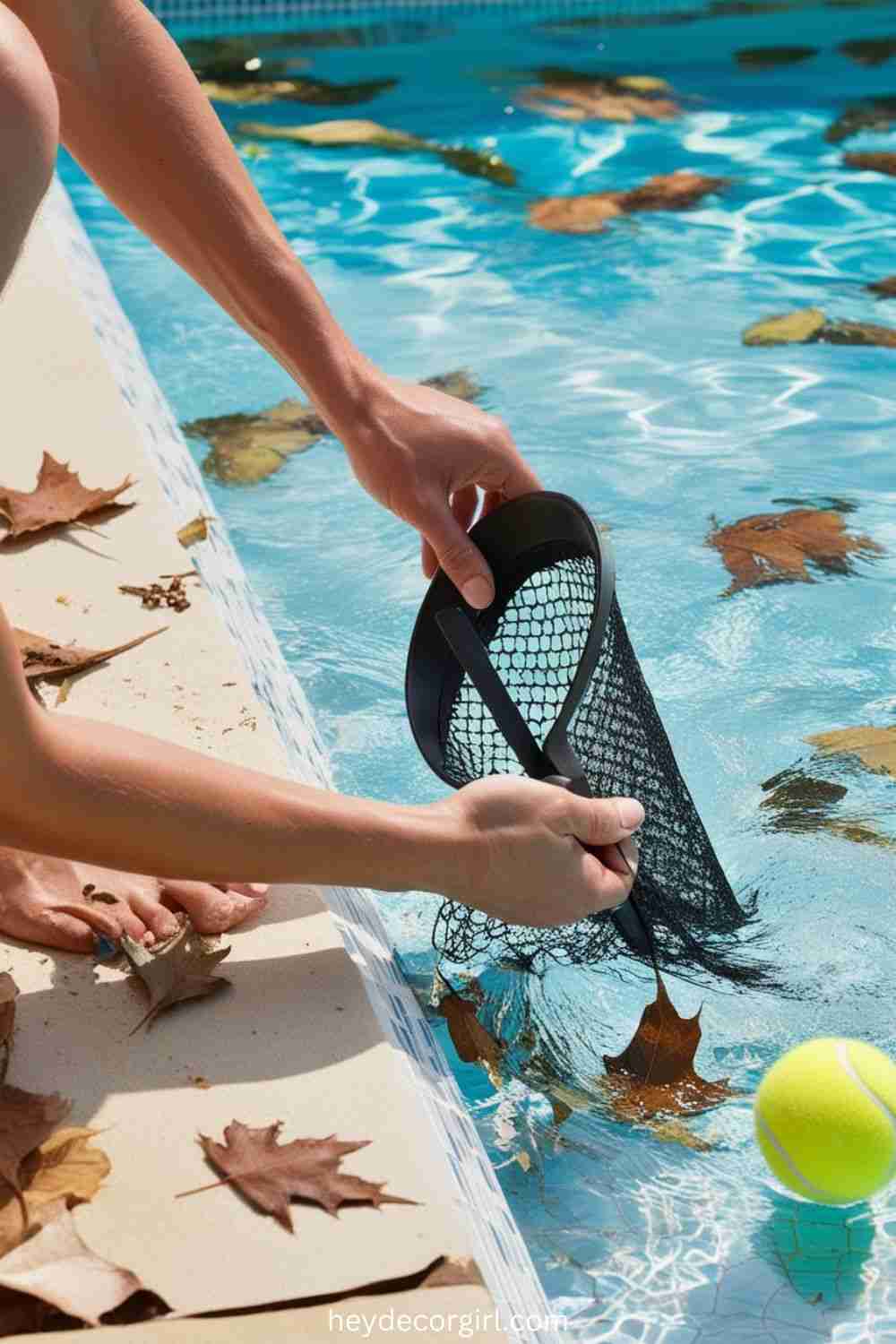
Removing any debris on the surface of your pool is important to ensure that the water is clear and the filtration system does not clog. The regular skimming works well to eliminate the leaves, bugs, and other floating objects; however, you can streamline the process with a couple of easy hacks. As one example, you can put the pantyhose or fine mesh over your skimmer basket to trap smaller debris that would have otherwise passed through. Also, it is better to brush the pool walls and floor once a week to avoid the formation of algae and to loosen the dirt so as to vacuum it. To add to it, a tennis ball thrown into the pool will absorb oils and lotions on the surface of the water and leave it clear and clean after a few efforts.
2. Vacuuming Made Easy
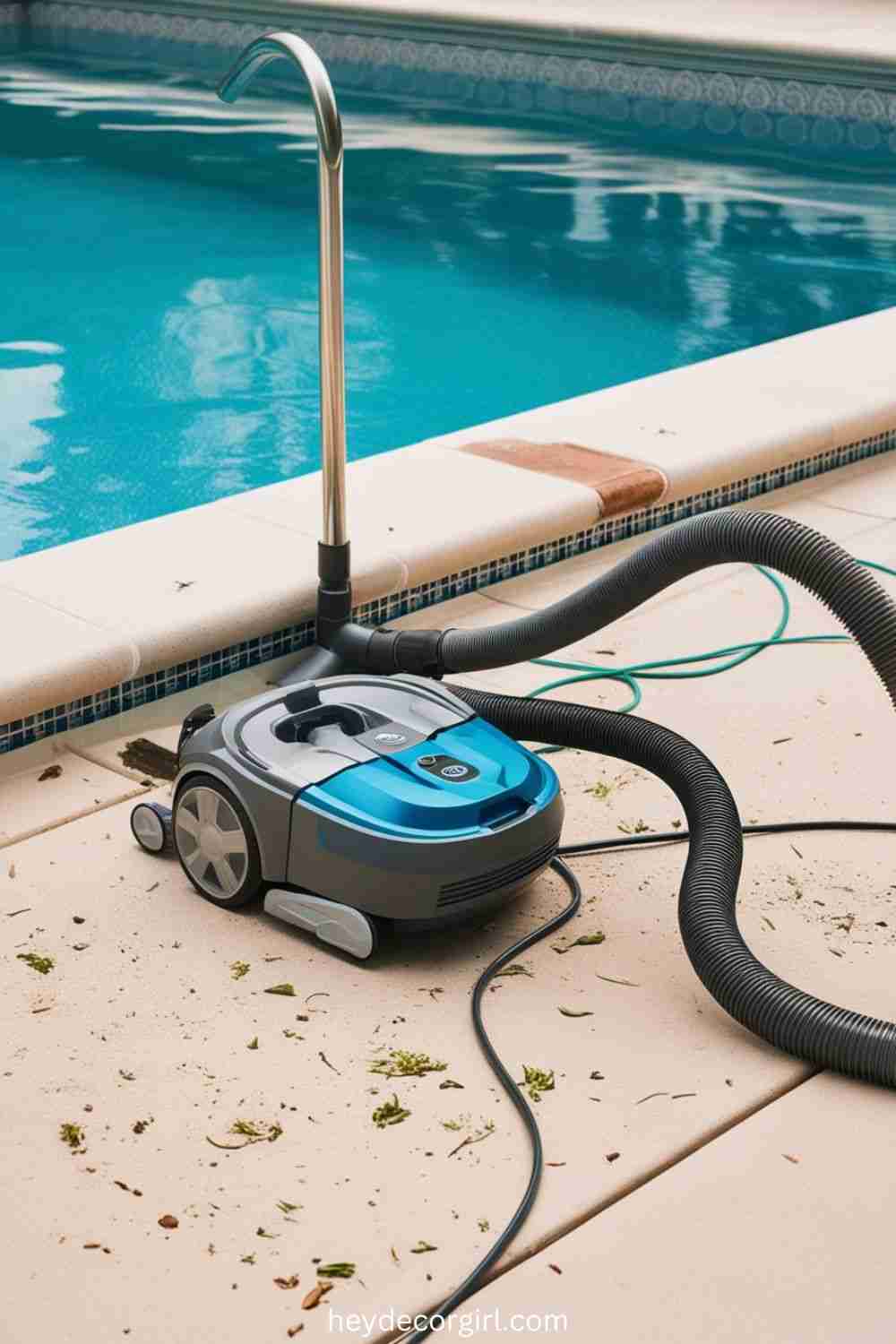
Cleaning your pool does not necessarily require a time-consuming task of vacuuming it. They have changed the game by investing in a robotic pool vacuum, which cleans the floor and walls of the pool automatically and will save you time working on cleaning the pool. As a less expensive alternative, one of the solutions is a DIY vacuum unit, consisting of a garden hose and a vacuum head attachment that will be effective in cleaning up dirt and debris. Wipe out the filter bag or debris container of the vacuum after every use in order to be efficient. Scheduled vacuuming, skimming, and brushing are also useful in keeping your pool clean, and it will take minimal pressure off your filtration system, ensuring your water stays crystal clear throughout the season.
3. Baking Soda for pH Balance
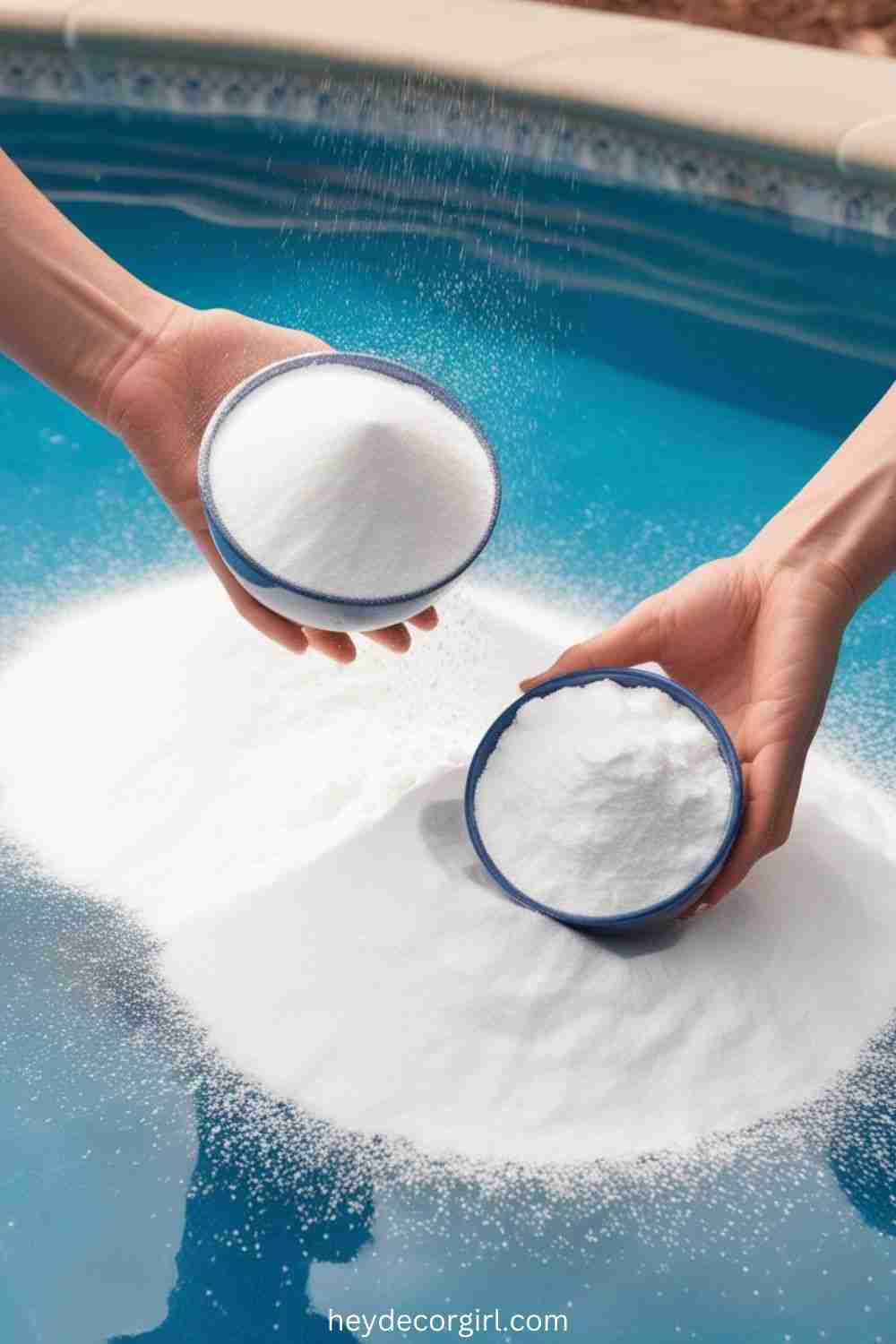
The water quality and the life of pool equipment depend a lot on the correct PH level in your pool. Rather than using costly commercial pH increasers, you can use the low-cost baking soda in place of the high-cost commercial pH increasers. Sodium bicarbonate, also used as baking soda, is used to increase the alkalinity of the water without much impact on the pH, which makes the environment more stable and less damaging to the skin and eyes of swimmers. All one has to do is sprinkle the recommended quantity around the pool and allow it to be spread evenly by the filtration system. Not only is such a hack cost-efficient, but it also maintains a balance of your pool water and makes it shine.
4. Vinegar for Hard Water Stains
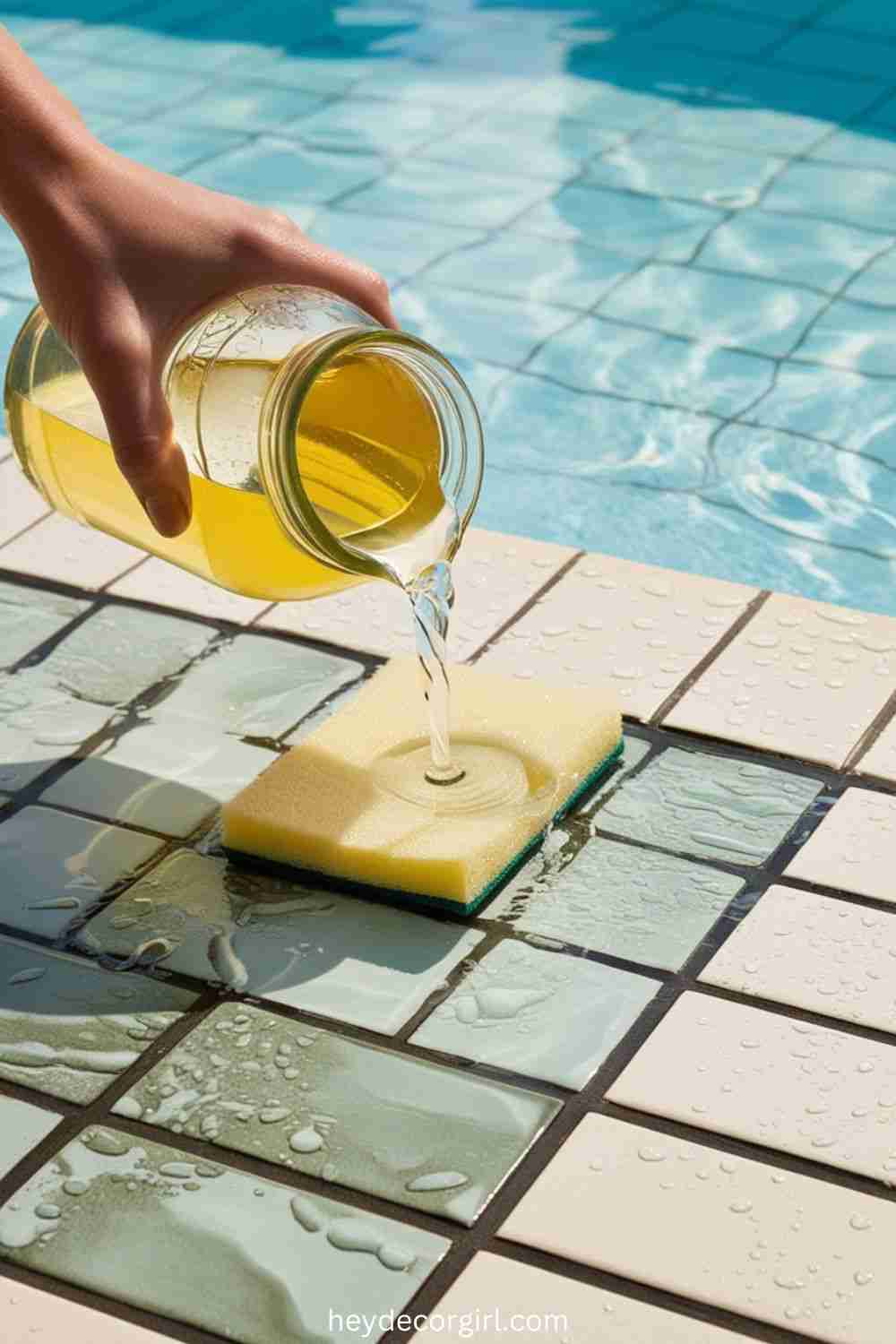
Hard water has an ugly appearance and may be hard to remove from the tiles of the pool, but with white vinegar, an easy and efficient remedy is available. The vinegar is also naturally acidic, and this property aids in dissolving calcium deposits and mineral buildup and leaving your tiles glazed and shiny. Wet a sponge or a cloth with white vinegar and scrub the affected areas. To remove hard-to-remove stains, allow the vinegar to rest on the surface for a few minutes before scrubbing. This bio-safe, cheap trick does not harm your pool, and it does not require the use of harsh chemical cleaners, so it is a win-win for your pool and the environment.
5. Hydrogen Peroxide as a Chlorine Booster
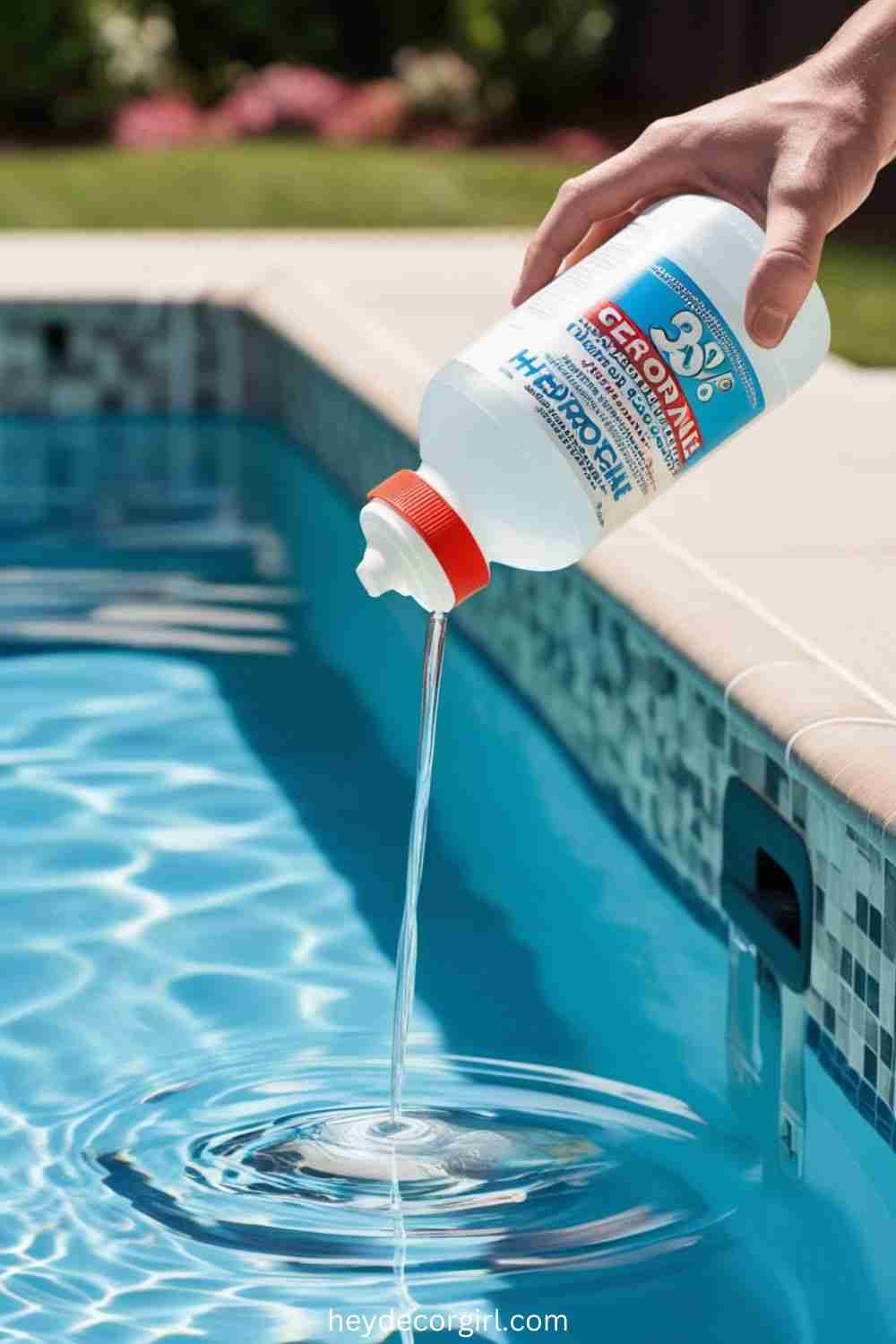
Hydrogen peroxide is a strong and mild substitute for the conventional swimming pool chemicals and can be utilized to accelerate chlorine concentration in your pool. To increase the oxidation process, which has a greater effect on chlorine in killing bacteria and sanitizing pools, you can add a little bit of hydrogen peroxide to the water. It especially works well in the decomposition of organic substances, including body oils and sweat, that may consume chlorine. Add approximately 1 to 2 cups of 3 percent hydrogen peroxide to 10,000 gallons of water to use. This hack is not only useful in keeping the water clean and clear, but also consumes less chlorine, hence making your pool maintenance easier and cost-effective.
6. DIY Algae Treatment with Household Items
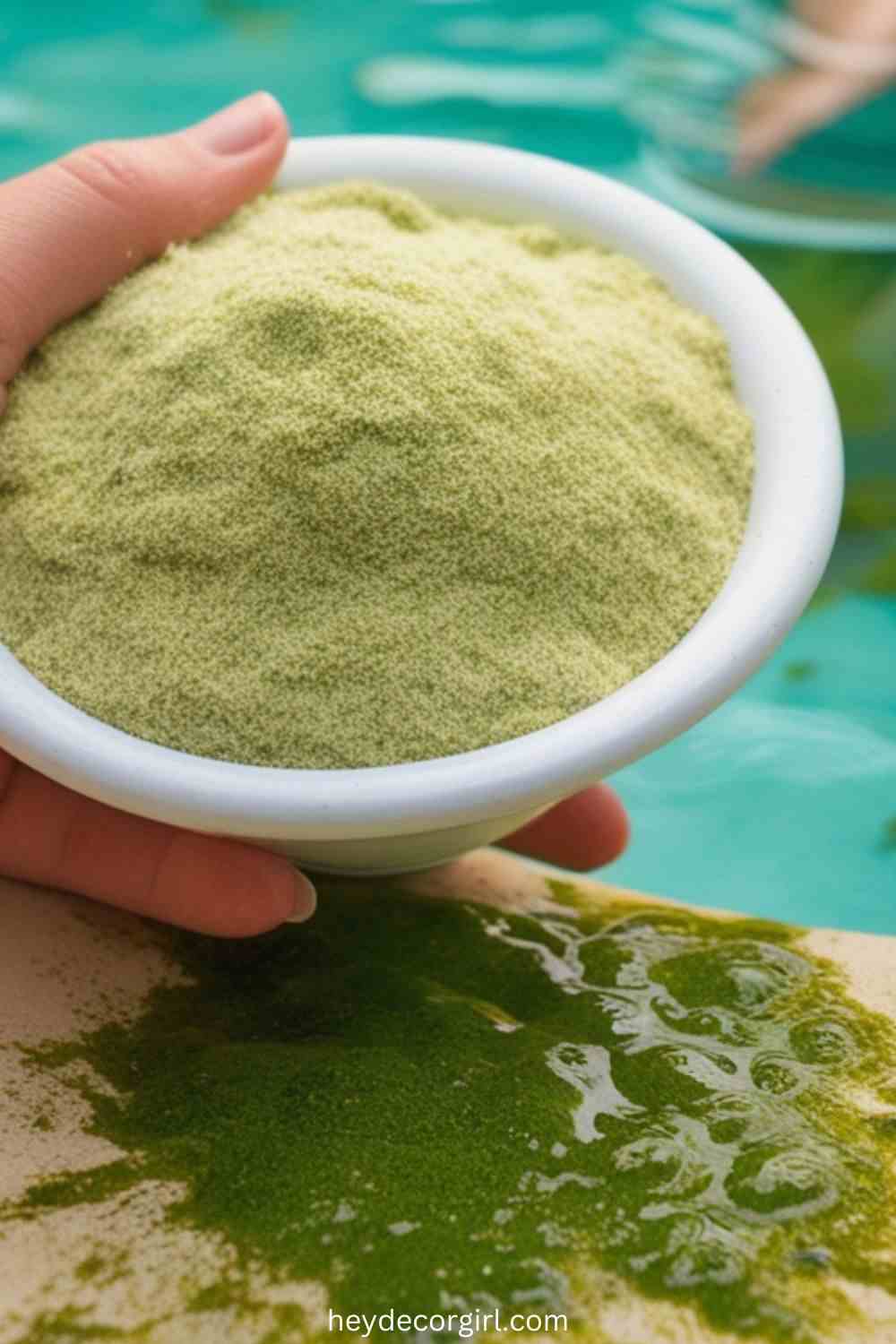
Algae may be a green, murky nightmare in your pool before long, but you do not always need to use harsh chemicals to combat it. The clarity of your pool can be restored by a simple home DIY algae treatment using household items. Borax, a laundry booster, is one of the useful answers that can be used to raise the pool pH and prevent the growth of algae. Add approximately 1/4 cup of borax to 1,000 gallons of pool water and stir it in. The other choice is a combination of household bleach and water (1 gallon of bleach in 10,000 gallons of pool water) to kill the algae and prevent their future growth. These low-cost, environmentally friendly tricks will see your pool free of algae without having to drain your wallet.
7. Repurposing Household Items
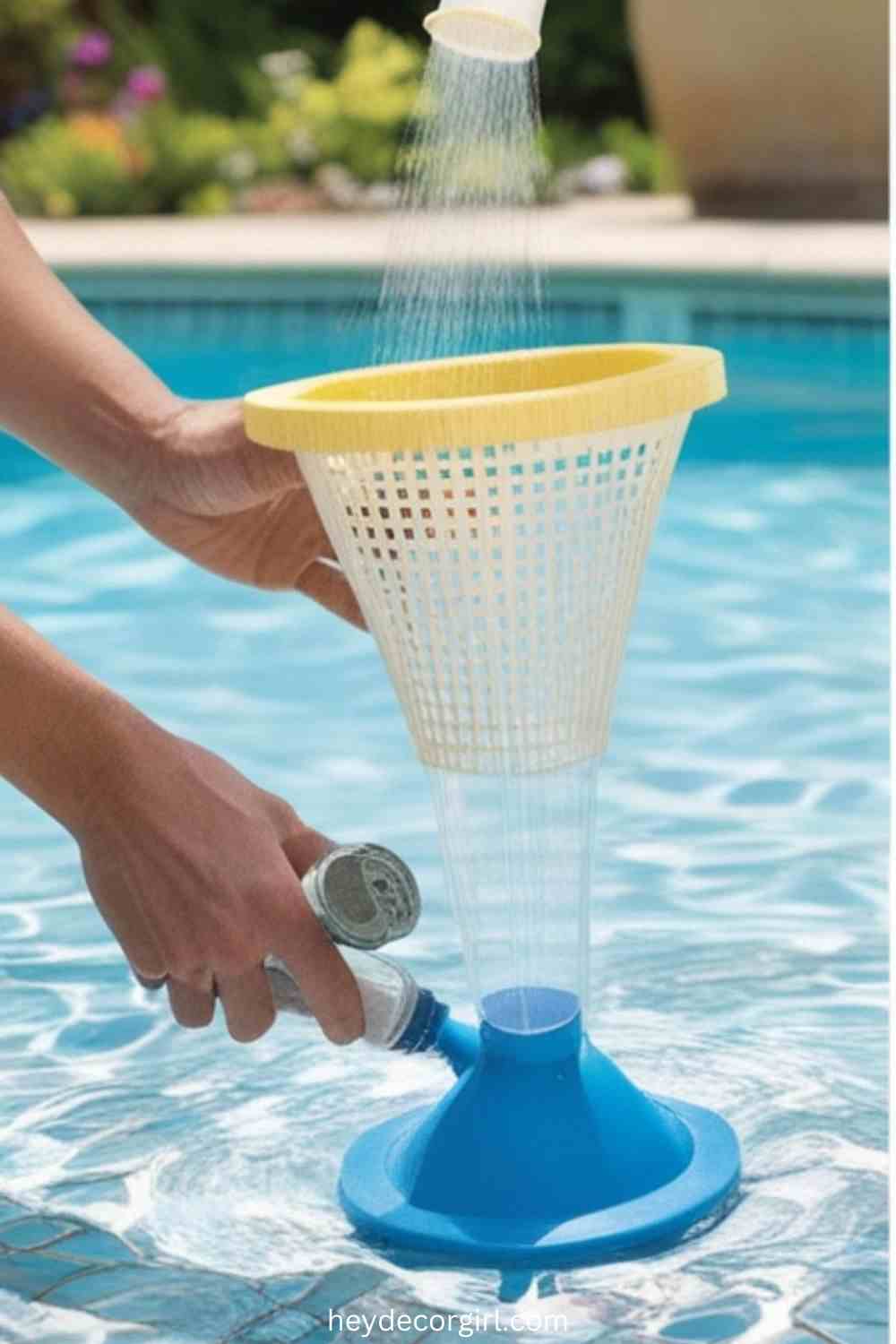
Household waste can be used to simplify and reduce the costs of cleaning a pool. As an illustration, you can use the pantyhose or tights that are old and put them across your pool in the skimmer basket to trap the smaller debris, such as hair, best particles, which would not be captured by ordinary filters. This is the easiest hack to enhance the efficiency of your skimmer so that cleaning it manually is not made very frequently. A plastic bottle is another helpful tool: it is better to cut it into a funnel shape, then you will be able to pour chemicals or cleaning solutions into your pool more accurately. A pool floatation device can be made using a worn-out pool noodle that will aid in cleaning difficult-to-access areas. These re-purposed products present new low-cost options to make pool maintenance a hassle.
8. Creating a Pool Cover Hack

A pool cover is necessary to keep debris away and to provide the water with good quality and yet commercial covers are costly. Alternatively, this hack will be relatively inexpensive and uses bubble wrap, which will also provide insulation. All you need to do is cut the bubble wrap to the size of your pool and put it on the bottom. The bubbles serve as a shield, where the heat is trapped in the water, as well as the dirt, leaves, and insects are locked out. To make it even more convenient, attach the edges using weighted materials or specially designed pool clips. This homemade pool cover is easy to use, and it helps keep your pool clean. At the same time, it can preserve heat,t, thus saving you on the expenses of heating your pool during the colder seasons.
9. Pool Net Alternatives
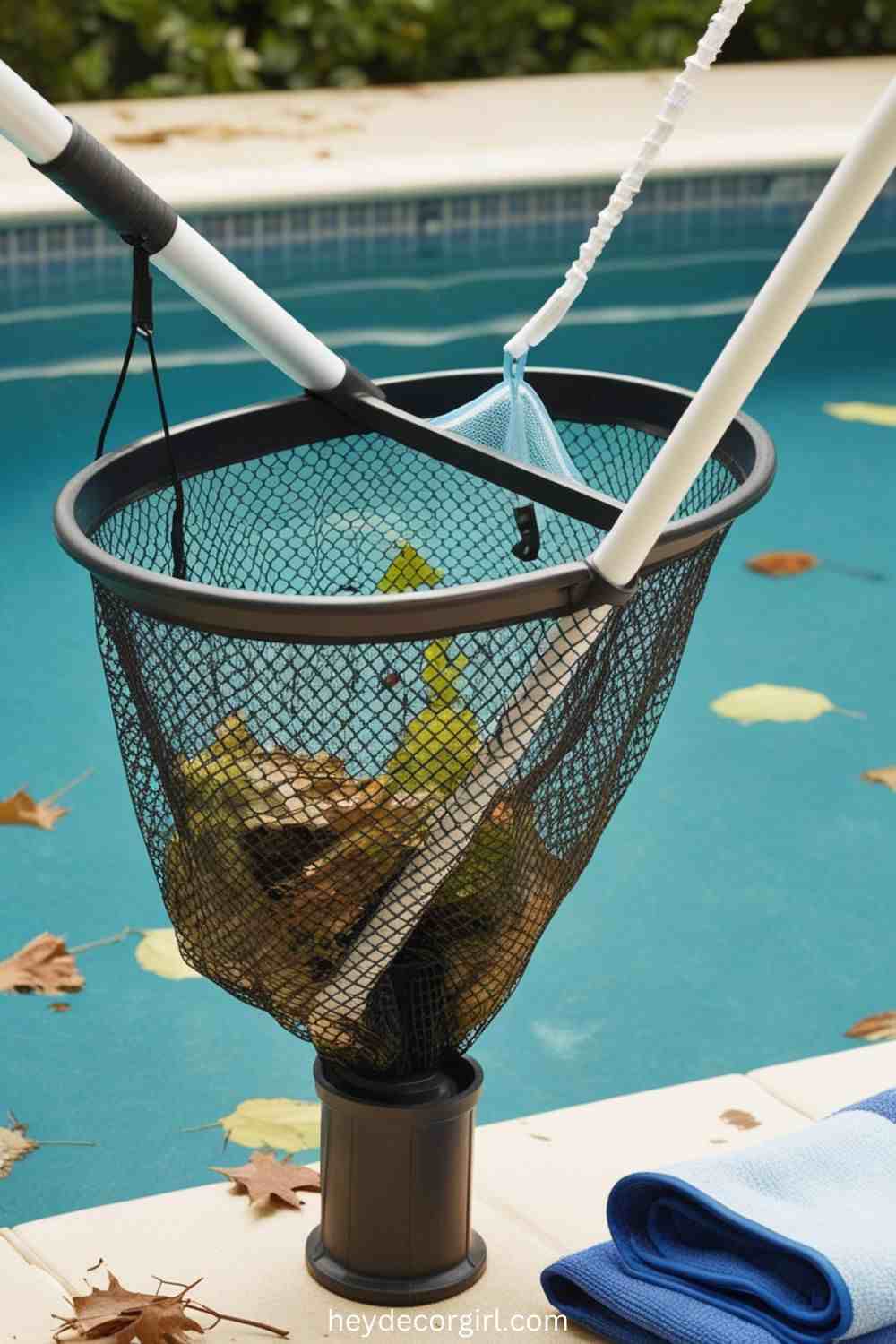
Although pool nets are useful in clearing debris, they are cumbersome and may be cumbersome to use at times. Luckily, there are a few ingenious ways you make cleaning your pool easier and quicker. An alternative solution is to use a large fine-mesh laundry bag that can be used as a homemade skimmer net. All you need to do is stick it on a pool pole, and it is equally effective in getting leaves, twigs, and even insects. The next option is to wipe the surface of the water with a microfiber cloth or towel and remove the fine debris. They are very lightweight, user-friendly, and may be free or cheap, thus they are good alternatives to individuals seeking to ease the process of cleaning their pool.
10. Removing Stains with Vitamin C Tablets
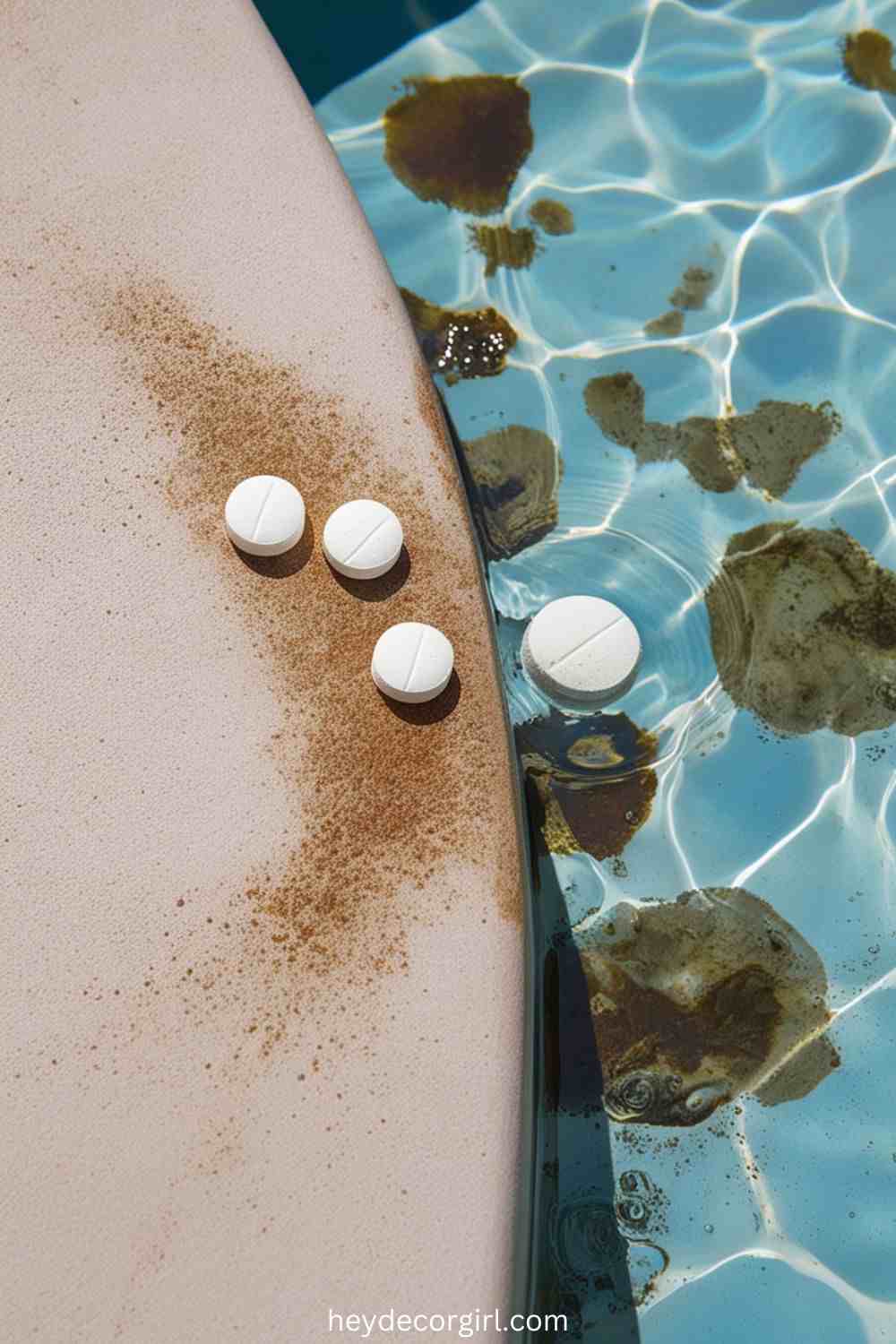
Unattractive spots of metals such as iron and copper are difficult to remove, and vitamin C pills provide an easy way to solve this problem. Vitamin C is ascorbic acid, which reacts with the metals and dissolves the stains without damaging the pool surface. In application, the number of Vitamin C pills placed on the stain should be a few, and after a few minutes, they should be scrubbed using a sponge and a soft cloth. In the case of bigger stains, you may break multiple pills in a bucket of water and pour them over the affected parts. This is a very simple process that is not only environmentally-friendly, using non-toxic products, but it is also a cost-effective process of bringing your pool back to its clean look.
FAQ
1. Which frequency of cleaning my pool should I use these hack forks?
Basic cleaning activities, such as skimming and brushing, should be done at least once every week to ensure that your pool is in good condition. Tasks that are more intensive, such as deep vacuuming and removing of stain removal, may occur after every 2-4 weeks, depending on the frequency of usage of your pool and the environment surrounding the pool.
2. Do these swimming pool cleaning tricks apply to any form of pool?
Yes, the majority of these hacks are not harmful to any type of pool, including the inground and above-ground pools. Nevertheless, it is always good to test a small area first, particularly in DIY treatments, to make sure that they do not leave any scars on the surface.
3. Is it possible to apply vinegar or baking soda to all the surfaces of a pool?
Most pool surfaces, such as tile, fiberglass, and plastic, are safe with both vinegar and baking soda. Nevertheless, natural stone tiles should not be exposed to vinegar due to its acidity, which can be devastating to the stone. The most important thing to do is to always make sure that you check the material of your pool prior to using any cleaning solution.
4. What can I do to avoid algae growth in my pool?
Also, to avoid the development of algae, ensure that your water is well chemically balanced, ensure that you vacuum your pool regularly, and apply some of the homemade remedies, such as borax or hydrogen peroxide. It is important to clean regularly and make sure that there is proper filtration to keep the algae away.
5. How do I make my pool clear after employing these hacks?
When your pool is still hazy, the problem may be connected with the chemistry of the water or with inefficient filtration. Measure the pH, chlorine, and alkalinity levels in your pool. Take into account a flocculant to aid in the clearing of cloudy water. In case of necessity, deep clean the change, or clean your pool filter.
6. What to do to eliminate the oil and lotion deposits on the pool surface?
The easiest way is to toss a tennis ball into the pool. The fibers will absorb oils and lotions, which will result in a cleaner pool. In the cases of more adamant build-up, a pool skimmer net will help remove the excess o, il and then clean up the tiles using vinegar or a special cleaner.
7. Is it possible to use hydrogen peroxide to maintain the pool every time?
Although hydrogen peroxide is useful in enhancing chlorine, as well as cleaning organic substances, its application should be done sparingly. Usually, the pH levels of your pool may vary with frequent use. Always check your water chemistry and make amends.
8. Should there be a pool cover during the winter?
Yes, it is very advisable to use a pool cover when out of season. It assists keepingeep debris out, keeps the water in line with temperature, and also makes cleaning more time-saving as you reopen the pool. The bubble wrap pool cover hack is an excellent and cost-effective winterizing solution.
9. What is the cause of knowing whether the pH balance in my pool is not right?
When the water is found to be rough on your skin or eyes, or when you realize that there is scaling or hazy water, then your PH balance would be distorted. The desired pH should be 7.4 to 7.6. The pool test strips can be used easily to check the water and to identify whether it requires adjustments.
10. Are there any cheap substitutes for the shop-purchased pool cleaning materials?
Absolutely! Some of the hacks in this paper, such as baking soda, vinegar, and hydrogen peroxide, de are cheap alternatives to commercial cleaners. Also, recycling such products as pantyhose and plastic bottles may contribute to reducing expenses without any negative effects on the cleaning efficiency.