![Hey Decor Girl [Latest Trending Decor Design Ideas]](https://heydecorgirl.com/wordpress/wp-content/uploads/2024/08/Heygirldecor-Logo.png)
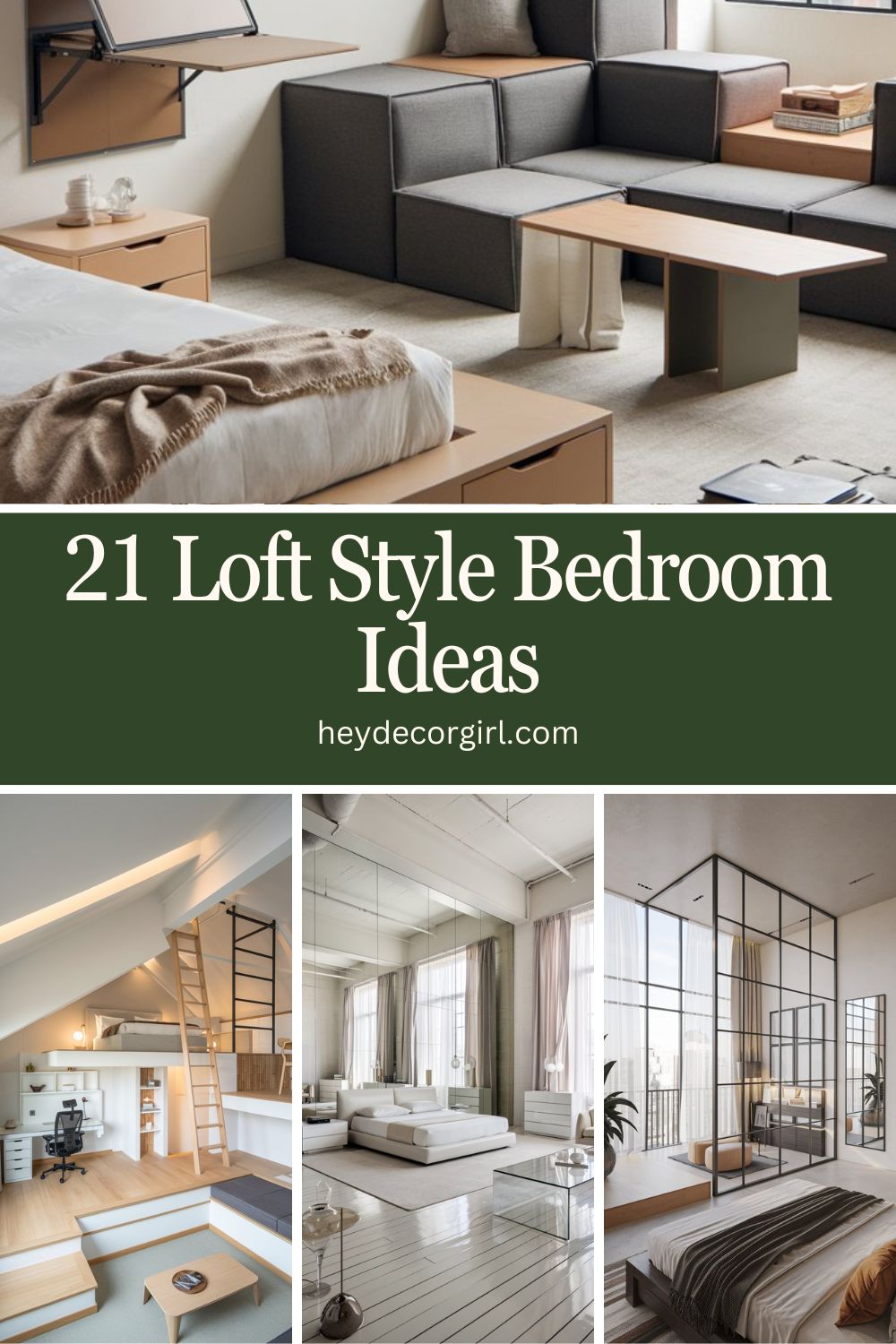
Loft-style bedroom Ideas are glorified with their special charm and open, airy atmosphere. These spaces are usually described using high ceilings, exposed beams, and wide windows, and their decoration usually reflects industrial and modernism. But, due to their openness and frequent irregular forms, the maximization of every inch can be difficult.
The primary factor in the design of a loft-style bedroom is to maximize the amount of space in order to build a functional and comfortable living space. This is because the lofts are usually large, open spaces, and careful design decisions can make a big and empty space look like a homey, well-organized retreat.
We are going to consider 21 creative loft bedroom designs that would make the most of your space. We will give you useful ideas and decorative examples, starting with the introduction of minimalist design concepts to the use of multi-purpose furniture and vertical storage devices to maximize the use of your loft-style bedroom. Whether you are designing a small loft or just want to improve the existing one, these tips will help you design a sleek and effective living environment.
Loft Style Bedroom Ideas
1. Embrace Open Layouts
Benefits of Open Floor Plans
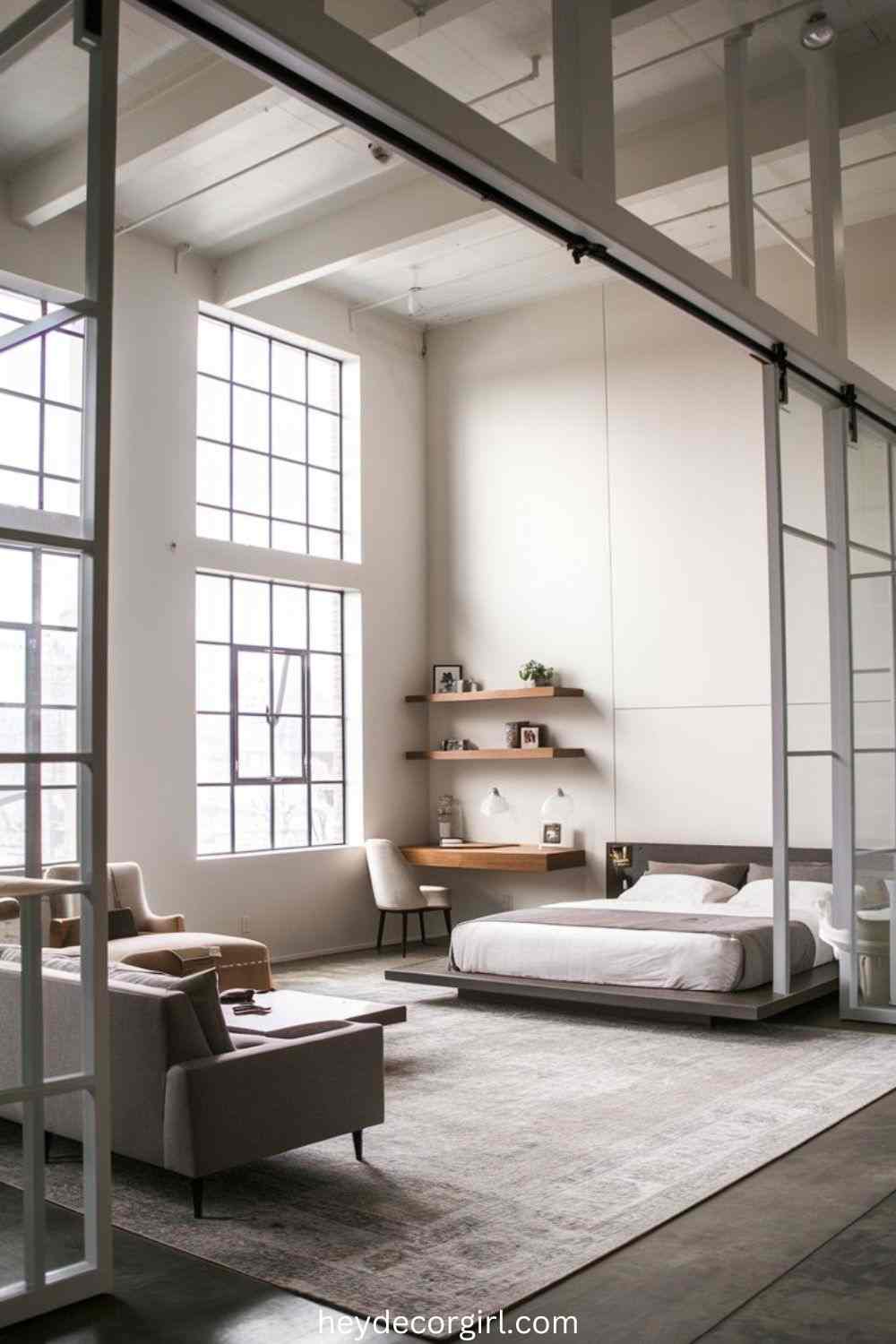
A characteristic feature of loft-style bedrooms is open floor plans, which have several unique benefits:
- Improved Flexibility: An open plan provides the ability to flexibly design furniture and decor. It is easy to redesign your space to suit the evolving requirements or tastes.
- Better Flow: Open layouts allow the space between different areas to flow seamlessly because there are no walls dividing the room, thus making the room look bigger and more unified.
- More Natural Light: Open plans also help distribute light more easily, as natural light can easily enter the room. This can light the area and also make it seem friendlier.
- More Sense of Space: Open layouts can give a sense of a bigger, more open space by eliminating physical barriers, allowing one to feel that a smaller loft is bigger.
Loft Bedroom Open Layouts.
Combined Sleeping and Living quarters:
- Create a bedroom-living room. Drawing the demarcation between the sleeping and the lounging or entertaining area can be done with the use of area rugs or other furniture arrangements. As an example, a low-profile bed or a smooth platform bed would be of assistance in preserving the openness of the room and isolating the bed from the other part of the room.
Multi-Level Design:
- Add a lofted or raised platform on which to put the bed. This design still has an open floor plan, and it provides different areas in the room. As an illustration, you may put the bed on a raised platform, and the lower part can be used as a comfortable sitting area or storage.
Floating Furniture:
- Floating furniture (like wall desks or shelves) can be used to minimize visual clutter, as well as create an open feel. Floating furniture will provide additional floor space and the feeling of openness in the room.
Sliding or Barn Doors:
- Install sliding/barn doors to separate the area where necessary, but retain the entire open space look. These doors may be closed so that it is more private or opened to maintain the space to feel connected and airy.
Defined Areas containing Rugs and Lights:
- Divide the open layout into different zones with area rugs and other lighting fixtures. As an illustration, a big carpet placed beneath the bed would give one the feeling that the bed is different, and that it is not part of the entire space. Equally, apply variations in the types of lights (e.g., pendant lights over the bed and floor lamps in the sitting area) to demarcate various functional areas visually.
When you adopt an open plan in your loft-style bedroom, you will be able to have a flexible,e expansive retreat. When you make strategic design decisions and include these examples, then you can make your loft space functional and pretty.
2. Use Multi-Functional Furniture
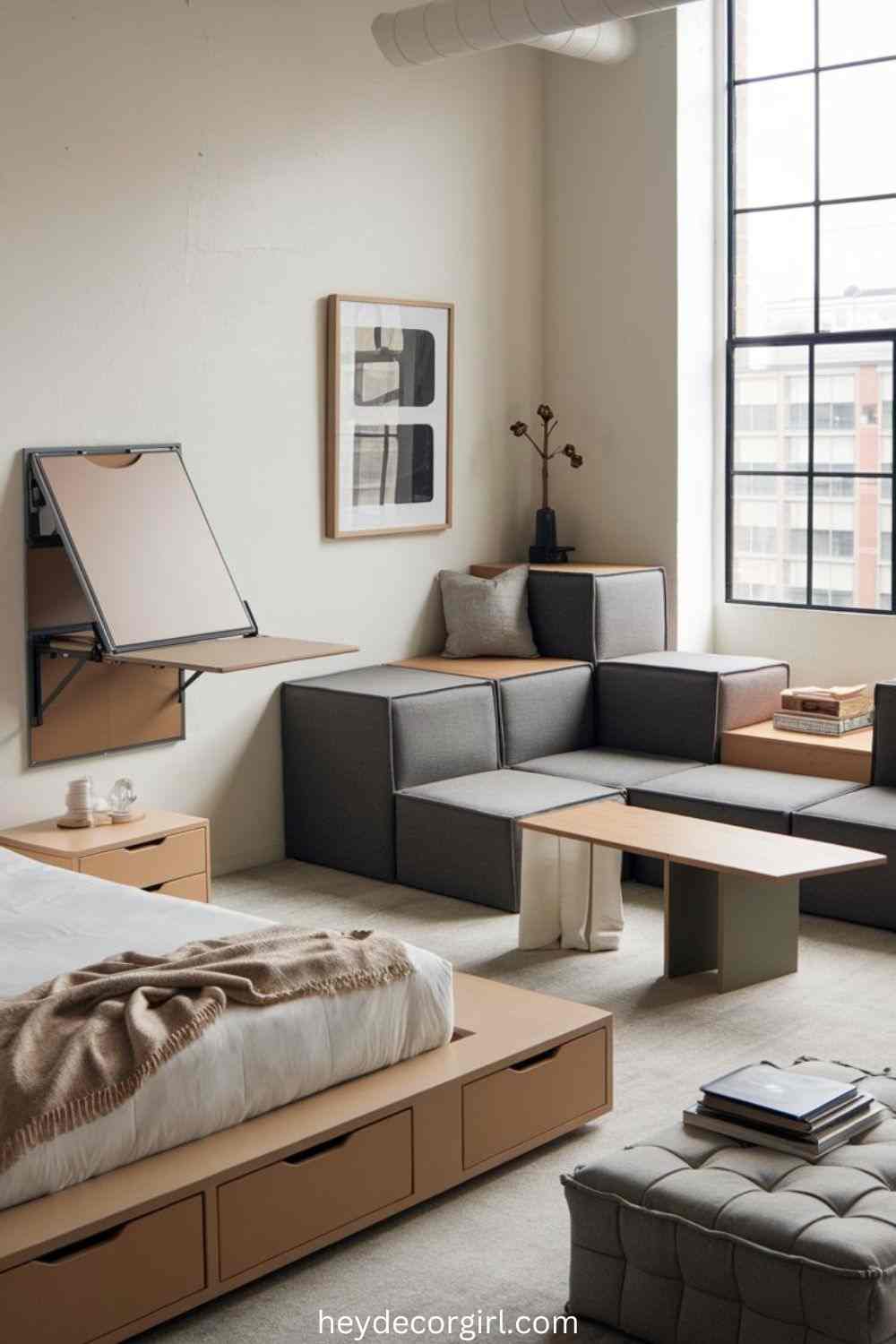
Furniture Ideas: Furniture that can serve several purposes.
Multi-purpose furniture is needed in loft-style bedrooms to maximize the space and increase utility. These are some of the ideas of versatile furniture:
- Bed with Storage: An elevated frame that has built-in drawers or a bed that has built-in drawers under the bed can also assist in maintaining order in the room and maximizing the space.
- Sofa Bed or Sleeper Sofa: A sofa with a conversion option into a bed is a two-in-one solution, as it can be used as a seat during the day and an additional sleeping space when required.
- Folding or Expanding Desks: Foldable or expandable desks conserve space and give you the opportunity to build a functional work station without losing space to do other things.
- Storage Ottomans: Ottomans that have storage areas under them may be used as seating or storage, which is perfect for storing blankets or books, and other things. Wall-mounted tables and desks: Tables or desks on the walls can be folded and put away when not in use, so as to create more space on the floor.
- Modular Furniture Systems: The modular furniture systems are designed to be reconfigured or extended when required, according to your requirements, and can be used to provide storage flexibility as well as seating.
Furniture Pieces that save space.
- Platform Bed Standing on Built-In Drawers: Placing a platform bed with drawers built into the base provides sufficient storage for clothing, bedding, or other necessities, eliminating the need to have more storage furniture.
- Convertible Sofa Bed: A fashionable convertible that can easily turn into a bed is a nice seating and sleeping solution, either in a small room or a place to host guests.
- Wall-Mounted Fold-Down Desk: A fold-down desk attached to the wall can also be used as a working/studying table and then folded tightly against the wall when it is not in use, which brings a lot of space to the floor.
- Storage Ottoman: A stylish storage ottoman can be used as a coffee table and additional storage, where one can store newspapers or remotes to be hidden, but it could add a touch of beauty to the room.
- Modular Seating Units: Flexible seating can be offered by modular seating modules, which can be restructured or joined up to form various other forms and can be employed to define separate areas within the open plan.
- Murphy Bed: A Murphy bed, or wall bed, can be folded against the wall when it is not used, thus providing free space on the floor and a more flexible living room during the day.
- Drop-Leaf Dining Table: A drop-leaf dining table that has extendable sides can not only be moved up and down to fit one or more persons at a time, but also folded down to fit the space when not in use.
- Nesting Tables: They can be placed on the floor as nesting tables or may be stacked upwards to provide the flexible surface areas as per the need, and be easily stored away when not in use.
With multi-functional furniture in your loft-style bedroom, you can have a more organized and flexible living environment that suits your needs without losing style or comfort.
3. Incorporate Vertical Storage Solutions
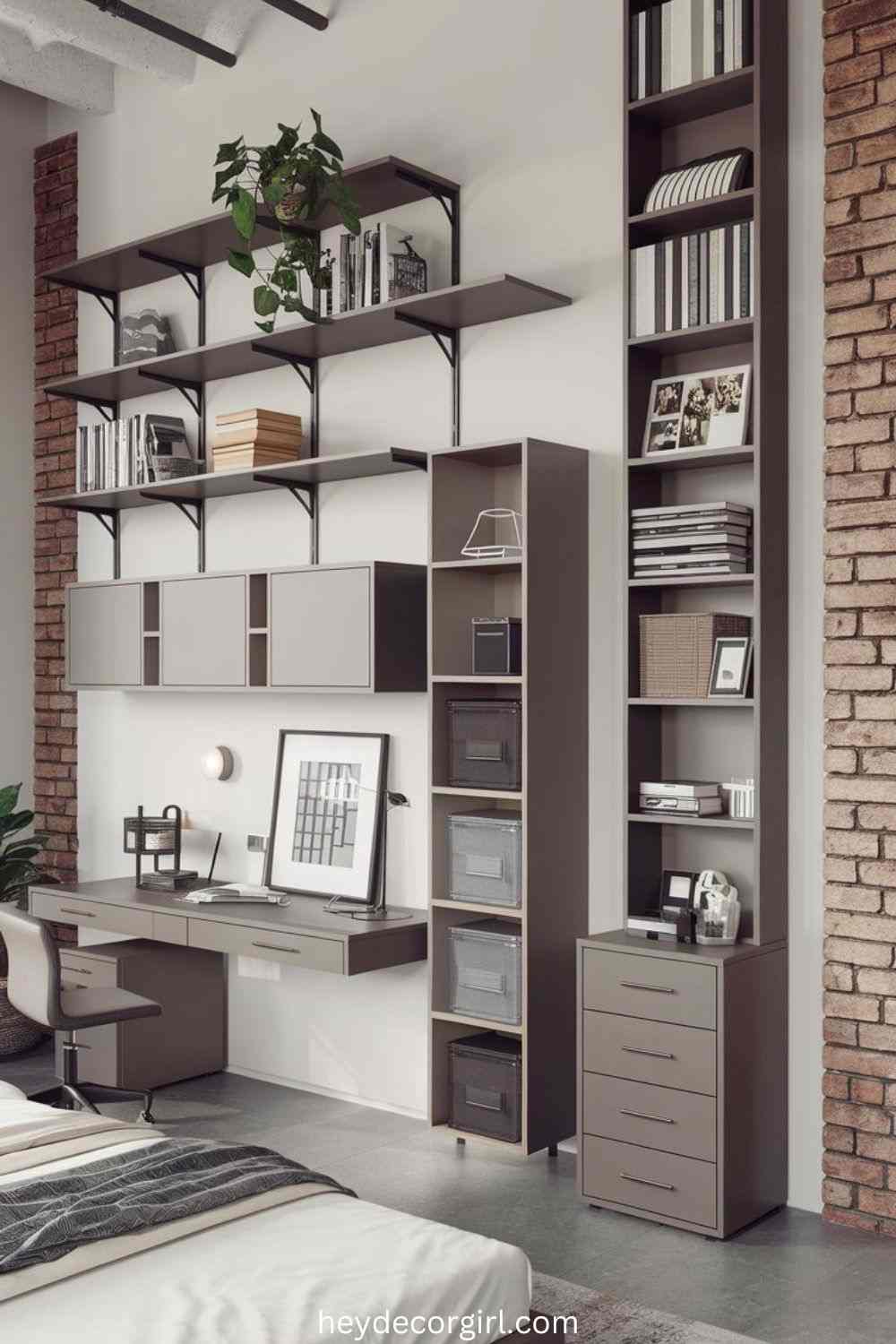
Wall Shelves and wall cabinets.
Loft bedrooms have a strong need for vertical storage to maximize the room space and keep the room tidy. The wall-mounted shelves and cabinets are specifically useful in using the vertical space of the room. The following are the ways that you can integrate these solutions:
Wall-Mounted Shelves:
- Install shelves on walls that can be used to stack books, ornaments, or any other daily necessities. Floating shelves allow the floor space to remain open and give the room a more open appearance.
- Make a mix of open and closed shelves to have a balance between visibility and storage. An example is the use of open shelves to display books and decor with closed cabinets to store unattractive items.
Wall-Mounted Cabinets:
- Wall-mounted Cabinets that have both open and closed shelves to make them more versatile and aesthetically more interesting.
Tall Bookcases and Storage Unit use.
- Storage shelves and tall bookcases use vertical space to their full potential, and they may be helpful, especially in a loft-style bedroom where there is little floor space. These are the ways to make use of them:
Tall Bookcases:
- Use bookcases against walls to store books, framed photographs, and decorations. The tall bookcases attract the eye upwards, which gives a sense of height to the room and makes it look larger.
The bookcases should have adjustable shelves so that various kinds of items can be accommodated and more space is utilized.
Vertical Storage Units:
- Clothing, linens, or other things can be stored in vertical storage units, which may be either tall dressers or narrow armoires to fit in corners or along walls. These units utilize the vertical space, but have a small area.
Select units that have inbuilt drawers or compartments to store things and make them easily accessible.
Types of Vertical Storage Solutions.
Floating Shelves with Inbuilt Lighting:
- Install floating shelves with inbuilt LED lighting to illuminate books and other ornamental materials, and bring practicality and aura into the room.
MMulti-LevelWall-Mounted Cabinet System:
- A cabinet system that is mounted on the wall with different levels and different compartments looks sleek and gives maximum storage in a vertical space.
Tall, Slim Bookcase:
- One of the tall and skinny bookcases against the wall can be used to store a lot of books and other decor without consuming a significant amount of space.
Over-the-Door Storage Units:
- Use the reverse side of a door to store extra stuff and over the door racks or organizers, which work well with accessories, shoes, or smaller items.
High Storage Shelving:
- Place high shelves over doorways or windows to keep the things that are not in frequent use, and out of sight, but can be accessed when they are needed.
With these vertical storage options, you can easily organize your loft-like bedroom and make the most of the available space, and make it look good at the same time.
Also Read: Feng Shui Bedroom Design Ideas To Try
4. Utilize Under-Bed Storage
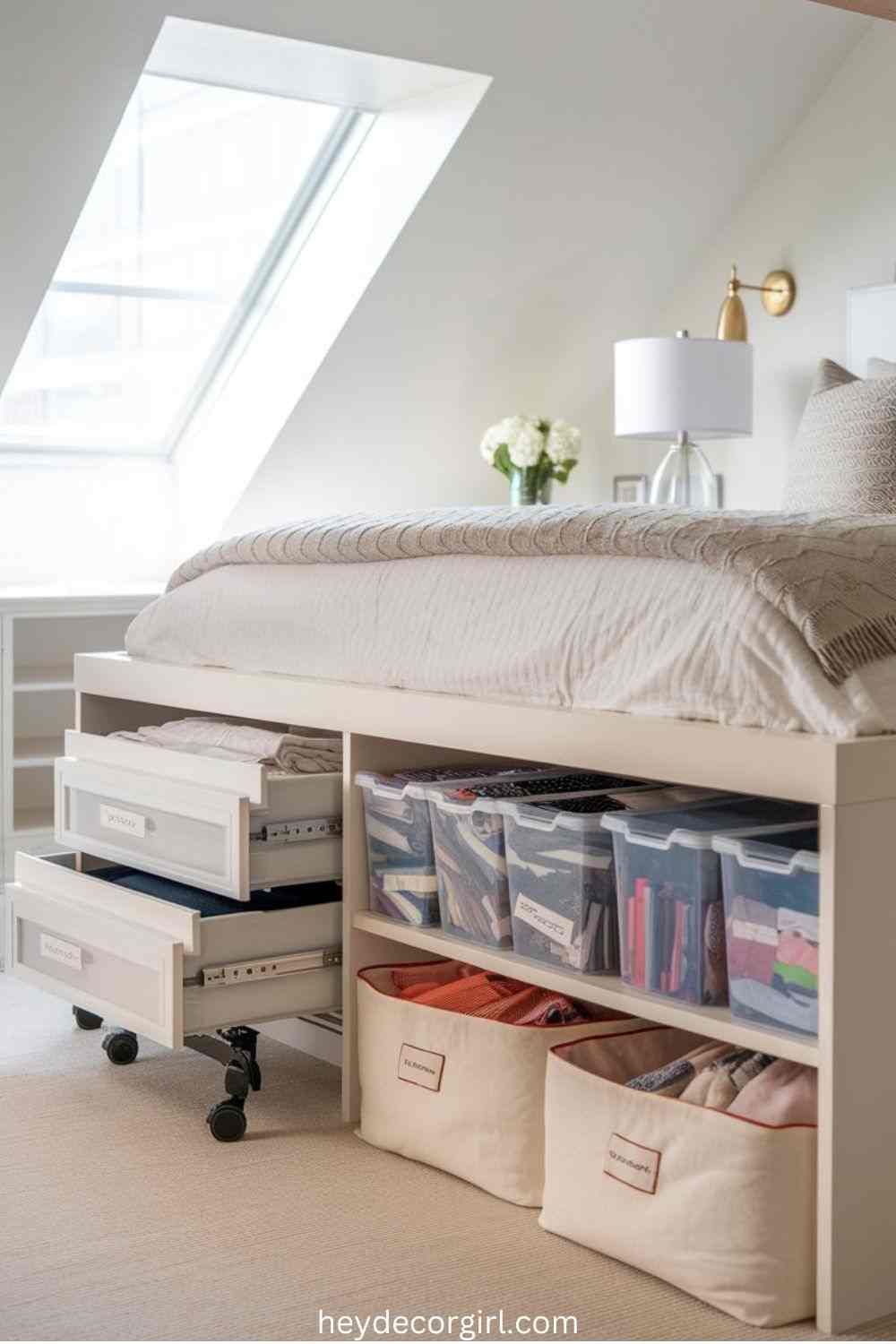
Various forms of Under-Bed Storage.
Under-bed storage is an effective way of utilizing space that is normally not used. These are some of the good alternatives:
- Storage Bins and Baskets: Seasonal clothing, shoes, or other items may be put in plastic bins or woven baskets. Their size is relatively small, and they can easily be slipped in and out underneath the bed and labeled.
- Drawers on CasteUnder-bed bed rollers are also rolling drawers and assist in storing under the bed and making them readily accessible. They are available in all sizes and can be worn as clothing, linens, or for personal use.
- Bed Risers that can be stored inbuilt: Bed risers raise the bed, leaving additional space below. Other risers have built-in storage compartments or shelves to offer more storage without the requirement to have independent storage solutions.
- Pull-Out Trays: Custom pull-out trays or drawers can be put beneath the bed frame, which is a clean method of access to stored items. They can also be constructed into the bed frame itself and can be adapted to various requirements.
- Under-Bed Storage Bags: Storage bags made of soft fabric and fitting under the bed are best with bedding, blankets, or out-of-season garments. They are often foldable and can be stashed away when not in use.
Advantages and Ideas on how to organize Under-Bed Space.
Benefits:
- Maximizes Space: Use of the area under the bed makes use of an otherwise neglected space to add storage space in the room.
- Prepares the Room Clean: By being kept under the bed, things are not visible, which gives the bedroom a cleaner and more organized look.
- Easy Access: Things that are stored under the bed are often readily accessible, and it becomes easy to access or put things away on demand.
Hints on how to arrange Under-Bed Space:
- Select Proper Storing Solutions: Choose storage bins, baskets, or drawers that fit under your bed. Fit the space so that it fits well and does not select furniture that is too large and cumbersome.
- Label Containers: Label storage bins or baskets to easily know what is stored in them. This will prevent searching through various containers and will maintain the area well-organized.
- Use Clear Storage Options: Use transparent plastic containers or bags so that you can see what is inside without necessarily opening the containers. This renders searching things faster and more efficiently.
- Keep Items Accessible: Organize the objects so that the most frequently used objects may be within reach. Put objects that are not used so much in the background or on higher bins, which are not often used.
- Maintain Cleanliness: Vacuum the space below the bed occasionally to make sure that dust does not settle. This is also useful in maintaining stored items in good condition.
- Consider Seasonal Storage: Keep seasonal goods like winter clothing or summer bedding under the bed. This saves space in the closet and keeps the items neat in accordance with the season.
With the help of these under-bed storage solutions and organization tips, you would be able to make good use of this unused space in your loft-style bedroom and keep your living area more efficient and clutter-free.
5. Opt for Sleek, Minimalist Design
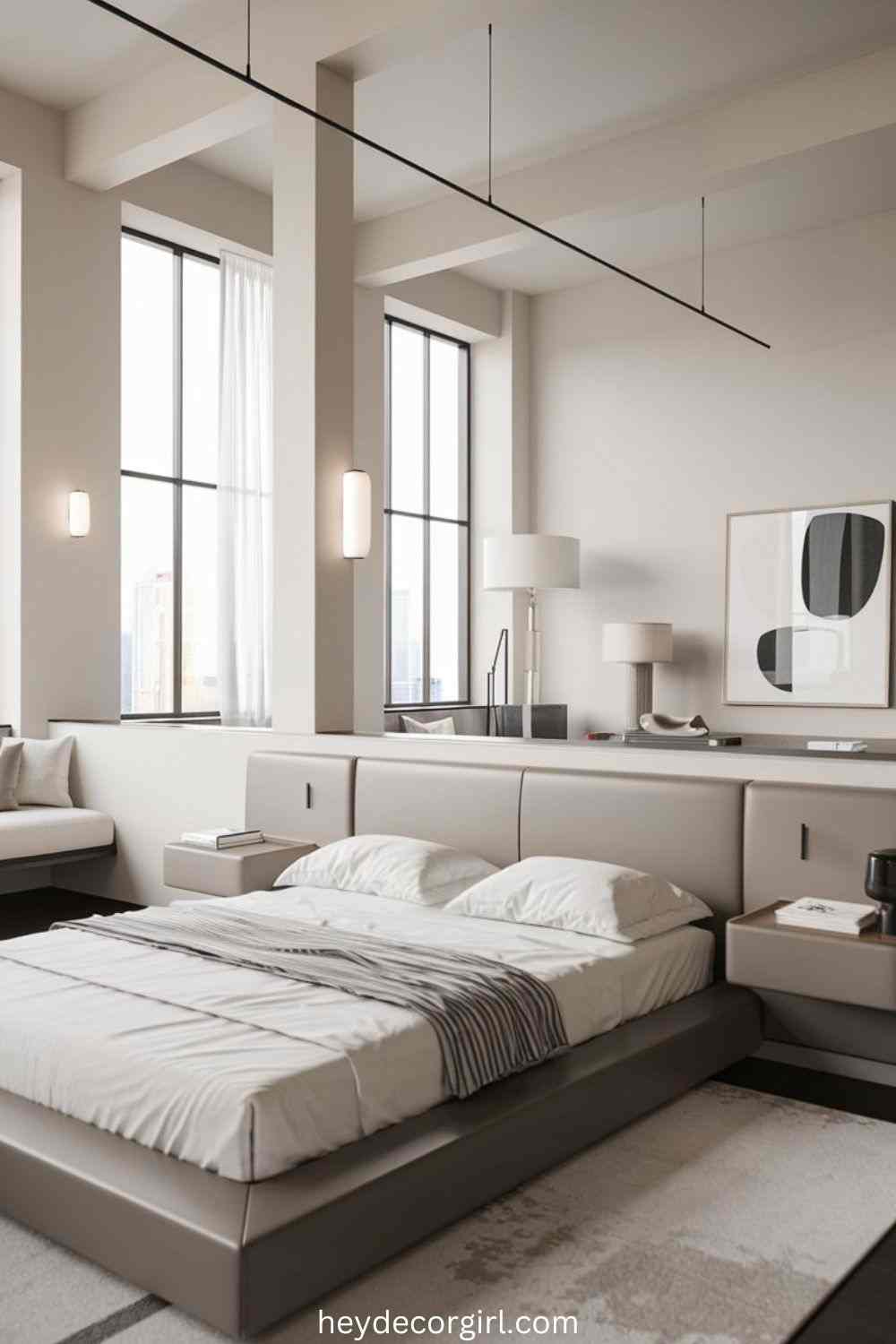
Minimalist Design Principles.
Minimalist building design is nothing more than plain and useful, with an accent on clean lines and open spaces. Here are the core principles:
- Less is More: Minimalism is concerned with the elimination of add-ons to the bare minimum. It implies fewer pieces of furniture and other elements of the interior design, but those that are intentional and add to the overall aesthetics.
- Clean Lines and Simple Forms: Furniture and decor should be cleanstraight-handledht handled and of simple form. You should not use elaborate details or overdecoration to provide a sleek appearance.
- Neutral Color Palette: Minimalist design is frequently characterized by neutral colors (whites, grays, beiges, etc.). Such colors give the space a relaxing, integrated appearance and may make it appear bigger and more spacious.
- Functional Furniture: Select furniture that is not only beautiful but also useful. Multi-purpose items with storage or that can be easily moved around also become the elements of a minimalistic strategy.
- Open Space: Provide free open spaces in the room. This assists in the creation of a feeling of lightness and spaciousness so that the room is not crowded.
- Quality Over Quantity: Buy fewer but higher-quality products instead of cramming the room with lower-quality products. This will be done in a way that makes every item value-added to the design.
Minimalism is good at maximizing space.
- Reduces Clutter: Minimalist design minimizes the visual noise by making sure that only the necessary objects are present and the decoration is not excessive. This gives a more structured and receptive look, making the space look bigger.
- Enhances Functionality: Minimalist architecture focuses on practical furniture and design. This makes every piece useful and, therefore, re is a way to maximize the utilization of the space.
- Creates Visual Harmony: The neutral colors and simple forms produce a harmonic appearance that adds to the impression of spaciousness. The lack of contrasting patterns and colors contributes to the movement of the eye in the room.
- Improves Flow: There are open spaces and clean lines that help in enhancing the flow and circulation of the room. This can create a loft that is even smaller to look larger and less claustrophobic.
- Emphasizes Light and Space: The minimalist design tends to use big windows and light-colored surfaces that increase the natural light and make the interior look more open and airy. Strategic lighting and reflective surfaces may also help to create a feeling of spaciousness.
Minimalist Design in Bedrooms in Loft-Style.
- Sleek Platform Bed: A low-profile platform bed with a simple headboard or no headboard at all gives a clean look with no distracting appearance.
- Floating Nightstands: Nightstands that are mounted on the wall or floating do not occupy any floor space and add functionality and add to a minimalist design.
- Neutral Bedding and Decor: Use impartial-colored bedding and sparse ornamentation to have a calm and clutter-free appearance.
- Built-In Storage Solutions: Clean-line integrated storage units merge with the room, enabling the space to be tidy and have a minimalist appearance.
- Simple Lighting Fixtures: Select simple, contemporary lighting lamps that offer sufficient light with minimal visual distraction.
With the minimalist design principles, you can make a loft-style bedroom more spacious, practical, and harmonious in terms of visuals, using the available space to its full potential and ensuring that the environment is stylish and serene.
6. Create a Lofted Bed Area
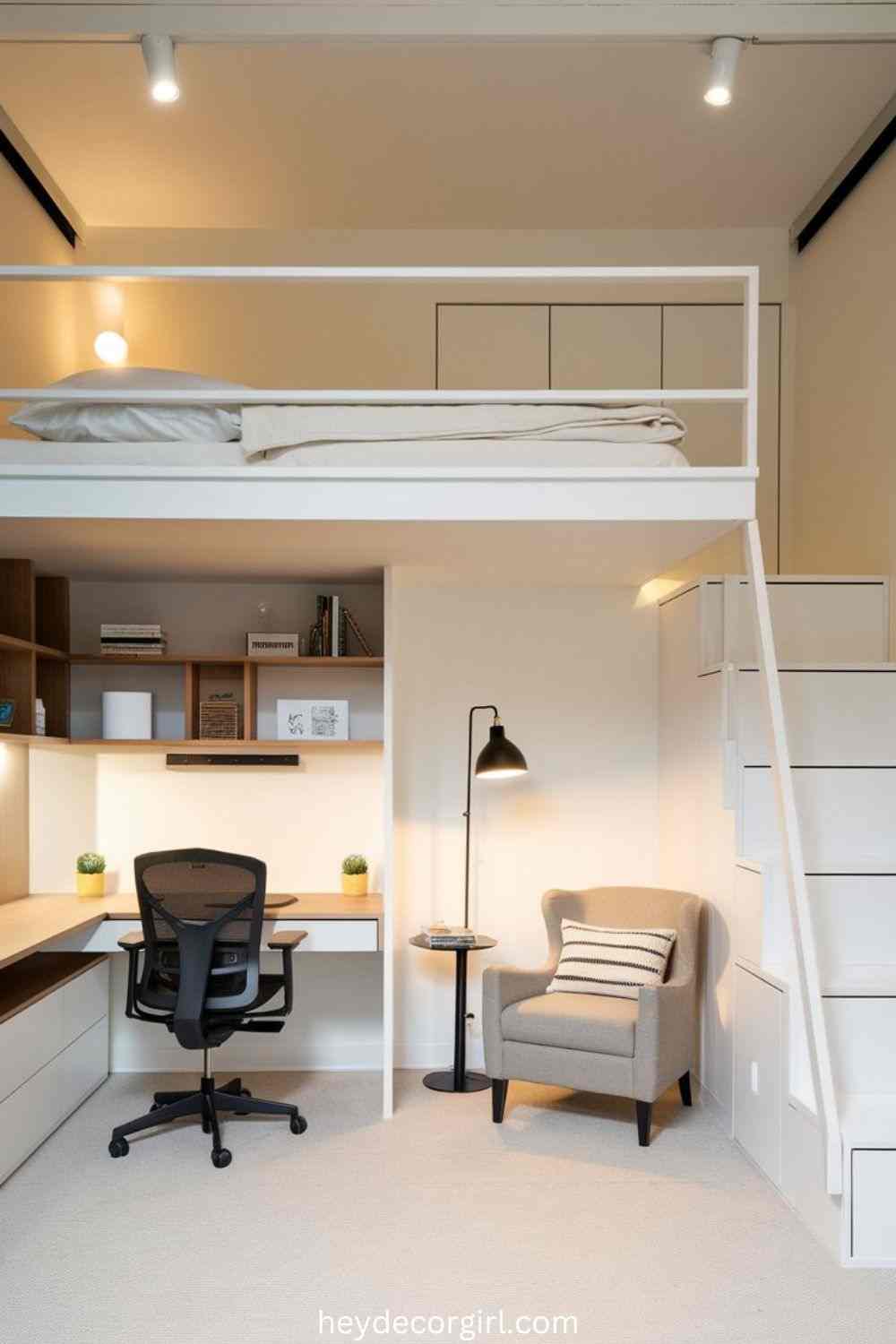
Benefits of Lofted Beds
Lofted beds raise the sleeping unit to provide more space below. Here are some key benefits:
- Maximizes Floor Space: Removing the space occupied by the bed to the floor provides a free space which can be utilized to have a desk, seating area, or storage.
- Creates Zones: Loft beds aid in defining various functional areas in a room to make it easier to establish distinct areas where people sleep, work, or relax.
- Improves Room Layout: By having the bed heightened, you will be able to make the room layout more helpful, making better use of space and the overall flow.
- Enhances Aesthetics: Lofted beds can also be used in the creation of a contemporary, architectural appearance to the room, providing aesthetic appeal as well as a feeling of elevation.
- Offers Storage opportunities: The area underneath the bed may be utilized for the storage of other items, including cabinets, shelves, or even bins, and the space that is not in use.
Planning to Design a Useful Lofted Bed Zone.
The lofted bed is an area of design that needs to be carefully designed to be functional and attractive. The way to design a good lofted bed space is as follows:
- Choose the Right Height: Whatever the space underneath is intended to be, establish the best height of the lofted bed depending on the available ceiling height. Make sure that there is no cramped headroom that and the height of the room is not too high.
- Install Stairs or a Ladder: Choose an efficient and secure solution for access to the lofted bed. Built-in stairs with storage compartments, a smooth ladder, or a combination of the two are possible. Make the method of access comfortable and safe.
- Use the Space Below Wisely: Plan the space beneath the raised bed to your requirements. You can integrate a home office, a small office with desk and chair, a comfortable reading area with a small sofa, or incorporate more storage by including shelves and cabinets.
- Ensure Proper Lighting: Equip the lofted area with bed lights and the area underneath. Think about the task lighting of the working or reading place and ambient lighting to be used to improve the feel of the room in general.
- Ensure Privacy and Comfort: In case of the lofted bed area being utilized as a sleeping place, it is adequate to add curtains or a partial divide to afford privacy. Select soft bedding and make sure that there is plenty of ventilation.
- Opt for a Sturdy Frame: Make sure that the raised bed frame is a sturdy one and firmly attached to the wall or ceiling. It must be capable of holding the weight of the mattress and occupants without being wobbly or unstable.
- Storage Solutions: The space below the lofted bed can be used to have built-in drawers, shelves, or cabinets to ensure the room is in order and no clutter is present. Think of the modular type of storage that is able to be adjusted to suit the available space.
- Create a Balanced Design: Adding design aspects will help to balance the lofted bed space with the other parts of the room. Apply unified color combinations, materials, nd decor to provide a cohesive appearance.
Examples of Lofted Bed Areas
- Lofted Bed, Workspace below: A bed raised on a desk with a chair below it forming the practical home office space. The desk can also have a storage or a shelf built so as to maximize the space.
- Lofted Bed with Reading Nook: The area underneath the raised bed is intended to be a cozy reading area consisting of a comfortable chair, side table, and a lamp, forming a relaxing retreat.
- Lofted Bed with Built-In Storage: It has a lofted bed that has built-in drawers and shelves beneath the bed that provide a lot of storage space to keep clothing, books, or other personal items.
- High Bed plus Small Living Room: The space under the elevated bed is equipped with a small seat or couch in order to form a mini living room inside the bedroom.
A well-designed lofted bed area can help you to better utilize vertical space, increase the functionality of the room, and create an elegant and orderly living space.
7. Use Light Colors and Reflective Surfaces
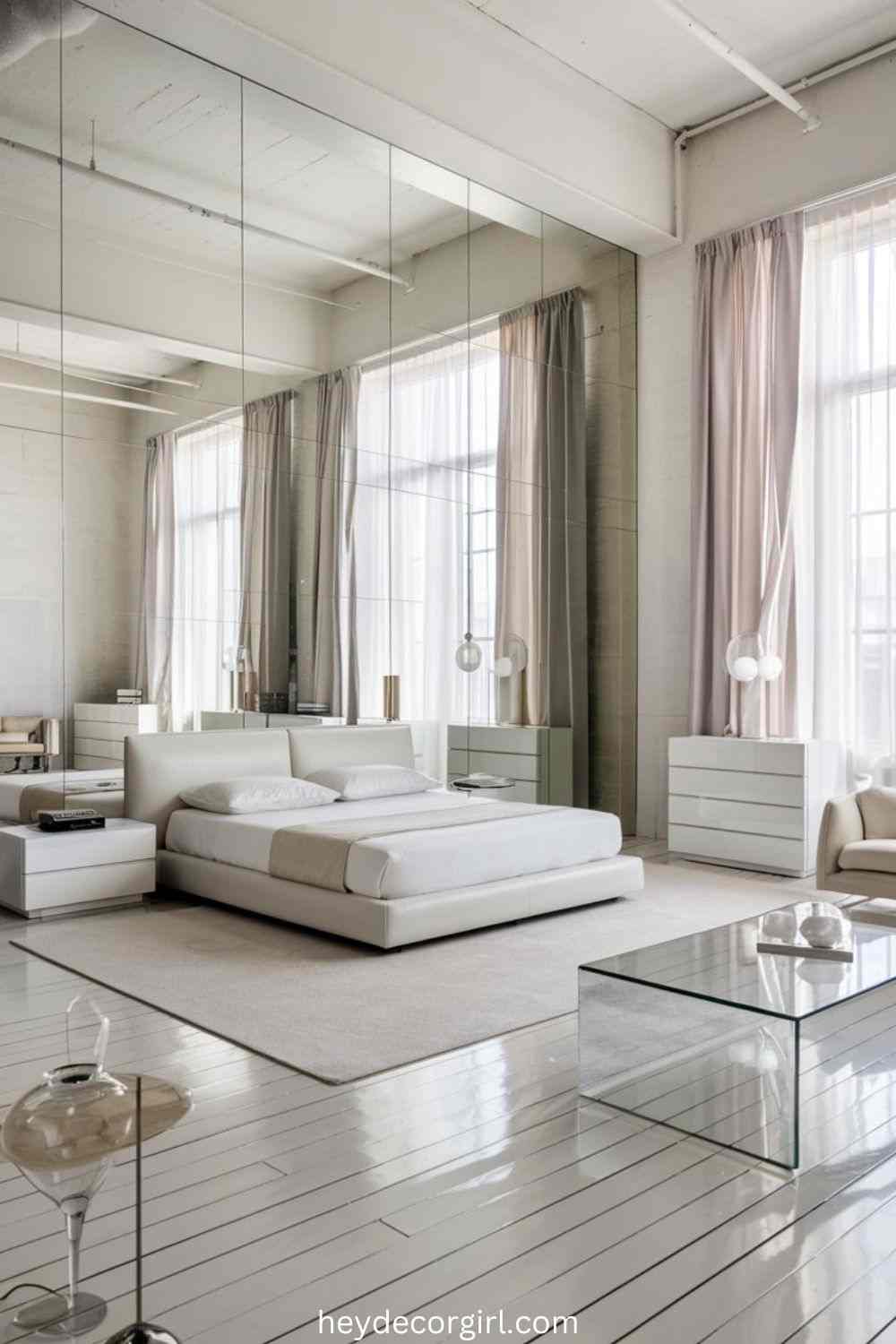
Effects of the Colour Schemes on Space Perception.
Color schemes are very important in the perception of space. The light colors and reflective surfaces have the following effect on the space perception in a loft-style bedroom:
- Creates a Sense of Openness: Light colors, including light grays, soft pastels, and whites, reflect more light and hence make it appear open and airy. Such colors can be used to give the impression of a large and spacious place, despite a small or tight area.
- Enhances Natural Light: The light walls and furniture contribute to the reflection of natural light, which makes the rooms look brighter and warmer. This is particularly useful in loft-style rooms that have high windows that allow ample daylight to come into the bedroom.
- Reflects Light: Mirrors and glossy finishes reflect the light around the room, which also increases the feeling of space. This makes the environment more dynamic and interesting to the eye.
- Minimizes Visual Clutter: By using light colors and refractive surfaces, the appearance of clutter can be minimised through a unified and smooth look. They make the space look more organized and not overwhelming.
- Promotes Calm and Serenity: Light colors can also be linked with calmness and rest, which may help create a more calming and peaceful bedroom atmosphere.
Examples of Reflective Surfaces and Materials.
- Mirrors: Mirrored furniture or large wall mirrors can also give the effect of having more space because they reflect light, thus making the room appear bigger. Mirrors may serve as a decoration, or practical objects, e.g,. A mirror wardrobe or a bedside table.
- Glossy Finishes: Furniture, cabinetry, or walls that have high-gloss paint or lacquer can also bounce back light and bring a sense of sophistication. The glossy finishes would be quite useful on cabinets, tables, dressers, etc.
- Glass Elements: Glasses are highly applicable in different furniture items, including coffee tables or shelves, to create an open-air and spacious atmosphere. Space can also be separated by glass partitions or doors, and this can be achieved without necessarily closing spaces.
- Metallic Accents: Use metals, e.g., chrome, brass, or gold, in the fixtures, hardware, or decor. These materials also absorb light and create a slight gloss in the room, which makes it elegant and bright.
- White or Light Colored Flooring: White tiles, polished concrete, or light wood as a floor covering material are light-colored or reflective, which adds brightness to the space and contributes to an impression of an open space.
- Sheer or Light Curtains: Light colored curtains or sheer curtains will enable the natural light to enter the room but keep the privacy. They contribute to the sense of spaciousness, leaving the room well-lit and airy.
- Reflective Decorative Accents: Include reflective ornamental pieces like metallic vases, mirrored picture frames, or glossy pieces of decoration to provide visual appeal and increase light refraction.
Examples of Light Colors in Design.
- White Walls: Light Wood Floors: The room is made to look larger by a loft-style bedroom, where the white walls and light wood floors make the room look bright and open.
- Soft Pastel Bedding and Pastel Accents: The soft pastel bedding, together with light-colored walls and reflections, helps to create a calming and airy feeling.
- Glossy White Furniture: Glossy white furniture (a bed frame or dresser) is also known to reflect light, as well as to keep a modern appearance.
- Mirrored Wall Panels: Mirrored wall panels or huge decorative mirrors can extend the space visually and bounce the natural light and artificial light.
The loft-style bedroom can be made more spacious, bright, and pleasing to the eye using light colors and reflective surfaces, and thus, it adds more functionality and beauty.
8. Incorporate Mirrors for Illusion of Space
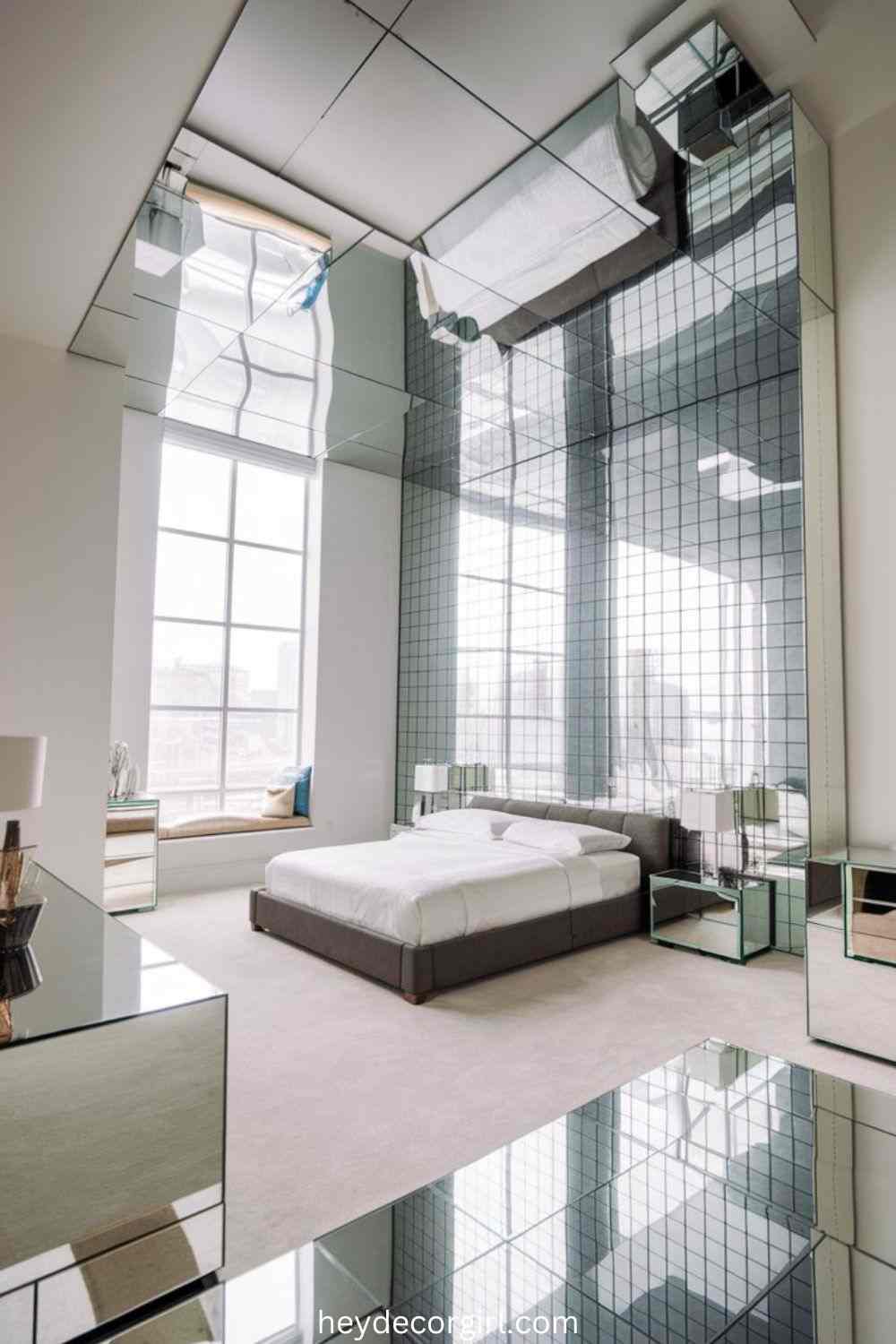
Mirrors Can Help a Room appear larger.
Mirrors are used successfully in interior design as a tool of illusion of more space. Here’s how they work:
- Reflect Light: Mirrors are used to reflect both natural and artificial light to make the room brighter. More light can be used to make the space look more open and airy.
- Expand Visual Dimensions: Mirrors should be placed in a way that they seem to change the depth and dimension of the room, making it look bigger than it is. They can symbolically stretch the limits of the space.
- Create Focal Points: Mirrors or mirrored walls of large size can also be used as focal points where the eye is attracted and gives the impression of grandeur. This will help divert the mind from the size of the room.
- Enhance Views: Likely, the architectural characteristics or other aspects of the room can be reflected in the mirrors and make the room seem larger and open to the world around it.
- Add Architectural Interest: Large blank walls can also be broken with the help of mirrors, adding visual interest and breaking up the large blank walls to make the room layout more dynamic and interesting.
Guidelines for the correct placement of mirrors.
- Choose the Right Size: Use bigger mirrors to create a major impact. Floors, ceilings, mirrors, or huge wall mirrors can successfully produce the illusion of additional space. It should be a large mirror to avoid the small ones that are likely to be scattered or less impressive.
- Put Position Mirrors: Install mirrors in front of the windows in order to reflect the natural light and make it brighter. The space could be expanded by placing mirrors to reflect something pretty to look at or outside attractions in the room.
- Use Mirrors to Define Zones: Mirrors may also be used to delineate varied functional areas, i.e., reflecting a home office area or creating a reading niche in a loft-style bedroom.
- Add Mirrors in Furniture: The mirrors on the furniture, e.g., a mirrored dresser or bedside tables. Such artworks can help create the space without occupying more wall space.
- Never overload with Reflections: Mirrors are good, but do not overuse too many mirrors in the room, as this may give a clumsy or chaotic appearance. Balance reflects other elements of design.
- Frame Mirrors Elegantly: Select the mirrors that have glamorous frames and that match the interior of the room. Simple or beautiful frames can improve the general view besides contributing to the space illusion.
- Reflect Light Fixtures: Mirrors that are used to reflect a light source,l ike chandeliers or pendant lights. This may enhance the light effect and help to open up the atmosphere and make it lighter.
- Consider Mirrored Panels: To be more contemporary, use mirrored panels or tiles as an accent wall, or as a part of the decor. It can produce a dramatic effect and enlarge the room visually.
- Eye Level Position Mirrors: Make sure that the mirrors are put at eye level to obtain a more natural and efficient reflection. Such an arrangement allows for maximizing the perceived space and functionality.
Here are some successful uses of Mirror Placement.
- Floor-to-Ceiling Mirror: One wall of the bedroom has a tall mirror that reflects the entire length of the room and creates a feeling of height and openness.
- Mirrored Wall Panels: A feature wall, where panels or tiles are placed, to produce an excellent visual effect, reflecting light and increasing the space.
- Mirror Opposite Window: There was a big mirror which was facing a window to capture as much natural light as possible and improve the brightness of the room.
- Mirrored Furniture: Such furnishings as a mirrored nightstand or dresser reflect the light and introduce a certain elegance into the room.
Through effective use of mirrors, you can build a loft-like bedroom that is more spacious, bright, and appealing to the eye, which improves the way the bedroom functions and looks.
Also Read: Best Dresser Alternatives For A Stylish Bedroom
9. Incorporate Multi-Level Designs
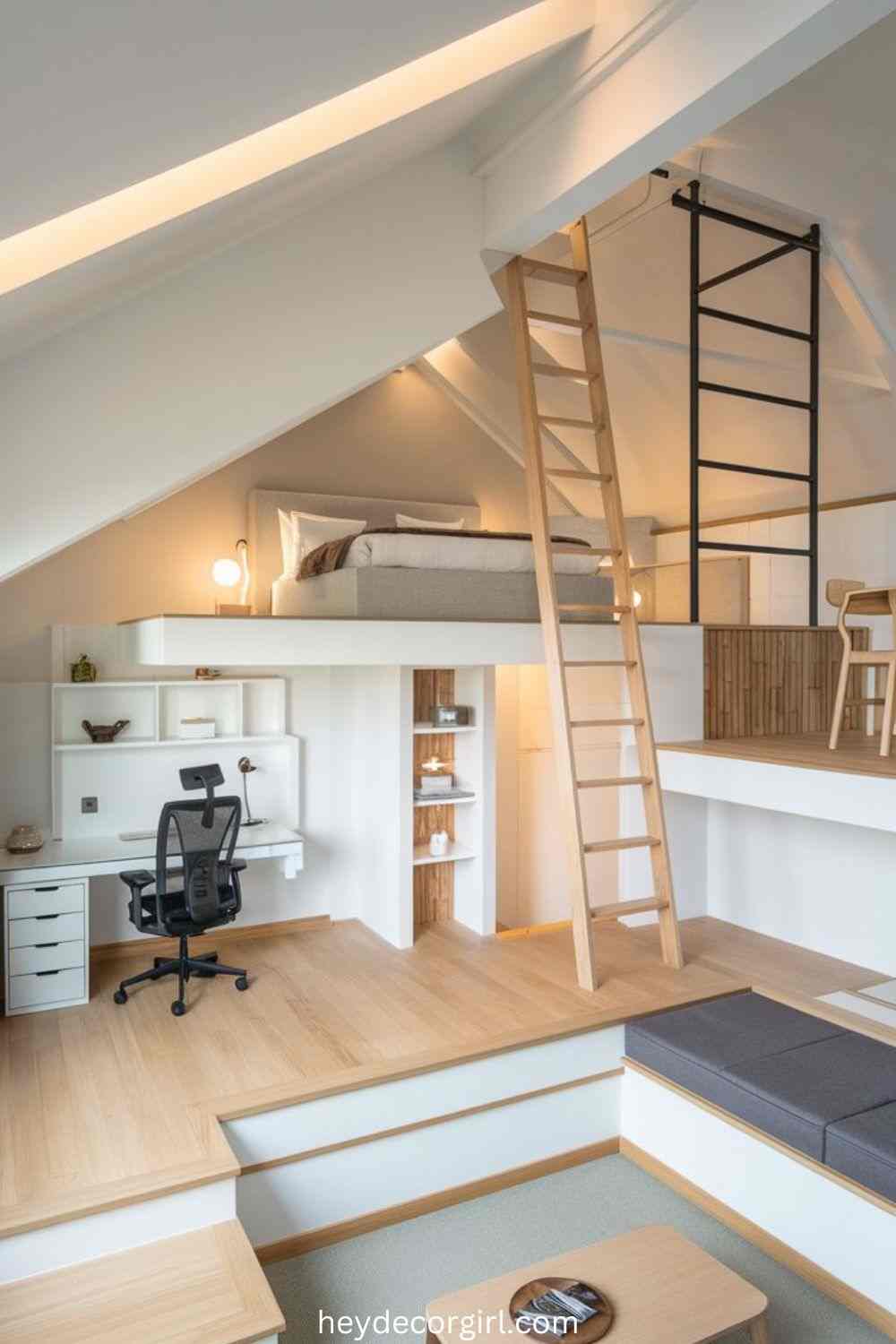
Differing Levels of Sleeping, working, and relaxation.
Loft-style bedrooms with multi-level designs are able to make the most out of space and establish different functional areas. The following are some of the ways of integrating the various levels:
- Define Functional Areas: Multi-level designs enable you to have distinct spaces to do various activities like sleeping, working, and relaxing. This is able to improve the functionality and the appearance of the room.
- Maximize Vertical Space: Vertical space enables you to use a small room and make it look larger and tidier. Various levels are able to bring some visual interest and depth to the room.
- Establish Confidentiality and distance: Raising some parts will help to create privacy and distance in an open-plan environment and create a more personalized and comfortable living space.
- Enhance Room Dynamics: Multi-level construction will provide architectural flair and interest, which will make the room more appealing to the eye and interesting.
Multi-Level layouts can be used as below..
Lofted Sleeping Area:
- Descriptio:n A sleeping platform or loft bed on a raised platform with open space underneath used as a workspace, or comfortable sitting area.
- Details: The sleeping space is raised and can be reached by a ladder or stairs, and has a comfortable mattress with simple bedding. The vacant area can be converted to a home office where a desk and a chair are put, or it can be a small cozy reading area with a small sofa.
Sunken Living Area:
- Definition: A recessed area of the room that serves the purpose of a lounge/living room, and forms a small, personalized space where people can relax.
- Details: The living room will be sunk into the floor, with built-in seats, soft cushions, nd a low coffee table. A step or a platform can be used to divide this area from the rest of the room.
Elevated Workstation:
- Description: A home office or study space on an elevated platform or mezzanine, which is located above the main bedroom space.
- Details: This workspace can be reached via a few stairs or a ladder and has a desk, a chair, and storage. This design would enable one to have a quiet, dedicated workspace and keep the main sleeping area independent.
Sleeping and Living:
- Description: Split-level: A split-level design has the sleeping area lifted and the living area raised, but the two levels have a small staircase or ramp that unites them.
- Details: The bedroom features a platform bed that has storage space beneath and the living space with a sofa, coffee table, and entertainment system. The two levels are well defined and well interrelated.
Multi-level Lounge and Dining:
- Description: The various levels were employed to make different areas where one could lounge and eat in the same open-plan space.
- Details: There is a level devoted to a dining table and chairs, a level with a lounge area and comfortable seating, and a coffee table. The two areas are separated by a slight rise.
Guidelines to Multi-Level Layout Designing.
- Ensure Safe Access: Offer secure and practical movement among the levels, including sound steps or ladders. Make sure that they are convenient and comfortable.
- Keep Balanced and Cohesive: Make sure that the various levels are aesthetically proportionate and united. Make the space cohesive with uniform color schemes, materials, and decor.
- Optimize Space Utilization: Better utilise every level by including in-built storage, modular furniture, and considerate design. This assists in having a structured and realistic layout.
- Lighting Take into consideration: Ventilation Take into consideration: Make sure that levels have enough lighting and ventilation. Provide some mix of natural lighting, task lighting, and ambient lighting to make each area more practical and comfortable.
- Create Clear Transitions: Make transitions between different levels by using design features like steps, railing,, s, or changes in flooring. This will aid in ensuring a feeling of order and flow in the room.
Examples of Multi-Level Layouts
- Bed with Lofted Bed below: An elevated bed table with a desk and a chair positioned under it to form an effective and fashionable workspace.
- Sunken Lounge Area raised with Bedroom: A reduced living space with a comfortable seating spot and a high sleeping bench to provide a unique and home-like living space.
- High study space below, main living space below: A home office or a study will be on an elevated platform, and the main living area will be lower, offering a quiet and efficient workspace.
With the use of multi-level designs, you can improve the functionality, aesthetics, and spatial arrangement of a loft-style bedroom and develop a dynamic and well-structured living experience.
10. Maximize Natural Light
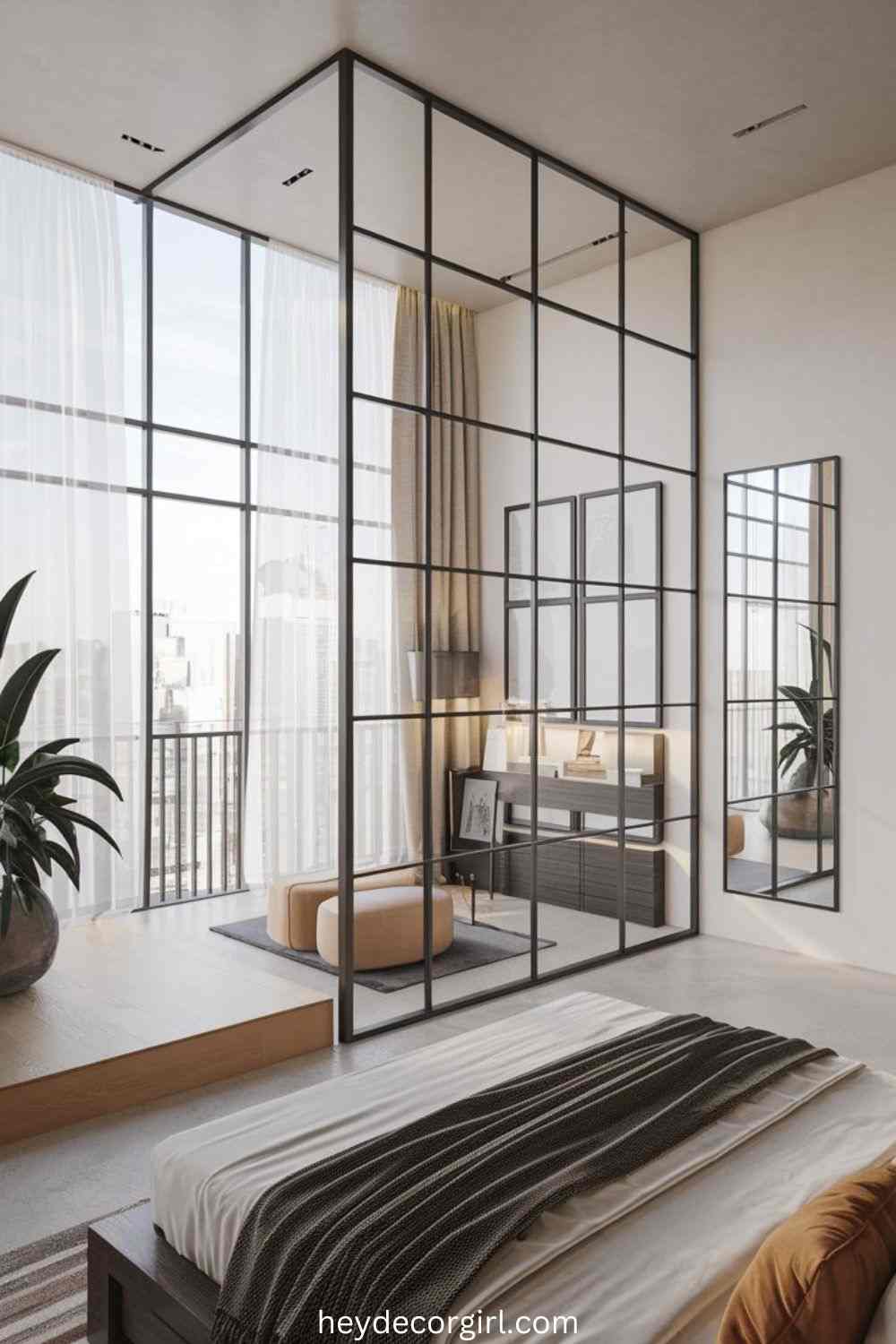
Small Space Natural Light Advantages.
The advantages of increasing the amount of natural light in small rooms, such as in loft bedrooms, are numerous:
- Creates a Sense of Openness: It is possible to use natural lighting in order to make small areas look bigger and more open. It helps to improve the space perception, making it brighter in all its corners and less confined.
- Improves Mood and Well-Being: It has been demonstrated that exposure to natural light will enhance mood, enhance energy levels, and result in overall well-being. It gives the space a warm and welcoming look, which makes it more welcoming and comfortable to live in.
- Enhances Aesthetics: Natural lighting brings out the textures, colors, and characteristics of a room. It brings a cozy and vibrating aspect to the decor, improving the aesthetic value of the room.
- Minimizing Artificial LightinTakingake advantage of natural light will help save on electricity usage through daytime lighting and save on energy, thus resulting in a more environmentally friendly living environment.
- Increases Productivity and Concentration: Brightly-lit rooms with a lot of natural light might boost concentration and increase productivity, so they are good work or study spots in the bedroom.
How to increase Natural Light in a Loft Bedroom.
Optimize the Placement and size of the Window:
- Direction: Use as many and as large windows as possible. The room has large windows, skylights, or glass doors that enable more natural light to enter the room.
- Tips: Have Havefloor-to-ceilingg windows or large glass panels to fill the room with light. Add more windows or enlarge the existing ones, in case the structure does not prevent it.
Apply the Light-Filtering Window Treatments:
- Description: Choose sheer or light-filtering window coverings that will not trap natural light, but will provide privacy.
- Tips: Sheer curtains, light blinds, or shades that can be adjusted easily to regulate the quantity of light in the room should be used.
Add Reflective Area:
- Description: Reflective surfaces can be used to bounce light throughout the room and increase the brightness in it.
- Suggestions: Mirrors, glass furniture, or metallic accessories should be used in the decoration to enhance the effect of natural light.
Select Light and Neutral Colors:
- Descriptio:n Light and neutral finishes on the walls, ceilings, and furnishings are more reflective and therefore, the room looks brighter and bigger.
- Tips: Use whites, light gra, ys or pastel paint and decoration to make as much use as possible of the reflective quality of natural light.
Add Roof Windows or Skylights:
- Description: Add skylights or roof windows to add more natural light to the room, particularly where there is a sloping roof in the loft.
- What to avoid: Select skylights that have a shade built-in or blinds to regulate the amount of light penetrating them and glare at certain times.
Install Transom Windows:
- Description: Transom windows are to be installed on doors and larger windows so that light may pass between the rooms and increase the overall brightness.
- Tips: Frosted or clear glass transoms are used to ensure privacy and ensure that the transmission of light is maximum.
Use Glass Doors or partitions:
- Description: Change solid doors or partitions with glass ones to allow the light to pass through the space.
- Suggestions: Use frosted glass or transparent glass doors and partitions to maximize the light flow without fully sacrificing privacy.
Keep Windows Unobstructed:
- Description: Do not put huge pieces of furniture or objects in front of a window that may shield the natural light.
- Helpful hints: You should be able to place furnishings so as not to block the windows, and to make sure that the light can enter the room and dissipate freely.
Install Light Tubes or Solar Tubes:
- Description: Fit light tubes or solar tubes in order to harness and channel natural light to darker sections of the room.
Tips: Place light tubes in the most strategic place to maximize light in the room and illuminate the place that may lack natural access to the window.
Incorporate Indoor Plants:
- Description: Indoor plants should be used to supplement natural light and create a fresh and bright atmosphere.
- Tips: Select plants that grow in bright indirect light and position them beside the windows to use the natural light.
With these measures, you will be able to make the most of the natural lighting in a loft-type bedroom to make it appear brighter, more welcoming, and spacious.
You May Also Like:
FAQ
1. What are the advantages of a loft-style bedroom?
Answer: Loft-style bedrooms are characterized by the open, airy impression and wide possibilities of the design. They are characterized by high ceilings and big windows, which make the atmosphere spacious and light. These areas have been able to support imaginative and multi-purpose designs, and they are therefore best suited to make the most of functionality and design.
2. What are the guidelines for using multi-functional furniture in a loft bedroom?
Answer: Multi-purpose furniture like beds with inbuilt storage, convertible couches, or desks that can also be used as vanity tables can be used to make the most of the available space because they are used in many ways. This will minimize the use of more furniture items and keep the room in order.
3. What are the best ideas to integrate e vertical storage solution in a loft bedroom?
Answer: To take advantage of vertical space, install tall bookcases, shelves, and cabinets on the walls. The solutions maintain space on the floor and offer sufficient storage without occupying space. Make sure that shelves and storage devices are properly installed and fit the size of the room.
4. What is the best way to utilize the under-bed storage in a loft bedroom?
Answer: Use under-bed storage by selecting beds that have built-in drawers or a room below to have storage bins. It is a perfect place to store those things that are not utilized on a day-to-day basis, like seasonal clothes or additional bedding. Ensure that the under-bed space is well sorted out.
5. How does light colour and reflective surfaces affect a loft bedroom?
Answer: Light colors and surfaces with reflections, i.e., mirrors and light furniture, help to enlarge the illusion of space because light is reflected and the room becomes brighter and more open. An expansive atmosphere can be achieved by using light colored walls and furniture.
6. What does the use of mirrors do to make a loft bedroom look like it is bigger?
Answer: Reflections can be used to increase the size of the room with the help of mirrors. Install huge mirrors facing windows to increase natural lighting or panels of mirrors as feature walls. Make sure that mirrors are put at eye level and do not place too many reflective surfaces in one place.
7. Why is a lofted bed area in a loft bedroom good?
Answer: A lofted bed area provides additional space on the floor, which can be used to do other activities, including a working area or a living room. It is also capable of providing a relaxing and elevated sleeping area and making the room look more organized and versatile.
8. What do I do to integrate multi-level designs into a loft bedroom?
Answer: Multi-level designs may be reached with the development of different levels of different functions, an elevated sleeping area, a sunken lounge, or a raised workspace. This will provide architectural appeal and give the opportunity to separate functional areas in one space.
9. How can a loft bedroom be maximized in terms of natural light?
Answer: Bring as much natural light as possible through large windows, skylights, or glass doors. Select window treatments that block light and introduce surfaces that are reflective, such as mirrors and glass furniture. Do not cover windows with anything, and you can even add light tubes to get more light.
10. What can I do to have privacy in an open-floor loft bedroom?
Answer: Preserve privacy with open loft design through innovative design features such as frosted glass walls, well-placed furniture, or panel curtains. Multi-level designs can also be included to make distinct and more intimate spaces in the open space.