![Hey Decor Girl [Latest Trending Decor Design Ideas]](https://heydecorgirl.com/wordpress/wp-content/uploads/2024/08/Heygirldecor-Logo.png)
Fish tank decorations are not only used to keep fish but are also mini ecosystems that could add some life, color, and tranquility to any area. Aquarium decorations are one of the most significant elements of an aquarium. Decorations in fish tanks not only make your tank look more beautiful, but they also offer places of hiding as well as alleviate anxiety among your fish, and are known to stimulate the natural behaviors of your fish. Natural rocks and driftwood, corals made of artificial materials, themed decorations, and so on: the right decorations can make your tank an underwater heaven.
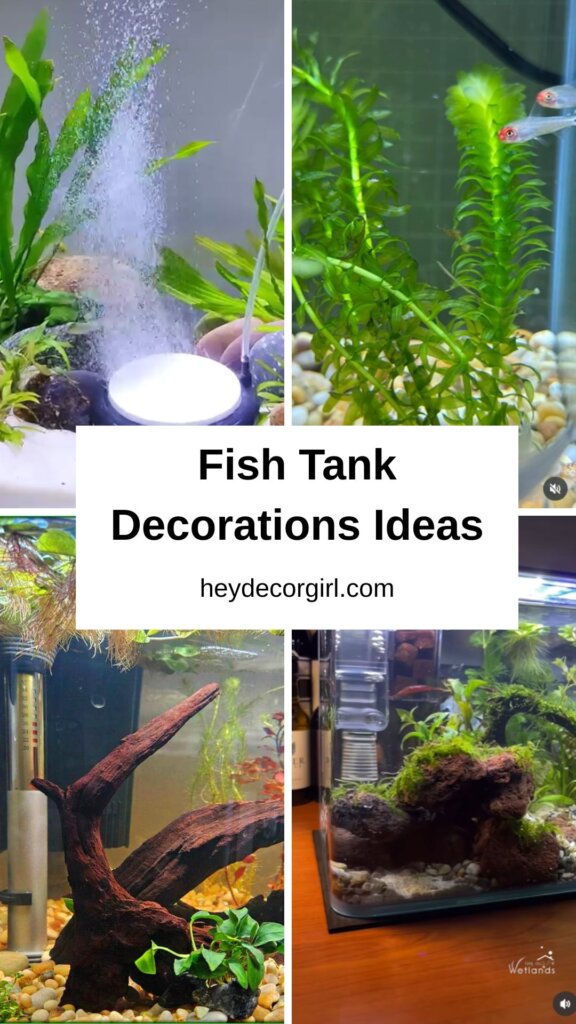
The selection of appropriate decorations will be based on the kind of fish, tank size, and your own aesthetics. Although there are fish that are comfortable in the dense vegetation, others would be comfortable in the open areas with a couple of decorations.
Moreover, decorations may influence the quality of the water and maintenance of tanks, and therefore, it is essential to make sure that the materials used are non-toxic and safe. As an amateur or an expert aquarist, it is always good to know the kind of things to put in a fish tank, their advantages, and where to place the decorations in order to have a beautiful, stress-free, and flourishing aquatic environment. Here, we will discuss the most popular decorations, materials, and tips to make your fish tank an interesting focal point of your house.
Top 10 Stunning Fish Tank Decorations Ideas
Here are some stunning ideas to inspire your fish tank decorations:
Natural Rock Formations
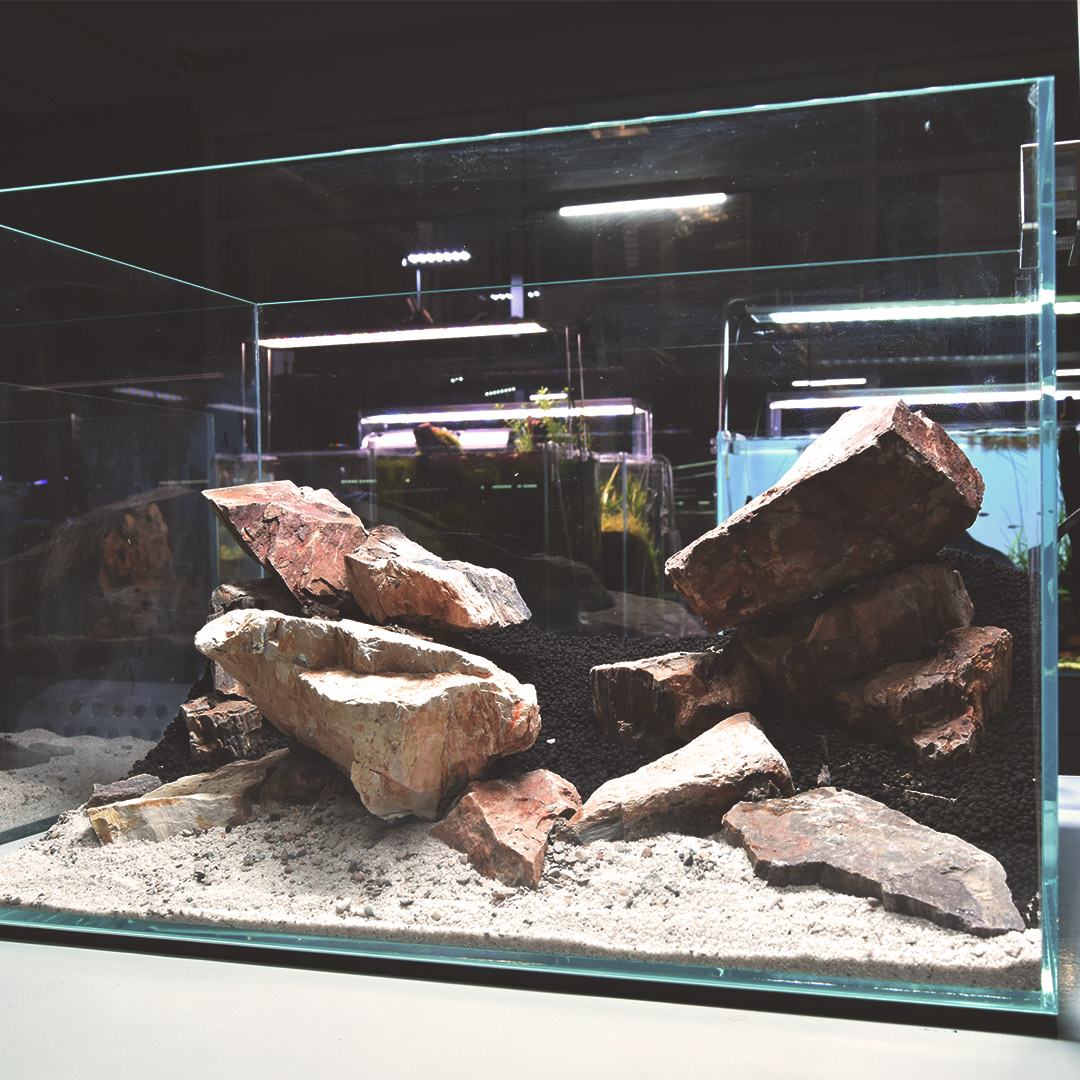
Credit@natureinsidemy
With the help of natural stones such as slate, lava, or river stones, caves and places where fish can hide may be created. They copy the natural environment, which gives fish a feeling of security. The rock formations also aid in territorial arrangements of fish, as well as offer surfaces on which useful bacteria grow. Make sure that rocks are aquarium safe and clean them correctly before they are placed in the tank. Small rocks can be piled to form multi-tiered fish foraging areas. It adds realism by adding moss or algae on the rocks. Rock decorations suit freshwater and saltwater tanks, and they are much more aesthetically appealing in addition to providing benefits to fish behavior and the water quality.
Driftwood and sunken Logs
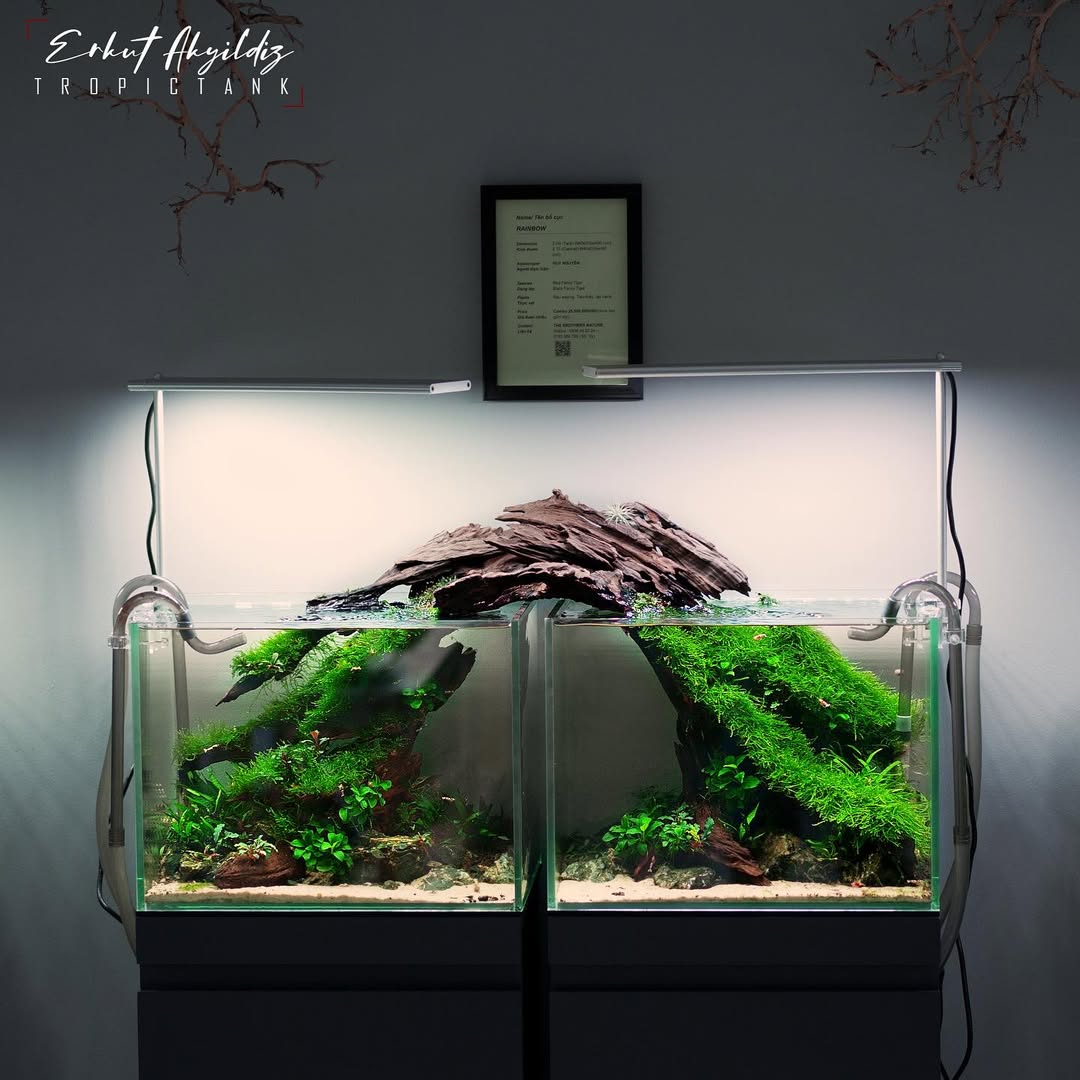
Credit@erkutakyildiz
Live Aquatic Plants
Credit@plant_land_newengland
ArtificialLow-Maintenancee Plants
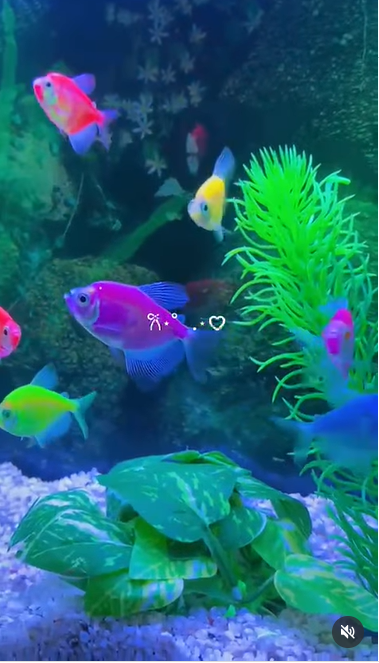
Credit@seazone_innovative
Artificial plants are ideal for novice or low-maintenance tanks. They do not need light, manure, or carbon dioxide, and offer protection and places of hiding. They are of different colors, sizes, and realistic shapes, which bring aesthetic beauty to any tank. Artificial plants do not grow algae and deteriorate as easily as live plants do. They could be used together with other decorations, such as rocks or driftwood, to come up with creative aquascapes. Although they do not have the advantage of natural filtration, they are easy to clean and durable. Always use non-toxic aquarium-safe artificial plants so as not to harm fish. It is a convenient method of improving the appearance of your tank without additional maintenance.
Figure and Ornamentation Themed
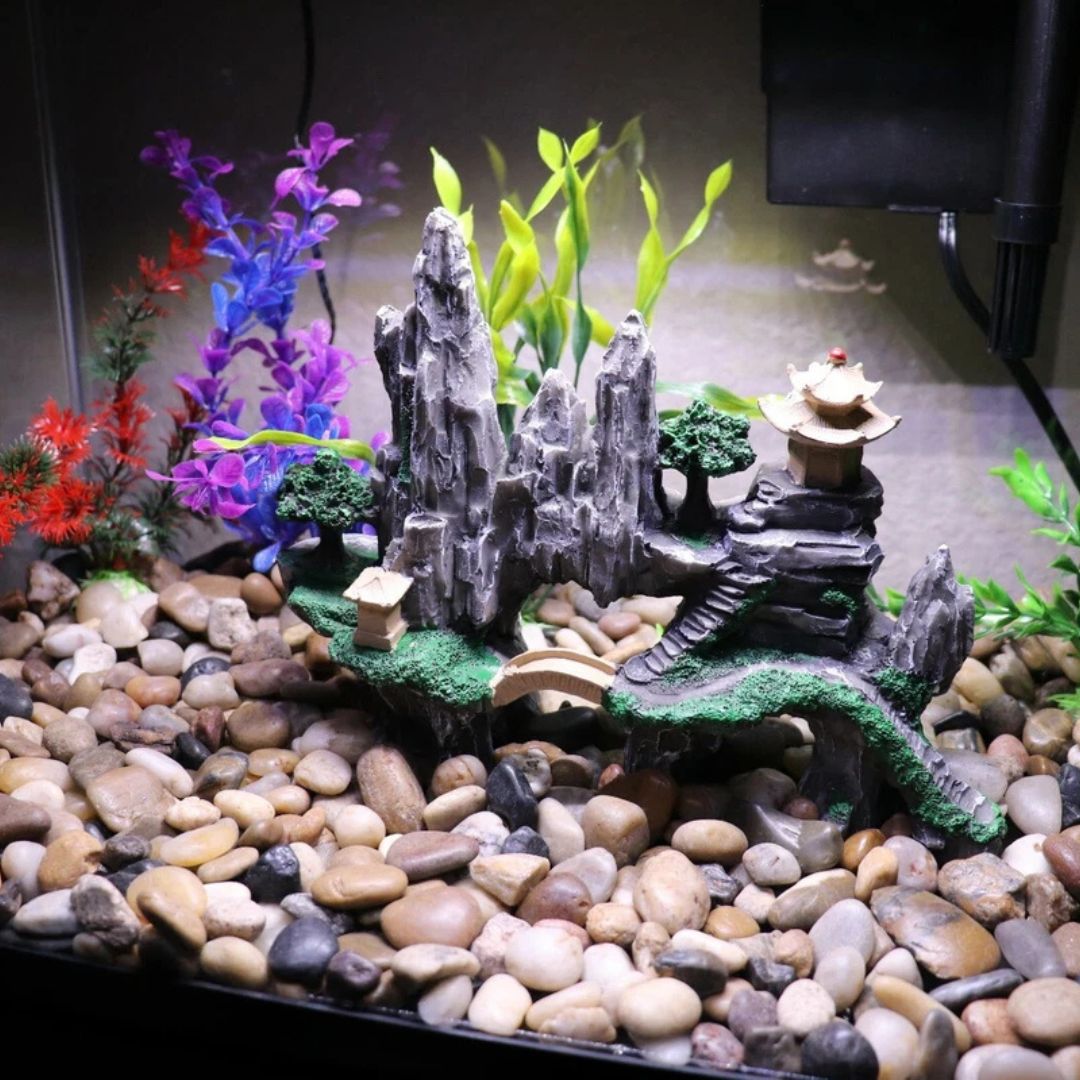
Themed decorations, such as castles, sunken ships, treasure chests, or underwater statues, serve to provide creativity and fun to a fish tank. They offer concealment places and encourage exploration by the fish. Make sure there are no rough decorations that may cause harm to the aquarium. Ornaments may be used in freshwater or saltwater tanks, and may be used to conform to a specific theme, e.g., pirate or fantasy. Plants and rocks are combined with ornaments to create a dynamic environment that is layered environment. The little figurines may also serve as conversation pieces, as well as providing personality to the aquarium. They enable hobbyists to be creative without making the fish environment unusable and unsafe.
Gravel and Sand Substrates
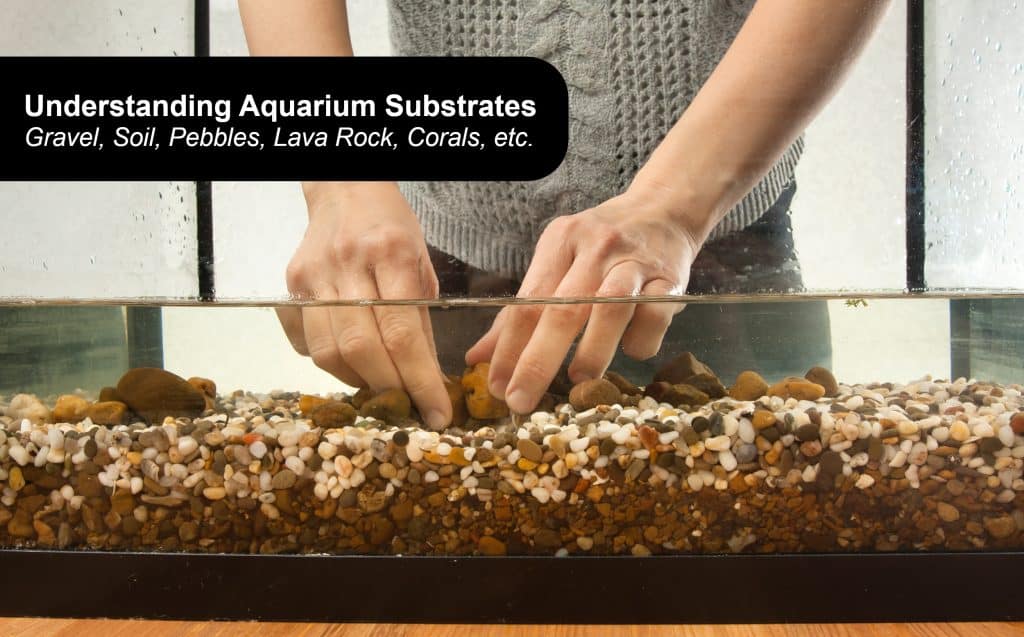
The substrate selected has a drastic impact on the overall appearance of the tank. Decorations and plants are applied to gravel, sand, or colored substrates. Gravel is also free to flow and enable the growth of useful bacteria. Sand bottom-dwelling aquatic creatures, such as loaches and corydora, are so that the delicate barbels are not harmed. Colored substrates are suitable to supplement the theme tank or plant decorations. You may combine the sizes of substrates to vary the texture. The inclusion of pebbles or shells will also add beauty and naturally provide shelter. The substrates are not only supportive of decorations, but they are also important in the biological filtration, as well as sustaining water quality to a thriving aquarium.
Bubblers and Air Stones
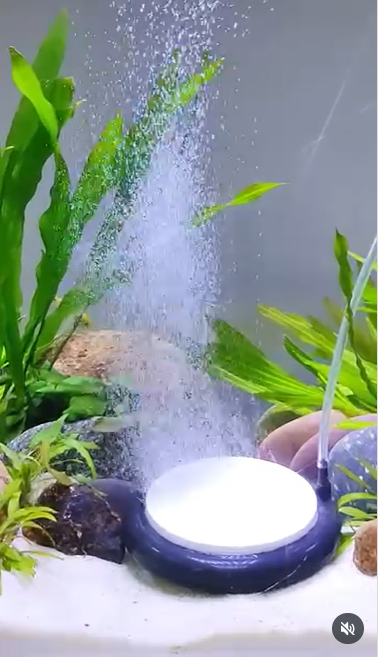
Credit@hygger.official
Air stones and bubblers give motion and oxygen to the aquariums and also improve visual attractions. They generate moving bodies of water and minimize non-portable areas, and promote healthier fish. Fish are also attracted to air bubbles and may be encouraged to play. Several decorative ornaments can be used to provide a dramatic effect around bubblers, such as air emerging through a sunken castle or rocks. Bubblers are user-friendly, energy-saving saving and come in various shapes, sizes, and colors. They aid in the circulation of water besides keeping off debris. They work well, especially in small or heavily congested tanks, so that there are optimum oxygen levels.
Aquarium Backgrounds
Credit@aquarium_vinyl
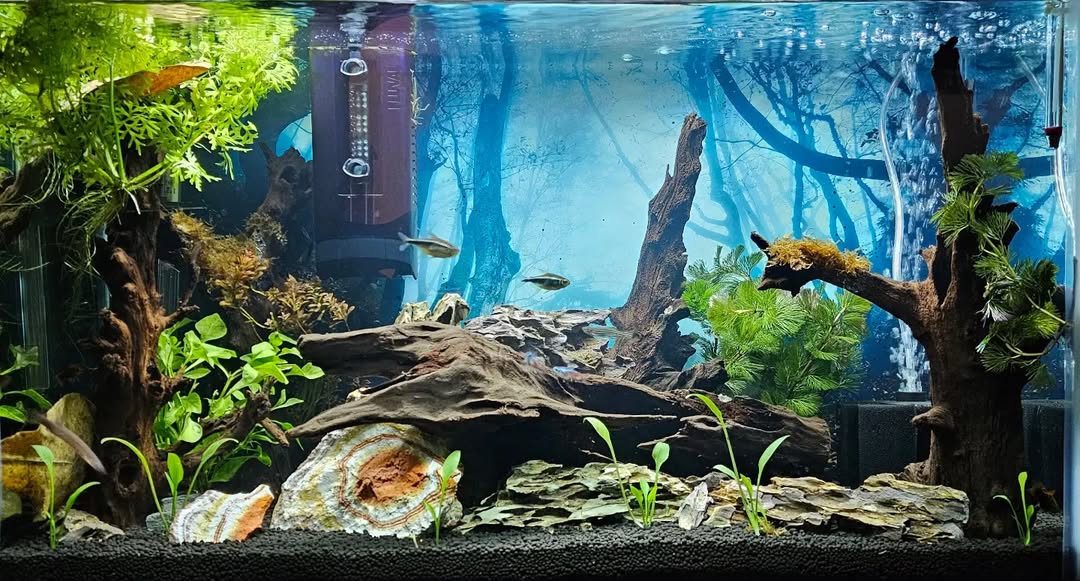
Backgrounds or backdrops conceal unattractive walls and equipment and increase the depth of tanks. There are options of 3D backgrounds, printed underwater images, or plain blue/black paper. The decorations and plants are displayed on backgrounds, and colors become more noticeable. 3D textures create more cocoons where fish can hide and make the surroundings more lifelike. The backgrounds can be changed the seasonal aesthetics, which can be easily cleaned and changed to a removable background. Open water space can be simulated by transparent or reflective backgrounds of fish to minimize fish stress. The use of backgrounds and foreground decoration, and the plan, also makes the tank look layered and natural. Backgrounds are an easy but efficient method of enhancing aquarium design and consumer experience.
Floating Decorations
Credit@dustinsfishtanks
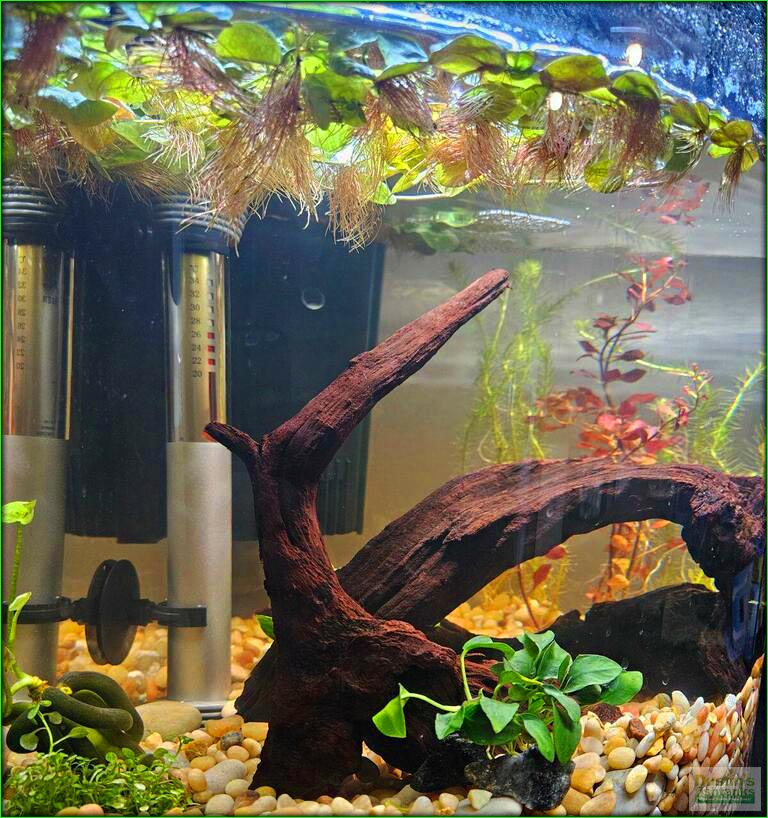
Vertical elements are provided by floating decorations such as lily pads, logs, or fake floating plants. They provide shelter and protection to shy fish or surface fish. Floating structures produce natural light designs and minimize stress by providing fish with uninhabitable spaces. They also reduce the direct exposure of the water surface to lighting, thus limiting the growth of algae. Lightweight safe materials are also encouraged to avoid tipping. Other decorations on tanks can be enhanced with floating decorations, which create an attractive layer effect both on the surface and down to the substrate. These additions bring out the natural touch of the tank and encourage the fish to wander through the various levels of the environment and making the tank more active and interesting.
Miniature Caves and Hideouts
Credit@theindoorwetlands
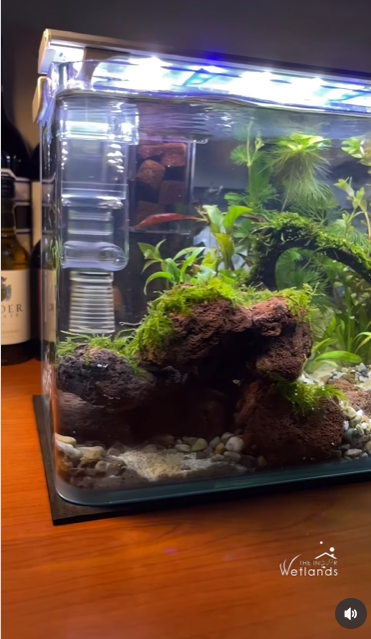
Fish have safe hiding places in small caves, tunnels, or ceramic tubes, which are necessary in reducing stress and breeding. They replicate the natural shelters in rivers and lakes. Various species are adapted to different sizes and shapes. Caves are particularly significant to timid, territorial, and night-time fish, giving them secure shelters both to rest and to fight. There should be non-toxic, smooth materials that are aquarium safe in order to avoid injuries. A natural habitat is formed by mixing caves with rocks, plants, or air stones. Tanks are also more interactive to the viewer through the hideouts, and fish can explore and communicate with their surroundings, which improves the aesthetics and well-being of the fish.
Tips for Decorating Your Fish Tank
- The most important message to be observed is Safety First: To make fish safe, only non-toxic aquarium-safe decorations are to be used.
- Balance Hiding and Open Spaces: It should be ensured that there are enough hiding spots where shy fish are, and open spaces where the active species are located.
- Consider the Behavior of the fish: Aggressive or territorial fish may be provided with a limited number of decorations to avoid conflicts.
- Keep Water Plastic: Be careful not to overload ornamentation and decorations to the extent that it prevents the water flow and filtration.
- Clean-up Objects: Identify the objects that can be washed and taken off without affecting the ecosystem of the tank.
- Add Natural Objects: Rocks, driftwood, and live plants will give your fish a more natural setting.
- Plan in Layers: Tall ornament or plant in the background must be laid down the ladder, short in the foreground.
- Add Color Rationally: Add natural colors with bright accentuating colors without underlining the fish.
- Check Compatibility: Make sure that all the decorations are fresh water or salt water, where necessary.
- Rotate or Update Decor: After every time, you may change or relocate the decorations so as to make the environment interesting to your fish.
Conclusion
Fish tank decoration is not only about beauty but also about making a safe, fascinating, and happy habitat for your fish. You may be more of the natural rocks, driftwood, live plants, or even themed ornaments; either way, every decoration is an important part in the health of fish and the harmony of the tank. It is possible to make your aquarium a beautiful underwater world by means of carefully ch,osen safe, functional, and aesthetically pleasing elements. Do not forget that you should think of the beauty and utility of what you are decorating so that your decorations, in addition to being beautiful, should also be beneficial. One of the living arts is a decorated fish tank that is fascinating and relaxing.
FAQs
Q: What are the safest materials to use in decorations for fish tanks?
A: The safe materials are natural rocks, driftwood, plastics that are safe in aquariums, ceramics, and live plants. Do not use painted or treated objects that may lead to chemicals being released into the water.
Q: What is the frequency of cleaning the fish tank decorations?
A: Cleaning of decorations should be done every 2-4 weeks or when algae accumulation takes place. Warm water and a soft brush should be used; no soap or chemicals.
Q: Is it possible to use live plants with artificial decorations?
A: Yes! Live plants combined with artificial plants help beautify the environment and create a habitat, as well as controllers of the quality of water.
Q: Does decoration influence fish behavior?
A: Yes, hiding areas minimize stress and promote natural behaviors, and make territorial or timid fish feel safe.
Q: Is it possible to place outside rocks or wood in my tank?
A: It should be cleaned, boiled, nd checked as safe in the aquarium only. Raw outdoor materials might change the water chemistry and kill fish.